
Why the Massive Iran Protests Haven’t Toppled Its Clerical Establishment
Understanding why Iran’s theocratic system remains intact despite widespread unrest
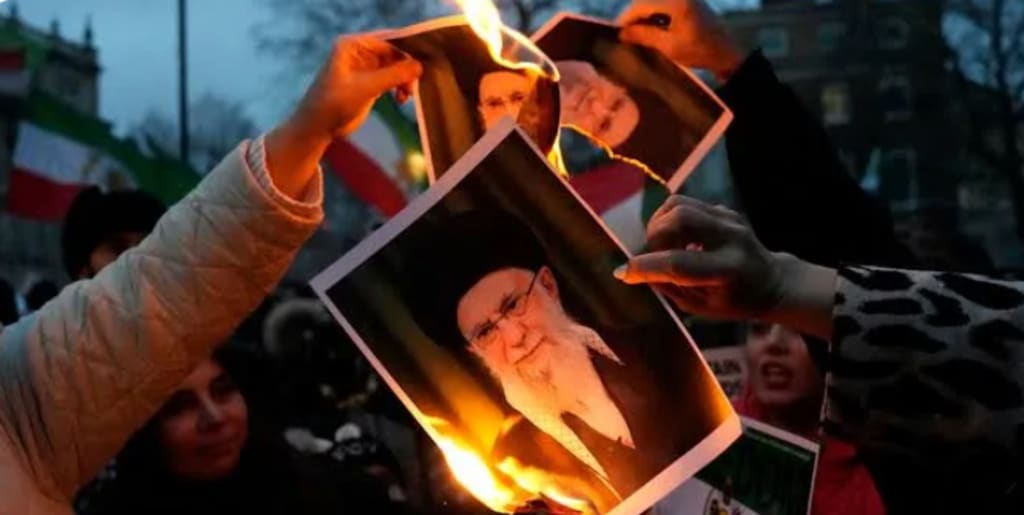
In late 2025, Iran witnessed another wave of massive protests that swept across its cities. Sparked by economic hardship, political frustration, and a growing anger at the clerical establishment, these demonstrations drew international attention. Yet, despite the size, passion, and determination of the protesters, Iran’s leadership has not toppled. Why is that? Let’s break it down.
A System Built to Last
Iran’s political system is unlike most countries. At the top sits the Supreme Leader, who controls the military, the judiciary, and major state institutions. Under him is a dense network of councils, security forces, and loyal bureaucracies. This system isn’t just about governance—it’s designed to survive upheaval.
The Islamic Revolutionary Guard Corps (IRGC) and its Basij militia are particularly crucial. These forces are deeply loyal to the clerics and have broad powers to monitor, suppress, and control dissent. Without fractures in these forces, protests struggle to achieve meaningful change.
It’s not just about force. The IRGC also dominates key sectors of the economy, from oil to construction. This means the regime’s survival is tied to economic interests, which makes isolating the leadership much harder.
History Shows the Pattern
Iran isn’t new to protests. The Green Movement of 2009 and the Mahsa Amini protests of 2022–23 are examples of massive uprisings that didn’t topple the regime. Why? One major reason: the security forces stayed loyal.
For a movement to succeed in dismantling a government, key parts of the state—especially the military and security services—usually need to defect. In Iran, that hasn’t happened. Even widespread social discontent struggles to succeed without unified leadership and control over strategic areas.
A Fragmented Opposition
One reason the protests haven’t toppled the government is the lack of a unified opposition. There’s no single leader or cohesive strategy behind the demonstrations. While exiled figures like Reza Pahlavi have tried to guide the movement, their influence inside the country is limited.
Divisions among opposition groups—monarchists, secular democrats, ethnic minority advocates, and others—make coordinated action difficult. Without a clear alternative or recognized leadership, protests risk losing focus and momentum.
Repression and Information Control
The Iranian government has responded to protests with brutal force. Reports describe mass arrests, shootings, and coerced confessions on state television to discredit activists.
The authorities have also restricted the internet, blocking social media and messaging apps. This disrupts communication, coordination, and international coverage. By cutting off the digital lifeline, the state makes it harder for protests to maintain energy and pressure.
Economic Anger vs. Regime Survival
It’s ironic that Iran’s economic struggles—high inflation, unemployment, and currency collapse—spark protests but haven’t led to regime collapse. The government maintains control through subsidies, patronage, and repression, keeping key groups loyal.
Moreover, elite insiders benefit from the current system. Their wealth and influence make them invested in maintaining the status quo rather than risking political change.
International Pressure Isn’t Enough
Sanctions and international criticism have added pressure, but they often strengthen the government’s narrative. Authorities blame “foreign enemies” for unrest, using nationalism to rally support.
Global players are also cautious. Iran’s oil, regional influence, and nuclear negotiations make countries hesitant to intervene directly. This limits the ability of external pressure to create rapid regime change.
Why the Protests Haven’t Succeeded…Yet
The failure of these protests isn’t because Iranians lack courage or resolve. It’s because the system is structurally strong, institutionally resilient, and strategically entrenched.
For real change to happen, several unlikely factors would need to align:
Key defections within the security forces
A unified, credible opposition leadership
Sustained international pressure that isolates the clerical elite
Until then, protests may continue to raise awareness, inspire younger generations, and push for gradual reform—but they are unlikely to bring immediate toppling of Iran’s clerical rulers.
Bottom line: Iran’s protests are historic, passionate, and politically significant, but the system is built to withstand waves of unrest. Change may come slowly, but it will require more than demonstrations—it will need strategic coordination, internal cracks, and long-term pressure from both inside and outside the country.
About the Creator
Keep reading
More stories from Aqib Hussain and writers in The Swamp and other communities.
Access to Elon Musk’s Starlink Internet Service Is Now Free in Iran as Regime Continues Brutal Crackdown on Protests
As Iran faces one of the most intense waves of protests in its modern history, the government has responded with force, fear, and an all-too-familiar tactic: shutting down the internet. But in a surprising twist, access to Elon Musk’s Starlink satellite internet service is now reportedly free in Iran, offering protesters and civilians a rare way to stay connected with the outside world amid a brutal crackdown.
By Aqib Hussain2 months ago in The Swamp
Parallel Protests
I haven't written for quite some time, but I have A LOT of thoughts about yesterday's protest rally against our government's involvement and complicity in America's war on Iran, on the harbourside of my home city Bristol, and I need to put them somewhere. My gorgeous girlfriend is always a loving and listening ear and sharing it all with her will always be a healthy and happy way of processing the mental and emotional weight, but getting it straight in my brain to share means writing it all down in straight lines, so, here we are and thanks for being here.
By Steph Cole5 days ago in The Swamp
Defence Force Plane Bound for Middle East to Help New Zealanders Stranded by Conflict
New Zealand’s government has deployed a Defence Force aircraft to the Middle East to assist citizens stranded amid escalating conflict, demonstrating the country’s commitment to the safety and security of its nationals abroad. The mission comes as regional instability has intensified, threatening the safety of foreign nationals, including New Zealanders, living and traveling in affected areas. The Royal New Zealand Air Force (RNZAF) confirmed that a C-130 Hercules transport plane is en route to coordinate evacuations and provide logistical support. Defence Minister Andrew Little emphasized that the deployment is precautionary but necessary to ensure that New Zealand citizens can leave high-risk zones safely. “New Zealanders’ safety is our top priority,” Minister Little said. “We are closely monitoring the situation and taking all necessary measures to assist those affected by the conflict. This aircraft will support evacuation efforts and provide transport for New Zealanders who need to return home.” Responding to Rising Regional Tensions The deployment follows a surge in hostilities across parts of the Middle East, including missile strikes, airspace restrictions, and armed clashes. Governments worldwide have been scrambling to evacuate citizens from areas experiencing sudden escalations. New Zealand’s initiative reflects both proactive planning and international cooperation. Officials are liaising with foreign governments, regional authorities, and international organizations to facilitate safe passage and avoid potential conflict zones. Airspace coordination is particularly critical, as commercial flights may be limited or diverted due to military activity in the region. The Role of the Defence Force Aircraft The RNZAF’s C-130 Hercules is a versatile transport aircraft capable of carrying personnel, vehicles, and essential supplies. Its deployment allows for rapid extraction of citizens from high-risk locations, as well as the transport of humanitarian aid if required. Military officials note that the aircraft’s ability to operate in challenging environments is crucial for ensuring the safe evacuation of New Zealanders. The plane will also provide real-time updates to the Ministry of Foreign Affairs and Trade (MFAT) regarding conditions on the ground, enabling better coordination of subsequent flights and support services. Assisting New Zealanders Abroad New Zealand’s government has urged citizens traveling or living in the Middle East to register with the Smart Traveler Enrollment Program (STEP) or the local equivalent maintained by MFAT. The ministry has also set up a 24-hour contact line to provide guidance, updates, and support to New Zealanders affected by the conflict. “For those in affected areas, it is vital to stay informed and follow the advice of authorities,” said an MFAT spokesperson. “Our teams are working around the clock to ensure all New Zealanders are safe and accounted for.” The Defence Force deployment underscores the country’s commitment to rapid, coordinated responses in crises. It also illustrates the importance of military assets in supporting humanitarian and evacuation operations, especially in regions where commercial travel may be disrupted or unsafe. International Cooperation and Challenges Evacuations in conflict zones often require careful coordination with multiple governments and organizations. Officials must navigate airspace restrictions, security checkpoints, and local regulations, all while maintaining the safety of evacuees and crew. New Zealand’s deployment is part of a broader international trend, as countries prioritize the safety of their citizens amid unpredictable regional conflicts. Lessons learned from previous evacuations, such as those in Afghanistan and Iraq, have informed planning and operational readiness for missions like this one. Looking Ahead The RNZAF aircraft is expected to make multiple trips, depending on the number of New Zealanders requiring evacuation and the evolving security situation. Meanwhile, the government continues to assess the situation in real time, ready to deploy additional support if necessary. By taking swift action, New Zealand demonstrates its commitment to protecting its citizens overseas while navigating complex regional security challenges. For New Zealanders in the Middle East, the arrival of the Defence Force plane provides a lifeline and a measure of reassurance amid ongoing uncertainty.
By Fiaz Ahmed 2 days ago in The Swamp
The Politics of Playing Dress-Up
Well, to start off I'd like to say a happy world book day to all who celebrate. I know I haven't really posted anything on my socials about it but I'm not a jubilant kind of person. I lay low most of the time. Let's start off with a popular anecdote from the vaults...
By Annie Kapur3 days ago in Geeks


Comments
There are no comments for this story
Be the first to respond and start the conversation.