politics
Politics does not dictate our collective cultural mindset as much as it simply reflects it; We've got to look in the mirror sometimes, and we've got one.
‘They Want to Break Us’: Russian Energy Grid Strikes Give Freezing Kyiv Some of Its Darkest Days. AI-Generated.
Kyiv is facing one of its coldest winters in recent memory—and Russian attacks on Ukraine’s energy grid have plunged the city into literal and figurative darkness. With freezing temperatures, residents are coping without electricity, heat, or hot water, as a deliberate campaign targets the city’s infrastructure.
By Aqib Hussainabout 8 hours ago in The Swamp
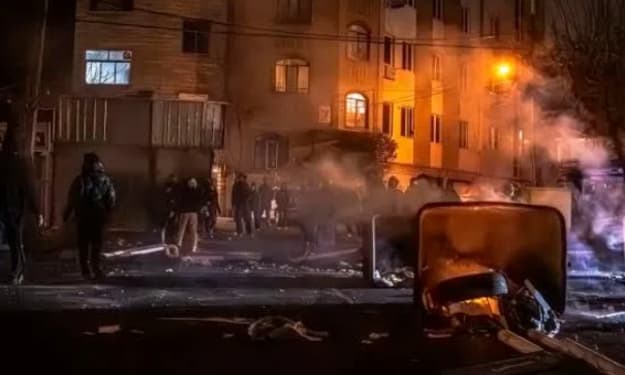
Why the Massive Iran Protests Haven’t Toppled Its Clerical Establishment. AI-Generated.
In late 2025, Iran witnessed another wave of massive protests that swept across its cities. Sparked by economic hardship, political frustration, and a growing anger at the clerical establishment, these demonstrations drew international attention. Yet, despite the size, passion, and determination of the protesters, Iran’s leadership has not toppled. Why is that? Let’s break it down.
By Aqib Hussainabout 8 hours ago in The Swamp
Access to Elon Musk’s Starlink Internet Service Is Now Free in Iran as Regime Continues Brutal Crackdown on Protests. AI-Generated.
As Iran faces one of the most intense waves of protests in its modern history, the government has responded with force, fear, and an all-too-familiar tactic: shutting down the internet. But in a surprising twist, access to Elon Musk’s Starlink satellite internet service is now reportedly free in Iran, offering protesters and civilians a rare way to stay connected with the outside world amid a brutal crackdown.
By Aqib Hussainabout 8 hours ago in The Swamp
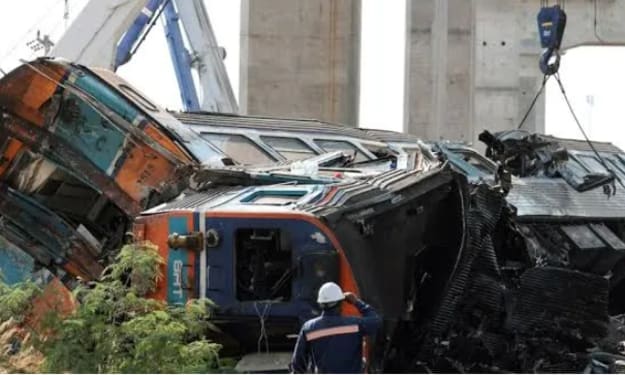
At Least 31 Killed After Crane Falls on Train in Thailand. AI-Generated.
A devastating rail disaster in Thailand has left at least 31 people dead and dozens more injured after a construction crane collapsed onto a moving passenger train. The tragic incident, which occurred in the northeastern province of Nakhon Ratchasima, has shocked the nation and raised serious concerns about construction safety and infrastructure oversight.
By Aqib Hussainabout 8 hours ago in The Swamp
Trump News at a Glance: President Vows to Help ‘Iranian Patriots’ in Latest Signal of Military Action Against Tehran. AI-Generated.
Former President Donald Trump has issued a dramatic statement promising support for “Iranian Patriots,” signaling a possible escalation in US-Iran relations and raising global concerns about potential military action. While Trump is no longer in office, his statements continue to carry weight in international politics, particularly as he maintains significant influence over US political discourse and foreign policy debate.
By Aarif Lashariabout 8 hours ago in The Swamp
US Supreme Court Appears Likely to Uphold Restrictions on Transgender Athletes. AI-Generated.
The US Supreme Court is poised to make a landmark decision that could reshape the landscape of youth and collegiate sports across the country. Reports indicate that the Court appears likely to uphold restrictions on transgender athletes, a move that would reinforce state-level bans preventing transgender girls and women from competing in sports aligned with their gender identity.
By Aarif Lashariabout 9 hours ago in The Swamp
Bill and Hillary Clinton Refuse to Testify in House Epstein Investigation. AI-Generated.
Former US President Bill Clinton and former Secretary of State Hillary Clinton have refused to testify in a House investigation examining the handling of the Jeffrey Epstein case, a decision that has reignited political controversy and public scrutiny. The refusal has drawn sharp reactions from lawmakers, victims’ advocates, and political commentators, reopening long-standing questions about accountability, transparency, and elite power in one of the most disturbing criminal cases in recent US history.
By Aarif Lashariabout 9 hours ago in The Swamp
Trump Administration Ends Temporary Protected Status for Somalis in the US. AI-Generated.
The Trump administration has officially ended Temporary Protected Status (TPS) for Somali nationals living in the United States, a move that could place tens of thousands of people at risk of deportation. The decision has sent shockwaves through Somali-American communities and sparked strong reactions from lawmakers, human rights organizations, and immigration advocates. At the heart of the controversy lies a fundamental question: is Somalia safe enough for its citizens to return after decades of conflict and instability?
By Aarif Lashariabout 9 hours ago in The Swamp
‘End of Western Alliance’ Means UK Must Be Bolder, Says Chatham House Director. AI-Generated.
The director of Chatham House, the UK’s leading foreign policy think tank, has warned that the era of a cohesive Western alliance may be coming to an end, arguing that Britain must adopt a bolder and more independent approach to global affairs. The remarks come amid growing geopolitical fragmentation, strained transatlantic relations, and the rise of new power centers challenging long-standing Western dominance. The warning reflects a broader debate in British foreign policy circles about how the UK should position itself in a world where traditional alliances can no longer be taken for granted. What Is Meant by the ‘End of the Western Alliance’? For decades, the Western alliance—anchored by NATO, close US-European cooperation, and shared democratic values—has shaped global security and economic policy. According to the Chatham House director, that framework is now under severe strain. Differences over defense spending, trade, climate policy, and responses to conflicts have exposed deep divisions between the United States and its European partners. Political polarization within Western democracies has further complicated consensus-building, weakening the sense of shared purpose that once defined the alliance. The Impact of US Unpredictability A key factor in the perceived decline of the Western alliance is the unpredictability of US foreign policy. Shifts between administrations have led allies to question Washington’s long-term commitments, particularly to NATO and multilateral institutions. The Chatham House director pointed to recent years in which US leadership appeared more inward-looking, prioritizing domestic concerns over global coordination. For the UK, which has historically relied on close ties with the US, this uncertainty has created strategic anxiety. Europe’s Strategic Awakening Europe, meanwhile, has begun reassessing its own role on the global stage. The war in Ukraine, rising tensions with China, and concerns over energy security have forced European nations to confront their dependence on external partners. The director argued that while European cooperation remains essential, Europe cannot simply replace the US as a unified strategic leader. Instead, individual countries—including the UK—must develop clearer national strategies that complement, rather than rely entirely on, collective action. Why the UK Must Be Bolder According to Chatham House, the UK faces a critical choice: cling to outdated assumptions about the Western alliance or adapt to a more fragmented world. Being “bolder,” the director said, does not mean abandoning allies, but rather redefining how Britain engages internationally. This could involve taking more independent diplomatic initiatives, strengthening ties beyond traditional Western partners, and investing in areas where the UK has comparative advantages, such as diplomacy, intelligence, and soft power. The Post-Brexit Reality Brexit has fundamentally reshaped the UK’s foreign policy environment. Outside the European Union, Britain has greater autonomy but fewer formal mechanisms to influence European decision-making. The Chatham House director suggested that post-Brexit Britain must work harder to remain relevant, building flexible partnerships with both European and non-European countries. This includes deeper engagement with Indo-Pacific nations, Africa, and the Middle East. Defense and Security Implications Defense policy is another area where boldness is required. While the UK remains a key NATO member, reliance on NATO alone may no longer be sufficient. Increased investment in defense capabilities, cyber security, and emerging technologies was highlighted as essential. At the same time, the director cautioned against militarization without diplomacy. Security, he argued, must be paired with strong diplomatic engagement to manage conflicts and prevent escalation. Economic and Trade Considerations The erosion of the Western alliance also has economic consequences. Global trade is increasingly shaped by competition between blocs, protectionism, and strategic supply chains. The UK, as a major financial and trading nation, must navigate these shifts carefully. The Chatham House director urged policymakers to pursue trade relationships that balance economic opportunity with ethical considerations, including labor standards and environmental protection. Climate and Global Challenges Climate change, pandemics, and technological disruption are challenges that transcend traditional alliances. The director emphasized that global cooperation remains vital, even as political alliances weaken. The UK, he argued, can play a leadership role in climate diplomacy and global governance, leveraging its scientific expertise and international networks. Boldness, in this context, means shaping agendas rather than reacting to them. Critics and Counterarguments Not everyone agrees that the Western alliance is ending. Some analysts argue that recent crises have actually reinforced cooperation among Western nations, particularly in response to security threats. Others caution that moving too far from established alliances could leave the UK isolated. The Chatham House director acknowledged these concerns but maintained that adaptation does not equal abandonment. A Moment for Strategic Clarity The director’s remarks have reignited debate within Westminster and beyond. Policymakers across parties are grappling with how to balance loyalty to allies with the need for strategic independence. The UK’s next steps will likely shape its global role for decades, determining whether it remains a central player or struggles to find its footing in a multipolar world. Conclusion: Redefining Britain’s Global Role The warning from Chatham House underscores a profound shift in global politics. As the Western alliance evolves—or potentially fragments—the UK faces both risks and opportunities. Being bolder, as the director suggests, means embracing realism, investing in capabilities, and engaging globally with confidence and purpose. In an era of uncertainty, Britain’s challenge is not simply to adapt, but to lead where it can, forging partnerships that reflect the realities of a changing world.
By Aarif Lashariabout 10 hours ago in The Swamp