
Bill and Hillary Clinton Refuse to Testify in House Epstein Investigation
Introduction: A High-Profile Refusal Rekindles Controversy
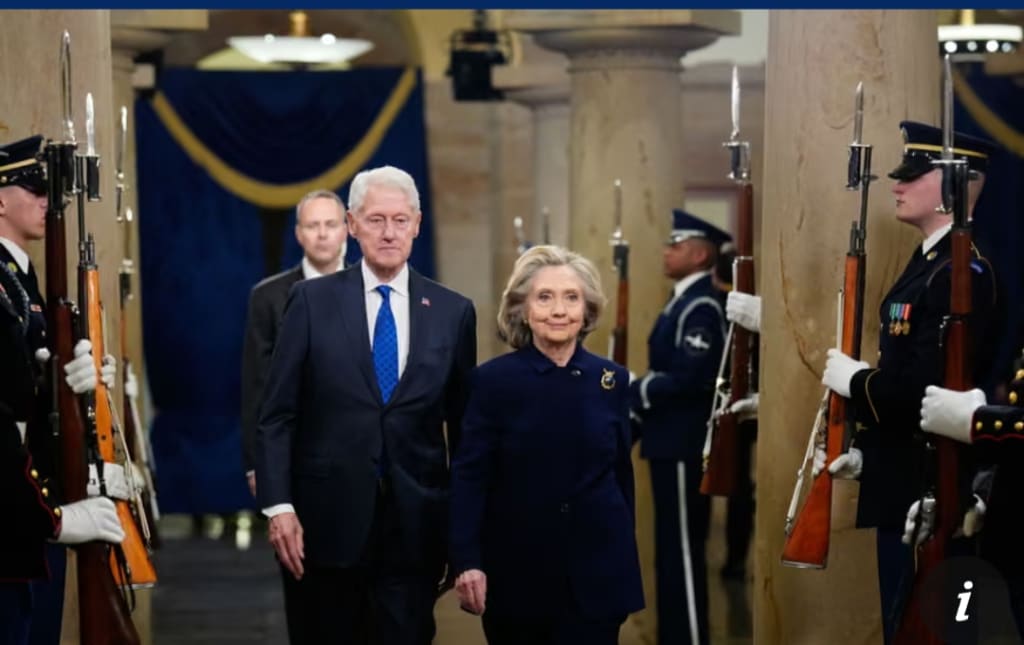
Former US President Bill Clinton and former Secretary of State Hillary Clinton have refused to testify in a House investigation examining the handling of the Jeffrey Epstein case, a decision that has reignited political controversy and public scrutiny. The refusal has drawn sharp reactions from lawmakers, victims’ advocates, and political commentators, reopening long-standing questions about accountability, transparency, and elite power in one of the most disturbing criminal cases in recent US history.
As Congress intensifies its focus on Epstein’s network and the institutional failures that allowed his abuse to continue for years, the Clintons’ decision places them once again at the center of a deeply polarizing debate.
Background: The Epstein Case and Congressional Scrutiny
Jeffrey Epstein, a wealthy financier with powerful connections, died in federal custody in 2019 while awaiting trial on sex trafficking charges involving underage girls. His death, officially ruled a suicide, triggered widespread outrage and conspiracy theories, as well as renewed demands to investigate how Epstein evaded accountability for decades.
In response, House lawmakers launched investigations into the role of federal agencies, prosecutors, and influential figures connected to Epstein. The aim, according to committee members, is to determine whether political influence, prosecutorial misconduct, or systemic failures enabled Epstein to avoid justice for so long.
Why the Clintons Are Being Asked to Testify
Bill Clinton’s past association with Epstein has been well documented. The former president acknowledged traveling on Epstein’s private jet several times in the early 2000s in connection with work for the Clinton Foundation. Clinton has repeatedly denied any knowledge of Epstein’s criminal activities and says he severed contact long before Epstein’s arrest.
Hillary Clinton has not been directly linked to Epstein’s activities, but investigators argue that testimony from both Clintons could help clarify the extent of Epstein’s access to political power and whether any warning signs were overlooked by influential figures.
Republican lawmakers in particular have pushed for testimony, framing it as essential to restoring public trust.
The Refusal and Legal Justification
Attorneys for Bill and Hillary Clinton informed the House committee that the couple would not voluntarily testify. According to their representatives, the request is politically motivated and lacks a clear legal basis, particularly given that neither Clinton has been accused of criminal wrongdoing related to Epstein.
Legal experts note that private citizens are not obligated to testify before Congress unless subpoenaed. At this stage, the committee has not issued a formal subpoena, though some lawmakers have suggested that step may follow.
The Clintons’ legal team has emphasized that Bill Clinton has already addressed questions about Epstein publicly and through past inquiries.
Political Reactions: Divided Lines
The refusal has drawn predictable partisan responses. Republican lawmakers accused the Clintons of avoiding accountability and demanded subpoenas, arguing that no one—regardless of status—should be above scrutiny.
Democratic leaders have largely defended the Clintons, characterizing the investigation as a political spectacle designed to damage prominent Democrats rather than uncover new facts. They point out that many powerful individuals across political and business circles associated with Epstein, yet only certain figures are being aggressively targeted.
This division reflects broader tensions over how Congress should conduct oversight in politically sensitive cases.
Victims’ Advocates Demand Transparency
Survivors of Epstein’s abuse and advocacy groups have expressed frustration with the refusal, stressing that the investigation should prioritize accountability over politics. Many argue that testimony from all individuals connected to Epstein—regardless of party—could help expose systemic failures and prevent future abuse.
For victims, the focus is less on individual guilt and more on understanding how institutions failed to protect vulnerable people. Advocates warn that political infighting risks overshadowing the voices of survivors.
Broader Questions of Elite Accountability
The Clintons’ refusal has reignited debate about whether powerful figures are held to different standards than ordinary citizens. Critics argue that Epstein’s ability to cultivate relationships with politicians, financiers, and royalty helped shield him from scrutiny for years.
The investigation has highlighted concerns about how wealth and influence can undermine justice, particularly in cases involving sexual exploitation. For many Americans, the Epstein case symbolizes a deeper mistrust in institutions meant to enforce the law impartially.
Legal Limits of Congressional Investigations
While congressional committees have broad investigative powers, they also face legal and political constraints. Subpoenas can be challenged in court, and witnesses may invoke constitutional protections, including the Fifth Amendment.
Legal analysts caution that forcing testimony from high-profile figures can backfire if perceived as partisan overreach. At the same time, failing to pursue key witnesses risks weakening the investigation’s credibility.
The committee now faces a strategic choice: escalate the standoff or refocus its efforts elsewhere.
Media and Public Response
The refusal has dominated news coverage, fueling renewed public interest in Epstein’s network and unanswered questions surrounding his case. Social media reactions range from outrage to skepticism, with many expressing fatigue over what they see as endless controversy without accountability.
Some commentators argue that the fixation on famous names distracts from systemic reforms needed to prevent similar abuses. Others insist that confronting powerful figures is essential to restoring trust.
What Happens Next
It remains unclear whether the House committee will issue subpoenas to compel testimony from the Clintons. Doing so could trigger lengthy legal battles and intensify political polarization ahead of future elections.
Meanwhile, investigators continue to review documents, testimony from other witnesses, and agency records related to Epstein’s prosecution history. Lawmakers say their ultimate goal is to produce recommendations that strengthen protections for victims and close gaps in the justice system.
Conclusion: A Test of Transparency and Trust
Bill and Hillary Clinton’s refusal to testify in the House Epstein investigation has become a flashpoint in the ongoing struggle over accountability, power, and transparency. While the decision may be legally justified, it has deepened public skepticism about whether influential figures are truly subject to the same scrutiny as everyone else.
As Congress presses forward, the challenge will be to ensure that political rivalries do not overshadow the central issue: understanding how a serial abuser evaded justice for so long—and ensuring it never happens again.
About the Creator
Keep reading
More stories from Aarif Lashari and writers in The Swamp and other communities.
Trump Administration Ends Temporary Protected Status for Somalis in the US
The Trump administration has officially ended Temporary Protected Status (TPS) for Somali nationals living in the United States, a move that could place tens of thousands of people at risk of deportation. The decision has sent shockwaves through Somali-American communities and sparked strong reactions from lawmakers, human rights organizations, and immigration advocates. At the heart of the controversy lies a fundamental question: is Somalia safe enough for its citizens to return after decades of conflict and instability?
By Aarif Lashari4 days ago in The Swamp
Gold Price Today: Bullion Slips from Record Highs as Profit-Taking Meets a Firmer Dollar
Gold, often regarded as a safe-haven asset, has seen significant fluctuations in recent trading sessions. Today, the bullion price slipped from record highs, reflecting a combination of profit-taking by investors and a strengthening U.S. dollar. This movement underscores the delicate balance between market sentiment, currency strength, and global economic conditions, illustrating why gold remains a closely watched asset for traders, investors, and analysts worldwide.
By Salaar Jamaliabout 20 hours ago in The Swamp
How to Succeed at the Benson Directory®
Congratulations and welcome to the Benson Directory® employee #22391! As our newest call handler, you will have the privilege of speaking with dozens of unique and interesting people on a daily basis as well as the opportunity to earn bonuses for high performance. Contained within this handbook you will find a set of ease to follow instructions designed to help you settle in to your new role and begin paving the way to success.
By S. A. Crawfordabout 23 hours ago in Fiction



Comments
There are no comments for this story
Be the first to respond and start the conversation.