
Buying Greenland Could Cost as Much as $700 Billion
Buying Greenland Could Cost as Much as $700 Billion: Why the Idea Is More Expensive Than It Sounds

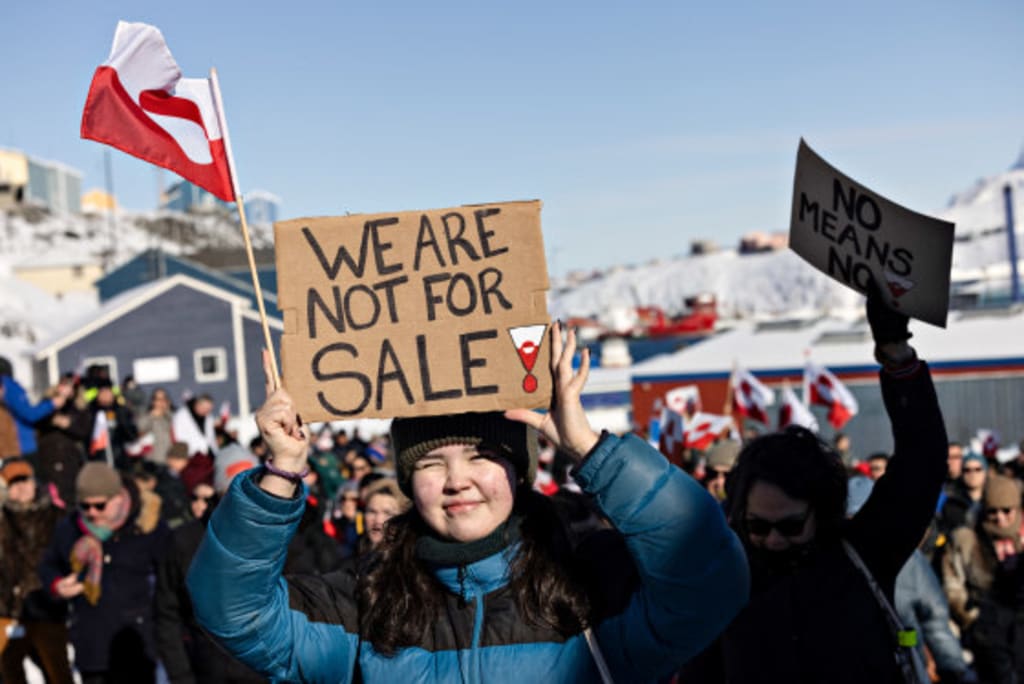
The idea of buying Greenland may sound like a geopolitical joke to some, but estimates suggest that acquiring the massive Arctic island could cost up to $700 billion. While the concept gained global attention during the Trump administration, the financial, political, and ethical realities behind such a purchase reveal why the price tag is far higher than most people expect.
Greenland is not just a frozen landmass with icebergs and polar bears. It is a strategically vital, resource-rich territory with its own government, culture, and international importance. When all factors are considered, the cost of buying Greenland goes far beyond a simple real estate transaction.
Why Greenland Attracts Global Interest
Greenland is the world’s largest island, covering more than 2.1 million square kilometers, yet it has a population of only about 56,000 people. Despite its sparse population, the island holds immense strategic and economic value.
Its location in the Arctic places it at the center of emerging global trade routes as ice melts due to climate change. These routes could significantly shorten shipping distances between North America, Europe, and Asia. Additionally, Greenland sits between major military powers, making it a critical asset for defense and surveillance.
Beyond geography, Greenland is believed to contain vast reserves of rare earth minerals, oil, natural gas, and uranium, resources that are increasingly important in modern technology and clean energy transitions.
Breaking Down the $700 Billion Estimate
The $700 billion figure is not an official price but an estimated total cost based on several financial and political factors.
First, Greenland is an autonomous territory within the Kingdom of Denmark. Any purchase would require not only Denmark’s approval but also the consent of Greenland’s people. This alone would demand massive compensation packages and long-term financial guarantees.
Second, Denmark currently provides Greenland with an annual subsidy of around $600 million to support public services. If another country were to take over, it would likely need to replace or exceed this funding indefinitely. Over decades, those costs would add up to hundreds of billions of dollars.
Third, infrastructure investment would be unavoidable. Greenland lacks extensive roads, hospitals, ports, and housing. Developing the island to modern standards would require enormous public spending, particularly given its harsh climate and remote location.
The Cost of Governance and Social Services
Buying Greenland would not end with signing a deal. The new governing nation would be responsible for education, healthcare, welfare, and employment opportunities for the local population.
Greenland’s economy currently relies heavily on fishing and public sector jobs. Any transition of ownership would require large-scale economic development programs to ensure stability and growth. Failure to do so could result in social unrest, unemployment, and international criticism.
These long-term governance obligations significantly increase the overall cost, turning the purchase into a multi-generational financial commitment rather than a one-time expense.
Strategic and Military Considerations
From a defense perspective, Greenland already plays a role in global security. The United States operates Thule Air Base in northern Greenland, which is vital for missile detection and space surveillance.
If Greenland were purchased, military expansion and modernization would likely follow. Building new bases, upgrading radar systems, and securing Arctic waters would require billions in additional defense spending. These costs are often excluded from public discussions but are essential to understanding the true financial impact.
Political and Ethical Barriers
Even if money were no object, buying Greenland raises serious political and ethical questions. In today’s world, the idea of purchasing territory populated by indigenous people clashes with modern principles of self-determination and sovereignty.
Greenlanders have repeatedly expressed that they are not for sale. Many view discussions of purchasing the island as dismissive of their culture and democratic rights. Any attempt to proceed without overwhelming local support would likely spark global backlash.
International law does not forbid land purchases outright, but political pressure from allies, human rights organizations, and rival powers would be intense.
Is Greenland Worth $700 Billion?
From a purely strategic viewpoint, Greenland offers undeniable value. Access to Arctic routes, control over critical minerals, and enhanced security positioning make it an attractive asset.
However, when weighed against the financial burden, political risks, and ethical concerns, the idea becomes far less practical. Spending $700 billion—or more—on a territorial acquisition may not deliver returns comparable to investing the same amount in technology, climate resilience, or domestic infrastructure.
Final Thoughts
The idea that buying Greenland could cost as much as $700 billion highlights how misleading simple headlines can be. The true cost is not just financial but political, social, and moral.
Greenland is not an empty piece of land waiting for a buyer. It is a living society with its own identity, ambitions, and future. Any serious discussion about ownership must begin not with money, but with respect for the people who call the island home.
In the end, Greenland’s value may be immeasurable—not because of what it could offer a superpower, but because of what it represents in an era increasingly shaped by cooperation rather than conquest.
About the Creator
Asad Ali
I'm Asad Ali, a passionate blogger with 3 years of experience creating engaging and informative content across various niches. I specialize in crafting SEO-friendly articles that drive traffic and deliver value to readers.
The Forsyth House Fire
Since 1851, Forsyth House has stood on the corner of Union Street and Gordon Street in the heart of Glasgow. Its iconic, or was... because on Sunday 8th of March, 2026, a fire broke out in a small, seemingly un-named shop in the building and tore all that history down. As I write, the rubble is still unsettled and the street is still blocked off. Central Station is quiet on the upper level, and around 30 small businesses have quite literally gone up in smoke.
By S. A. Crawford3 days ago in The Swamp


Comments
There are no comments for this story
Be the first to respond and start the conversation.