politics
Politics does not dictate our collective cultural mindset as much as it simply reflects it; We've got to look in the mirror sometimes, and we've got one.
Zelenskyy to Hold Talks with European Leaders Amid Fresh Strikes on Kyiv. AI-Generated.
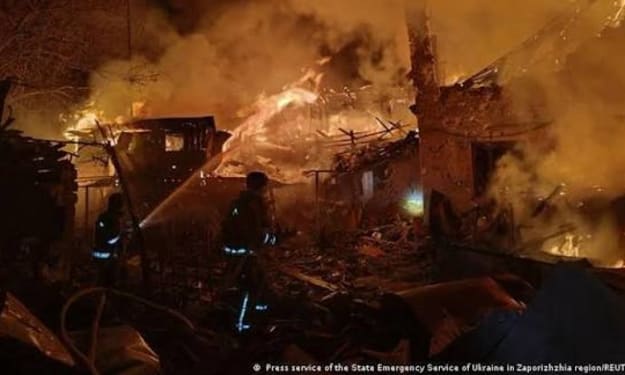
As fresh strikes once again shake Kyiv, Ukrainian President Volodymyr Zelenskyy is preparing to hold high-level talks with European leaders, signaling that diplomacy remains as critical as battlefield resilience. The timing of these discussions underscores a familiar pattern in the Russia-Ukraine war: moments of intensified military pressure are often followed by renewed diplomatic engagement, as Ukraine seeks both immediate support and long-term security guarantees from its European partners. The latest attacks on Kyiv have reignited concerns about the vulnerability of civilian infrastructure and the sustainability of Ukraine’s air defense systems. Although Ukrainian forces have repeatedly demonstrated their ability to intercept incoming missiles and drones, the psychological and economic impact of repeated strikes on the capital remains profound. For ordinary Ukrainians, air raid sirens and power disruptions have become an exhausting routine, reinforcing the urgency behind Zelenskyy’s diplomatic push. Zelenskyy’s planned talks with European leaders are expected to focus on several core issues: military assistance, air defense reinforcement, financial aid, and the broader political roadmap for ending the war. Europe has been one of Ukraine’s most consistent backers since the conflict began, but shifting political dynamics within the European Union have introduced new challenges. Elections, budget constraints, and war fatigue among voters have made continued support a more complex proposition for some governments. Against this backdrop, the Ukrainian president’s message is likely to emphasize unity and shared security interests. Zelenskyy has frequently argued that Ukraine’s fight is not only about national survival but also about protecting the European security order. Fresh strikes on Kyiv serve as a stark reminder that the conflict’s consequences extend far beyond Ukraine’s borders, affecting energy security, migration patterns, and geopolitical stability across the continent. European leaders, meanwhile, face a delicate balancing act. On one hand, there is broad recognition that abandoning Ukraine would embolden aggression and undermine international norms. On the other, concerns persist about escalation, economic strain, and the long-term cost of sustained military support. Zelenskyy’s diplomacy aims to keep Ukraine’s plight at the forefront of European agendas, especially at a time when global attention is divided among multiple crises. The renewed attacks on Kyiv also highlight the evolving nature of the war. Rather than rapid territorial advances, the conflict has increasingly taken the form of attritional strikes designed to exhaust resources and morale. In this environment, air defense systems, intelligence sharing, and rapid repair of infrastructure have become just as important as traditional battlefield gains. Zelenskyy’s discussions with European partners are expected to address these realities, with a focus on practical measures that can make an immediate difference for civilians. Another key theme likely to emerge in the talks is Ukraine’s long-term integration with Europe. Beyond emergency aid, Kyiv continues to push for deeper political and economic ties with the European Union. For Zelenskyy, these talks are not only about surviving the present crisis but also about shaping Ukraine’s future as a firmly European state. Progress toward EU membership, reconstruction planning, and institutional reforms may all feature in the discussions, even as missiles fall. From a broader perspective, the timing of these talks sends a powerful symbolic message. By engaging European leaders amid active hostilities, Zelenskyy reinforces the idea that Ukraine refuses to be isolated or intimidated. The strategy blends resilience with outreach, projecting an image of a nation that can withstand pressure while actively shaping its diplomatic destiny. For the Vocal Media audience, this moment captures the essence of modern conflict: war and diplomacy unfolding simultaneously, each influencing the other in real time. The strikes on Kyiv are not just military events; they are catalysts for political decisions, alliances, and narratives that will shape Europe’s future. Zelenskyy’s engagement with European leaders reflects a recognition that wars today are fought as much in conference rooms as on the battlefield. Ultimately, the success of these talks will be measured not only by new aid packages or statements of solidarity, but by whether they translate into sustained, coordinated action. As confirmed by recent events, Ukraine’s struggle is far from over. Yet, by turning moments of crisis into opportunities for dialogue, Zelenskyy continues to demonstrate a leadership style defined by persistence, adaptability, and an unwavering appeal to shared values. In the shadow of fresh strikes on Kyiv, these talks stand as a reminder that even in the darkest moments, diplomacy remains a vital weapon—one that Ukraine is determined to wield with purpose and resolve.
By Fiaz Ahmed Brohiabout a month ago in The Swamp
Yemen’s Saudi-Led Coalition Warns STC Against Moves in Hadramout. AI-Generated.
Yemen’s long-running conflict has entered yet another complex phase as the Saudi-led coalition has issued a clear warning to the Southern Transitional Council (STC) over its political and military activities in Hadramout province. The development highlights deep fractures within the anti-Houthi camp and underscores how unresolved rivalries continue to threaten stability in a country already devastated by years of war. Hadramout, Yemen’s largest governorate by area, occupies a strategic position in the country’s east. Rich in natural resources and home to key ports and oil facilities, the province has largely avoided the intense fighting seen in other regions. However, its relative calm has made it a focal point for competing political ambitions. The recent warning from the Saudi-led coalition suggests growing concern that the STC’s actions could destabilize the area and undermine broader efforts to maintain unity among forces opposed to the Houthi movement. The Southern Transitional Council, backed primarily by the United Arab Emirates, has long advocated for southern autonomy or outright independence. While the STC is technically aligned with the internationally recognized Yemeni government and the Saudi-led coalition against the Houthis, its goals often clash with those of Riyadh and President Abdrabbuh Mansur Hadi’s successors. In recent years, the STC has consolidated control over several southern regions, including Aden, and has sought to expand its influence into Hadramout. According to analysts, the coalition’s warning reflects fears that unilateral moves by the STC—such as mobilizing armed units or attempting to assert administrative control—could trigger internal conflict. Hadramout has its own local power structures, tribal networks, and security forces that do not necessarily align with the STC’s southern separatist agenda. Any attempt to impose authority could spark resistance, drawing the province into the broader turmoil engulfing Yemen. Saudi Arabia’s role in Hadramout has traditionally focused on security and counterterrorism, particularly against extremist groups like Al-Qaeda in the Arabian Peninsula. Riyadh has invested heavily in stabilizing the region, viewing it as a buffer against chaos spreading from western Yemen. From this perspective, the STC’s ambitions represent a direct challenge to Saudi interests and to the coalition’s stated goal of preserving Yemen’s territorial integrity. The warning also exposes the delicate balance within the Saudi-led coalition itself. While Saudi Arabia and the UAE remain strategic partners, they have backed different local actors in Yemen, leading to overlapping and sometimes conflicting agendas. The STC’s rise has been widely attributed to Emirati support, whereas Saudi Arabia has continued to endorse the central government framework. Hadramout, therefore, has become a testing ground for how far these differences can be managed without open confrontation. For local residents, the political maneuvering raises serious concerns. Hadramout’s population has enjoyed relative stability compared to other regions, allowing limited economic activity and social life to continue despite the national crisis. Any escalation could disrupt livelihoods, displace communities, and open the door to renewed violence. Civil society voices in the province have repeatedly called for keeping Hadramout neutral, warning that importing external conflicts would only worsen humanitarian conditions. International observers see the situation as emblematic of Yemen’s broader problem: the absence of a unified vision for the country’s future. Even as diplomatic efforts to end the war with the Houthis gain momentum, divisions among anti-Houthi factions threaten to derail progress. The coalition’s warning to the STC may be an attempt to enforce discipline and prevent fragmentation, but it also highlights how fragile existing alliances remain. Looking ahead, much will depend on whether dialogue can prevail over confrontation. The STC faces a choice between pursuing its ambitions through negotiation or risking isolation by defying the coalition’s warning. At the same time, Saudi Arabia and its partners must address southern grievances in a meaningful way if they hope to maintain cohesion. Ignoring these tensions could lead to new fronts of conflict, complicating an already dire situation. In essence, the dispute over Hadramout is not just about territorial control; it is about competing visions of Yemen’s identity and governance. As the Saudi-led coalition cautions the STC against destabilizing moves, the episode serves as a reminder that peace in Yemen will require more than ending battles—it will demand reconciling deeply rooted political aspirations. Until then, provinces like Hadramout will remain at the center of a fragile and uncertain future.
By Fiaz Ahmed Brohiabout a month ago in The Swamp
Somalia Demands Israel Withdraw Somaliland Recognition: A New Flashpoint in the Horn of Africa. AI-Generated.
The Horn of Africa has once again become the center of international attention as Somalia formally demanded that Israel withdraw any recognition or engagement with Somaliland, the self-declared breakaway region in northern Somalia. The move highlights deep-rooted sovereignty disputes, shifting geopolitical alliances, and growing competition among global and regional powers in one of the world’s most strategically important regions. Understanding the Somaliland Question Somaliland declared independence from Somalia in 1991 following the collapse of the central government. Since then, it has maintained its own administration, security forces, and democratic elections. Despite this relative stability, no major international body or state officially recognizes Somaliland as an independent country. Somalia continues to view Somaliland as an integral part of its sovereign territory. For Mogadishu, any foreign recognition or diplomatic engagement with Somaliland is seen as a direct violation of Somalia’s territorial integrity and international law. Why Israel Is at the Center of the Dispute Reports suggesting that Israel may be exploring diplomatic or strategic engagement with Somaliland have alarmed Somalia’s federal government. Although Israel has not publicly announced formal recognition, Somalia fears that even informal acknowledgment could set a dangerous precedent. Somali officials argue that such actions undermine Somalia’s unity and embolden separatist movements. In response, Somalia has issued strong diplomatic messages demanding that Israel respect Somalia’s internationally recognized borders. Strategic Importance of Somaliland Somaliland occupies a highly strategic location along the Gulf of Aden, near one of the world’s busiest maritime trade routes. Control or influence in this region offers access to vital shipping lanes connecting Europe, Asia, and the Middle East. This strategic positioning has attracted growing interest from global and regional players seeking military, economic, and security partnerships. Somaliland’s Berbera port, in particular, has become a focal point for international investment and strategic planning. Somalia’s Diplomatic Stance Somalia’s government has emphasized that recognition of Somaliland violates international norms and African Union principles, which prioritize the preservation of colonial-era borders to prevent instability. Officials warn that external involvement risks reigniting conflict in a country that has spent decades recovering from civil war. Somalia has called on the international community to engage only through Mogadishu and respect its sovereignty, arguing that fragmented diplomacy could weaken regional stability. Regional and Global Implications The dispute extends beyond Somalia and Israel. It reflects broader geopolitical shifts in the Horn of Africa, where countries compete for influence amid fragile political landscapes. Regional tensions have already been heightened by conflicts in neighboring Ethiopia and Sudan, as well as by rival interests of global powers. Any recognition of Somaliland by a state like Israel could encourage other nations to follow suit, potentially redrawing political alliances and triggering diplomatic fallout across Africa and the Middle East. Somaliland’s Perspective From Somaliland’s viewpoint, international engagement is long overdue recognition of its political stability and governance compared to the rest of Somalia. Leaders in Hargeisa argue that their decades-long peace, democratic processes, and economic development justify independent status. Somaliland supporters see foreign engagement as validation of their self-determination, even if formal recognition remains elusive. What Comes Next? The situation places Israel in a delicate position. Balancing diplomatic interests while avoiding destabilization in the Horn of Africa will require careful navigation. Somalia, meanwhile, is likely to intensify diplomatic efforts through regional organizations and international forums. The dispute also raises broader questions about sovereignty, self-determination, and the role of external powers in fragile regions. Conclusion Somalia’s demand that Israel withdraw any recognition of Somaliland underscores the fragile balance of power in the Horn of Africa. As global interest in the region grows, unresolved historical disputes risk becoming flashpoints for wider geopolitical tensions. Whether this issue escalates into a larger diplomatic confrontation or leads to renewed dialogue will depend on how regional actors and international partners respond. What remains clear is that Somaliland’s status continues to shape the political future of Somalia—and the strategic calculations of the world beyond its borders.
By Fiaz Ahmed Brohiabout a month ago in The Swamp
Russia Using Belarus Territory to Bypass Ukraine’s Defences, Says Zelenskyy. AI-Generated.
The war in Ukraine has entered another complex and dangerous phase as President Volodymyr Zelenskyy warned that Russia is increasingly using Belarusian territory to bypass Ukrainian defences. This allegation has raised fresh concerns across Europe, signaling a possible expansion of the conflict’s geographic scope and adding pressure on NATO’s eastern flank. According to Zelenskyy, Moscow is exploiting its close alliance with Belarus to create new military routes, allowing Russian forces to maneuver around fortified Ukrainian positions. While Belarus has not officially entered the war as a combatant, its role as a logistical and strategic partner to Russia is becoming more pronounced, reshaping the dynamics of the ongoing conflict. A Strategic Shift in the Battlefield Ukraine has spent months reinforcing its defensive lines, particularly along the eastern and southern fronts where Russian assaults have been most intense. However, Zelenskyy argues that Russia’s use of Belarusian territory provides a strategic shortcut, enabling troops, weapons, and equipment to move more freely and threaten Ukraine from unexpected directions. Belarus shares a long northern border with Ukraine, making it a crucial geographical factor. Early in the war, Russian forces launched attacks toward Kyiv from Belarus, a move that shocked many observers. Although those forces later withdrew, Ukraine never fully ruled out the possibility of renewed pressure from the north. Zelenskyy’s latest comments suggest that this threat is once again becoming real, even if indirectly. Rather than launching a full-scale invasion from Belarus, Russia may be using the territory to reposition forces, train troops, and store equipment, complicating Ukraine’s defense planning. Belarus’s Role: Silent Partner or Active Enabler? Belarusian President Alexander Lukashenko has repeatedly claimed that his country does not want to be drawn directly into the war. Yet, evidence suggests Belarus continues to allow Russian forces access to its bases, airspace, and infrastructure. Military exercises involving Russian troops on Belarusian soil have become frequent, sending warning signals to Kyiv and Western allies. For Ukraine, this creates a constant state of uncertainty. Defending every possible northern approach requires resources, manpower, and vigilance—assets that are already stretched thin due to intense fighting elsewhere. Zelenskyy has emphasized that even without firing a single shot, Belarus’s cooperation with Russia undermines regional security and gives Moscow tactical advantages. This, he argues, makes Belarus complicit in Russia’s aggression. Implications for Ukraine’s Defence Strategy Ukraine’s military leadership now faces a difficult balancing act. Strengthening defenses in the north could weaken positions in the east and south, where active combat continues daily. Russia’s ability to use Belarusian territory forces Ukraine to spread its forces wider, reducing the effectiveness of concentrated defense lines. At the same time, Ukraine continues to rely heavily on Western military aid, including air defense systems, surveillance technology, and long-range weapons. Zelenskyy has used this latest warning to renew calls for faster and stronger support from allies, stressing that Russia’s evolving tactics require an equally adaptive response. Regional and Global Reactions Zelenskyy’s remarks have resonated beyond Ukraine. NATO members bordering Belarus, such as Poland and Lithuania, are closely monitoring the situation. Any increased military activity in Belarus raises alarms about spillover risks and potential provocations near NATO borders. Western leaders have consistently warned Belarus against direct involvement in the war, suggesting that such a move would trigger harsher sanctions. However, as Russia continues to use Belarusian territory indirectly, questions arise about how the international community should respond to this gray-zone cooperation. Some analysts argue that Russia’s strategy is designed to test Western resolve while avoiding immediate escalation. By keeping Belarus formally out of the war, Moscow may believe it can exploit strategic benefits without provoking a stronger international backlash. A War with Expanding Dimensions Zelenskyy’s warning underscores a broader reality: the war in Ukraine is no longer confined to traditional front lines. It is increasingly shaped by alliances, geography, and indirect involvement from neighboring states. The use of Belarusian territory highlights how modern conflicts can evolve beyond declared battlefields, making them harder to contain and resolve. As Ukraine continues to defend its sovereignty, the situation in Belarus remains a critical factor. Whether Minsk chooses to deepen its involvement or maintain its current role could significantly influence the war’s next phase. Conclusion Russia’s alleged use of Belarusian territory to bypass Ukraine’s defences marks a troubling development in an already complex conflict. Zelenskyy’s warning serves as a reminder that the war’s consequences extend far beyond Ukraine’s borders. As geopolitical tensions rise, the international community faces renewed urgency to address not only the battlefield realities but also the strategic networks enabling the conflict. For Ukraine, vigilance on all fronts—military, diplomatic, and political—remains essential as it confronts an adversary willing to adapt and expand its tactics in pursuit of dominance.
By Fiaz Ahmed Brohiabout a month ago in The Swamp
Thailand and Cambodia Reach Cease-Fire in Brutal Border War. AI-Generated.
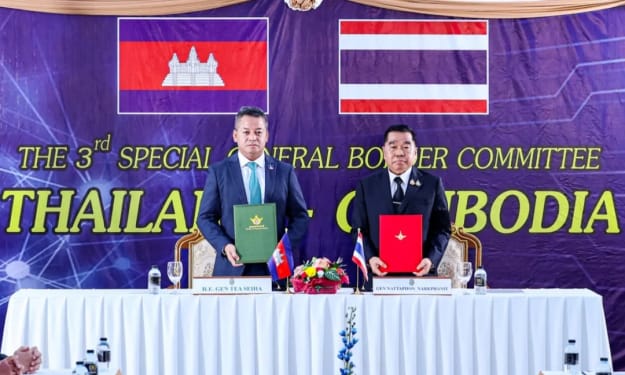
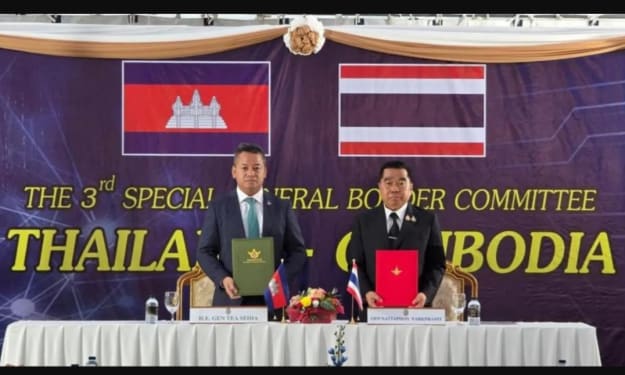
After more than three weeks of fierce combat along their shared frontier, Thailand and Cambodia have agreed to an immediate cease-fire, bringing a fragile halt to one of the most intense border conflicts in years. The truce, signed late on December 27, 2025, marks a crucial turning point in a dispute that has claimed over 100 lives, displaced hundreds of thousands of civilians, and drawn international concern for regional stability. �
By Salaar Jamaliabout a month ago in The Swamp
Afridi Slams Punjab Government for Blocking PTI Activities in Lahore. AI-Generated.
Former Pakistan cricket captain and Pakistan Tehreek-e-Insaf (PTI) leader Shahid Afridi has strongly criticised the Punjab government for what he described as the systematic blocking of PTI’s political activities in Lahore, calling it an attack on democratic rights and freedom of expression. Afridi’s remarks come amid heightened political tensions in Pakistan, where opposition parties continue to accuse provincial and federal authorities of suppressing dissent. Afridi’s Sharp Criticism Speaking to the media and sharing his views publicly, Afridi expressed deep concern over restrictions placed on PTI gatherings, rallies, and organisational meetings in Lahore. He argued that preventing a major political party from mobilising supporters reflects a fear of public opinion rather than a commitment to democracy. According to Afridi, political disagreement should be addressed through dialogue and the ballot box—not through administrative barriers, police deployments, or bans on assembly. He emphasised that Lahore, historically a political and cultural heart of Pakistan, should remain open to all political voices regardless of party affiliation. Lahore as a Political Symbol Lahore holds immense symbolic importance in Pakistan’s political landscape. It has long been a hub for rallies, protests, and mass movements across party lines. Afridi noted that restricting PTI activities in such a city sends a troubling message about the shrinking space for democratic participation. He added that when governments attempt to silence opposition voices, they risk alienating citizens and deepening political polarisation. Afridi warned that suppressive tactics often backfire, strengthening public sympathy for those being targeted rather than weakening them. PTI’s Ongoing Struggles Since the ouster of Imran Khan from office, PTI has faced significant hurdles, including arrests of leaders, legal challenges, and limitations on public gatherings. Afridi argued that these measures have gone beyond law enforcement and entered the realm of political victimisation. He stressed that PTI supporters have the same constitutional rights as any other citizens, including the right to peaceful assembly. Blocking rallies, he said, undermines confidence in institutions and fuels frustration among the youth—many of whom see PTI as a vehicle for political change. Call for Fair Political Competition Afridi urged the Punjab government to ensure a level playing field for all political parties. He maintained that true democracy thrives when competing ideas are allowed to reach the public freely. Rather than fearing opposition gatherings, governments should focus on governance, economic stability, and addressing public grievances. Drawing from his own background as a national sports hero, Afridi compared politics to sportsmanship—where rules must apply equally to all teams. He said selective enforcement of laws damages credibility and erodes trust in the system. Public Reaction and Political Climate Afridi’s comments quickly gained traction on social media, with supporters praising him for speaking out and critics accusing him of politicising issues. Regardless of differing views, his statement has reignited debate about civil liberties, political tolerance, and state power in Pakistan. Political analysts note that Pakistan’s current climate remains highly charged, with protests, court battles, and accusations dominating headlines. In such an environment, voices like Afridi’s—well-known beyond politics—carry added weight and influence public discourse. Warning Against Escalation Afridi also cautioned that continued restrictions could escalate tensions further. He argued that silencing political activity does not eliminate dissent; instead, it pushes it underground, making situations more volatile. Allowing peaceful expression, he said, is the safest and most democratic path forward. He called on authorities to prioritise stability through inclusion rather than exclusion, reminding them that democracy is strongest when institutions protect rights—even for opponents. Conclusion Shahid Afridi’s criticism of the Punjab government’s handling of PTI activities in Lahore highlights broader concerns about democratic freedoms in Pakistan. As political divisions deepen, his message underscores the need for tolerance, dialogue, and respect for constitutional rights. Whether one agrees with Afridi’s stance or not, his remarks reflect a growing public conversation about the limits of state authority and the importance of political openness. In a democracy, silencing voices rarely brings peace—listening to them often does.
By Fiaz Ahmed Brohiabout a month ago in The Swamp
N Korea, Russia Bound in ‘Blood’ of War: Kim Tells Putin in New Year Note. AI-Generated.
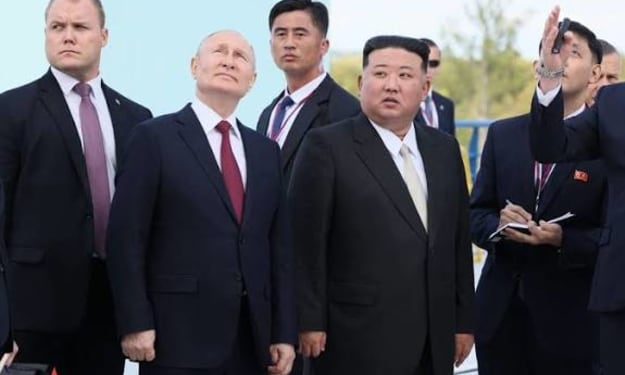
North Korea and Russia have strengthened their wartime camaraderie as Pyongyang’s leader Kim Jong Un extended a New Year message to Russian President Vladimir Putin, emphasizing the “blood bond” forged through conflict and shared geopolitical struggles. The note, released amid heightened tensions on the global stage, underscores the growing strategic alignment between the two nations as they navigate an increasingly polarized international environment. Kim Jong Un, in his message, praised Russia’s resilience and military determination in the ongoing Ukraine conflict, describing Moscow’s efforts as a “beacon of resistance” against Western influence. The North Korean leader expressed admiration for Russia’s “unflinching commitment to sovereignty,” framing it as a shared struggle that mirrors Pyongyang’s own historical challenges in defending its national identity and security. The rhetoric used by Kim in his message is significant, as it not only cements the personal rapport between the two leaders but also signals Pyongyang’s willingness to publicly endorse Russia’s military strategies. Analysts suggest that this move could indicate future coordination in defense, intelligence, or economic strategies, particularly as both nations face increasing international sanctions and diplomatic isolation. For Russia, Kim’s message serves multiple purposes. Domestically, it reinforces the Kremlin’s narrative that its military actions have global legitimacy and allies beyond Europe. Internationally, it demonstrates that Moscow is not alone in confronting what it perceives as Western hegemony, potentially deterring further sanctions or diplomatic pressures. The New Year note, in essence, positions North Korea as a sympathetic partner in Russia’s geopolitical ambitions, which may embolden Putin to continue his assertive policies without fear of diminishing alliances. The historical context of the relationship between North Korea and Russia provides further insight into the significance of Kim’s message. During the Cold War, Pyongyang maintained close ties with the Soviet Union, receiving military, economic, and political support. After the dissolution of the USSR, relations with Moscow cooled but never disappeared entirely. Recent years have seen a gradual re-engagement, especially as North Korea seeks to counterbalance the influence of the United States, South Korea, and Japan in East Asia. The New Year message appears to be the latest manifestation of this renewed alignment. Observers note that Kim’s statement also carries a symbolic message of defiance. By publicly associating with Russia during the Ukraine conflict, North Korea signals that it will resist Western criticism and sanctions while asserting its sovereign right to determine military and diplomatic priorities. This aligns with Pyongyang’s broader strategy of showcasing self-reliance and resilience, key pillars of its national ideology. The international response to Kim’s message has been cautious but observant. Western powers, including the United States and the European Union, have reiterated concerns about North Korea’s nuclear ambitions and the potential for increased military cooperation with Russia. Diplomatic circles are closely monitoring whether this message translates into tangible support, such as arms transfers, joint military exercises, or intelligence sharing, which could have significant implications for regional security. Furthermore, analysts are examining the timing of the message. Released at the start of a new year, the note sets the tone for 2026, signaling Pyongyang’s intention to remain actively engaged in global geopolitical narratives. The symbolic framing of a “blood bond” may resonate domestically within North Korea, reinforcing the leadership’s image as a steadfast protector of national interests while cultivating international prestige. In summary, Kim Jong Un’s New Year message to Vladimir Putin represents more than a mere diplomatic greeting; it is a strategic declaration of solidarity, resilience, and shared geopolitical outlook. By emphasizing the “blood bond” formed through conflict, North Korea positions itself as a committed ally of Russia, capable of influencing regional and potentially global security dynamics. As 2026 unfolds, the world will be watching closely to see how this alliance develops, what practical measures may emerge, and how other global powers respond to this unmistakable show of unity between two nations often at odds with Western interests.
By Fiaz Ahmed Brohiabout a month ago in The Swamp
Zelensky Plans to Meet Trump on Sunday for Talks on Ending Russian War. AI-Generated.
In a significant diplomatic development, Ukrainian President Volodymyr Zelensky has announced plans to meet former U.S. President Donald Trump this Sunday to discuss potential pathways to ending the ongoing war with Russia. The announcement has captured global attention, signaling a possible shift in the geopolitical dynamics surrounding the conflict that has gripped Eastern Europe for over two years. The meeting, scheduled to take place in Washington D.C., comes amid growing international pressure for a resolution to the war, which has resulted in tens of thousands of deaths, millions of displaced people, and widespread economic disruption. Zelensky’s initiative appears to be part of a broader effort to engage influential global figures who can support diplomatic solutions, while also emphasizing Ukraine’s agency in negotiating peace on its own terms. The Stakes of the Meeting Experts note that the Zelensky-Trump dialogue carries high stakes. While Trump is no longer in office, he maintains significant influence over U.S. domestic politics and a loyal base within the Republican Party. Analysts suggest that his insights and potential advocacy could shape Congressional perspectives, particularly in relation to military aid packages and sanctions against Russia. Ukrainian officials have emphasized that the meeting will focus primarily on diplomatic channels to de-escalate hostilities and to explore possible compromises that ensure Ukraine’s territorial integrity while addressing Russian security concerns. However, critics caution that any engagement with a former leader can carry risks, including political polarization and domestic controversy in both the U.S. and Ukraine. Historical Context The conflict in Ukraine began in 2022 following Russia’s full-scale invasion of its neighbor, igniting one of the most intense military confrontations in Europe since World War II. Despite multiple rounds of sanctions against Russia and ongoing support for Ukraine from Western allies, a lasting ceasefire has remained elusive. Trump’s administration, during his presidency, had complex relations with Ukraine, marked by both diplomatic cooperation and controversy. The 2019 impeachment proceedings involving a phone call to Zelensky underscore the sensitive nature of U.S.-Ukraine relations and suggest that this upcoming meeting will require careful navigation to avoid historical pitfalls. Global Reactions The announcement of the meeting has elicited mixed reactions worldwide. European leaders have expressed cautious optimism, seeing the dialogue as an opportunity to generate momentum toward peace. Russia, however, has responded with skepticism, framing the engagement as potentially symbolic rather than substantive. Kremlin officials have reiterated that any negotiations must include direct dialogue with Moscow, suggesting that Zelensky’s approach could face resistance from Russian authorities. Meanwhile, international media and policy analysts are closely monitoring the event, recognizing that even symbolic meetings can influence public opinion and diplomatic discourse. “The optics of this meeting are powerful,” said Dr. Elena Markova, a European foreign policy expert. “Even if no concrete agreements are reached, it signals Ukraine’s commitment to exploring all avenues for peace.” Potential Outcomes While it remains unclear what specific proposals will be discussed, several potential outcomes could arise from the meeting. These include discussions on a renewed ceasefire framework, adjustments to sanctions regimes, and strategies to secure humanitarian corridors for civilians affected by the conflict. Analysts also point to the possibility of U.S. political figures playing a role in advocating for Ukrainian interests in Congress, which could shape future funding and support for Kyiv. Observers are particularly attentive to Zelensky’s messaging following the meeting. A successful dialogue, even if preliminary, could strengthen his position domestically and internationally, portraying Ukraine as proactive in seeking peace while safeguarding its sovereignty. Conversely, perceived missteps or controversial statements could spark criticism and political fallout. Looking Ahead The Zelensky-Trump meeting underscores the increasingly complex landscape of international diplomacy surrounding the Ukraine conflict. As global powers weigh in, Ukraine continues to navigate a delicate balance between military resistance, diplomatic engagement, and domestic political considerations. Ultimately, the upcoming talks will likely serve as a barometer for the broader international community’s willingness to explore innovative approaches to resolving one of the most pressing conflicts of the 21st century. While no single meeting can end a war, the initiative highlights the importance of dialogue, strategic alliances, and creative diplomacy in addressing protracted conflicts that have far-reaching human, economic, and geopolitical consequences. As Sunday approaches, the world watches with anticipation, hopeful that dialogue, however challenging, may pave the way for a sustainable and peaceful resolution to a conflict that has already caused immense suffering.
By Fiaz Ahmed Brohiabout a month ago in The Swamp
Start writing...Thailand and Cambodia Agree on Ceasefire to End Weeks of Deadly Fighting . AI-Generated.
After weeks of escalating violence along their shared border, Thailand and Cambodia have agreed to a ceasefire aimed at ending deadly clashes that displaced civilians, strained diplomatic ties, and raised regional concerns in Southeast Asia. The agreement, announced following intensive diplomatic engagements, marks a significant step toward restoring calm in a region long affected by periodic border tensions rooted in historical disputes.
By Salaar Jamaliabout a month ago in The Swamp
US Contemplates Sending More Resources to Forcibly Board Oil Tanker Near Venezuela. AI-Generated.
Yemen’s long-running conflict has entered yet another tense phase as southern separatist groups report Saudi-led airstrikes near their positions, raising fears of renewed instability in a country already devastated by more than a decade of war. The reports come at a delicate moment, when fragile political arrangements and regional diplomacy had offered cautious hope for de-escalation. A Conflict Within a Conflict Yemen’s war is often described as a binary struggle between the internationally recognized government, backed by a Saudi-led coalition, and the Iran-aligned Houthi movement controlling much of the north. However, the reality on the ground is far more complex. In the south, separatist forces — primarily represented by the Southern Transitional Council (STC) — seek to re-establish an independent South Yemen, which existed until unification in 1990. Although the STC has at times been allied with Saudi Arabia against the Houthis, relations have frequently been strained. The separatists accuse Riyadh of prioritizing political control over genuine southern autonomy, while Saudi Arabia views a fragmented Yemen as a strategic risk along its southern border. Reports of Saudi Airstrikes According to statements from southern separatist officials and local sources, Saudi warplanes carried out airstrikes near STC-controlled positions in recent days. The strikes reportedly targeted areas close to military installations and checkpoints, though no independent confirmation has yet verified the full scale or intent of the attacks. Southern leaders claim the strikes were meant to pressure their forces amid political disagreements, rather than targeting Houthi positions. Saudi authorities have not issued a detailed public response, fueling speculation and uncertainty among local communities. Rising Tensions in the South The alleged airstrikes have intensified mistrust between Saudi Arabia and its former southern allies. For the STC, any military action against its forces is seen as a betrayal of earlier understandings that recognized southern political aspirations under the Riyadh Agreement — a Saudi-brokered deal intended to integrate southern forces into a unified government. Analysts warn that such incidents could destabilize already fragile security arrangements, particularly in strategic southern provinces that host ports, oil infrastructure, and key maritime routes near the Bab el-Mandeb Strait — one of the world’s most important shipping lanes. Regional and Strategic Implications Saudi Arabia’s involvement in Yemen is driven by both security concerns and regional competition. Riyadh fears that instability in the south could create power vacuums exploited by extremist groups or hostile regional actors. At the same time, maintaining influence over Yemen’s political future remains a strategic priority. However, striking or pressuring southern separatists risks opening a new front in the conflict. Instead of confronting the Houthis alone, Saudi Arabia could find itself managing multiple rival forces, each with different political goals and local loyalties. For regional observers, the situation highlights how Yemen’s war has evolved from a conventional intervention into a tangled web of alliances and rivalries. Civilian Impact and Humanitarian Concerns As always, civilians bear the heaviest cost. Residents in areas near the reported airstrikes described fear, displacement, and renewed anxiety after months of relative calm. Yemen remains one of the world’s worst humanitarian crises, with millions dependent on aid for survival. Any escalation — even limited air operations — risks disrupting aid deliveries, damaging infrastructure, and worsening food insecurity. Human rights groups have repeatedly called for restraint, urging all parties to avoid actions that could endanger civilians or derail peace efforts. Diplomatic Efforts at Risk The reports of Saudi airstrikes come at a time when diplomatic efforts, including indirect talks between Saudi Arabia and the Houthis, had reduced cross-border attacks and violence in some regions. A breakdown in relations with southern separatists could undermine these fragile gains. Experts argue that a lasting solution in Yemen must address not only the north-south divide but also internal political fragmentation. Ignoring southern grievances or responding with force could push separatists toward unilateral action, further complicating peace negotiations. What Comes Next? Whether the reported airstrikes represent a temporary show of force or a shift in Saudi strategy remains unclear. Much will depend on behind-the-scenes diplomacy and whether Riyadh and the STC can repair trust. For Yemen, the episode is a reminder that peace remains elusive. Without inclusive political dialogue that accounts for all major factions — including southern separatists — the country risks slipping back into wider conflict. As the world’s attention often drifts elsewhere, Yemen’s complex war continues to evolve, demanding renewed international focus before another cycle of violence takes hold.
By Fiaz Ahmed Brohiabout a month ago in The Swamp