
Somalia Demands Israel Withdraw Somaliland Recognition: A New Flashpoint in the Horn of Africa
Sovereignty, strategy, and shifting alliances collide in a growing Horn of Africa dispute

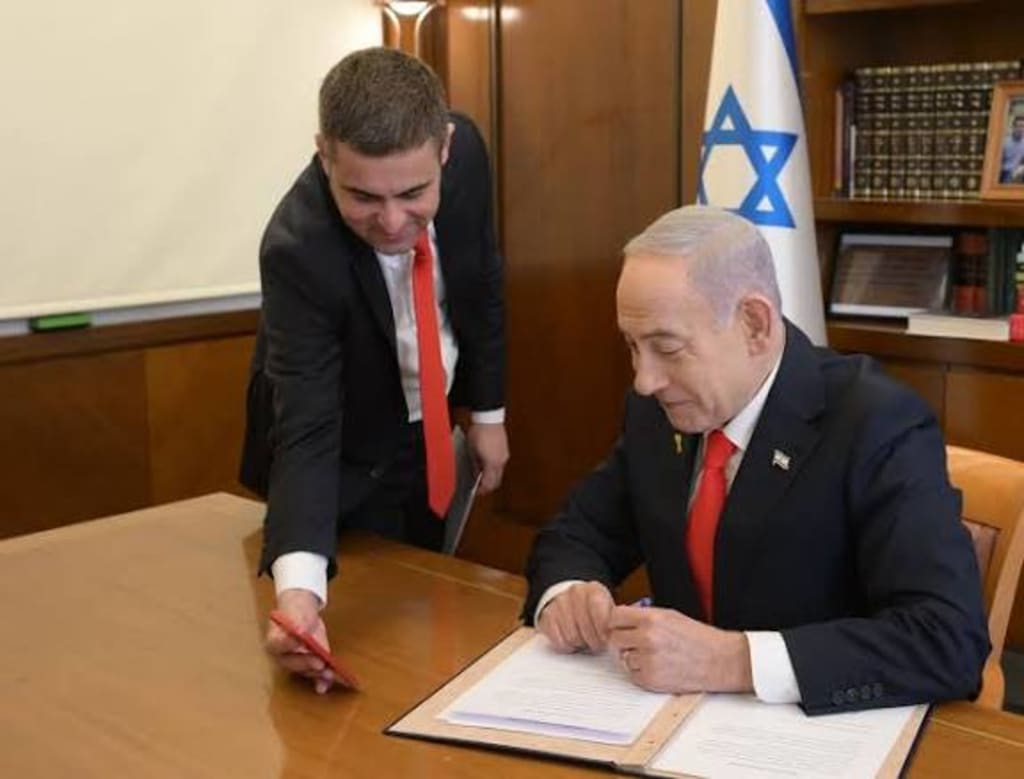
The Horn of Africa has once again become the center of international attention as Somalia formally demanded that Israel withdraw any recognition or engagement with Somaliland, the self-declared breakaway region in northern Somalia. The move highlights deep-rooted sovereignty disputes, shifting geopolitical alliances, and growing competition among global and regional powers in one of the world’s most strategically important regions.
Understanding the Somaliland Question
Somaliland declared independence from Somalia in 1991 following the collapse of the central government. Since then, it has maintained its own administration, security forces, and democratic elections. Despite this relative stability, no major international body or state officially recognizes Somaliland as an independent country. Somalia continues to view Somaliland as an integral part of its sovereign territory.
For Mogadishu, any foreign recognition or diplomatic engagement with Somaliland is seen as a direct violation of Somalia’s territorial integrity and international law.
Why Israel Is at the Center of the Dispute
Reports suggesting that Israel may be exploring diplomatic or strategic engagement with Somaliland have alarmed Somalia’s federal government. Although Israel has not publicly announced formal recognition, Somalia fears that even informal acknowledgment could set a dangerous precedent.
Somali officials argue that such actions undermine Somalia’s unity and embolden separatist movements. In response, Somalia has issued strong diplomatic messages demanding that Israel respect Somalia’s internationally recognized borders.
Strategic Importance of Somaliland
Somaliland occupies a highly strategic location along the Gulf of Aden, near one of the world’s busiest maritime trade routes. Control or influence in this region offers access to vital shipping lanes connecting Europe, Asia, and the Middle East.
This strategic positioning has attracted growing interest from global and regional players seeking military, economic, and security partnerships. Somaliland’s Berbera port, in particular, has become a focal point for international investment and strategic planning.
Somalia’s Diplomatic Stance
Somalia’s government has emphasized that recognition of Somaliland violates international norms and African Union principles, which prioritize the preservation of colonial-era borders to prevent instability. Officials warn that external involvement risks reigniting conflict in a country that has spent decades recovering from civil war.
Somalia has called on the international community to engage only through Mogadishu and respect its sovereignty, arguing that fragmented diplomacy could weaken regional stability.
Regional and Global Implications
The dispute extends beyond Somalia and Israel. It reflects broader geopolitical shifts in the Horn of Africa, where countries compete for influence amid fragile political landscapes. Regional tensions have already been heightened by conflicts in neighboring Ethiopia and Sudan, as well as by rival interests of global powers.
Any recognition of Somaliland by a state like Israel could encourage other nations to follow suit, potentially redrawing political alliances and triggering diplomatic fallout across Africa and the Middle East.
Somaliland’s Perspective
From Somaliland’s viewpoint, international engagement is long overdue recognition of its political stability and governance compared to the rest of Somalia. Leaders in Hargeisa argue that their decades-long peace, democratic processes, and economic development justify independent status.
Somaliland supporters see foreign engagement as validation of their self-determination, even if formal recognition remains elusive.
What Comes Next?
The situation places Israel in a delicate position. Balancing diplomatic interests while avoiding destabilization in the Horn of Africa will require careful navigation. Somalia, meanwhile, is likely to intensify diplomatic efforts through regional organizations and international forums.
The dispute also raises broader questions about sovereignty, self-determination, and the role of external powers in fragile regions.
Conclusion
Somalia’s demand that Israel withdraw any recognition of Somaliland underscores the fragile balance of power in the Horn of Africa. As global interest in the region grows, unresolved historical disputes risk becoming flashpoints for wider geopolitical tensions.
Whether this issue escalates into a larger diplomatic confrontation or leads to renewed dialogue will depend on how regional actors and international partners respond. What remains clear is that Somaliland’s status continues to shape the political future of Somalia—and the strategic calculations of the world beyond its borders.
About the Creator
Fiaz Ahmed Brohi
I am a passionate writer with a love for exploring and creating content on trending topics. Always curious, always sharing stories that engage and inspire.
Keep reading
More stories from Fiaz Ahmed Brohi and writers in The Swamp and other communities.
Russia Using Belarus Territory to Bypass Ukraine’s Defences, Says Zelenskyy
The war in Ukraine has entered another complex and dangerous phase as President Volodymyr Zelenskyy warned that Russia is increasingly using Belarusian territory to bypass Ukrainian defences. This allegation has raised fresh concerns across Europe, signaling a possible expansion of the conflict’s geographic scope and adding pressure on NATO’s eastern flank. According to Zelenskyy, Moscow is exploiting its close alliance with Belarus to create new military routes, allowing Russian forces to maneuver around fortified Ukrainian positions. While Belarus has not officially entered the war as a combatant, its role as a logistical and strategic partner to Russia is becoming more pronounced, reshaping the dynamics of the ongoing conflict. A Strategic Shift in the Battlefield Ukraine has spent months reinforcing its defensive lines, particularly along the eastern and southern fronts where Russian assaults have been most intense. However, Zelenskyy argues that Russia’s use of Belarusian territory provides a strategic shortcut, enabling troops, weapons, and equipment to move more freely and threaten Ukraine from unexpected directions. Belarus shares a long northern border with Ukraine, making it a crucial geographical factor. Early in the war, Russian forces launched attacks toward Kyiv from Belarus, a move that shocked many observers. Although those forces later withdrew, Ukraine never fully ruled out the possibility of renewed pressure from the north. Zelenskyy’s latest comments suggest that this threat is once again becoming real, even if indirectly. Rather than launching a full-scale invasion from Belarus, Russia may be using the territory to reposition forces, train troops, and store equipment, complicating Ukraine’s defense planning. Belarus’s Role: Silent Partner or Active Enabler? Belarusian President Alexander Lukashenko has repeatedly claimed that his country does not want to be drawn directly into the war. Yet, evidence suggests Belarus continues to allow Russian forces access to its bases, airspace, and infrastructure. Military exercises involving Russian troops on Belarusian soil have become frequent, sending warning signals to Kyiv and Western allies. For Ukraine, this creates a constant state of uncertainty. Defending every possible northern approach requires resources, manpower, and vigilance—assets that are already stretched thin due to intense fighting elsewhere. Zelenskyy has emphasized that even without firing a single shot, Belarus’s cooperation with Russia undermines regional security and gives Moscow tactical advantages. This, he argues, makes Belarus complicit in Russia’s aggression. Implications for Ukraine’s Defence Strategy Ukraine’s military leadership now faces a difficult balancing act. Strengthening defenses in the north could weaken positions in the east and south, where active combat continues daily. Russia’s ability to use Belarusian territory forces Ukraine to spread its forces wider, reducing the effectiveness of concentrated defense lines. At the same time, Ukraine continues to rely heavily on Western military aid, including air defense systems, surveillance technology, and long-range weapons. Zelenskyy has used this latest warning to renew calls for faster and stronger support from allies, stressing that Russia’s evolving tactics require an equally adaptive response. Regional and Global Reactions Zelenskyy’s remarks have resonated beyond Ukraine. NATO members bordering Belarus, such as Poland and Lithuania, are closely monitoring the situation. Any increased military activity in Belarus raises alarms about spillover risks and potential provocations near NATO borders. Western leaders have consistently warned Belarus against direct involvement in the war, suggesting that such a move would trigger harsher sanctions. However, as Russia continues to use Belarusian territory indirectly, questions arise about how the international community should respond to this gray-zone cooperation. Some analysts argue that Russia’s strategy is designed to test Western resolve while avoiding immediate escalation. By keeping Belarus formally out of the war, Moscow may believe it can exploit strategic benefits without provoking a stronger international backlash. A War with Expanding Dimensions Zelenskyy’s warning underscores a broader reality: the war in Ukraine is no longer confined to traditional front lines. It is increasingly shaped by alliances, geography, and indirect involvement from neighboring states. The use of Belarusian territory highlights how modern conflicts can evolve beyond declared battlefields, making them harder to contain and resolve. As Ukraine continues to defend its sovereignty, the situation in Belarus remains a critical factor. Whether Minsk chooses to deepen its involvement or maintain its current role could significantly influence the war’s next phase. Conclusion Russia’s alleged use of Belarusian territory to bypass Ukraine’s defences marks a troubling development in an already complex conflict. Zelenskyy’s warning serves as a reminder that the war’s consequences extend far beyond Ukraine’s borders. As geopolitical tensions rise, the international community faces renewed urgency to address not only the battlefield realities but also the strategic networks enabling the conflict. For Ukraine, vigilance on all fronts—military, diplomatic, and political—remains essential as it confronts an adversary willing to adapt and expand its tactics in pursuit of dominance.
By Fiaz Ahmed Brohi23 days ago in The Swamp
Saudi Arabia Electric Wheelchair Market Size & Forecast 2025–2033
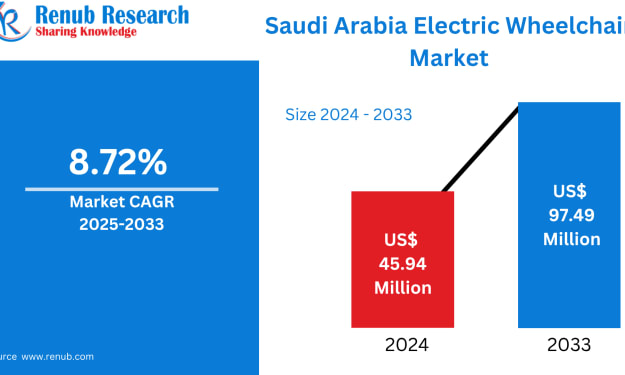
Saudi Arabia Electric Wheelchair Market Overview The Saudi Arabia Electric Wheelchair Market is on a strong growth trajectory, supported by expanding healthcare infrastructure, an aging population, and national reforms aimed at improving accessibility and quality of life. According to Renub Research, the market is projected to grow from US$ 45.94 million in 2024 to US$ 97.49 million by 2033, registering a CAGR of 8.72% during 2025–2033.
By jaiklin Fanandishabout 12 hours ago in The Swamp



Comments
There are no comments for this story
Be the first to respond and start the conversation.