
Yemen’s Saudi-Led Coalition Warns STC Against Moves in Hadramout
Rising tensions in eastern Yemen expose fragile alliances and the unresolved struggle for power

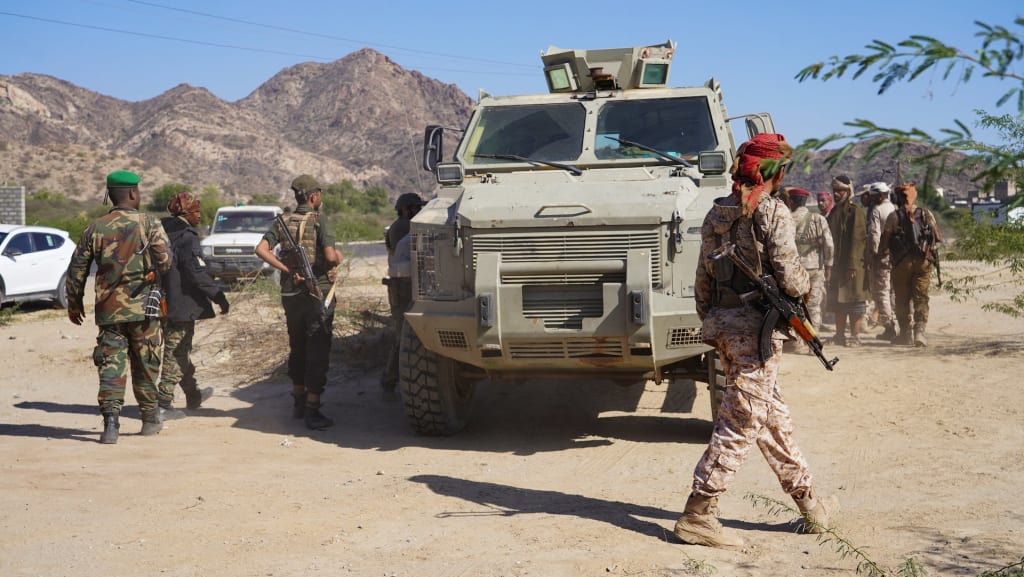
Yemen’s long-running conflict has entered yet another complex phase as the Saudi-led coalition has issued a clear warning to the Southern Transitional Council (STC) over its political and military activities in Hadramout province. The development highlights deep fractures within the anti-Houthi camp and underscores how unresolved rivalries continue to threaten stability in a country already devastated by years of war.
Hadramout, Yemen’s largest governorate by area, occupies a strategic position in the country’s east. Rich in natural resources and home to key ports and oil facilities, the province has largely avoided the intense fighting seen in other regions. However, its relative calm has made it a focal point for competing political ambitions. The recent warning from the Saudi-led coalition suggests growing concern that the STC’s actions could destabilize the area and undermine broader efforts to maintain unity among forces opposed to the Houthi movement.
The Southern Transitional Council, backed primarily by the United Arab Emirates, has long advocated for southern autonomy or outright independence. While the STC is technically aligned with the internationally recognized Yemeni government and the Saudi-led coalition against the Houthis, its goals often clash with those of Riyadh and President Abdrabbuh Mansur Hadi’s successors. In recent years, the STC has consolidated control over several southern regions, including Aden, and has sought to expand its influence into Hadramout.
According to analysts, the coalition’s warning reflects fears that unilateral moves by the STC—such as mobilizing armed units or attempting to assert administrative control—could trigger internal conflict. Hadramout has its own local power structures, tribal networks, and security forces that do not necessarily align with the STC’s southern separatist agenda. Any attempt to impose authority could spark resistance, drawing the province into the broader turmoil engulfing Yemen.
Saudi Arabia’s role in Hadramout has traditionally focused on security and counterterrorism, particularly against extremist groups like Al-Qaeda in the Arabian Peninsula. Riyadh has invested heavily in stabilizing the region, viewing it as a buffer against chaos spreading from western Yemen. From this perspective, the STC’s ambitions represent a direct challenge to Saudi interests and to the coalition’s stated goal of preserving Yemen’s territorial integrity.
The warning also exposes the delicate balance within the Saudi-led coalition itself. While Saudi Arabia and the UAE remain strategic partners, they have backed different local actors in Yemen, leading to overlapping and sometimes conflicting agendas. The STC’s rise has been widely attributed to Emirati support, whereas Saudi Arabia has continued to endorse the central government framework. Hadramout, therefore, has become a testing ground for how far these differences can be managed without open confrontation.
For local residents, the political maneuvering raises serious concerns. Hadramout’s population has enjoyed relative stability compared to other regions, allowing limited economic activity and social life to continue despite the national crisis. Any escalation could disrupt livelihoods, displace communities, and open the door to renewed violence. Civil society voices in the province have repeatedly called for keeping Hadramout neutral, warning that importing external conflicts would only worsen humanitarian conditions.
International observers see the situation as emblematic of Yemen’s broader problem: the absence of a unified vision for the country’s future. Even as diplomatic efforts to end the war with the Houthis gain momentum, divisions among anti-Houthi factions threaten to derail progress. The coalition’s warning to the STC may be an attempt to enforce discipline and prevent fragmentation, but it also highlights how fragile existing alliances remain.
Looking ahead, much will depend on whether dialogue can prevail over confrontation. The STC faces a choice between pursuing its ambitions through negotiation or risking isolation by defying the coalition’s warning. At the same time, Saudi Arabia and its partners must address southern grievances in a meaningful way if they hope to maintain cohesion. Ignoring these tensions could lead to new fronts of conflict, complicating an already dire situation.
In essence, the dispute over Hadramout is not just about territorial control; it is about competing visions of Yemen’s identity and governance. As the Saudi-led coalition cautions the STC against destabilizing moves, the episode serves as a reminder that peace in Yemen will require more than ending battles—it will demand reconciling deeply rooted political aspirations. Until then, provinces like Hadramout will remain at the center of a fragile and uncertain future.
About the Creator
Fiaz Ahmed Brohi
I am a passionate writer with a love for exploring and creating content on trending topics. Always curious, always sharing stories that engage and inspire.
Keep reading
More stories from Fiaz Ahmed Brohi and writers in The Swamp and other communities.
Somalia Demands Israel Withdraw Somaliland Recognition: A New Flashpoint in the Horn of Africa
The Horn of Africa has once again become the center of international attention as Somalia formally demanded that Israel withdraw any recognition or engagement with Somaliland, the self-declared breakaway region in northern Somalia. The move highlights deep-rooted sovereignty disputes, shifting geopolitical alliances, and growing competition among global and regional powers in one of the world’s most strategically important regions. Understanding the Somaliland Question Somaliland declared independence from Somalia in 1991 following the collapse of the central government. Since then, it has maintained its own administration, security forces, and democratic elections. Despite this relative stability, no major international body or state officially recognizes Somaliland as an independent country. Somalia continues to view Somaliland as an integral part of its sovereign territory. For Mogadishu, any foreign recognition or diplomatic engagement with Somaliland is seen as a direct violation of Somalia’s territorial integrity and international law. Why Israel Is at the Center of the Dispute Reports suggesting that Israel may be exploring diplomatic or strategic engagement with Somaliland have alarmed Somalia’s federal government. Although Israel has not publicly announced formal recognition, Somalia fears that even informal acknowledgment could set a dangerous precedent. Somali officials argue that such actions undermine Somalia’s unity and embolden separatist movements. In response, Somalia has issued strong diplomatic messages demanding that Israel respect Somalia’s internationally recognized borders. Strategic Importance of Somaliland Somaliland occupies a highly strategic location along the Gulf of Aden, near one of the world’s busiest maritime trade routes. Control or influence in this region offers access to vital shipping lanes connecting Europe, Asia, and the Middle East. This strategic positioning has attracted growing interest from global and regional players seeking military, economic, and security partnerships. Somaliland’s Berbera port, in particular, has become a focal point for international investment and strategic planning. Somalia’s Diplomatic Stance Somalia’s government has emphasized that recognition of Somaliland violates international norms and African Union principles, which prioritize the preservation of colonial-era borders to prevent instability. Officials warn that external involvement risks reigniting conflict in a country that has spent decades recovering from civil war. Somalia has called on the international community to engage only through Mogadishu and respect its sovereignty, arguing that fragmented diplomacy could weaken regional stability. Regional and Global Implications The dispute extends beyond Somalia and Israel. It reflects broader geopolitical shifts in the Horn of Africa, where countries compete for influence amid fragile political landscapes. Regional tensions have already been heightened by conflicts in neighboring Ethiopia and Sudan, as well as by rival interests of global powers. Any recognition of Somaliland by a state like Israel could encourage other nations to follow suit, potentially redrawing political alliances and triggering diplomatic fallout across Africa and the Middle East. Somaliland’s Perspective From Somaliland’s viewpoint, international engagement is long overdue recognition of its political stability and governance compared to the rest of Somalia. Leaders in Hargeisa argue that their decades-long peace, democratic processes, and economic development justify independent status. Somaliland supporters see foreign engagement as validation of their self-determination, even if formal recognition remains elusive. What Comes Next? The situation places Israel in a delicate position. Balancing diplomatic interests while avoiding destabilization in the Horn of Africa will require careful navigation. Somalia, meanwhile, is likely to intensify diplomatic efforts through regional organizations and international forums. The dispute also raises broader questions about sovereignty, self-determination, and the role of external powers in fragile regions. Conclusion Somalia’s demand that Israel withdraw any recognition of Somaliland underscores the fragile balance of power in the Horn of Africa. As global interest in the region grows, unresolved historical disputes risk becoming flashpoints for wider geopolitical tensions. Whether this issue escalates into a larger diplomatic confrontation or leads to renewed dialogue will depend on how regional actors and international partners respond. What remains clear is that Somaliland’s status continues to shape the political future of Somalia—and the strategic calculations of the world beyond its borders.
By Fiaz Ahmed Brohi22 days ago in The Swamp



Comments
There are no comments for this story
Be the first to respond and start the conversation.