
Thailand and Cambodia Agree Ceasefire After Weeks of Deadly Clashes
A fragile truce halts border violence, offering hope for peace after weeks of escalating conflict


A fragile pause brings hope after one of the region’s most serious border escalations
After weeks of deadly fighting along their disputed border, Thailand and Cambodia have agreed to an immediate ceasefire, offering a rare moment of calm in a conflict that has displaced hundreds of thousands and raised regional concerns. The agreement, announced in late December, marks a critical step toward easing tensions between the two Southeast Asian neighbors after violence spiraled into one of the most serious confrontations in years.
While the ceasefire has been welcomed domestically and internationally, experts caution that it is only a temporary solution to a deep-rooted dispute that has flared repeatedly over decades.
How the Conflict Escalated
The latest round of violence began earlier this month when skirmishes along remote sections of the Thailand-Cambodia border quickly escalated into sustained military clashes. Both sides accused each other of provoking the conflict, and within days, heavy artillery and air power were deployed.
Border villages became battlegrounds, forcing families to flee with little warning. According to officials, dozens of people were killed, and nearly one million civilians were displaced, making this one of the most severe episodes in recent memory.
The fighting shattered a fragile truce that had held earlier in the year, exposing just how volatile the situation remains.
A Border Shaped by History
The Thailand-Cambodia border dispute is not new. Its roots trace back to colonial-era maps and competing interpretations of territorial boundaries. Over time, disagreements have focused on land surrounding ancient temple complexes, which carry enormous cultural and national significance for both countries.
Sites such as Preah Vihear and Ta Muen Thom are more than historical landmarks — they are symbols of identity and sovereignty. This symbolism has fueled nationalist sentiment on both sides, making compromise politically sensitive and emotionally charged.
What the Ceasefire Agreement Includes
The ceasefire officially took effect at midday on December 27 following high-level talks between defense officials from both nations. The agreement outlines several key commitments:
Immediate cessation of hostilities, including artillery fire and air operations
No further troop movements or reinforcements along the border
Protection of civilians and safe passage for displaced residents returning home
Humanitarian coordination, including demining efforts in affected areas
Confidence-building measures, such as prisoner releases once the ceasefire holds
Thailand also agreed to return detained Cambodian soldiers after a 72-hour verification period, a gesture seen as a sign of goodwill.
Humanitarian Impact on Border Communities
For civilians living near the border, the ceasefire offers desperately needed relief. Entire villages were evacuated as shelling intensified, and schools, markets, and farms were abandoned.
Many families remain in temporary shelters, uncertain whether it is truly safe to return. Infrastructure damage, unexploded ordnance, and economic disruption will likely affect these communities long after the fighting stops.
Local economies dependent on cross-border trade and tourism have also suffered. Border closures halted commerce, while regional tourism — particularly near historic sites — declined sharply due to safety concerns.
Regional and International Response
The ceasefire has been widely welcomed by the international community. Members of ASEAN played a behind-the-scenes role in encouraging dialogue, emphasizing regional stability and cooperation.
Major global powers, including the United States and China, urged restraint during the fighting, reflecting broader concerns about security in Southeast Asia. Malaysia also contributed diplomatic support, reinforcing ASEAN’s role as a mediator in regional disputes.
Why This Ceasefire Matters
While the ceasefire does not resolve the underlying territorial disagreement, it prevents further bloodshed and opens the door to renewed diplomacy. Analysts say sustained peace will require:
Clearer border demarcation
Ongoing military-to-military communication
Legal and diplomatic frameworks to manage disputes
Reduced nationalist rhetoric on both sides
Without these measures, the risk of future flare-ups remains high.
What Comes Next
Officials from both Thailand and Cambodia have pledged to continue negotiations through bilateral talks and joint committees. Confidence-building efforts will be crucial in the coming weeks as observers monitor compliance with the ceasefire.
For now, the agreement represents a pause in violence, not a permanent resolution. Still, for the thousands affected by the fighting, even a fragile peace offers hope — a chance to return home, rebuild livelihoods, and begin healing after weeks of fear and uncertainty.
Final Thoughts
The Thailand-Cambodia ceasefire is a reminder that diplomacy, even after violence erupts, remains possible. While challenges lie ahead, the agreement signals a shared recognition that continued conflict benefits no one. Whether this moment leads to lasting peace will depend on sustained political will, dialogue, and respect for the lives caught between borders.
About the Creator
Asad Ali
I'm Asad Ali, a passionate blogger with 3 years of experience creating engaging and informative content across various niches. I specialize in crafting SEO-friendly articles that drive traffic and deliver value to readers.
The Forsyth House Fire
Since 1851, Forsyth House has stood on the corner of Union Street and Gordon Street in the heart of Glasgow. Its iconic, or was... because on Sunday 8th of March, 2026, a fire broke out in a small, seemingly un-named shop in the building and tore all that history down. As I write, the rubble is still unsettled and the street is still blocked off. Central Station is quiet on the upper level, and around 30 small businesses have quite literally gone up in smoke.
By S. A. Crawford3 days ago in The Swamp
UK orders 37 artillery weapon systems for RCH 155
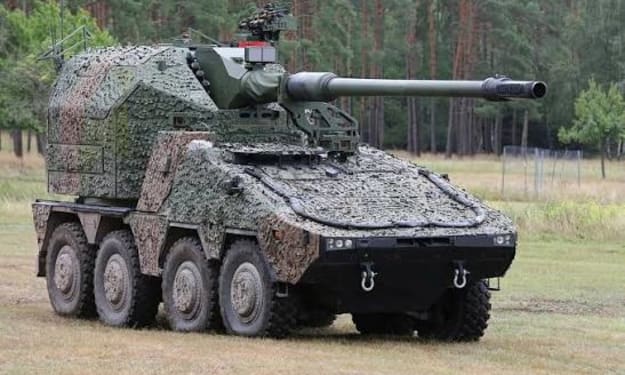
The British Army has taken a significant step toward modernising its artillery forces, placing an order for 37 artillery weapon systems in support of its next‑generation Remote Controlled Howitzer (RCH 155) programme. The £53 million contract, awarded by the Organisation for Joint Armament Co‑operation (OCCAR) on behalf of the British Army, represents a long‑lead production agreement that will supply key components of the RCH 155’s artillery modules and support the early phases of the Mobile Fires Platform capability. Officials describe the procurement as part of a broader effort to replace the Army’s legacy self‑propelled guns and restore artillery lethality aligned with modern operational requirements. The RCH 155, mounted on the Boxer armoured vehicle chassis, is envisioned as a highly mobile 155 mm howitzer capable of firing on the move, striking targets at extended ranges and improving survivability in high‑intensity conflict environments. Closing the Capability Gap The British Army’s artillery fleet has been challenged in recent years by the retirement or transfer of older systems. In particular, its fleet of AS‑90 self‑propelled guns was donated to allied forces, notably to support Ukraine’s defence against Russian aggression. This has created a gap in the Army’s long‑range cannon artillery capability that the RCH 155 is intended to fill. To bridge this gap, the Army initially procured 14 Archer artillery systems from Sweden as an interim solution. While useful, these systems do not fully match the strategic depth and advanced features expected of the future Mobile Fires Platform. The RCH 155’s advanced automation, mobility, and firepower are designed to address that shortfall. What the New Order Entails The recent order for 37 weapon systems does not equate to 37 complete howitzer vehicles; rather, it focuses on the production of the artillery gun modules and related subsystems that will eventually be integrated into full vehicles. These include the 155 mm barrel, recoil mechanisms, automated loading systems, breeches and other critical artillery elements. The contract also supports significant investment in the UK’s defence industrial base, particularly in gun barrel manufacturing capacity. Around £30 million of the contract’s value is allocated to expanding facilities such as Rheinmetall’s “Gun Hall” in Telford, which is expected to create skilled jobs and bolster sovereign production capability. By securing these long‑lead items now, the Ministry of Defence (MoD) aims to mitigate future production delays and ensure that the RCH 155 programme progresses smoothly. Long‑lead contracts are a common procurement practice in defence when key components must be manufactured well in advance of final assembly and delivery. Technical Edge and Operational Promise The RCH 155 system itself represents a leap forward in artillery technology compared with legacy guns. Developed by ARTEC GmbH—a joint venture between German and European defence firms—and integrated into the Boxer wheeled chassis, the RCH 155 combines automation, mobility and firepower. Advanced features include fully automated loading, remote operation of the gun module, and the ability to execute rapid “shoot‑and‑scoot” manoeuvres that reduce vulnerability to counter‑battery fire. The system is expected to fire up to eight rounds per minute and hit targets at ranges up to around 70 km depending on ammunition type. Mounted on a wheeled vehicle capable of traversing road and off‑road terrain at speeds up to 100 km/h, this mobility is a crucial factor in modern artillery concepts, offering rapid repositioning and enhanced tactical flexibility. Industrial and Strategic Dimensions The RCH 155 procurement is not solely about military capability; it also reflects strategic defence industrial considerations. The UK’s investment in domestic production lines and technological infrastructure aims to enhance sovereign manufacturing capability and reduce reliance on external suppliers. The expansion of facilities like the Telford gun barrel plant is expected to sustain skilled employment and anchor artillery production within the UK industrial base. This is seen as part of a broader effort to strengthen the UK’s defence supply chain, creating resilience against geopolitical disruptions and aligning production capacity with long‑term military needs. The collaboration with Germany under OCCAR also underscores continued bilateral cooperation on major defence equipment, as both nations look to standardise systems and share testing and evaluation data. Uncertainties and Next Steps Despite the recent contract award, the overall scale and timeline of the RCH 155 programme remain subject to further decisions. The MoD has previously stated that definitive delivery dates and fleet sizes are still under assessment, with the programme expected to achieve initial operating capability later in the decade once full production decisions are taken. In the interim, the Army will continue trials and evaluation of prototype systems to inform future procurement phases. Assessments carried out jointly with German partners will help shape final configurations and operational requirements. The long‑lead contract for 37 weapon systems symbolises confidence in the programme’s direction, even if the complete buy plan has yet to be confirmed. Broader Context The push to renew artillery capabilities is driven by evolving battlefield realities and lessons learned from recent conflicts, including the importance of long‑range fires and rapid manoeuvre artillery on modern battlefields. The RCH 155 is part of an emerging generation of self‑propelled artillery systems that prioritise automation, mobility, and survivability. As the British Army moves toward finalising production contracts and preparing for future delivery, the 37 weapon systems order stands as a key milestone in a long‑term effort to equip ground forces with agile and potent fire support.
By Fiaz Ahmed 3 days ago in The Swamp
Pandora’s Burden
“My brother warned me to not accept gifts from the one who commissioned you,” said Epimetheus to the woman clad in silvery raiments standing at the entrance to the temple. Her silver tiara and the silver rings on her fingers and toes glinted in the firelight cast by torches set on either side of the doorway. Lingering in the shadows, beyond the reach of the flames as she was, he could not tell what she held in her hands. At first what appeared to be a box was perhaps a funerary urn, or maybe merely an apple.
By J. Otis Haas3 days ago in Fiction



Comments
There are no comments for this story
Be the first to respond and start the conversation.