Salaar Jamali
Stories (55)
Filter by community
Highlights From New Year’s Eve Celebrations Around the Globe . AI-Generated.
As the calendar turned and a new year began, cities across the world erupted in color, music, and emotion, offering a powerful reminder of humanity’s shared traditions and diverse cultural expressions. New Year’s Eve is one of the few moments when billions of people, regardless of geography or background, pause together to mark the passage of time. The highlights from this year’s global celebrations reflected not only joy and spectacle, but also resilience, reflection, and hope for the future.
By Salaar Jamali11 days ago in Journal
See NYE Celebrations Around the World as 2025 Comes to an End. AI-Generated.
As the final hours of 2025 tick away, cities across the globe light up with color, sound, and shared anticipation. New Year’s Eve (NYE) is more than a calendar milestone—it is a worldwide moment of reflection, renewal, and collective hope. From iconic fireworks over famous skylines to deeply rooted cultural rituals, celebrations marking the end of 2025 reveal how diverse yet interconnected the world truly is.
By Salaar Jamali11 days ago in History
After Saudi Arabia’s Yemen Strike, UAE Rejects Support for Separatists: A Turning Point in Gulf Relations. AI-Generated.
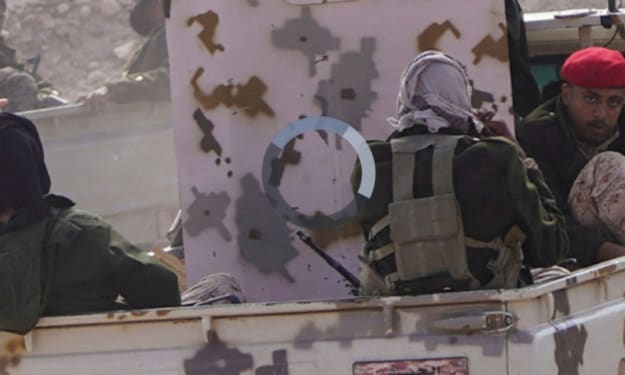
In a dramatic escalation that has stunned Middle Eastern policymakers and analysts alike, tensions between two of the Gulf’s most powerful allies — Saudi Arabia and the United Arab Emirates (UAE) — have erupted over developments in the long-running conflict in Yemen. At the heart of the crisis is a Saudi-led airstrike on Yemen’s Mukalla port, an accusation that triggered Abu Dhabi’s rejection of claims that it has been arming southern Yemeni separatists, and prompted a swift announcement that UAE forces would withdraw from Yemen. �
By Salaar Jamali11 days ago in The Swamp
PLA Holds Drills Around Taiwan in Warning to ‘Independence Forces’ After U.S. Arms Deal. AI-Generated.
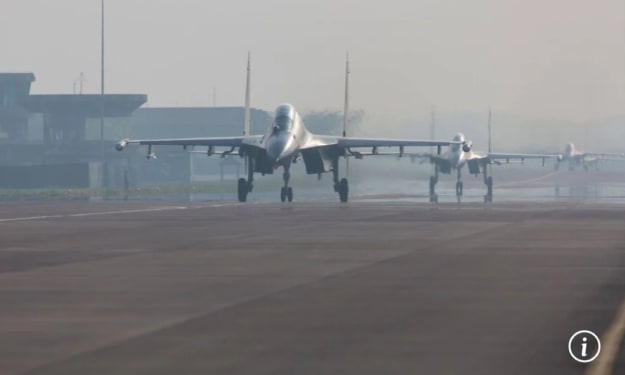
China’s People’s Liberation Army (PLA) has conducted a new round of military drills around Taiwan, issuing a sharp warning to what Beijing calls “independence forces” following a fresh arms deal between the United States and the self-governed island. The exercises underscore rising tensions in the Taiwan Strait, as military signaling intensifies alongside diplomatic friction between China, the United States, and Taiwan.
By Salaar Jamali14 days ago in The Swamp
China Launches War Games Around Taiwan as Island Vows to Defend Democracy. AI-Generated.
China has launched a new round of large-scale military war games around Taiwan, sharply escalating tensions in the Taiwan Strait and prompting a firm response from Taipei, which has vowed to defend its democratic system and way of life. The exercises, announced by China’s military authorities, involve coordinated operations by naval, air, and missile forces and are being framed by Beijing as a necessary response to what it calls separatist activity and foreign interference.
By Salaar Jamali14 days ago in The Swamp
China to Stage Drills Around Taiwan in ‘Stern Warning’ to External Forces . AI-Generated.
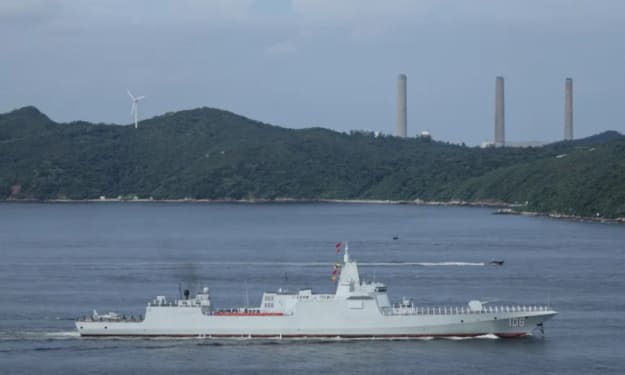
China has announced plans to conduct military drills around Taiwan, describing the exercises as a “stern warning” to what it calls external forces interfering in cross-strait affairs. The declaration, issued by Chinese defense authorities, has once again intensified tensions in the Taiwan Strait, a region that sits at the center of strategic rivalry in the Asia-Pacific.
By Salaar Jamali14 days ago in The Swamp
China Announces Major Military Drills Around Taiwan in ‘Serious Warning’ Against Any Push for Independence. AI-Generated.
China has announced large-scale military drills around Taiwan, describing the exercises as a “serious warning” to forces advocating for Taiwanese independence and what Beijing calls external interference in its internal affairs. The drills, involving multiple branches of the People’s Liberation Army (PLA), have once again heightened tensions in the Taiwan Strait, a region already regarded as one of the most sensitive geopolitical flashpoints in the world.
By Salaar Jamali14 days ago in The Swamp
North Korea’s Kim Jong Un Oversees Cruise Missile Launches, Signaling Strategic Resolve. AI-Generated.
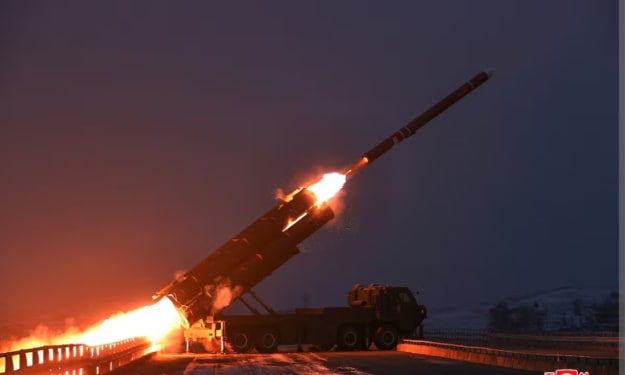
North Korean leader Kim Jong Un has once again stepped into the spotlight of global security concerns by overseeing a series of cruise missile launches, an event that Pyongyang says underscores its determination to strengthen national defense capabilities amid what it describes as rising external threats. The launches, reported by North Korean state media, come at a time of heightened military activity on the Korean Peninsula and renewed tensions involving the United States, South Korea, and their regional allies.
By Salaar Jamali14 days ago in The Swamp
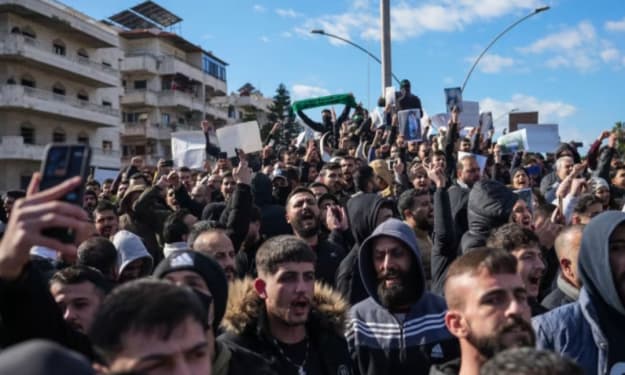
Syria Protests Live: Deadly Clashes Erupt as Hundreds Demonstrate. AI-Generated.
In a stark reminder of how fragile the situation remains in post-Assad Syria, deadly clashes erupted across multiple cities on December 28, 2025, as hundreds — and in some areas thousands — took to the streets in protest. The demonstrations, which began as peaceful gatherings, descended into violence in the coastal and central provinces of Latakia, Tartus, Hama and Homs, leaving several people dead and scores injured. �
By Salaar Jamali14 days ago in FYI
Putin Says Russia Will Achieve Its Ukraine Aims by Force if Kyiv Doesn’t Want Peace. AI-Generated.
Russian President Vladimir Putin has once again hardened his rhetoric on the war in Ukraine, declaring that Moscow will achieve its objectives “by force” if Ukrainian authorities refuse what he describes as a negotiated peace. The statement, delivered during a public address and later echoed by senior Kremlin officials, underscores the deep impasse that continues to define one of the most consequential conflicts in Europe since World War II.
By Salaar Jamali14 days ago in The Swamp
Three Dead, Dozens Injured in Syria During Clashes Between Alawites and Counterdemonstrators. AI-Generated.
Latakia, Syria — December 28, 2025 — Violent clashes between members of Syria’s Alawite minority and counterdemonstrators erupted across several coastal cities on Sunday, leaving at least three people dead and dozens injured in some of the most intense unrest in the country since the fall of former president Bashar al-Assad nearly a year ago. �
By Salaar Jamali14 days ago in The Swamp
US Seeks Pakistani Partnership in Locomotive Sales and Mineral Exploration. AI-Generated.
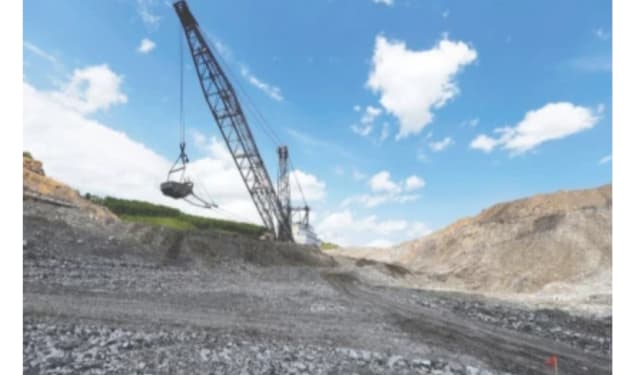
The United States is actively pursuing deeper economic engagement with Pakistan, signaling renewed interest in locomotive sales and mineral exploration partnerships as part of a broader effort to strengthen bilateral trade and investment ties. The move reflects Washington’s growing focus on South Asia as a strategic economic region, while Pakistan looks to modernize its infrastructure and unlock the vast potential of its untapped natural resources. Recent discussions between US officials, American companies, and Pakistani counterparts highlight a pragmatic shift in relations—one that emphasizes commercial cooperation, private-sector investment, and long-term economic sustainability rather than purely geopolitical considerations. Revitalizing Pakistan’s Rail Sector One of the key pillars of this proposed partnership is locomotive sales and railway modernization. Pakistan Railways, once the backbone of national transport, has struggled in recent decades with aging rolling stock, inefficiencies, and declining freight capacity. With Pakistan aiming to revive its rail network as a cost-effective and environmentally efficient transport system, US manufacturers see an opportunity to supply modern diesel-electric and hybrid locomotives, signaling systems, and maintenance solutions. American locomotive producers are particularly well-positioned to offer high-horsepower, fuel-efficient engines designed for heavy freight corridors—an area Pakistan hopes to expand as it shifts cargo transport away from congested highways. Improved rail infrastructure would not only reduce transportation costs but also enhance regional connectivity between ports, industrial zones, and inland markets. For Pakistan, upgrading locomotives is about more than transport—it is a step toward economic competitiveness, improved logistics for exports, and job creation through localized maintenance and assembly partnerships. Mineral Exploration: A Strategic Opportunity Beyond railways, the US has expressed strong interest in Pakistan’s mineral sector, which remains largely underdeveloped despite its immense geological potential. Pakistan is believed to possess significant reserves of copper, gold, lithium, rare earth elements, coal, and industrial minerals, particularly in Balochistan and Gilgit-Baltistan. With global demand for critical minerals soaring—driven by renewable energy technologies, electric vehicles, and advanced manufacturing—the US is eager to diversify supply chains and reduce dependence on limited sources. Pakistan, in this context, offers both opportunity and strategic value. American companies bring advanced geological surveying technologies, environmentally responsible extraction methods, and global market access, which could help Pakistan transition from raw material exports to value-added mineral processing. Such collaboration could significantly boost Pakistan’s export earnings while ensuring sustainable and transparent mining practices. Economic Diversification and Mutual Benefit The push for cooperation aligns with Pakistan’s broader economic reform agenda, which seeks to diversify foreign investment sources and move beyond reliance on traditional partners. By engaging with US firms, Pakistan hopes to attract capital that prioritizes technology transfer, workforce development, and regulatory compliance. For the US, Pakistan represents a large emerging market of over 240 million people, strategically located at the crossroads of South Asia, Central Asia, and the Middle East. Strengthening commercial ties through locomotives and minerals allows Washington to promote rules-based trade, private enterprise, and economic stability in the region. This partnership model focuses on business-to-business engagement, supported by diplomatic facilitation rather than government-to-government financing. It reflects a growing US preference for leveraging private sector innovation to drive development outcomes. Addressing Challenges and Risks Despite the promise, several challenges remain. Pakistan’s mining sector has historically faced issues related to regulatory uncertainty, security concerns, and infrastructure gaps. US investors typically require clear legal frameworks, transparent licensing processes, and guarantees on contract enforcement before committing large sums. Similarly, large-scale railway modernization requires long-term planning, financing stability, and institutional reform within Pakistan Railways. Without governance improvements and operational efficiency, even the most advanced locomotives may struggle to deliver expected results. Both sides appear aware of these hurdles. Ongoing discussions emphasize policy reforms, investor protections, and public-private partnership models that distribute risk while ensuring accountability. Regional and Strategic Implications The US interest in Pakistan’s locomotive and mineral sectors also carries regional significance. Improved rail connectivity could strengthen Pakistan’s role as a trade and transit hub, linking ports with neighboring countries. Meanwhile, responsible mineral development could position Pakistan as a key supplier in global clean-energy supply chains. Importantly, this engagement does not aim to replace Pakistan’s existing partnerships but to broaden its economic options. Analysts suggest that diversified investment relationships reduce vulnerability to external shocks and enhance negotiating leverage on the global stage. From Washington’s perspective, economic cooperation offers a constructive way to remain engaged in South Asia amid shifting geopolitical dynamics, reinforcing stability through growth rather than military involvement. Looking Ahead As talks progress, concrete agreements on locomotive procurement, joint ventures, and mineral exploration licenses are expected to take shape over the coming months. If executed effectively, these partnerships could mark a new chapter in US-Pakistan relations—one defined by trade, technology, and shared economic interests. For Pakistan, success will depend on translating interest into implementation, ensuring reforms keep pace with ambition. For the US, sustained engagement and long-term commitment will be key to building trust and delivering mutual benefit. In a global economy increasingly shaped by infrastructure resilience and resource security, the emerging US-Pakistan partnership in locomotives and minerals may prove to be both timely and transformative. If you want, I can also provide a subtitle, category, SEO headline, or Vocal Media-style excerpt for this article.
By Salaar Jamali15 days ago in Trader