politics
Politics does not dictate our collective cultural mindset as much as it simply reflects it; We've got to look in the mirror sometimes, and we've got one.
Woman Felt ‘Dehumanised’ After Musk's Grok AI Used to Digitally Remove Her Clothes. AI-Generated.
A recent incident involving Elon Musk’s Grok AI has reignited debates about artificial intelligence ethics, privacy, and consent. A woman has come forward claiming she felt “dehumanised” after the AI was used to digitally remove her clothes in images generated without her consent. The case has sparked a wider discussion about the potential dangers of AI-driven technology and how society should regulate it.
By Aarif Lashari28 days ago in The Swamp
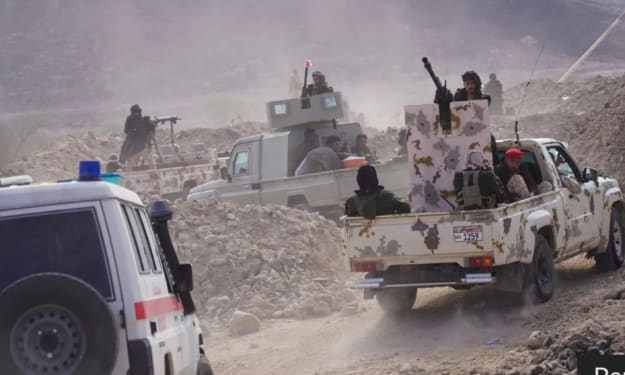
Yemeni Separatists Plan to Hold Independence Vote Within Two Years. AI-Generated.
Southern Leaders Push for Statehood as Yemen’s Political Crisis Deepens Yemen’s long-running conflict may be entering a new and uncertain phase as Yemeni separatist leaders announce plans to hold an independence referendum within the next two years. The proposal, driven primarily by the Southern Transitional Council (STC), has reignited debates about Yemen’s territorial unity, regional stability, and the future of a country already fractured by war.
By Aarif Lashari28 days ago in The Swamp
Iranian Officials Warn Trump Not to Cross ‘Red Line’ Over Threats to Intervene in Protests. AI-Generated.
Iranian officials have issued a strong warning to former U.S. President Donald Trump, cautioning him not to cross what they described as a “red line” after he threatened U.S. intervention if Iranian authorities kill protesters. The sharp exchange highlights rising tensions between Tehran and Washington at a time when Iran is grappling with widespread domestic unrest and intense international scrutiny.
By Aarif Lashari28 days ago in The Swamp
Officials Blame Sparkler Candles for Swiss Ski Resort Fire, as First Victim Named. AI-Generated.
Swiss authorities have confirmed that sparkler candles used during a festive celebration were the likely cause of the deadly fire that tore through a popular Swiss ski resort, leaving multiple people injured and several fighting for their lives. As investigators continue their work, officials have also named the first victim, bringing a personal and heartbreaking dimension to a tragedy that has shocked Switzerland and the international community.
By Aarif Lashari28 days ago in The Swamp
Why the Nuclear Plant Is a Sticking Point in Peace Negotiations. AI-Generated.
As the conflict between Russia and Ukraine continues into its prolonged phase, one of the most significant and contentious issues standing in the way of peace talks is the situation surrounding nuclear energy infrastructure, particularly the Zaporizhzhia Nuclear Power Plant (ZNPP). With both Russia and Ukraine accusing each other of targeting or taking control of such facilities, the broader implications for security, energy, and international diplomacy have turned the ZNPP and other nuclear assets into a flashpoint in the pursuit of peace.
By Fiaz Ahmed Brohi28 days ago in The Swamp
FIA ASI Shifted to Airport Sanitation: An Unexpected Turn for Pakistan's Federal Investigation Agency. AI-Generated.
The Federal Investigation Agency (FIA) in Pakistan has been at the forefront of maintaining law and order, investigating a wide range of criminal activities from human trafficking to cybercrimes. Recently, however, an unexpected move has caught the attention of both the public and officials—one of the Assistant Sub-Inspectors (ASI) from FIA has been reassigned to airport sanitation duties. This decision, which comes as part of an internal reshuffling, has raised eyebrows across various sectors. With the FIA's core responsibility being law enforcement and investigating federal crimes, the reassignment of an officer to sanitation tasks has prompted questions about the agency's operational priorities, its internal decision-making, and the wider implications of such changes for the law enforcement community. A Sudden Shift: The Role of the FIA ASI The Federal Investigation Agency (FIA) is one of Pakistan's leading law enforcement bodies, responsible for enforcing federal laws related to human trafficking, immigration, anti-narcotics, and cybercrimes. The agency is known for its rigorous investigation methods, and its officials often play a pivotal role in tackling organized crime and corruption. Assistant Sub-Inspectors (ASI) within the FIA hold significant roles, usually handling investigative and supervisory tasks. These officers are generally tasked with ensuring the smooth functioning of their respective departments, gathering intelligence, and supporting larger operations against federal crimes. So when an ASI, usually involved in such critical work, was reassigned to work on airport sanitation, it raised questions about the agency’s internal priorities and the potential reasons for this reallocation. Given the serious nature of the FIA's work, this decision has led to mixed reactions from various quarters. The Sanitation Shift: Understanding the Reasoning At first glance, the idea of an ASI being reassigned to airport sanitation may seem unusual, especially considering the importance of the FIA in enforcing federal laws. However, according to government sources, this move might be a part of an administrative reshuffling that aims to optimize staff distribution and address personnel shortages. Sanitation work at major international airports, such as Jinnah International Airport in Karachi or Allama Iqbal International Airport in Lahore, is no small task. These areas are hubs for thousands of travelers, and maintaining cleanliness and hygiene is a top priority to ensure the health and safety of passengers and staff. The assignment of an ASI to this task could be an effort to streamline airport services, or it may represent a short-term measure to address staffing issues within the airport’s sanitation department. While the rationale behind the move may appear practical, it still remains a puzzling decision to many within the law enforcement community, especially when one considers the significant expertise and skills required for positions within the FIA. Some believe that this move could represent a misalignment of the ASI’s potential and responsibilities, while others suggest it reflects internal management challenges that are being tackled at the cost of operational efficiency. Public Reactions: Questions and Concerns The reassignment of the FIA ASI to sanitation duties has led to mixed reactions. Many within the law enforcement community have questioned whether this is the best use of resources and whether the move is in line with the agency’s original purpose. Critics argue that this type of reshuffling can lead to a lack of focus on critical law enforcement duties, particularly when personnel may be better suited for investigative tasks. In addition to the concerns within law enforcement, the public has also expressed confusion. For example, citizens have raised questions about the agency's role in combating federal crimes when it appears to be diverting personnel to non-law enforcement roles. Some have even pointed to other issues facing the country, such as rising crime rates and corruption, suggesting that the FIA should focus on its core responsibilities rather than addressing internal personnel matters. On the other hand, some have suggested that this may be a temporary move to address immediate operational needs at the airport, where sanitation staff could be lacking. The reassignment of an ASI, who is often regarded as experienced in handling complex tasks, might be an attempt to bring an experienced leader to oversee sanitation activities, ensuring the airport remains in top form during high-travel periods. The Broader Implications: A Sign of Deeper Challenges? While it’s important not to jump to conclusions about the intentions behind the reassignment, this move might also be reflective of broader organizational challenges within the FIA. It could signal a need for better personnel management, restructuring, or even a response to budget constraints. If the FIA is experiencing staffing shortages, it might not have enough resources to assign personnel to its traditional roles within law enforcement, thus prompting temporary reassignments such as the one observed with this ASI. There are also questions about whether the FIA is underfunded or grappling with personnel cuts, which might explain such decisions. Given the complexities involved in maintaining a law enforcement agency’s operations, staffing issues can significantly impact its ability to function at full capacity, potentially leading to the reassignment of personnel to less relevant roles. Conclusion: A Moment of Reflection for the FIA The reassignment of an FIA ASI to work in airport sanitation serves as a reminder that even prestigious law enforcement agencies are not immune to internal challenges. While the reasons behind this decision may not be entirely clear, it reflects the importance of the FIA’s role and the difficulties associated with ensuring that personnel are allocated to tasks that align with their skills and expertise. It remains to be seen whether this reassignment is a temporary solution or part of a larger trend within the agency. Nonetheless, it underscores the need for thoughtful and strategic management within the FIA to ensure that it can continue to serve the public effectively, while addressing staffing concerns and fulfilling its critical mandate of maintaining national security. This incident also opens a conversation about how government agencies handle workforce management, crisis situations, and the reallocation of resources in times of need. As public opinion and internal discussions unfold, the FIA may find ways to further strengthen its approach to balancing the needs of the public with the practicalities of operating a major law enforcement agency.
By Fiaz Ahmed Brohi28 days ago in The Swamp
Israel Intercepts 'False Target' After Drone Alert Near Lebanon Border: A Step Towards Tighter Security Measures. AI-Generated.
On a recent occasion, Israeli forces reported successfully intercepting a "false target" after a drone alert was raised near its northern border with Lebanon. The incident is one in a series of escalating security concerns in the region, raising questions about Israel's vulnerability to aerial threats and its preparedness for unconventional warfare. As tensions remain high between Israel and Hezbollah, and with the growing instability in the Middle East, Israel’s defense infrastructure continues to be tested, but this event also underscores Israel’s technological advancements and their role in preventing potential attacks. The Incident: A False Alarm and its Implications On a day marked by high alert in Israel’s northern districts, military sources reported a drone that was detected approaching the country’s airspace from the direction of Lebanon. Initially, security forces believed the drone posed a potential threat, possibly related to Hezbollah, the Shiite militant group backed by Iran and a significant player in regional conflicts. This group has a long history of using drones to target Israeli defense structures and has even used drones for intelligence-gathering purposes in previous years. The alarm bells went off when the drone entered a restricted airspace zone, triggering Israel’s air defense systems. Israel’s Iron Dome defense system, which is widely known for its success in intercepting missiles and rockets, was prepared to take action. However, after closely analyzing the situation, Israel’s military concluded that the drone was a “false target” and did not pose any immediate risk to the country’s infrastructure or personnel. The target was assessed as potentially being an unmanned aerial vehicle (UAV) being tested or deployed for reconnaissance or surveillance purposes, rather than a weaponized drone. Despite the interception being a false alarm, the situation highlights the increasing reliance on drones in warfare and the growing complexities of border security in the Middle East. It is a reminder that Israel's technological edge in air defense is continually under scrutiny as new forms of warfare and tactics emerge, especially along volatile borders like the one with Lebanon. The Regional Context: Israel’s Security Concerns and Lebanon Israel’s northern border with Lebanon is home to Hezbollah, a group that has been involved in numerous cross-border skirmishes with Israel over the years. While the group’s activities have remained relatively contained, the use of drones and other advanced technologies by Hezbollah is seen as a sign of the group’s growing capabilities. Over the years, there have been reports of Hezbollah attempting to deploy drones to target Israeli military positions and facilities, as well as for intelligence gathering. The Israeli government has repeatedly warned about the growing threat posed by Hezbollah and its increasing sophistication in drone technology. While Israel has managed to intercept and neutralize many such threats, the reality of drone warfare is that it can be hard to detect and neutralize, especially when UAVs are used for surveillance or reconnaissance. Moreover, the broader geopolitical landscape adds to Israel’s insecurity. With the Iran-backed Hezbollah situated on Israel’s northern border and Syria to the northeast, Israel remains on high alert for any provocation. Iran’s influence in the region, coupled with the activities of Hezbollah and other armed groups, amplifies the risks faced by Israel. It is no surprise that Israel’s defense systems, including the Iron Dome and its aerial defense radar networks, are constantly upgraded to detect and neutralize evolving threats. Israel’s Technological Edge: The Iron Dome and Beyond The recent incident also highlights Israel’s technological prowess and its continuous innovation in defense systems. The Iron Dome, widely credited with its success in intercepting short-range rockets and artillery shells, has been instrumental in protecting civilian areas from missile attacks. However, the Iron Dome’s capability against drones is still under development and represents one of the main focuses of Israel’s military innovation. Israel’s defense sector, in collaboration with private tech companies, has been developing more advanced systems to track and neutralize UAV threats. The Israeli military has introduced technologies like C-MUSIC (Commercial Multi-Spectral Infrared Countermeasure), a laser-based defense system designed to counter aerial threats, including drones. This system is capable of destroying incoming projectiles mid-air and is part of Israel’s efforts to adapt to the growing use of drones in military conflicts worldwide. In addition to intercepting missiles, Israel is also focused on improving its surveillance and intelligence capabilities to better detect drone activities before they can reach sensitive targets. This includes radar systems that can detect small and low-flying objects such as drones, allowing for earlier detection and more effective interception. Global Implications: Drone Warfare in Modern Conflicts The incident near Lebanon’s border is also part of a larger global trend toward drone warfare. Armed drones are now used by state and non-state actors alike for a variety of military purposes, from surveillance to precision strikes. In conflicts like those in the Middle East, drones have become a significant tool for both intelligence gathering and combat. For Israel, the incident is a wake-up call to further invest in drone defense technologies. Israel’s experience in intercepting and neutralizing drones can provide valuable lessons to other countries facing similar threats. However, Israel’s reliance on technology does not diminish the need for diplomatic efforts to resolve the underlying tensions in the region, particularly with Hezbollah and Iran. Conclusion: The Changing Face of Modern Warfare The recent drone incident in Israel’s northern border with Lebanon underscores the evolving nature of modern warfare, where aerial threats, including drones, play an increasingly important role. While the drone in question may have been a false alarm, the reality is that Israel’s security concerns are legitimate, especially with groups like Hezbollah employing advanced technologies in their operations. Israel’s air defense systems, particularly the Iron Dome, remain among the best in the world, but they must continuously evolve to stay ahead of emerging threats. The incident near Lebanon’s border serves as a reminder that security in the modern world requires more than just physical borders—it requires a sophisticated and agile defense system capable of responding to the ever-growing threat of drones and other unconventional tactics.
By Fiaz Ahmed Brohi28 days ago in The Swamp
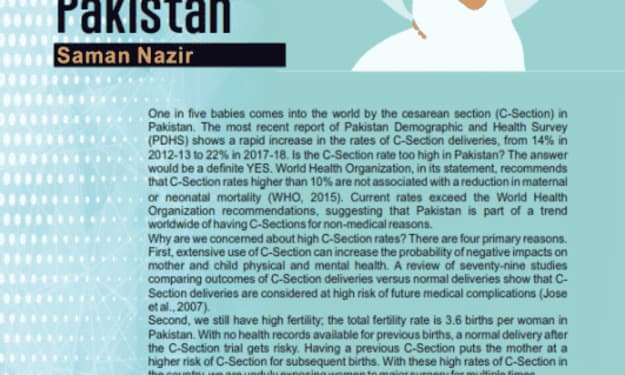
Unnecessary C-Sections Surge in Pakistan as Hospitals Prioritize Profit: A Growing Health Crisis. AI-Generated.
In Pakistan, the surge in unnecessary cesarean sections (C-sections) has become a disturbing trend, raising concerns over maternal health and hospital ethics. While C-sections are crucial for saving lives in certain medical situations, an increasing number of them are being performed for non-medical reasons, leading to complications and long-term health issues for mothers. This surge is largely attributed to hospitals prioritizing profit over patient care, with some institutions encouraged to push C-sections as a more profitable option for delivery. According to recent studies, the C-section rate in Pakistan has seen a significant increase over the past few years, with some reports indicating that nearly 40% of all births in private hospitals are by C-section. This is an alarming statistic when compared to the World Health Organization's recommendation that C-sections should only account for 10-15% of births, indicating that the practice in Pakistan is not only widespread but often unnecessary. The Profit Motive in the Medical Industry One of the primary reasons behind the rising number of C-sections is the increasing commercialisation of the healthcare sector in Pakistan, particularly in private hospitals. C-sections, though more expensive than vaginal deliveries, are viewed as more profitable for hospitals. This is due to the higher medical fees associated with the procedure, including the surgical costs, the length of hospital stays, and follow-up care. As a result, some private hospitals are incentivized to encourage expectant mothers to opt for a C-section, even when a natural birth would suffice. Hospitals and healthcare providers often use persuasive tactics to convince women to undergo C-sections, claiming that the procedure is safer or more convenient, particularly for women who have busy schedules or prefer the predictability of scheduled surgeries. However, these claims are not always grounded in medical necessity. The over-reliance on C-sections is undermining maternal health and causing unnecessary medical risks for both mothers and their babies. Health Risks and Consequences While C-sections can save lives in certain high-risk situations, they also carry significant health risks. These include infections, blood loss, longer recovery times, and increased risks for future pregnancies. Women who undergo multiple C-sections are at greater risk for complications in subsequent pregnancies, such as placenta previa, uterine rupture, and placenta accreta, which can be life-threatening. Additionally, C-sections also contribute to a higher rate of premature births and respiratory problems for babies. The impact of unnecessary C-sections on maternal health cannot be understated. Women who have C-sections may experience more intense pain during recovery, longer hospital stays, and a higher risk of post-surgical complications, such as infections or blood clots. These risks are compounded by the fact that many women in Pakistan do not receive proper post-operative care or adequate information about the potential risks associated with C-sections. The Role of Education and Awareness One of the most significant factors contributing to the rise in unnecessary C-sections is the lack of education and awareness among pregnant women. Many women in Pakistan are unaware of the risks associated with C-sections and are often swayed by the advice of healthcare providers. The lack of proper information leaves women vulnerable to making decisions based on convenience rather than informed consent. Educational campaigns about the benefits of natural childbirth, the risks of C-sections, and the importance of seeking second opinions could help empower women to make better choices for their health and the health of their babies. There is also a need for better training for healthcare providers, emphasizing patient-centered care and the importance of using C-sections only when medically necessary. The Need for Regulatory Measures The rise in unnecessary C-sections in Pakistan points to a larger problem of inadequate regulation and oversight in the healthcare industry. While private hospitals continue to prioritize profits, the government and relevant medical authorities must step in to enforce stricter guidelines for C-sections. This could include stricter monitoring of medical practices, better reporting of C-section rates, and more stringent requirements for informed consent before performing elective C-sections. Furthermore, health insurance companies must also play a role in reducing unnecessary procedures by incentivizing hospitals to follow evidence-based practices and discouraging over-medicalization of childbirth. Conclusion The surge in unnecessary C-sections in Pakistan is a troubling trend that raises serious questions about the priorities of the healthcare system. While private hospitals may benefit financially from increased C-section rates, the consequences for maternal and child health are dire. It is essential that Pakistan’s healthcare system shifts its focus from profit to patient-centered care, prioritizing the health and well-being of mothers and babies. Public awareness, regulatory oversight, and proper education for both healthcare providers and patients are crucial to reversing this trend and ensuring a safer, healthier future for all expectant mothers in Pakistan.
By Fiaz Ahmed Brohi28 days ago in The Swamp
China Threatened to Cancel Key Trade Talks After UK Minister’s Taiwan Visit in June. AI-Generated.
China reportedly threatened to cancel important trade negotiations with the United Kingdom following the visit of a British minister to Taiwan in June, according to multiple diplomatic sources. The revelation underscores the delicate balance between economic engagement and geopolitical sensitivities in the Indo-Pacific region. The UK minister’s visit to Taiwan, aimed at strengthening diplomatic and economic ties, prompted a sharp reaction from Beijing. Chinese officials viewed the visit as a violation of the “One China” policy, which considers Taiwan part of China, and warned London that it could jeopardize ongoing trade discussions. While the UK insists its visit was in line with international norms and focused on trade and cultural exchange, China perceived it as a political provocation. Trade relations between China and the UK have been significant, with billions of pounds of goods exchanged annually. Sectors such as finance, technology, and advanced manufacturing have benefited from bilateral cooperation. However, Beijing’s threat to cancel talks reflects growing caution in its approach to countries that engage with Taiwan in a formal capacity. Diplomatic sources indicate that Chinese officials issued the warning shortly after the minister’s visit, signaling that they could reconsider future trade agreements if the UK continued actions perceived as undermining Chinese sovereignty. A senior UK official described the threat as “blunt but expected,” emphasizing that such responses are part of China’s broader strategy to maintain influence over Taiwan-related matters. The incident also highlights the increasingly complex environment for global trade negotiations. Governments are now required to navigate not only economic objectives but also geopolitical considerations. Analysts suggest that countries like the UK, which seek to expand trade with Asian markets, must weigh the benefits of economic engagement against the potential diplomatic repercussions of high-profile visits to Taiwan. Beijing’s approach follows a pattern observed with other Western nations that have pursued closer ties with Taiwan. In recent years, countries that have sent officials to Taiwan or strengthened defense and economic cooperation have faced warnings, sanctions, or diplomatic pushback from China. The UK’s situation is a clear example of how even routine trade discussions can be influenced by broader geopolitical dynamics. The timing of the threat was particularly sensitive, as both the UK and China were preparing for high-level trade negotiations intended to secure agreements in areas such as technology transfer, green energy, and financial services. Analysts suggest that Beijing’s warning created pressure for London to balance its diplomatic principles with the economic imperative of securing trade deals with one of its largest trading partners. Despite the tension, both countries have signaled a desire to continue engagement. British officials have emphasized that trade talks will proceed, albeit with the awareness that political developments, such as ministerial visits to Taiwan, can influence negotiations. China, meanwhile, is reportedly monitoring the UK’s actions closely, sending signals that further engagement may be contingent on diplomatic restraint regarding Taiwan. Experts note that this incident is part of a broader challenge facing international relations in 2026 and beyond. Trade, technology, and geopolitical influence are increasingly interconnected, meaning that countries cannot treat economic discussions as separate from political actions. The UK’s experience highlights the complexities facing smaller powers attempting to maintain sovereignty over their foreign policy while engaging economically with major global powers. For the business community, the threat of canceled talks serves as a reminder of the unpredictability inherent in international trade. Companies operating in both the UK and China may face delays or uncertainty in contracts and agreements if political tensions escalate. Industries reliant on Chinese imports or investment must now factor in potential diplomatic disputes that could affect supply chains and market access. In the broader context, the episode underscores the continuing tension over Taiwan, a flashpoint in global geopolitics. While countries like the UK engage with Taiwan on trade, culture, and technology, China remains highly sensitive to any form of international recognition or engagement that could suggest support for Taiwanese independence. This dynamic ensures that trade relations are often intertwined with political signaling, requiring careful diplomatic navigation. As the UK and China move forward, observers are closely watching how both nations manage their economic and political priorities. The challenge lies in maintaining robust trade relations while avoiding actions that could provoke diplomatic backlash. The June incident serves as a reminder of the fine line countries walk in balancing global trade ambitions with geopolitical realities. Ultimately, the warning issued by China in response to the UK minister’s Taiwan visit highlights the complex interplay of diplomacy and commerce in today’s world. While trade talks are vital for economic growth, they cannot be separated from the broader strategic environment in which they occur, particularly when sensitive issues like Taiwan are involved. For the UK, navigating this delicate balance will remain a priority in ensuring both economic opportunities and stable international relations.
By Fiaz Ahmed Brohi28 days ago in The Swamp