
Yemeni Separatists Plan to Hold Independence Vote Within Two Years
Southern Leaders Push for Statehood as Yemen’s Political Crisis Deepens
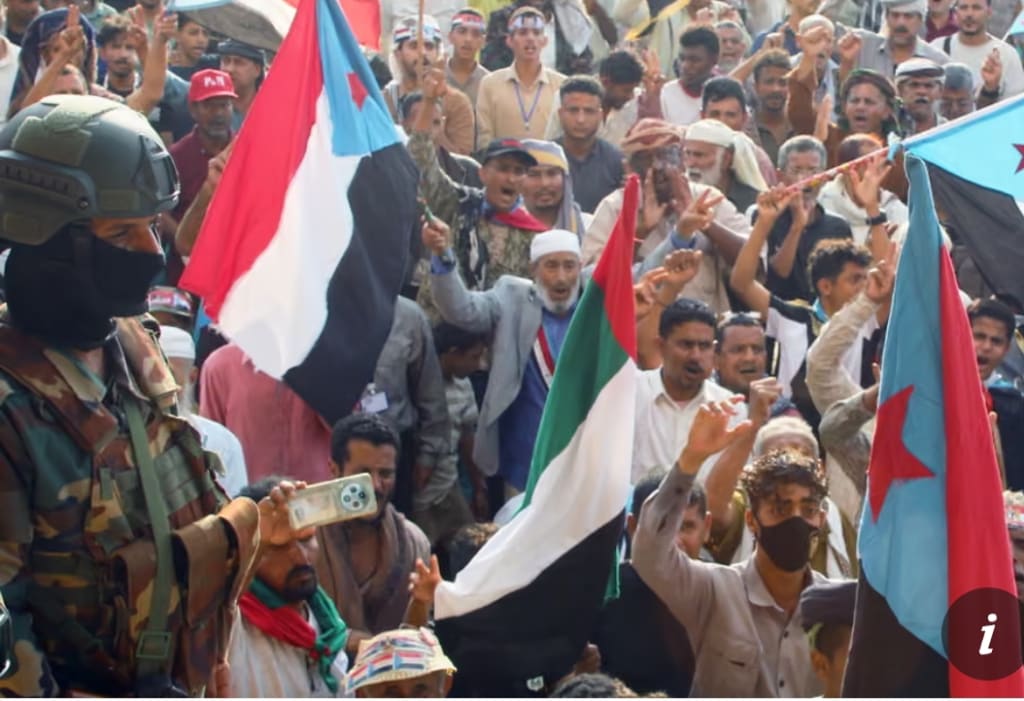
Southern Leaders Push for Statehood as Yemen’s Political Crisis Deepens
Yemen’s long-running conflict may be entering a new and uncertain phase as Yemeni separatist leaders announce plans to hold an independence referendum within the next two years. The proposal, driven primarily by the Southern Transitional Council (STC), has reignited debates about Yemen’s territorial unity, regional stability, and the future of a country already fractured by war.
The announcement has drawn strong reactions both inside Yemen and across the Middle East, raising concerns that a formal push for southern independence could further complicate peace efforts and prolong one of the world’s worst humanitarian crises.
Who Are the Yemeni Separatists?
The separatist movement in southern Yemen is led by the Southern Transitional Council, a political and military body formed in 2017. The STC claims to represent the interests of southern Yemenis who believe their region has been politically marginalized since Yemen’s unification in 1990.
Many in the south argue that unification brought economic neglect, loss of political autonomy, and unequal distribution of resources. These grievances deepened after the 1994 civil war, when southern leaders’ attempt to secede was crushed by the central government.
Today, the STC controls large parts of southern Yemen, including the strategic port city of Aden, and enjoys backing from segments of the population as well as regional support, particularly from the United Arab Emirates.
The Independence Vote Plan
According to senior STC officials, preparations are underway to organize a popular vote on southern independence within two years. The council says the referendum would allow people in the south to “peacefully and democratically decide their future.”
While details remain vague, STC leaders have indicated that the vote would follow a period of political organization, public outreach, and security stabilization in areas under their control. They insist the move is not intended to derail peace talks but to ensure that southern voices are not ignored in any future political settlement.
A Divided Country Already at War
Yemen has been devastated by conflict since 2014, when Houthi rebels seized control of the capital, Sana’a, prompting a Saudi-led military intervention. The war has fractured the country into multiple zones of control, with the internationally recognized government, Houthis, separatists, and local militias all holding territory.
In this context, the separatists’ push for independence adds yet another layer of complexity. Critics argue that Yemen risks becoming permanently fragmented, while supporters claim division is already a reality and formal separation could bring stability.
Regional and International Reactions
The independence proposal has alarmed Yemen’s internationally recognized government, which insists that the country’s territorial integrity must be preserved. Government officials warn that any unilateral move toward secession would violate existing peace frameworks and could spark renewed fighting.
Saudi Arabia, a key player in Yemen’s conflict, has historically supported Yemeni unity, though it has also worked closely with the STC at various points. The UAE, meanwhile, is widely viewed as sympathetic to southern aspirations, though it has not officially endorsed an independence vote.
International powers, including the United Nations, have urged restraint. Diplomats fear that a referendum could undermine fragile ceasefires and derail UN-led efforts to negotiate a comprehensive political settlement.
Public Opinion in Southern Yemen
Public sentiment in the south is mixed but increasingly vocal. Many residents of Aden and surrounding provinces express frustration with decades of instability, unemployment, and poor public services. For them, independence represents hope for self-governance and accountability.
Others worry that secession could lead to economic isolation, new internal conflicts, or international non-recognition. Yemen’s economy is already in ruins, and critics question whether an independent south would have the resources and institutions needed to function as a viable state.
Legal and Practical Challenges
Holding an independence referendum in a conflict zone presents enormous challenges. Security remains fragile, voter registration systems are weak, and there is no clear legal framework for such a vote under Yemeni or international law.
Additionally, large numbers of Yemenis have been displaced by the war, raising questions about who would be eligible to vote and how the results would be validated. Without international oversight, any referendum could face accusations of bias or illegitimacy.
Impact on Peace Efforts
Peace mediators worry that the independence push could harden positions on all sides. The Houthis may use the development to argue that Yemen is no longer a single state, while the central government could become less willing to make concessions.
At the same time, some analysts believe that acknowledging southern demands may actually be necessary for lasting peace. They argue that ignoring the issue of southern self-determination has been a major flaw in previous peace initiatives.
What Comes Next for Yemen?
The next two years will be critical. If separatists move forward with their plans, Yemen could face a decisive moment that reshapes its political map. Whether this leads to peaceful negotiations, international mediation, or renewed violence remains uncertain.
For millions of Yemenis already struggling with hunger, displacement, and insecurity, the priority remains ending the war and restoring basic stability. Any political transition, including potential independence, will ultimately be judged by whether it improves the lives of ordinary people.
Conclusion
The announcement that Yemeni separatists plan to hold an independence vote within two years underscores the deep fractures within Yemen’s political landscape. While supporters see it as a long-overdue chance for self-determination, critics warn it could further destabilize a country already on the brink.
As Yemen stands at yet another crossroads, the international community, regional powers, and Yemeni leaders face a difficult task: balancing competing aspirations while preventing the conflict from spiraling into yet another chapter of violence.
About the Creator
Keep reading
More stories from Aarif Lashari and writers in The Swamp and other communities.
Parallel Protests
I haven't written for quite some time, but I have A LOT of thoughts about yesterday's protest rally against our government's involvement and complicity in America's war on Iran, on the harbourside of my home city Bristol, and I need to put them somewhere. My gorgeous girlfriend is always a loving and listening ear and sharing it all with her will always be a healthy and happy way of processing the mental and emotional weight, but getting it straight in my brain to share means writing it all down in straight lines, so, here we are and thanks for being here.
By Steph Cole6 days ago in The Swamp
‘It’s a Huge Mess’: How Starmer Is Failing Britain’s Armed Forces
Britain’s armed forces are facing mounting criticism from defence analysts, former military leaders, and political opponents who argue that the government of Keir Starmer has failed to address serious problems affecting the country’s military readiness. From equipment shortages and recruitment challenges to strategic uncertainty in a rapidly changing global security environment, critics say the United Kingdom’s defence structure is struggling to keep pace with modern threats. Several senior defence commentators have described the situation bluntly. One former officer recently summarized the state of affairs as “a huge mess,” pointing to a combination of delayed procurement programs, overstretched personnel, and uncertainty over long-term military strategy. The criticism comes at a time when geopolitical tensions across Europe and the Middle East have increased pressure on NATO members to strengthen their military capabilities. Britain’s armed forces, long considered among the most capable in Europe, have been undergoing a period of restructuring in recent years. Government officials argue that modernization and technological innovation require difficult decisions, including reductions in some traditional force structures. However, critics say these reforms have been poorly managed and have weakened operational readiness. The most visible challenge has been recruitment and retention. The British Army has struggled to meet its target troop numbers, and experienced personnel have reportedly left service due to concerns about career prospects, workloads, and the pace of reforms. Defence experts warn that losing trained soldiers and officers creates gaps that cannot easily be filled. Equipment modernization has also been a point of contention. Delays in acquiring new vehicles, aircraft, and naval systems have frustrated military planners who argue that the armed forces must adapt quickly to emerging threats. While the government has announced investments in advanced technology—including cyber capabilities and drone systems—critics say the transition has been uneven. Opposition politicians and defence specialists have raised concerns that the United Kingdom may not be meeting the expectations of its allies within the North Atlantic Treaty Organization. NATO has increasingly emphasized the importance of readiness, particularly as tensions with rival powers continue to influence global security calculations. Maintaining credible military capability, analysts argue, is essential not only for national defence but also for the credibility of international alliances. The government, however, disputes the claim that the armed forces are being neglected. Officials say Britain continues to invest billions of pounds in defence and remains committed to strengthening its role within NATO. They point to ongoing modernization programs, including upgrades to the navy’s aircraft carriers and investments in next-generation fighter aircraft. Supporters of the government also argue that the nature of warfare is evolving rapidly. Modern conflicts increasingly involve cyber attacks, space-based surveillance, and unmanned systems rather than large conventional forces alone. From this perspective, shifting resources toward new technologies is necessary to ensure that the military remains effective in the decades ahead. Nevertheless, critics insist that modernization should not come at the expense of basic readiness. Some analysts say that while technological development is important, the armed forces still require sufficient personnel, equipment maintenance, and training to respond to immediate crises. Without these fundamentals, they warn, advanced technology alone cannot guarantee security. The debate has intensified amid a broader discussion about Britain’s role in the world. As global competition grows and new conflicts emerge, the United Kingdom faces difficult choices about how much to invest in defence and what type of military force it wants to maintain. Some experts believe the country must significantly increase spending to keep pace with other major powers. Others argue that the focus should be on improving efficiency and strategic planning rather than simply allocating more funds. According to these analysts, clearer long-term objectives are needed to ensure that investments in defence produce meaningful results. Public opinion on the issue is mixed. While many citizens support maintaining a strong military, there are also competing demands for government spending in areas such as healthcare, education, and economic development. Balancing these priorities has become one of the most challenging tasks for policymakers. For members of the armed forces themselves, the debate is more personal. Service personnel rely on stable leadership, reliable equipment, and clear strategic direction to perform their duties effectively. When those elements appear uncertain, morale can suffer. Whether the criticism directed at Starmer’s government leads to significant policy changes remains to be seen. What is clear, however, is that the discussion about the future of Britain’s military is becoming increasingly urgent. In an era marked by geopolitical instability and technological transformation, the decisions made today will shape the country’s defence capabilities for decades to come.
By Fiaz Ahmed a day ago in The Swamp


Comments
There are no comments for this story
Be the first to respond and start the conversation.