
Yemen Clashes Bring Saudi- and UAE-Backed Forces Into Confrontation
A New Flashpoint Deepens Divisions Within the Anti-Houthi Alliance
Below is a Vocal Media–ready blog article of around 900 words, written with clear subheadings, short paragraphs, and a neutral news-analysis tone, suitable for publication.
Yemen Clashes Bring Saudi- and UAE-Backed Forces Into Confrontation
A New Flashpoint Deepens Divisions Within the Anti-Houthi Alliance
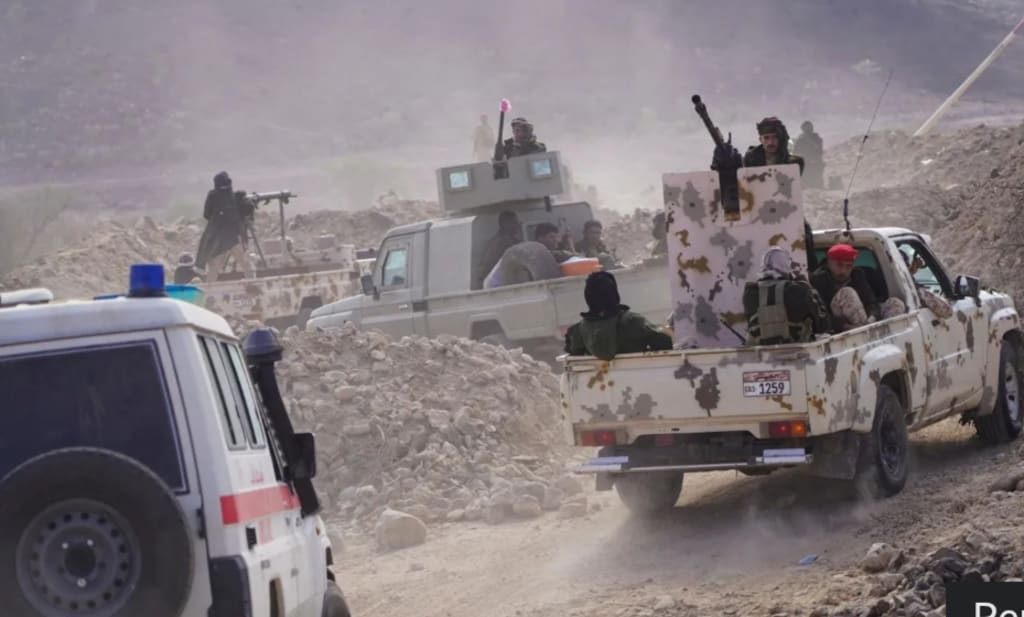
Fresh clashes in southern Yemen have brought forces backed by Saudi Arabia and the United Arab Emirates into direct confrontation, highlighting deep fractures within the coalition that has dominated Yemen’s conflict for nearly a decade. The fighting underscores how Yemen’s war is no longer defined solely by the struggle against the Houthi movement but by competing regional interests and internal rivalries.
As violence flares once again, concerns are growing that these internal divisions could further destabilize an already fragile country and derail ongoing efforts to reach a lasting peace.
What Happened in Southern Yemen
The latest clashes erupted in strategic areas of southern Yemen, where Saudi-backed government forces loyal to the internationally recognized Yemeni government faced off against UAE-backed Southern Transitional Council (STC) forces. Both sides have exchanged heavy fire, using armored vehicles, artillery, and air support in some areas.
Local sources report casualties on both sides, though exact figures remain unclear. Civilians have been caught in the crossfire, with residents fleeing neighborhoods as fighting intensified near government buildings and military checkpoints.
The confrontations mark one of the most serious escalations between the two factions in recent months.
A Fractured Anti-Houthi Coalition
Saudi Arabia and the UAE have long been allies in Yemen, joining forces in 2015 to combat the Iran-aligned Houthi movement that controls much of northern Yemen, including the capital, Sanaa. However, despite their shared enemy, Riyadh and Abu Dhabi have pursued different political goals.
Saudi Arabia has supported Yemen’s internationally recognized government, seeking to preserve Yemen’s territorial unity. The UAE, meanwhile, has backed southern separatist forces, particularly the STC, which advocates for the re-establishment of an independent South Yemen.
These competing visions have turned former allies into rivals on the ground.
Why the Southern Question Matters
Southern Yemen holds enormous strategic importance. The region includes vital ports, oil infrastructure, and shipping lanes near the Bab el-Mandeb Strait, one of the world’s most critical maritime chokepoints.
Control over the south is not just a Yemeni issue—it has major implications for regional security, global trade, and energy routes. This strategic value has made southern Yemen a focal point for external influence, particularly from Saudi Arabia and the UAE.
As the Houthis consolidate power in the north, the south has become the arena where competing allies now test their strength.
The Role of the Southern Transitional Council
The STC, formed in 2017, has emerged as a powerful political and military force in southern Yemen. Backed militarily and financially by the UAE, it has seized control of key cities, including Aden, Yemen’s temporary capital.
While the STC claims to represent southern aspirations, critics argue that its actions undermine national unity and weaken the Yemeni government’s position in negotiations with the Houthis.
Previous attempts to integrate the STC into a unified government—most notably through the Riyadh Agreement—have repeatedly stalled, leaving unresolved tensions that continue to erupt into violence.
Saudi Arabia’s Dilemma
For Saudi Arabia, the renewed clashes present a serious dilemma. Riyadh has invested heavily in stabilizing Yemen and reducing cross-border attacks from the Houthis. Continued infighting among anti-Houthi forces complicates these efforts and threatens to prolong the conflict.
Saudi officials have repeatedly called for restraint and dialogue, urging all factions to prioritize peace talks. However, Riyadh’s influence over UAE-backed forces remains limited, reflecting the shifting balance of power within the coalition.
The clashes raise questions about Saudi Arabia’s ability to shape outcomes in Yemen without direct military escalation.
Impact on Peace Efforts
The renewed fighting comes at a delicate moment, as international mediators work to revive peace talks between Yemen’s warring parties. The United Nations has warned that internal divisions among anti-Houthi forces could undermine negotiations and embolden hardliners on all sides.
Diplomats fear that if southern conflicts continue, Yemen could slide into a de facto partition, making any comprehensive peace agreement far more difficult to achieve.
For ordinary Yemenis—already suffering from one of the world’s worst humanitarian crises—the prospect of renewed instability is devastating.
Regional and International Reactions
International observers have expressed concern over the clashes, calling on Saudi Arabia and the UAE to de-escalate tensions and support political dialogue. Western governments and humanitarian organizations warn that continued violence will worsen food insecurity, displacement, and economic collapse.
Meanwhile, analysts note that the confrontations could benefit the Houthis, who have largely avoided involvement in the southern fighting while strengthening their political position in the north.
What Comes Next for Yemen
Yemen’s conflict is entering a new and dangerous phase. The confrontation between Saudi- and UAE-backed forces highlights how the war has evolved from a regional proxy battle into a complex struggle involving multiple power centers and competing agendas.
Unless these internal divisions are addressed, Yemen risks becoming permanently fragmented. Sustainable peace will require not only an end to hostilities with the Houthis but also a political settlement that addresses southern grievances and balances regional interests.
For now, Yemen remains caught between rival ambitions, with its people paying the highest price.
About the Creator
Keep reading
More stories from Aarif Lashari and writers in The Swamp and other communities.
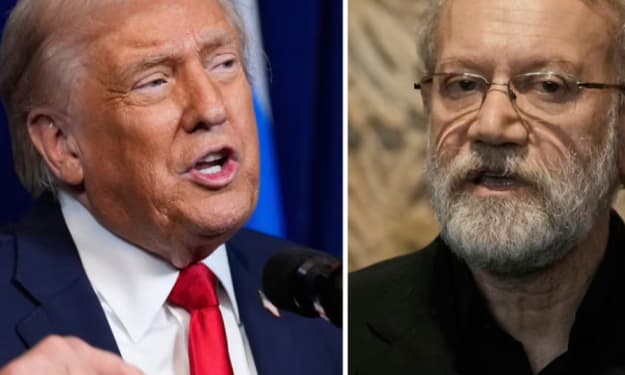
Iranian Officials Warn Trump Not to Cross ‘Red Line’ Over Threats to Intervene in Protests
Iranian officials have issued a strong warning to former U.S. President Donald Trump, cautioning him not to cross what they described as a “red line” after he threatened U.S. intervention if Iranian authorities kill protesters. The sharp exchange highlights rising tensions between Tehran and Washington at a time when Iran is grappling with widespread domestic unrest and intense international scrutiny.
By Aarif Lashari2 months ago in The Swamp
A Gathering of Evil Bosses
“I’m the queen of chin jutting while I smooth my hair, attacking, insulting, and deflecting to protect my appointer.” “Oh, please, Blondi, my hair is curled, highlighted, and longer than yours. I feature television commercials telling immigrants that we will give them a free plane ride home, and if they voluntarily turn themselves in, they will be allowed to legally apply for re-entry. It runs everywhere, and I look good in it! You can’t compete because of your blond hair. Mine is nicer, and my lips are prettier than yours.”
By Andrea Corwin 16 days ago in The Swamp
A More Human Vocal
When we launched Vocal nearly a decade ago, the world was a very different place. LLMs did not exist, and stories were created one at a time by people sitting down to write, revise, and share something personal. Many of our assumptions about publishing, trust, and participation were built for a world where effort and output were inseparable.
By Justin @ Vocala day ago in Resources


Comments
There are no comments for this story
Be the first to respond and start the conversation.