
How to Train a Dog Not to Run Up to People (Even If They're Excited, Cute, or Both)
Your dog’s not bad—they’re just untrained. Rushing up to strangers may look friendly, but it’s risky, rude, and can lead to real problems. Whether you’ve got a bouncy pup or a full-grown freight train on four legs, this guide will walk you through calm, practical steps to stop the madness. No gimmicks, no nonsense—just real training that works. We’ll teach your dog how to listen, wait, and walk past people like a total pro. Because a dog that stays by your side isn’t just easier to manage—it’s safer, happier, and way more welcome in the world.

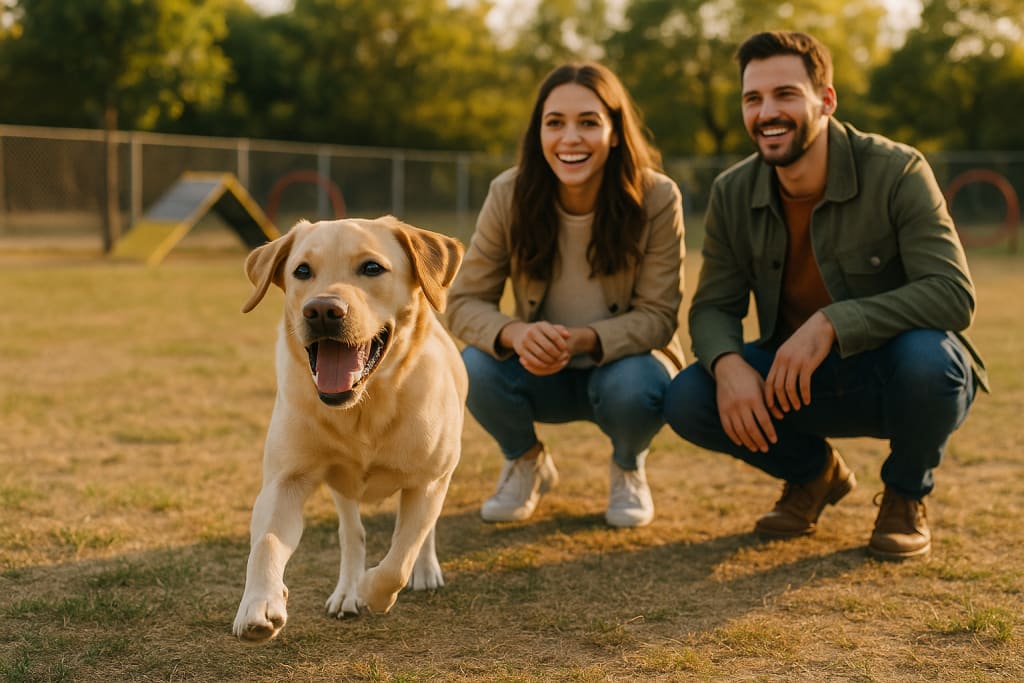
Some dogs bark. Some chew furniture. Some dig holes.
But one habit causes more public chaos than most:
Running up to people.
It’s a problem in parks, on sidewalks, during walks, and at family gatherings. One second your dog is by your side, and the next they’re halfway across the grass sprinting at a jogger. You yell. You chase. You apologize. Again.
If this sounds familiar, it’s time to fix it—for your dog’s safety, your peace of mind, and the comfort of everyone around you.
What Causes This Behavior?
Dogs don’t do things for no reason. When they run toward people, it’s not random. Here’s what’s usually going on.
1. Excitement
Most dogs don’t want to attack. They just get overexcited. People mean attention, smells, and new energy.
2. No Self-Control
Impulse control isn’t built in. It’s learned. Puppies and high-energy breeds especially struggle with this.
3. Reinforced Habits
If people have smiled, waved, or petted your dog when it ran toward them in the past, that’s all the reward it needed.
4. Curiosity
Dogs are sensory creatures. A new person is a new experience—new scent, new sound, new possibility.
Why It’s a Problem
Some owners laugh when their dog runs up to someone. “He’s just friendly!” they say. But let’s break this down.
1. Not Everyone Likes Dogs
Yes, it’s hard to believe, but some people are afraid of dogs. Some have trauma. Others are allergic. They deserve space.
2. Safety Risk
A leaping Labrador can knock down a child or elderly person. A barky terrier can trigger panic in someone nervous.
3. It Teaches Bad Habits
Every time your dog rushes off without permission, it learns: “I’m the boss. I decide what happens.”
What You Need Before You Train
Training starts with tools. Here’s what helps:
- Leash (6-foot for regular walks, 20–30 ft for long-line training)
- Treats (something high-value like liver or chicken)
- Patience (more than you think you’ll need)
- Clear voice commands (not yelling—just calm and consistent)
You don’t need shock collars, choke chains, or shouting matches. You need structure and timing.
Step 1: Teach a Reliable “Stay”
This is your anchor. If your dog learns to stay in place, they don’t chase people.
How to Train:
- Start with a leash in a quiet spot.
- Say “Sit,” then “Stay.”
- Take one step back.
- Wait 3 seconds.
- Step forward, treat, praise.
- Increase distance and time as your dog improves.
Common Mistake:
Don’t move too fast. Many owners expect their dog to stay still for a minute after two tries. That’s like asking a kindergartner to solve algebra.
Step 2: Practice “Look at Me”
Eye contact builds connection. It also redirects focus away from distractions.
How to Train:
- Hold a treat next to your face.
- Say “Look.”
- As soon as your dog makes eye contact—even for a second—treat and praise.
This command helps interrupt bad choices. If your dog sees a person and hears “Look,” you can prevent them from bolting.
Step 3: Build a Strong Recall
“Come” isn’t optional. It’s safety.
How to Train:
- Use a 15–30 ft long line in an open space.
- Call your dog in a clear, happy voice: “Come!”
- When they do, treat and praise heavily.
- If they ignore you, don’t repeat the command. Go get them calmly and try again.
Key Rule:
Never scold your dog when they come to you, even if it took ten minutes. You’re teaching that coming back is always safe and good.
Step 4: Teach “Leave It” or “No”
Sometimes you won’t have time for a full recall or stay. You need a fast, sharp command.
How to Train:
- Place a treat on the floor.
- Cover it with your hand.
- Say “Leave it.”
- When your dog backs off, reward them with a different treat.
- Over time, they learn that listening gets them something better.
Use this when your dog sees a person and looks ready to lunge or sprint.
Step 5: Practice Around Real Distractions
Once your dog knows the commands, they need to apply them in the real world.
How to Train:
- Go to a park with your dog on a long leash.
- When someone walks nearby, ask your dog to sit and look at you.
- Use “Stay” or “Leave it.”
- Reward success. Gently correct mistakes.
The first few sessions won’t be perfect. That’s normal. Training with distractions takes time.
Step 6: Teach That Not Every Person Is an Invitation
Dogs learn patterns. If strangers keep petting them, they’ll expect attention from everyone.
What to Do:
- Tell strangers not to interact during training.
- Ask friends to ignore your dog unless they’re calm and sitting.
- Reward your dog for ignoring people and staying close to you.
The goal isn’t to make your dog antisocial. It’s to teach them manners. There’s a big difference between calm interest and frantic charging.
Bonus: Reward Calmness, Not Excitement
Many owners give attention when dogs are hyper. That’s backwards. Dogs repeat what works.
Try This:
- Don’t pet your dog when it jumps or whines.
- Wait until they’re sitting or lying down quietly.
- Then give love and praise.
You’re shaping behavior by reinforcing the state of mind you want.
Common Problems and How to Fix Them
My Dog Listens at Home but Not Outside
That’s normal. Dogs don’t generalize well. “Sit” in the kitchen doesn’t always translate to “Sit” on the sidewalk.
Solution: Practice commands in new places every week.
My Dog Bolts Even When on a Leash
Use a front-clip harness or head halter for more control. Long lines are safer than retractable leashes.
My Dog Loves People Too Much
That’s not a bad thing. It just needs direction. Focus training around impulse control and structured greetings.
Breed and Age Matter (But They Don’t Excuse Bad Habits)
Some dogs are naturally more social. Retrievers, pit bulls, and doodles often want to greet everyone. Others, like Shiba Inus or livestock guardians, are more reserved.
But no matter the breed, the rules are the same:
- Look to you for direction.
- Stay calm in public.
- Respond to basic commands.
Young dogs need more repetition. Older dogs need more patience. But both can learn.
The Goal Is Freedom, Not Control
Most people want their dog to behave so they can stop using the leash. But here's the truth:
Only well-trained dogs earn real freedom.
A dog who doesn’t run at people can walk off-leash, visit friends, go hiking, and join family trips. Training gives more life, not less.
Real-Life Example: Teddy the Golden
Teddy was a 1-year-old Golden Retriever who ran up to everyone—kids, bikers, old ladies in sun hats. He once jumped into a stranger’s lap at a picnic.
His owners were overwhelmed. We worked on:
- Sit/stay with distractions
- “Look at me” before walking past people
- No more petting unless he was calm
It took 5 weeks. But now Teddy walks through a crowded park like a pro. He still loves people—he just waits to be invited.
Recap: The 7 Steps to Stop the Sprint
- Stay – Builds pause and patience.
- Look at Me – Creates focus.
- Recall – Brings them back to you.
- Leave It – Interrupts the impulse.
- Controlled Exposure – Turns practice into progress.
- No More Random Attention – Removes rewards for bad behavior.
- Calmness Is the Goal – Reward what you want, ignore the rest.
Conclusion: A Calm Dog Makes Life Better for Everyone
Dogs don’t need to be perfect. They need to be manageable. They need to trust you more than they trust their own impulses.
When your dog stays by your side as a jogger passes…
When they sit and look up instead of lunging…
When they choose you instead of chaos…
That’s not just training. That’s a relationship.
And that’s the kind of dog people respect—and the kind of owner dogs rely on.
You’ve got this. Start today. Go slow. Stay steady. Reward calm.
And remember: every calm step forward is a win.
Thanks for your reading.
About the Creator
A Dart at Dusk
Seconds ago, the sullen sun set on the two of us… my exuberant furry companion and me. A fresh breeze embraces us, delivering welcome relief from the day’s oppressive heat. His typical stumbling and staggering along — apace with a sloth — has turned into trip-trapping, high-stepping, almost skipping along.
By Angie the Archivist 📚🪶6 days ago in Petlife
Most New Puppy Owners Don’t Know This
The Hidden Truth About How Puppies Learn, Bond, and Thrive With You --- You brought your new puppy home. The excitement is overwhelming. Toys scattered everywhere, little paws running in every direction, tiny noses sniffing every corner.
By Ahmed aldeabellaabout 9 hours ago in Petlife


Comments
There are no comments for this story
Be the first to respond and start the conversation.