
How to stop a dog jumps up at strangers on walks
You love your dog, but let’s face it—jumping up on people isn’t always a cute quirk. It can be downright embarrassing and even dangerous, especially if the dog greets a child or an elderly person with too much enthusiasm. While your dog’s behavior might stem from affection or excitement, it’s crucial to teach them a more polite way to greet people. In this guide, we’ll explore why dogs jump, the risks involved, and how to train your dog to stop. With some patience and the right techniques, you can transform your dog’s behavior for the better.
The Ultimate Guide to Stopping Your Dog from Jumping Up on People
So, you have a dog that’s a little too friendly. Or maybe a lot too friendly. You know the one: the dog who greets every new person by jumping up with a joyful, tail-wagging enthusiasm, as if they haven’t seen the world in years. Cute, right? Well, not everyone thinks so.
While you might love the affection, not everyone is on the same page. If you’ve ever had your dog jump on someone who wasn’t expecting it, you’ve probably seen the sudden shift in their expression. A simple, happy "hello" can easily turn into an awkward, embarrassing situation. Worse, if your dog jumps up at a child or a senior citizen, you risk causing harm or, in some cases, emotional trauma.
But before you panic, remember: this is a behavior you can train out of your dog. In fact, with patience, consistency, and a little bit of strategy, you can teach your dog to greet people calmly without leaving your guests covered in muddy paw prints. Let’s break it down and figure out exactly why dogs jump up, why we should stop it, and how to train them to do something better.
Why Do Dogs Jump?
If you've ever watched puppies interact with their mother, you'll notice they jump up to her in a way that’s almost instinctual. The reason? It’s a way to signal hunger or neediness. Essentially, puppies see jumping as a form of communication, one that they use to get attention. Over time, they carry this behavior into adulthood.
But here’s the kicker: as much as you love your dog, they don’t know the difference between a human and their mom. To them, you're part of their "pack," and when they jump on you, it's just a puppy move—albeit an oversized one if you’ve got a big dog. Jumping also happens during playtime. It’s fun, and let's face it, it’s their way of showing affection.
The real problem? If your dog jumps up and you react by giving them attention—whether it’s pushing them down or laughing and petting them—you’re actually rewarding the behavior. They may not understand that you're frustrated; all they know is that jumping on you gets them a reaction. And let’s face it, dogs love attention. Good or bad, it’s all the same to them.
Why is Jumping Problematic?
Sure, the jump is cute when your dog is a puppy, but as they grow bigger and stronger, the behavior can become problematic. The risks escalate when your dog greets strangers with the same enthusiasm, especially children, the elderly, or anyone who may not be comfortable with dogs. A jump from an excited dog can result in physical injury, either to the person or to your dog if they’re met with a knee to the chest or a startled response.
And the worst-case scenario? A person who’s startled or frightened by your dog’s jump could react with panic or aggression, which only fuels your dog’s excitable behavior. It’s a vicious cycle. So, if your dog’s jumping is becoming an issue, it’s time to intervene. The best approach is to train your dog to greet people politely.
How to Stop Your Dog from Jumping Up on People
1. Ignore the Jumping (Really!)
The simplest way to stop your dog from jumping is to not give them the attention they crave. You may be tempted to scold them when they jump, but here's the twist: scolding is still attention. Instead, when your dog jumps up on you, simply turn your back and ignore them completely. No eye contact, no talking, no touching. Just completely ignore them.
When they calm down and have all four paws on the ground, reward them with praise and treats. Over time, your dog will realize that calm behavior gets rewarded, not the jumping.
For the most effective training, leave the room or space completely if they can’t settle down. Return after a few moments, and repeat the process. Consistency is key here.
2. Training Your Dog with a Sit Command
You might already use a "sit" command for other situations, and this can be incredibly useful for preventing jumping. The idea is to teach your dog that the only way to receive attention is by sitting calmly. Here's how you can train this:
- Step 1: Ask your dog to sit.
- Step 2: Slowly approach them. If they stand up or start jumping, stop and walk away. Don’t say anything.
- Step 3: When they sit back down, reward them immediately with a treat.
It’s all about reinforcing the right behavior—sitting calmly. Repeat this process until your dog begins to associate sitting with good things happening, like treats and attention.
3. Using a Leash or House Line for Control
When you’re practicing with your dog at home, using a house-line (a short leash attached to their harness) can be helpful. It gives you more control over your dog’s movements when guests arrive or when they’re getting too excitable.
Another option is using an "exercise pen" to give your dog space to settle without being able to jump on people. Once they’re calm, you can give them access to the rest of the house.
How to Stop Jumping on Strangers During Walks
Walks are supposed to be fun, right? But when your dog starts jumping on passersby, it can quickly turn a pleasant stroll into a stressful ordeal. Here’s how to stop the jumping when you’re out and about:
- Stay Calm and Consistent: If someone approaches and your dog starts to jump, step back and stop. Do not engage until your dog has all four feet on the ground.
- Train with Distractions: Start in quieter areas and gradually introduce distractions. The goal is to teach your dog that calm behavior is the only way to get attention from people, whether they’re familiar or strangers.
- Use a No-Pull Harness: A no-pull harness can help keep your dog from lunging forward. It’s a gentle way to guide them without causing discomfort or pain.
What NOT to Do
Now, let's talk about a few things that don’t work and can actually make the problem worse:
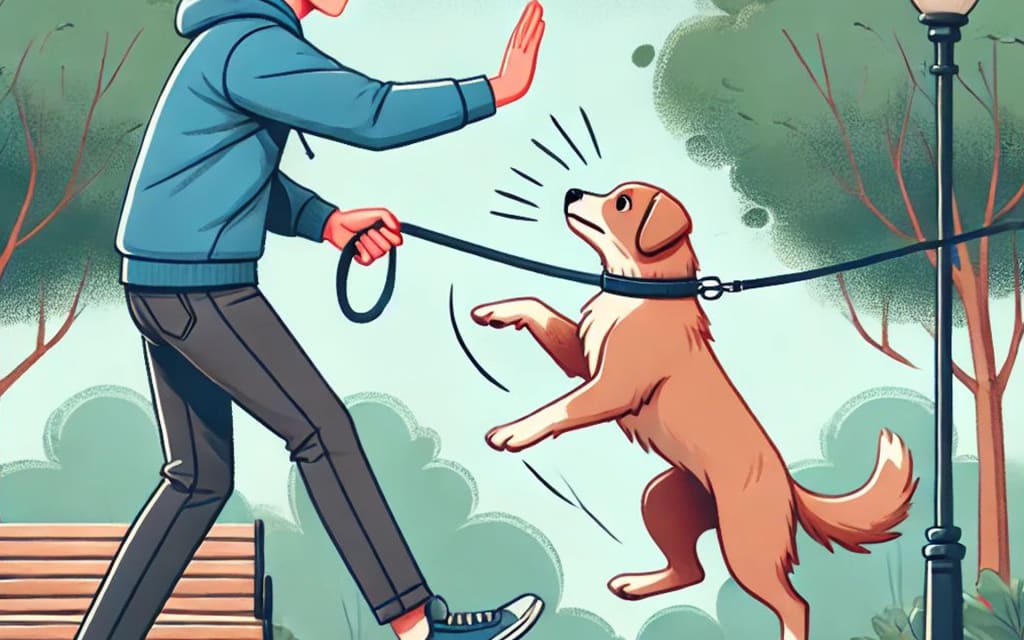
- Don't Use Physical Force: Raising your knee to block a dog’s jump or any type of aggressive physical correction can be harmful. Not only does it confuse the dog, but it might cause them to become more anxious or aggressive.
- Don’t Ignore the Behavior Completely: Ignoring the jumping can help in some cases, but it’s not the full solution. You need to be consistent, and sometimes, you’ll need to provide more structure and training to help your dog understand the desired behavior.
- Avoid Punishment: Punishing your dog for jumping can backfire. Dogs often don’t connect the punishment to their actions in the same way humans do. Instead of correcting the behavior, they may become fearful or confused.
The Real World: Putting it Into Practice
Now that you’ve got the theory down, let’s talk about real-life scenarios. Picture this: you have friends over for dinner, and your dog immediately tries to jump on them. What do you do?
First, have your dog sit or stay before opening the door. When your guest arrives, instruct your dog to stay seated. If they do, reward them immediately with praise and treats. If they jump, calmly walk away and come back once they’ve settled.
After enough practice, your dog will start to understand that sitting calmly equals positive rewards. And as a bonus, your guests will be impressed by your polite dog.
Conclusion
Teaching your dog not to jump is about more than just stopping a behavior—it’s about teaching them the right way to interact with people. Patience and consistency are key, and remember, the goal is to reward good behavior, not punish bad ones. With time and effort, you can have a dog that greets everyone with calm enthusiasm, without knocking them over. And trust me, your guests will thank you.
So, next time your dog tries to jump, remember: it’s not about stopping the behavior—it’s about showing them what you want instead. And when they get it right? Well, that’s when the real rewards start.
Thanks for your reading.
About the Creator
A Dart at Dusk
Seconds ago, the sullen sun set on the two of us… my exuberant furry companion and me. A fresh breeze embraces us, delivering welcome relief from the day’s oppressive heat. His typical stumbling and staggering along — apace with a sloth — has turned into trip-trapping, high-stepping, almost skipping along.
By Angie the Archivist 📚🪶4 days ago in Petlife
The Day I Realized My Home Might Be Stressing My Pet
For a long time, I thought my home was the safest place my pet could be. It was warm, familiar, filled with love. There were cozy corners for naps, toys scattered across the floor, and a predictable routine that gave us both comfort. I believed I was doing everything right — feeding the best food I could afford, keeping up with vet visits, and making sure my pet never felt alone.
By Inamullah Momand 4 days ago in Petlife



Comments
There are no comments for this story
Be the first to respond and start the conversation.