Narratives
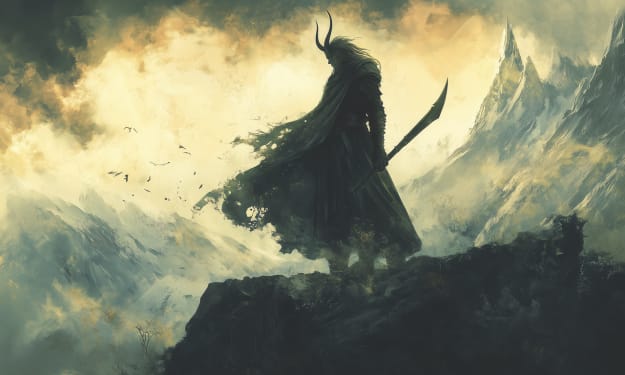
The Igigi, The Ones Who Rebelled Against the Anunnaki
A Hidden Chapter in Ancient Lore When exploring the vast world of ancient Mesopotamian mythology, most people encounter names like Enki, Enlil, and Anu, the powerful gods of the Sumerian pantheon who descended from the stars. These deities, often linked to the mysterious Anunnaki, dominate the narratives of ancient space gods. But there’s another group, often overlooked yet vital to the story: the Igigi. These celestial beings were the original workers, the first labor force of the gods, and perhaps even the earliest example of rebellion against cosmic hierarchy.
By The Secret History Of The World9 months ago in History
The history of Dalit oppression and the reality of the Dalit movement in modern India.
A horrific yet long-neglected chapter in Indian history is the brutal and continuous oppression of Dalits. The word ‘Dalit’ means to suppress, crush, and crush. And within this word lies a cruel reality of history, where millions of people have been victims of social oppression for centuries simply because of their birth. In Hinduism, Dalits were known as ‘untouchables’. This untouchability was not limited to religious rules, but was a terrible social system that did not even consider people as human beings.
By Abdul Barik9 months ago in History
The Woman with the Gun: How a Single Photo Changed the Story of the Irish Revolution
The iconic photograph of an armed woman from the IRA, taken by photographer Colman Doyle in Belfast during the 1970s, has become one of the most recognisable symbols of the "Troubles" in Northern Ireland. Much more than just a visual record, this image encapsulates the complexities of the conflict, the involvement of women in armed struggle, and how photography can shape historical and cultural narratives. Analyzing the context, impact, and legacy of this image allows us to understand not only the role of women in the IRA but also how a single photograph can transform perceptions of gender, resistance, and politics.
By Alex Anderson9 months ago in History
LIFE WITHOUT FUEL
[Isaac Asimov is a noted scientist and science fiction writer. He has a remarkable gift for being able to explain complex science phenomena in ways that the ordinary person can easily understand. Asimov was recently asked to imagine and describe what would happen to everyday life in 1997 if fuel energy began running out. Asimov explains that "this is a picture of the worst, of waste continuing of oil running out, of nothing in its place, of world population continuing to rise."]
By its_ishfaq_ahmad9 months ago in History
The Age of the Sphinx: Was There a Lost Civilization Behind the Egyptian Pyramids?
The Guardian of Secrets Beneath the blazing Egyptian sun, on the Giza Plateau, a colossal figure has watched silently for thousands of years. The Great Sphinx. With the body of a lion and the face of a man, it stands as a timeless guardian of ancient mysteries. But how old is the Sphinx? What secrets does it guard?
By The Secret History Of The World9 months ago in History
Pulwama and Balakot
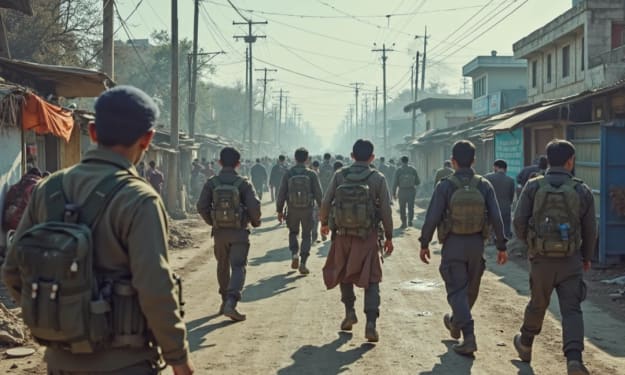
February 14, 2019. On Valentine's Day, one of the worst terrorist attacks in Indian history took place in Pulwama district of Jammu and Kashmir. At least 40 paramilitary personnel were killed in a suicide blast on a CRPF convoy. There was grief, anger and demands for revenge across India. In just twelve days, in the early hours of February 26, the Indian Air Force carried out an airstrike on a so-called "JeM" base in Balakot inside Pakistan. The BJP government, especially Prime Minister Narendra Modi, claimed: "This revenge is India's new bravery."
By Abdul Barik9 months ago in History
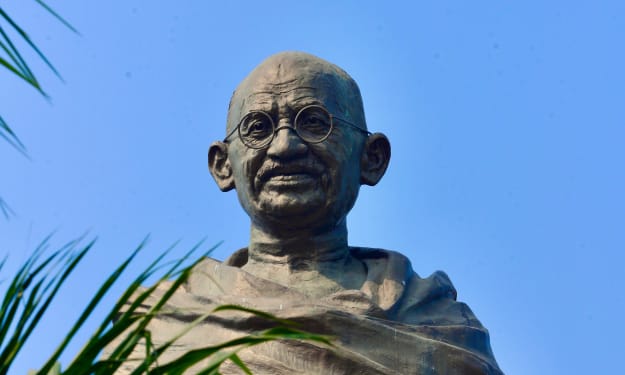
Becoming Gandhi: From Fearful Child to Fearless Father of a Nation
“Who has ever gained freedom without a battle?” asked a poet. Yet India’s path to independence defied that logic—a revolution led without swords, built on the strength of truth, humility, and nonviolence. At its heart stood Mahatma Gandhi—the man who transformed fear into a nation’s courage.
By Kadam's Publishing Company9 months ago in History
"Israel in the Quran: The Legacy of the Children of Israel"
The Role of Bani Isra'il in Islamic Scripture and Beliefs Bani Isra'il, or the Children of Israel, hold a significant place in Islamic history and theology. The Quran, the holy book of Islam, references the Children of Israel extensively, presenting their story as an important part of the broader narrative of divine guidance and prophetic missions. From the time of Prophet Musa (Moses) to the eventual emergence of Prophet Isa (Jesus), the Children of Israel are depicted as a community chosen by God, tasked with upholding His commandments and serving as a model for righteousness. The Quranic portrayal of Bani Isra'il emphasizes not only their religious and spiritual journey but also the lessons to be learned from their successes and failures.
By World politics 9 months ago in History
Kashmir: War of two states
Kashmir: The War of Two States, the Poverty of a Nation Kashmir. When you hear the word, snow-capped mountains, blue rivers, and flower-filled valleys come to mind. But behind this natural beauty lies the sigh of a nation, a bloody chapter in history, and a battlefield of pride for two states. For India and Pakistan, Kashmir is a symbol of national pride. But those who have repeatedly been deprived in the game of these two states are the Kashmiris—the original inhabitants of this valley, whose very existence is questionable.
By Abdul Barik9 months ago in History
A golden chapter
There are some eras in history that serve as a model of learning for not just one nation, but for all of humanity. One such era in Islamic history is the “Khilafah Rashidah” or “Era of the Rightly Ruled Caliphate”—which was established after the death of the Prophet Muhammad (peace and blessings of Allah be upon him) under the leadership of his closest companions. During this era, four caliphs took office one after the other: Abu Bakr (may Allah be pleased with him), Umar (may Allah be pleased with him), Uthman (may Allah be pleased with him), and Ali (may Allah be pleased with him). These four are called the ‘Al-Khalifa’ or ‘The Rightly Guided Caliphs’ because they embodied the ideals of the Prophet in practical politics, administration, social order, and justice.
By Abdul Barik9 months ago in History