
LIFE WITHOUT FUEL
"Imagining a World Without Oil, Gas, and Energy as We Know It"

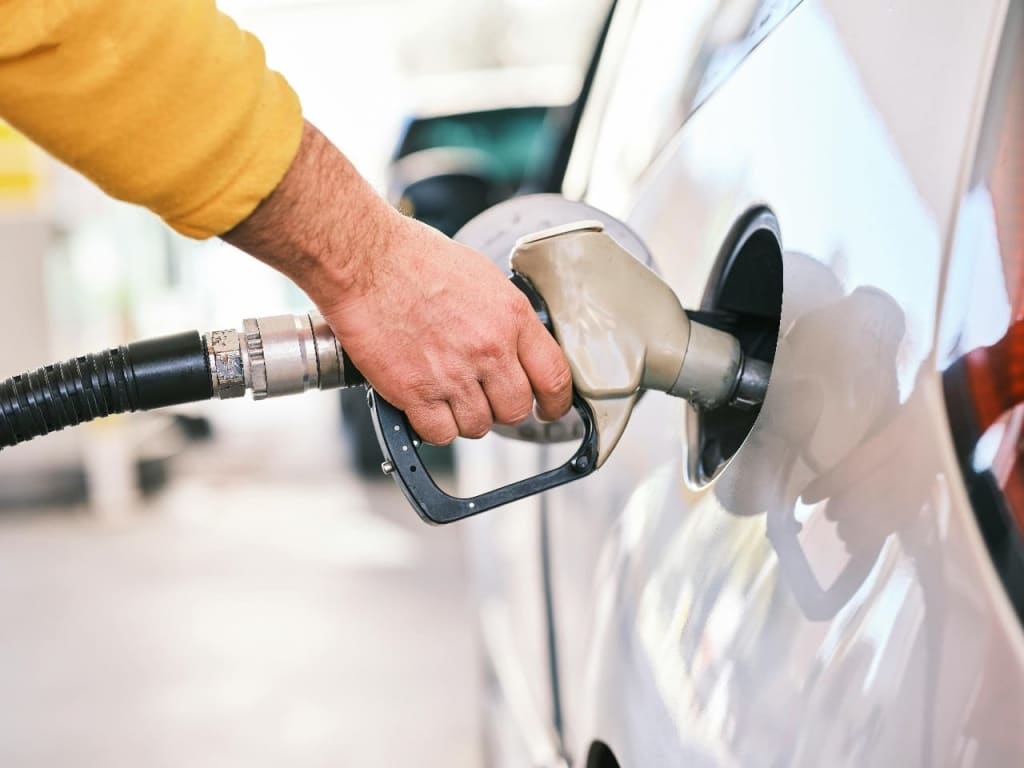
[Isaac Asimov is a noted scientist and science fiction writer. He has a remarkable gift for being able to explain complex science phenomena in ways that the ordinary person can easily understand. Asimov was recently asked to imagine and describe what would happen to everyday life in 1997 if fuel energy began running out. Asimov explains that "this is a picture of the worst, of waste continuing of oil running out, of nothing in its place, of world population continuing to rise."]
1. It's 1997, and it's raining and you'll have to walk to work again. Any given subway train breaks down one morning out of five. The buses are gone, and on a day like today, bicycles slosh and slide..
2. Lucky you have a job in demolition. It's slow and dirty work, but steady. The fading structures of a decaying city are the great mineral mine and hardware shops of the nation. Break them down and reuse the parts. Coal is too difficult to dig up and transport to give us energy in the amounts we need. nuclear fission is judged to be too dangerous, the hoped-for break-through toward nuclear fusion never took place, and solar batteries are too expensive to maintain in sufficient quantity.

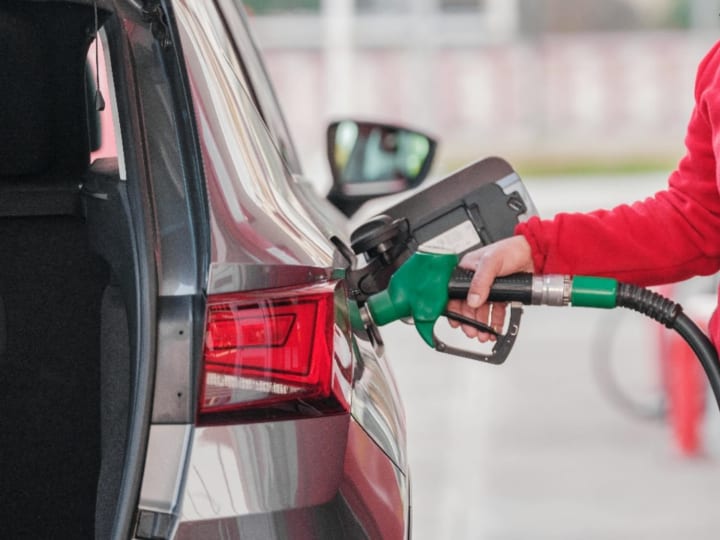
3.Anyone older than ten can remember automobiles. At first, the price of gasoline climbed- way up. Finally only the well-to-do drove, and that was too clear an indication that they were filthy rich; so any automobile on a city street was overturned and burned. The cars vahnished, becoming part of the metal resource.
4. There are advantages in 1997, if you want to look for them. The air is cleaner, and there seem to be fewer clouds. The crime rate has dropped. With the police car too expensive, policemen are back on their beats. More important, the streets are full. Legs are king, and people walk everywhere far into the night. There is mutual protection in crowds.

5. If the weather isn't too cold, people sit out front. If it is hot, the open air is the only air conditioning they get. At least the street lights still burn. Indoors, few people can afford to keep lights burning after supper.
6. As for the winter - well, it is inconvenient to be cold, with most of what furnace fuel is allowed hoarded for the dawn. But sweaters are popular indoor wear. Showers are not an everyday luxury. Lukewarm sponge baths must do, and if the air is not always fragrant in the human vicinity, the automobile fumes are gone.

7.It is worse in suburbs, which were born with the auto live with the auto and dying with the auto. Suburbanites form associations that assign turns to the procurement distribution fo food. Pushcarts creak from house to house along the posh suburban roads, and every bad snowstorm is a disaster. It isn't easy to hoard enough food to last till the roads are open. There is not much refrigeration except for the snow- banks, and then the dogs must be fought off.
8. What energy is left must be conserved for agriculture. The great car factories make trucks and farm machinery almost exclusively. The American population isn't going up much anymore, but the food supply must be kept high even though the prices and difficulty of distribution force each American to eat less. Food is needed for export to pay for some trickles of oil and for other resources.

9.The rest of the world is not as lucky as we are. They're starving out there because earth's population has continued to rese. The population on earth is 5.5 billion up by 1.5 billion since 1977 and, out side the United States Europe, not more than one in five has enough to eat at any given time. There is a high infant mortality rate.
10.It's more than just starvation, though. There are those who manage to survive on barely enough to keep the body working, and that proves to be not enough for the brain. It is estimated and that nearly two billion people in the world are permanently brain- damaged by under nutrition, and the number is growing.

11. At least the big armies are gone. Only the United States and the Soviet Union can maintain a few tanks, planes, and ships - which they dare not move for fear of biting into limited fuel reserves.
12. Machines must not be replaced by human muscle and beasts of burden. People are working longer hours, and - with lighting restricted, television only three hours a night, new books few and printed in small editions – what is there to do with leisure? Work; sleep; and eating are the great trinity of 1997, and only the first two are guaranteed.

13. Where will it end? It must end in a return to the days before 1800, to the days before the fossil fuels powered a vast machine industry and technology. It must end in substance farming and in a world population reduced by starvation, disease and violence to less than a billion.
14. And what can we do to prevent all this now?
15. Now? In 1997? Almost nothing.
TURN TO COMPREHENSION CHECK AT END OF CHAPTER
Thank You!
About the Creator
its_ishfaq_ahmad
Welcome to my storytelling corner! Passionate storyteller sharing original stories and thoughtful articles. I write to inspire, entertain, and connect through words. Explore a world of creativity, one story at a time.
Keep reading
More stories from its_ishfaq_ahmad and writers in History and other communities.
"Why Misfits Make the World More Beautiful"
Have you ever felt like you didn’t quite belong? Like no matter how hard you tried to fit in, you were always out of sync with the crowd? If that resonates with you, then you might be what the world calls a “misfit.” But don’t worry—this isn’t a label of failure. In fact, the secret life of misfits is often one of hidden brilliance, quiet strength, and unconventional paths to success.
By its_ishfaq_ahmad10 months ago in Fiction
18,000-Year-Old ‘Dog’ Discovered in Siberia, Scientists Left in Awe
A remarkable archaeological discovery in Siberia has stunned the scientific community: the remains of an 18,000-year-old animal believed to be an early form of a domesticated dog. Preserved in the region’s frozen soil, this ancient find is being described as one of the most important discoveries in understanding the origins of the human–dog relationship.
By Irshad Abbasi a day ago in History


Comments
There are no comments for this story
Be the first to respond and start the conversation.