World politics
Bio
shares simple and clear updates on global news, leaders, and events. We cover politics, conflicts, and international stories that shape the world. Stay informed and learn something new every day.
Stories (17)
Filter by community
I hate America
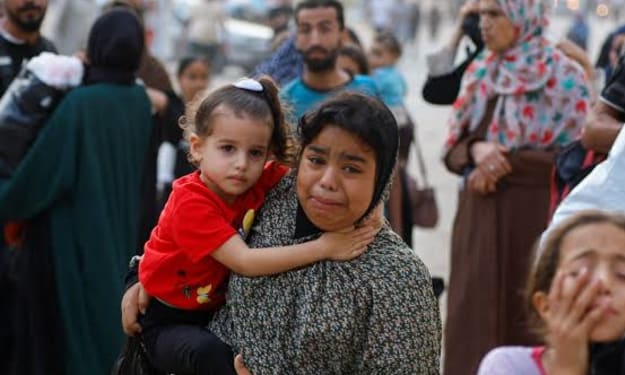
I Hate America for Helping Israel Let me be clear: when I say “I hate America for helping Israel,” I don’t mean I hate Americans. I don’t hate the ideals of democracy, freedom, or human rights that this country claims to uphold. What I hate is the hypocrisy. I hate the billions in aid sent to a country that continues to occupy, displace, and bomb a stateless, defenseless people. I hate how my government turns a blind eye to Palestinian suffering, and how the media spins tragedy into "self-defense" for one side only.
By World politics 9 months ago in The Swamp
Leaders & Liars: Who’s Running the World?
Leaders & Liars: Who’s Running the World? In a world saturated with political promises, manipulated narratives, and backroom deals, the question echoes louder than ever: Who’s really running the world? From democratically elected presidents to unelected corporate moguls, the line between leadership and manipulation continues to blur. Power, once believed to rest in the hands of the people, now seems increasingly concentrated in the hands of those who speak loudest — and lie best.
By World politics 9 months ago in The Swamp
"From Iceland to Indonesia: What Makes a Country Unique?"
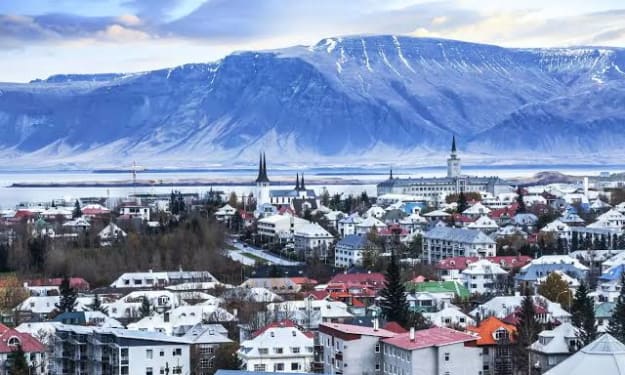
From Iceland to Indonesia: What Makes a Country Unique? What makes one country stand apart from another? It's more than just borders, flags, or famous landmarks. The uniqueness of a country lies in its unseen rituals, unspoken rules, and the heartbeat of its people. It’s in the way mornings begin, meals are shared, music is made, and memories are passed down. From Iceland’s ice-cloaked solitude to Indonesia’s tropical symphony of islands, each country carries a distinct flavor of life — a cultural fingerprint that no one else can copy. And when we stop to look beyond the surface, we begin to see that every nation offers a world entirely its own.
By World politics 9 months ago in Wander
The Rise in Political Toxicity: Democracy at a Breaking Point?
The Rise in Political Toxicity: Democracy at a Breaking Point? In an age defined by rapid communication and algorithm-driven discourse, the global political landscape is growing darker, sharper, and more divisive. What once were platforms for robust debate and thoughtful governance are now often battlegrounds of vitriol, misinformation, and calculated outrage. The rise in political toxicity—fueled by social media, populist rhetoric, and growing ideological extremism—is not just a symptom of modern politics; it is becoming the central feature. Across democracies old and new, from the chambers of Western parliaments to the streets of developing nations, toxic political culture is eroding trust, silencing moderate voices, and threatening the very foundations of civil society.
By World politics 9 months ago in The Swamp
🇺🇸 U.S. Foreign Policy Under Trump: A Global Ripple Effect
U.S. Foreign Policy Under Trump: A Global Ripple Effect The return of Donald Trump to the U.S. presidency in 2025 has once again placed American foreign policy under the global spotlight, sparking significant shifts with wide-reaching consequences. Trump's approach to international relations, marked by nationalism, skepticism towards multilateral institutions, and a transactional mindset, has created waves that resonate far beyond American borders. These ripple effects are shaping global geopolitics, alliances, and international governance, with implications felt in global health, diplomacy, human rights, and security.
By World politics 9 months ago in The Swamp
America vs. The World: Who’s Really in Charge?
America vs. The World: Who’s Really in Charge? For over a century, the United States has positioned itself as the world’s most influential political, economic, and military power. From its decisive role in two world wars to the establishment of international institutions like the United Nations and NATO, America has long claimed a seat at the head of the global table. But in a rapidly shifting geopolitical landscape — where emerging powers are challenging the old order, and global cooperation is fraying — the question arises: Is America still in charge, or is the balance of global power beginning to tilt?
By World politics 10 months ago in The Swamp
🇵🇱 European Elections and Rising Nationalism
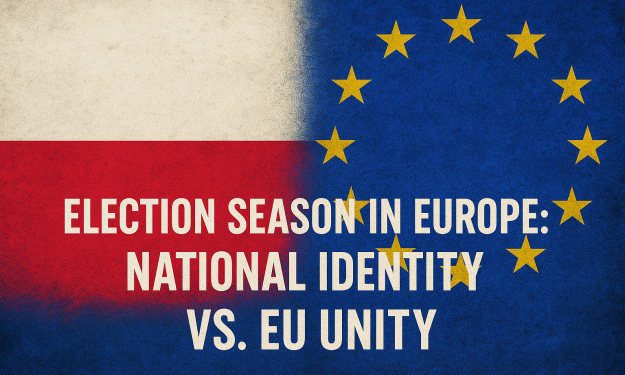
Election Season in Europe: National Identity vs. EU Unity As spring 2025 turns to summer, voters from Warsaw to Lisbon—and from Bucharest to Dublin—are filing into gyms, town halls, and makeshift poll stations for the most consequential European election season in a decade. The headlines shout about populist surges, cyber-intrigue, and razor-thin polls, but the deeper story is an old question with new urgency: Can national identity comfortably coexist with the promise—and the constraints—of European Union unity?
By World politics 10 months ago in The Swamp
Trump & KSA: Power, Oil, and Politics
Trump & KSA: Power, Oil, and Politics Few alliances in modern geopolitics have generated as much intrigue, criticism, and speculation as that between former U.S. President Donald J. Trump and the Kingdom of Saudi Arabia. It is a relationship built not merely on diplomacy, but on towering stakes: oil, arms, influence, and ideology. From lavish state receptions in Riyadh to controversial arms deals and mutual interests in regional security, the Trump-KSA connection became one of the defining features of his foreign policy. As Trump reenters the global stage with renewed political ambitions, the echoes of his engagement with Saudi Arabia continue to shape the narrative of U.S. involvement in the Middle East—and may once again become central in his potential return to power.
By World politics 10 months ago in The Swamp
"How China Became a Tech Superpower"
How China Became a Tech Superpower In just a few decades, China has transformed from a largely agrarian society into one of the most technologically advanced nations on Earth. Once known for cheap manufacturing and imitation products, China now leads in fields such as artificial intelligence, 5G, quantum computing, and electric vehicles. The question many around the world are asking is: How did China become a tech superpower so quickly?
By World politics 10 months ago in Futurism
Inside the CIA: America’s Secret Intelligence Agency
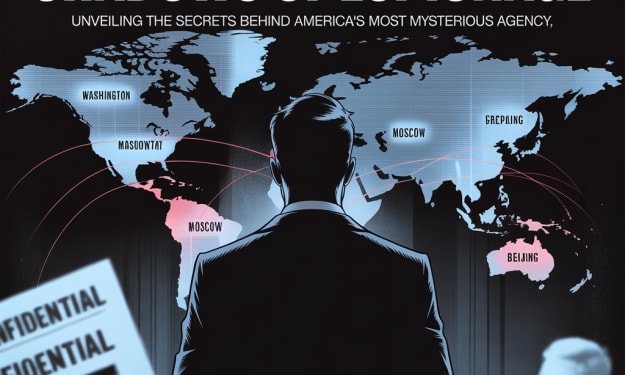
From Cold War Tactics to Cyber Wars: The CIA’s Global Reach In the shadows of global politics, where nations maneuver not through diplomacy alone but through secrecy, deception, and surveillance, the Central Intelligence Agency (CIA) stands as one of the most powerful and enigmatic institutions in the world. Born from the ashes of World War II and raised during the height of the Cold War, the CIA has evolved from traditional espionage operations to become a digital-age intelligence giant. Its reach extends across borders, ideologies, and technologies—operating in a world where knowledge is power and information can change the fate of nations. As threats have shifted from Soviet missiles to cyberterrorism and AI warfare, so too has the CIA adapted, making it not only a historical cornerstone of American security but also a critical player in today’s global power struggle.
By World politics 10 months ago in The Swamp
"Israel in the Quran: The Legacy of the Children of Israel"
The Role of Bani Isra'il in Islamic Scripture and Beliefs Bani Isra'il, or the Children of Israel, hold a significant place in Islamic history and theology. The Quran, the holy book of Islam, references the Children of Israel extensively, presenting their story as an important part of the broader narrative of divine guidance and prophetic missions. From the time of Prophet Musa (Moses) to the eventual emergence of Prophet Isa (Jesus), the Children of Israel are depicted as a community chosen by God, tasked with upholding His commandments and serving as a model for righteousness. The Quranic portrayal of Bani Isra'il emphasizes not only their religious and spiritual journey but also the lessons to be learned from their successes and failures.
By World politics 10 months ago in History