
A golden chapter
Rashidun Era of the Islamic Caliphate

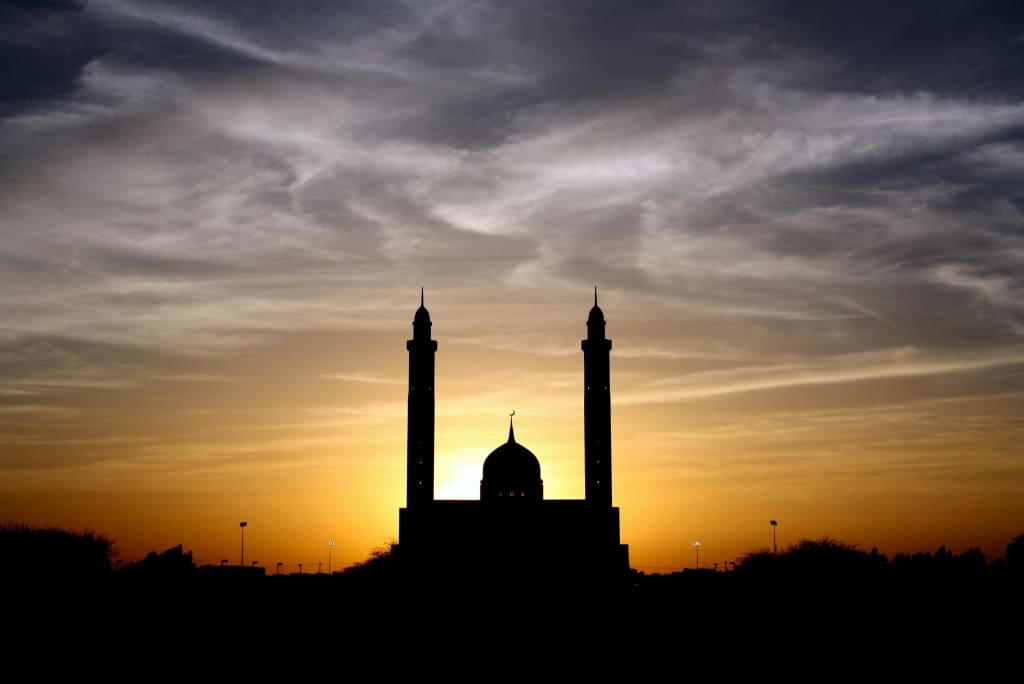
There are some eras in history that serve as a model of learning for not just one nation, but for all of humanity. One such era in Islamic history is the “Khilafah Rashidah” or “Era of the Rightly Ruled Caliphate”—which was established after the death of the Prophet Muhammad (peace and blessings of Allah be upon him) under the leadership of his closest companions. During this era, four caliphs took office one after the other: Abu Bakr (may Allah be pleased with him), Umar (may Allah be pleased with him), Uthman (may Allah be pleased with him), and Ali (may Allah be pleased with him). These four are called the ‘Al-Khalifa’ or ‘The Rightly Guided Caliphs’ because they embodied the ideals of the Prophet in practical politics, administration, social order, and justice.
This era spanned about 30 years (632-661 AD). Although it is not very long in terms of time, its depth and influence are immense. In this short period of time, the Islamic Caliphate grew from a small Arab state into a vast empire, stretching from Persia in the east to Egypt in the west.
After the death of the Prophet, the Companions faced a difficult reality—who would be the leader of the Muslim Ummah? Although there was disagreement among the Companions on the answer to this question, Abu Bakr (RA) was ultimately elected as the first Caliph. His Caliphate lasted only two years, but the contributions he made during this time will be written in golden letters in history. Abu Bakr (RA) took a tough stand against the false prophet Musaylama and other rebels and reestablished the influence of Islam throughout the Arabian Peninsula. He took the initiative to compile the first Quran after the martyrdom of the Hafizs sent during the Prophet's time in the Battle of Yamama, which was a historic step for the future of Islamic civilization.
Then came Hazrat Umar (RA)—the second Caliph of Islam. His reign lasted ten years (634-644 AD). It was the most extensive, well-organized and just reign of Islam. During the caliphate of Hazrat Umar (RA), the Islamic empire expanded amazingly. The Sassanid Empire of Persia and a large part of the Byzantine Empire came under the control of Islam. Cities whose names are immortal in history—such as Damascus, Kufa, Basra, Jerusalem—came under the control of Muslims during this period.
However, conquest was not the only contribution of Umar (RA); rather, his contribution to administrative reforms, judiciary, taxation, urban planning and public welfare activities is unparalleled. He was the first to introduce the “Diwan” (royal records office), the “Hijri Sal” (Islamic calendar), and the “Qazi” (court system). By implementing these policies - building roads, starting a postal system, digging water wells, building mosques, and providing allowances for the poor - he transformed the Islamic state into a developed administrative structure. After his death, not only Muslims but also non-Muslims wept, because during his rule, people of all religions received security and justice.
The caliphate of the third Caliph, Hazrat Uthman (RA), lasted 12 years (644-656 AD). During this time, the Islamic empire expanded further, and the Islamic naval power rose. Cyprus, many regions of North Africa, and many coastal cities of the Arabian Sea came under Muslim control. However, his greatest contribution was the final compilation of the Quran. To protect the Quran from various pronunciations, differences in recitation, and political confusion, he prepared a unified Mushaf and distributed it throughout the empire. As a result of this work, the Quran has been preserved as an accurate and intact book forever.
However, towards the end of Uthman's (RA) reign, some internal discontent arose. Rebellions broke out in distant provinces over some of the behavior of the governors, the kind attitude towards Uthman's (RA) relatives, and some administrative weaknesses. This rebellion turned into a terrible conspiracy and Hazrat Uthman (RA) was martyred. This incident marked the beginning of the first major division within the Muslim Ummah.
To deal with the intense grief and tension that arose in the minds of Muslims after the martyrdom of Uthman (RA), Hazrat Ali (RA) took charge of the Caliphate. He was a brave, wise and one of the wisest of the Companions. Unfortunately, during his Caliphate, the Islamic state faced internal conflicts. The vast wealth accumulated during the reigns of Umar (RA) and Uthman (RA) and the political interest of the new Muslims brought Islamic politics to a new reality. During this time, two major battles called 'Jamal' and 'Siffin' took place, where the Companions themselves were divided into two sides. These conflicts left deep scars in Islamic history and sowed the seeds of many disagreements for the future.
However, Hazrat Ali (RA) placed special emphasis on the judiciary, the spread of knowledge, and self-purification. He remained steadfast on Islamic principles even during the political crises of the Caliphate. His courage, sacrifice, and leadership are a unique chapter in Islam. He was martyred by a Kharijite rebel in 661 AD.
This 30-year history of the Rashidun Caliphate is not just about the expansion of an empire, but also a unique vision of the establishment of justice, humane governance, religious tolerance, and responsible leadership. The four Caliphs were committed to establishing peace, equality, and justice in society by following the principles of the Prophet. They did not use power for personal gain; rather, they considered it an amanah or trust from Allah.
This Rashidun era was the golden age of Islam—where rulers would stay up at night to judge, find the hungry and deliver food, free slaves, and be content with little for themselves. They have sincerely fulfilled the difficult responsibility of implementing the teachings of the Prophet in their own hands. Therefore, this era stands before us as an eternal ideal—where governance does not mean the arrogance of power, but rather it is a great trust of responsibility, piety, and accountability.
About the Creator
Keep reading
More stories from Abdul Barik and writers in History and other communities.
Sykes-Picot Agreement
There are moments in history that are invisible to the naked eye, but have an impact that lasts for centuries. If one agreement is to be blamed for the geographical and political decline of the Muslim world, it would undoubtedly be the “Sykes-Picot” agreement of 1916. This secret agreement was actually a stab in the back of Muslims—a fratricidal conspiracy through which the Western colonial powers shattered the heartland of the Muslim Ummah, that is, the Arab world.
By Abdul Barik8 months ago in History
The Seven Wonders of the World: Amazing Human Creations
People have always been fascinated by things that are grand and unusual. From the very beginning of civilization, humans wanted to build structures that were not just useful, but also showed their skill, creativity, and ambition. The Seven Wonders of the World are the most famous examples of this desire. They are impressive not only because of their size or beauty, but also because of the stories they tell about our past, different cultures, and human innovation. The idea of the Seven Wonders comes from ancient travelers and historians who listed the most remarkable human creations. Even though some of these wonders no longer exist, their legacy continues to inspire people around the world. Let’s explore each one, looking at their history, significance, and why they remain unforgettable. 1. The Great Pyramid of Giza (Egypt) The Great Pyramid of Giza is the only surviving wonder of the original Seven Wonders. Built around 2560 BCE as the tomb of Pharaoh Khufu, it is an extraordinary engineering achievement. Made from more than two million limestone blocks, some weighing over 15 tons, the precision of its construction is still astonishing today. The pyramid shows the power and beliefs of ancient Egypt and continues to attract visitors from all over the world. It is a true symbol of human skill and vision. 2. The Hanging Gardens of Babylon (Iraq) The Hanging Gardens of Babylon are famous for their beauty and clever design, though historians still debate whether they really existed. Ancient stories say King Nebuchadnezzar II built these stepped gardens for his wife, Amytis, who missed the green hills of her homeland. The gardens, described as terraces full of trees, flowers, and shrubs, appeared to float above the city. Whether real or partly mythical, they show how ancient people combined nature and architecture in extraordinary ways. 3. The Statue of Zeus at Olympia (Greece) Around 435 BCE, the sculptor Phidias created the Statue of Zeus at Olympia. This huge statue of the Greek god Zeus, seated on a throne, was over 12 meters tall and made of ivory and gold-plated bronze. It represented both artistic skill and religious devotion. Even though it was destroyed long ago, records and artistic depictions keep its memory alive, showing the Greeks’ dedication to beauty, religion, and craftsmanship. 4. The Temple of Artemis at Ephesus (Turkey) The Temple of Artemis, built around 550 BCE, was dedicated to the Greek goddess of the hunt and wilderness. Known for its enormous size, detailed sculptures, and beautiful design, it was rebuilt several times after destruction, reflecting its cultural importance. People traveled from across the Mediterranean to see it, making the temple a center of religion, art, and commerce. Today, its ruins still tell the story of a civilization that valued beauty and spiritual devotion. 5. The Mausoleum at Halicarnassus (Turkey) Built between 353 and 350 BCE, the Mausoleum at Halicarnassus was the tomb of Mausolus and his wife Artemisia. Combining Greek, Egyptian, and Lycian styles, it stood around 45 meters tall and was decorated with intricate sculptures. Its design influenced monumental tombs for centuries. Even after earthquakes destroyed it, the Mausoleum remains a symbol of human creativity and architectural achievement. 6. The Colossus of Rhodes (Greece) The Colossus of Rhodes, built between 292 and 280 BCE, was a massive bronze statue of the sun god Helios, celebrating Rhodes’ victory over an invading army. Over 30 meters tall, it was one of the tallest statues of the ancient world. Although it only stood for 54 years before an earthquake toppled it, the Colossus became a symbol of triumph, resilience, and artistic achievement, inspiring large statues throughout history. 7. The Lighthouse of Alexandria (Egypt) The Lighthouse of Alexandria, or Pharos, was built around 280 BCE on the small island of Pharos. Standing over 100 meters tall, it served as both a landmark and a guide for sailors entering Alexandria’s busy harbor. Its elegant design combined functionality and beauty. Though earthquakes destroyed it long ago, it remains a symbol of human ingenuity and innovation in maritime engineering. The Legacy of the Seven Wonders The Seven Wonders are more than just buildings; they are symbols of human creativity, ambition, and achievement. Each wonder tells a story about the people who built it, the culture it came from, and the new ideas of its time. Even though some no longer exist, their stories continue to live through historical records, art, and the fascination of people worldwide. These wonders still inspire architects, artists, engineers, and travelers today. From the pyramids of Egypt to the Hanging Gardens of Babylon, they remind us that imagination and effort can create something that lasts for thousands of years. They are examples of determination, vision, and the pursuit of excellence. Conclusion The Seven Wonders of the World are timeless creations that celebrate human creativity and determination. They are more than stones, metals, or ruins—they represent entire civilizations and the marks they left on history. Even after centuries, their stories continue to inspire people to dream, create, and achieve greatness. These wonders remind us that with vision, passion, and effort, humans can build creations that
By Binan Mooona day ago in History
3 Everyday Rules That Exist Because Someone Once Did Something Very Stupid
Everywhere you go, you are surrounded by rules that feel oddly specific. Do not touch. No running. Contents hot. Do not insert body parts. These warnings aren’t theoretical. They weren’t written by pessimists or lawyers with too much free time. They exist because at some point in history, a real human being looked at a situation and thought, “This will probably be fine.”
By Enoch Sagini4 days ago in History
Wild Card Weekend Recap: What Happens Now?
I think I figured out why I love Wild Card Weekend so much. It's because it's the first playoff anything of the calendar year. The NFL season starts in the fall, and once upon a time, the champion was crowned either on or slightly before New Year's. The evolution of the NFL schedule has resulted in the playoffs starting just into the New Year, and currently, the final week of the season falls on the first weekend of the New Year, with Wild Card Weekend coming a week after that. So yes, chronologically, the NFL's Wild Card Weekend serves as the first playoff anything of the calendar year.
By Clyde E. Dawkins7 days ago in Unbalanced




Comments
There are no comments for this story
Be the first to respond and start the conversation.