
Pulwama and Balakot
Pulwama and Balakot: Revenge, propaganda or planned drama?

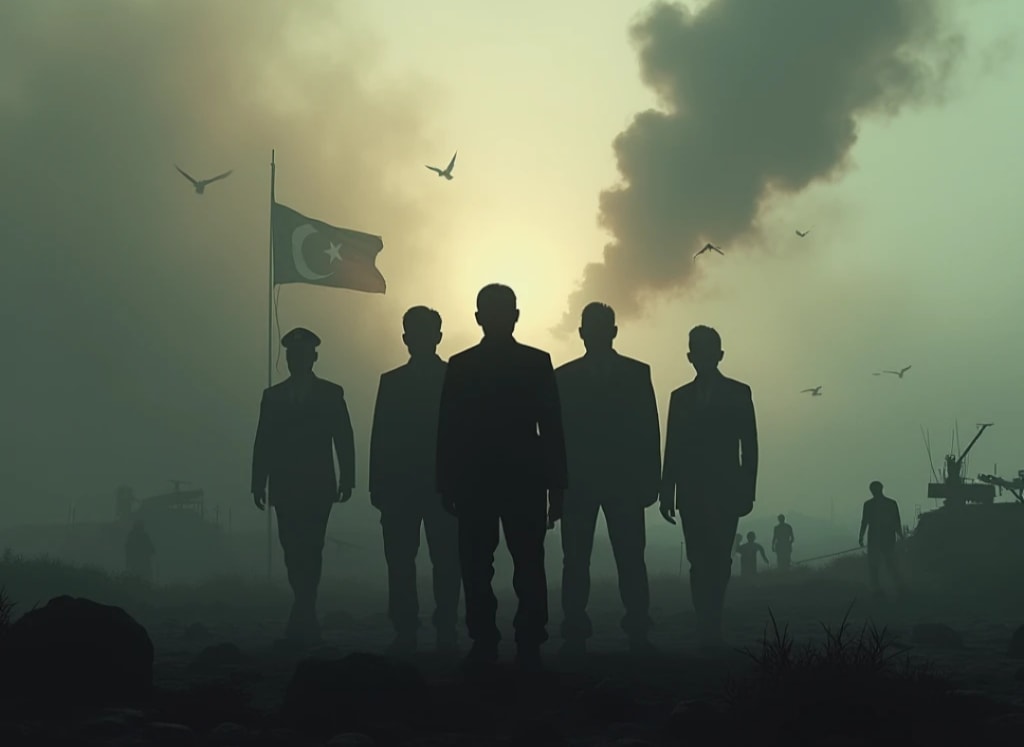
February 14, 2019. On Valentine's Day, one of the worst terrorist attacks in Indian history took place in Pulwama district of Jammu and Kashmir. At least 40 paramilitary personnel were killed in a suicide blast on a CRPF convoy. There was grief, anger and demands for revenge across India. In just twelve days, in the early hours of February 26, the Indian Air Force carried out an airstrike on a so-called "JeM" base in Balakot inside Pakistan. The BJP government, especially Prime Minister Narendra Modi, claimed: "This revenge is India's new bravery."
But long after this incident, the question arose - was this attack really an ordinary terrorist attack? Or was it a political interest, a timely conspiracy and a shadow of a deep state failure?
First of all, the type of suicide attack was new on Indian soil. Never before had a CRPF convoy been attacked with such an explosive-laden vehicle in Jammu and Kashmir. The main accused in the attack was a 22-year-old Kashmiri youth, Adil Ahmed Dar, who is called a suicide bomber of ‘JeS’. But the question is, how could he come so close to such a secure convoy with more than 350 kg of explosives? Why did India’s intelligence agencies not notice such a huge security gap? Even the National Investigation Agency (NIA) investigation has left many questions unanswered.
If we take into account the time, then a deeper political context is discovered. Just before Pulwama, the BJP lost the assembly elections in three key states—Madhya Pradesh, Rajasthan and Chhattisgarh. The popularity of the Modi government was taking a hit, and dissatisfaction was growing across the country over farmer agitations, unemployment and overall economic woes. The Pulwama attack became political oxygen for the Modi government. The country’s attention shifted from economic failure to nationalism. The call “we have taken revenge” heated up the emotions of the common people.
There is also a debate about the specific evidence of the Balakot airstrike. India claims that a terrorist training camp in Pakistan's Balakot area was destroyed and many 'Jewish' militants were killed. But international observers Reuters, Al Jazeera, and the BBC's investigative team went there and found that the attack site was an abandoned mountainous area, with no bodies, no signs of destruction. Pakistan also claims that even though the Indian aircraft entered, they mainly cut down some trees and killed some crows.
Former Indian Army Chief, Dr. Hooda, even raised questions about this incident: "Is this really an anti-terrorist revenge, or an election strategy?" The BJP made this attack a major tool in its election campaign. Modi uttered: "Ghuss ke maara hai" (I crossed the border and killed). Even the 'Balakot strike' entered their election slogan. The result? BJP's earthquake-like victory in the 2019 Lok Sabha elections.
After this incident, anti-Muslim, anti-Kashmir and war-aggressive sentiments were incited across India. Those who questioned the government were silenced by calling them ‘traitors’. This is like a new India, where slogans are the state religion, not questions.
However, after the Balakot strike, an Indian fighter jet was shot down and pilot Abhinandan Bharti was captured by Pakistan. Pakistan, showing its strategic acumen, quickly released him. This put Pakistan on the international stage as a humanitarian, while India was in danger diplomatically. This restored the balance—but the question remains: Was Balakot just an election drama?
The arrest of former Kashmir police officer DSPP Davinder Singh revealed a surprising fact. He was caught in a car with two Hizbul Mujahideen militants in 2020. Later, it was learned that his name was associated with those who came to investigate the Pulwama attack. When this information was revealed, the investigation was suddenly hushed up. Why? Who doesn't want the full truth of the Pulwama attack to be revealed?
The answer to this question may not be easy to find. But many political analysts, such as Arundhati Roy, Prashant Bhushan, and even former army officers believe that—“Pulwama and Balakot are part of a political strategy, where electoral public opinion is built at the expense of human lives.”
So who won, who lost?
The BJP government won—because they came to power for the second time on the wave of nationalism.
Pakistan also won to some extent—in the international community, they are known as a peace-loving and fast-reacting country.
The losers were ordinary Indians and Pakistanis—who do not want war, do not want hatred, but their emotions have been used for politics.
And the biggest losers were the families of the slain CRPF jawans—who still do not know how such a major security failure occurred, why it happened, and who is truly responsible.
The bottom line is that wherever nationalist sentiment is brought to the political stage, the truth gets buried under propaganda. Pulwama and Balakot are brutal examples of this.
About the Creator
Keep reading
More stories from Abdul Barik and writers in History and other communities.
Kashmir: War of two states
Kashmir: The War of Two States, the Poverty of a Nation Kashmir. When you hear the word, snow-capped mountains, blue rivers, and flower-filled valleys come to mind. But behind this natural beauty lies the sigh of a nation, a bloody chapter in history, and a battlefield of pride for two states. For India and Pakistan, Kashmir is a symbol of national pride. But those who have repeatedly been deprived in the game of these two states are the Kashmiris—the original inhabitants of this valley, whose very existence is questionable.
By Abdul Barik8 months ago in History
Chinese Water Torture
Since the dawn of history, human beings have inflicted unimaginable suffering upon one another. Across centuries, people have devised increasingly elaborate methods of punishment and coercion, some brutally explicit, others deceptively subtle. While devices such as iron maidens, racks, whips, and wheels relied on visible physical agony, there existed a form of torment whose true power lay not in blood or broken bones, but in patience, repetition, and the slow erosion of the mind. This method came to be known as Chinese water torture.
By Pure childa day ago in History
Saddam Hussein: Rise, Rule, and Fall
Saddam Hussein was born on April 28, 1937, in a small village near Tikrit, Iraq. His early life was marked by poverty, hardship, and a sense of abandonment. His father died before he was born, and his mother remarried soon after. Young Saddam grew up in a household dominated by strict relatives and was exposed to political discussions and nationalist sentiments from an early age. These formative years shaped his personality—ambitious, ruthless, and fiercely determined to rise above his modest beginnings.
By The best writer a day ago in History



Comments
There are no comments for this story
Be the first to respond and start the conversation.