
"Israel in the Quran: The Legacy of the Children of Israel"
"The Role of Bani Isra'il in Islamic Scripture and Beliefs"

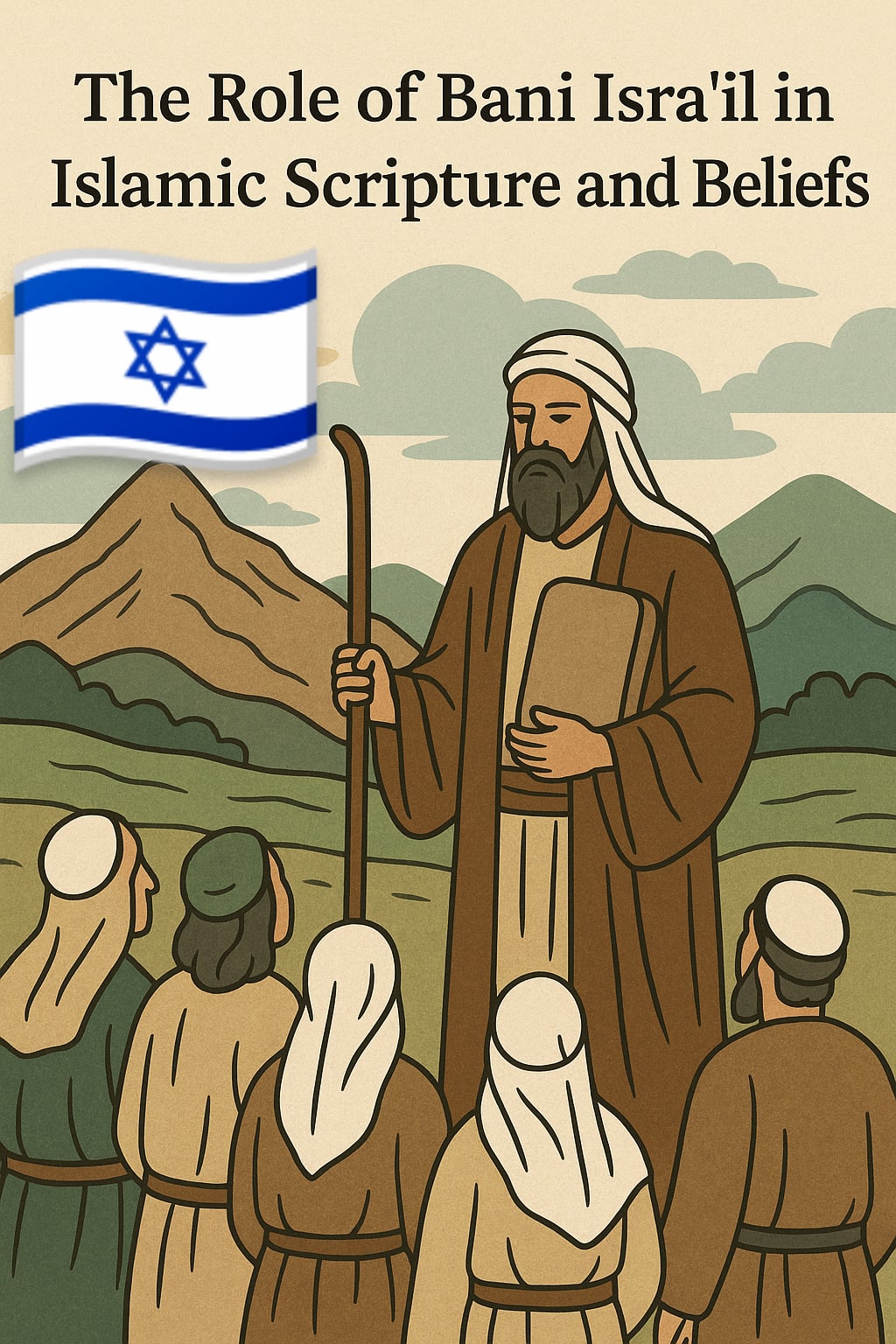
The Role of Bani Isra'il in Islamic Scripture and Beliefs
Bani Isra'il, or the Children of Israel, hold a significant place in Islamic history and theology. The Quran, the holy book of Islam, references the Children of Israel extensively, presenting their story as an important part of the broader narrative of divine guidance and prophetic missions. From the time of Prophet Musa (Moses) to the eventual emergence of Prophet Isa (Jesus), the Children of Israel are depicted as a community chosen by God, tasked with upholding His commandments and serving as a model for righteousness. The Quranic portrayal of Bani Isra'il emphasizes not only their religious and spiritual journey but also the lessons to be learned from their successes and failures.
The Quranic Depiction of Bani Isra'il
In Islamic belief, Bani Isra'il refers to the descendants of Prophet Ya'qub (Jacob), who was the grandson of Ibrahim (Abraham). Ya'qub’s twelve sons, the forefathers of the twelve tribes of Israel, are central figures in Islamic tradition. The Quran recounts various aspects of their lives, beginning with the trials and blessings that befell Prophet Musa, a member of Bani Isra'il. The Children of Israel are portrayed as recipients of divine favor and guidance, but their story is also marked by periods of rebellion, ingratitude, and failure to follow God’s commandments.
One of the most significant themes in the Quran’s account of Bani Isra'il is their liberation from the tyranny of Pharaoh. According to the Quran, God sent Prophet Musa to free the Israelites from Egyptian bondage. The Quran highlights the miraculous events surrounding the liberation, including the parting of the Red Sea, which allowed the Israelites to escape, and the destruction of Pharaoh and his army. This event symbolizes God’s deliverance of the oppressed and the triumph of divine justice over tyranny.
In Surah Al-Baqarah, the second chapter of the Quran, Bani Isra'il are mentioned repeatedly, emphasizing their role in the divine plan. The Quran recounts their history in a way that underscores the lessons to be learned from their experiences, both positive and negative. The Israelites were favored by God with prophets, miracles, and a clear code of law, yet they often strayed from the path of righteousness. Their story serves as a reminder of the consequences of turning away from divine guidance.
The Lessons of Disobedience and Repentance
The Quran does not merely recount the successes of Bani Isra'il; it also emphasizes their failures and the consequences of disobedience. One of the most prominent examples is their repeated rejection of the messengers sent to them. After being saved from Pharaoh, the Children of Israel were guided by Prophet Musa, who received the Torah, the divine law. However, despite these blessings, many among Bani Isra'il disobeyed the commandments of God.
A significant example of this disobedience is the episode of the golden calf, which is mentioned in Surah Al-A'raf. After Musa had gone to Mount Sinai to receive divine commandments, some of the Israelites fashioned a golden calf and began worshipping it. This act of idolatry angered God, and the disobedient ones were punished. The Quran underscores that such acts of disobedience led to hardship and divine wrath.
However, the story of Bani Isra'il is not one of complete despair. Throughout the Quran, God calls on the Children of Israel to repent and return to righteousness. In Surah Al-Baqarah, God reminds them of the numerous blessings they have received and urges them to adhere to His guidance. The Quran portrays repentance as a key theme in the relationship between God and His people. Even when the Children of Israel faltered, the possibility of redemption through sincere repentance was always available.
The Prophets and Their Role
Bani Isra'il were recipients of many of the great prophets mentioned in the Quran. From the time of Prophet Musa, the Children of Israel were continually guided by prophets who taught them the commandments of God and urged them to follow the straight path. The Quran recounts the stories of Prophets like Dawud (David), Sulayman (Solomon), and Isa (Jesus), who are also from Bani Isra'il. These prophets not only provided spiritual guidance but also served as leaders, warriors, and teachers of divine wisdom.
Prophet Isa (Jesus) is particularly significant in Islamic thought. Although his story is closely associated with Christianity, the Quran presents Isa as a prophet and messenger of God. His role in guiding Bani Isra'il and calling them back to the true worship of God is central to the Quranic narrative. Isa’s teachings emphasized monotheism and righteousness, but his message was often met with opposition. The Quran presents his crucifixion in a different light from Christian tradition, suggesting that he was not crucified but rather raised up by God.
In the Islamic view, the prophets sent to Bani Isra'il were all part of a long line of messengers, culminating in the final prophet, Muhammad. Muhammad, although not from the lineage of Bani Isra'il, was seen as the last messenger to humanity, bringing the final revelation, the Quran, which affirmed the messages of the previous prophets, including those sent to the Children of Israel.
The Legacy of Bani Isra'il in Islamic Beliefs
The legacy of Bani Isra'il in Islam is multifaceted. On the one hand, they represent a community that received divine favor, guidance, and revelation. They were given the Torah, sent numerous prophets, and witnessed miracles that testified to the power and mercy of God. On the other hand, their story serves as a warning to future generations about the dangers of pride, ingratitude, and disobedience.
For Muslims, the story of Bani Isra'il is a reminder of the importance of following the guidance of God’s messengers, maintaining humility, and adhering to the commandments in the face of trials and temptations. The Quran emphasizes that all the prophets, including those sent to Bani Isra'il, preached the same core message: the worship of the One true God and the importance of righteous deeds.
In conclusion, Bani Isra'il’s role in Islamic scripture is one that offers both lessons and inspiration. Their narrative in the Quran serves as a profound reminder of divine justice, mercy, and the potential for redemption through repentance. Their legacy continues to shape Islamic thought and teachings, influencing the way Muslims understand their relationship with God and the importance of upholding His commandments.
About the Creator
World politics
shares simple and clear updates on global news, leaders, and events. We cover politics, conflicts, and international stories that shape the world. Stay informed and learn something new every day.
Keep reading
More stories from World politics and writers in History and other communities.
3 Completely Innocent Decisions That Ended Very Badly
Most disasters don’t begin with villainous laughter or ominous music. They begin with someone making a perfectly reasonable decision. Sensible, even. The kind of choice you’d defend confidently if questioned later.
By Enoch Saginiabout 19 hours ago in History
Israel: A Land of Struggle, Faith, and Transformation
The land that is today Israel has been at the crossroads of civilizations for thousands of years. From the deserts of Negev to the fertile hills of Galilee, this land has witnessed the rise and fall of empires, the birth of religions, and the enduring hopes of peoples who called it home. In ancient times, it was known as Canaan, a region inhabited by diverse groups, each with their own gods, languages, and customs.
By The best writer a day ago in History



Comments
There are no comments for this story
Be the first to respond and start the conversation.