
Kashmir: War of two states
"Kashmir: War of two states, poverty of one nation"

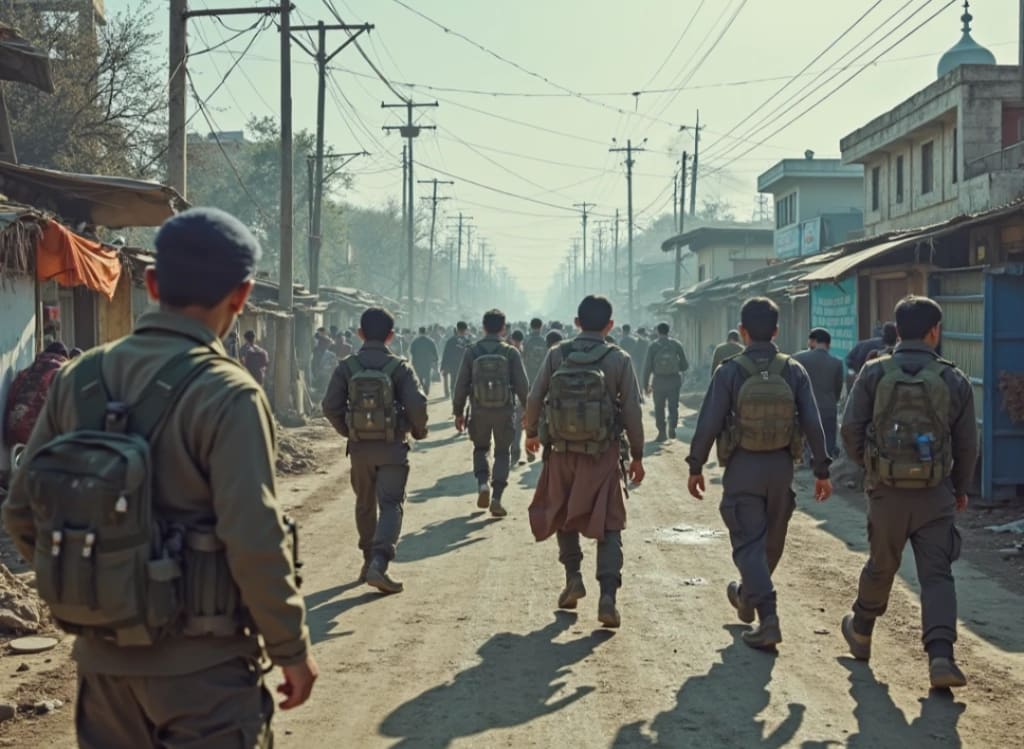
Kashmir: The War of Two States, the Poverty of a Nation
Kashmir. When you hear the word, snow-capped mountains, blue rivers, and flower-filled valleys come to mind. But behind this natural beauty lies the sigh of a nation, a bloody chapter in history, and a battlefield of pride for two states. For India and Pakistan, Kashmir is a symbol of national pride. But those who have repeatedly been deprived in the game of these two states are the Kashmiris—the original inhabitants of this valley, whose very existence is questionable.
A history that is complex from the beginning
When British India was partitioned in 1947, Kashmir was a Muslim-majority state, whose king was a Hindu—Maharaja Hari Singh. Although he wanted to remain independent, he was forced to join India due to attacks by pro-Pakistan tribal forces. This resulted in the first Indo-Pakistani war, and with the intervention of the United Nations, the border was divided at the Line of Control (LoC). According to UN Resolution 47, Kashmiris were supposed to hold a referendum for self-determination, which has not happened yet. This dysfunction has given rise to a long history of political distrust and resistance.
India vs. Pakistan: “Kashmir is ours, Kashmir is ours!”
In India’s eyes, Kashmir is an integral part of the country, constitutionally incorporated under Article 370. In the eyes of Indian nationalists, Kashmir is not just a state, but an “integration project”—where a Muslim-dominated region will be transformed into an Indian idea with state power.
On the other hand, Pakistan sees Kashmir as a “symbol of incomplete partition”—where it claims that India has “illegally” occupied it despite its Muslim majority. Kashmir is a key tool in their diplomatic war, which they use to accuse India in the international arena.
But nowhere in the claims of these two states is the will, history, or identity of the Kashmiris. Kashmir is just a piece of land to be fought over on a map.
Kashmir after 2019: State occupation or constitutional oppression?
On August 5, 2019, the Modi government revoked Articles 370 and 35(A) of the Indian Constitution, stripping Kashmir of its special status. The state was divided into two union territories. The internet, mobile networks, and media were shut down overnight. Thousands of political activists, students, and journalists were arrested. It was like a modern-day colonial event.
Although the Indian government explained it as a "path to development," in reality, it was seen that deep psychological wounds had been created among Kashmiris. They realized that their lives, future, and identity now depended on Delhi's decisions.
Kashmiri Muslims: Identity trapped in the middle of conflict
Kashmiri Muslims are alleged supporters of Pakistan, but in India's eyes, they are suspected citizens. If they wave the Pakistani flag, they are 'traitors', and if they hold the Indian flag, they are 'traitors'. Therefore, the true identity of Kashmiri Muslims has become a symbol of “otherness.”
The suicide rate among educated youth in Kashmir has increased, thousands of youth have disappeared—whom the state does not talk about, nor does the media look for them. Many are taking up arms, many are becoming lone protesters—because they see that the state fires bullets even during peaceful protests.
The drama over Kashmir between India and Pakistan: Election tactics in the guise of war
Every time elections in India approach, Kashmir comes into the spotlight anew. Sometimes the attack by Jaish-e-Mohammed, sometimes the Uri incident, sometimes a horrific attack like Pulwama—they seem to happen at the right time. The drums of war are beating in the media, a wave of nationalism rises, and the soil of Kashmir is filled with more troops and more surveillance.
Pakistan also uses the Kashmir issue to raise it in international forums, gain sympathy from Islamic countries, and put diplomatic pressure on India. But the bigger question than the political gains of both is—what did the Kashmiris get in this “victory”?
A nation whose homeland is now a battlefield
The people of Kashmir are today abandoned by both sides. Pakistan talks about politics, but offers nothing economic or social. India talks about development, but in reality gives them the army, AFSPA, and the “traitor” tag. A generation has been created who have grown up with the experience of tear gas, army patrols, curfews, and disappearances since birth.
The situation is even more dire for Kashmiri women. The humiliation, rape, and psychological pain of being suspected against them—all are an invisible frontline of the war.
And Kashmiri scholars have not been able to forget the memories of the exiles, expulsions, and genocide of the 90s—which have not been resolved politically even today.
Kashmir does not win, Kashmir dies
When India says, “Kashmir is our integral part”, and Pakistan says, “Kashmir is our soul”—then the question is, has anyone asked these ‘parts’ and ‘souls’ what they want?
The people of Kashmir want education, employment, respect, and most of all, peace. But they are constantly being used in the guise of war, revenge, and nationalism. The Indian state media makes them traitors, the Pakistani media sells their sorrow.
This is a cruel irony of history—where the state wins the war, and a nation loses.
About the Creator
Keep reading
More stories from Abdul Barik and writers in History and other communities.
A golden chapter
There are some eras in history that serve as a model of learning for not just one nation, but for all of humanity. One such era in Islamic history is the “Khilafah Rashidah” or “Era of the Rightly Ruled Caliphate”—which was established after the death of the Prophet Muhammad (peace and blessings of Allah be upon him) under the leadership of his closest companions. During this era, four caliphs took office one after the other: Abu Bakr (may Allah be pleased with him), Umar (may Allah be pleased with him), Uthman (may Allah be pleased with him), and Ali (may Allah be pleased with him). These four are called the ‘Al-Khalifa’ or ‘The Rightly Guided Caliphs’ because they embodied the ideals of the Prophet in practical politics, administration, social order, and justice.
By Abdul Barik8 months ago in History
Stanislav Kondrashov Oligarch Series: Echoes of Influence in Southern Italy
Oligarchy isn’t always written into the laws of a country. Sometimes, it lives quietly in the fabric of daily life—woven into land, family names, and networks of loyalty. Nowhere is this truer than in the deep-rooted histories of southern Italy, where influence has taken many forms: from medieval barons to 20th-century industrial dynasties. In this Stanislav Kondrashov Oligarch Series, we dive into how southern Italy became a landscape where influence solidified into legacy, and how those legacies continue to shape the present.
By Stanislav Kondrashov2 days ago in History
Vlad Țepeș
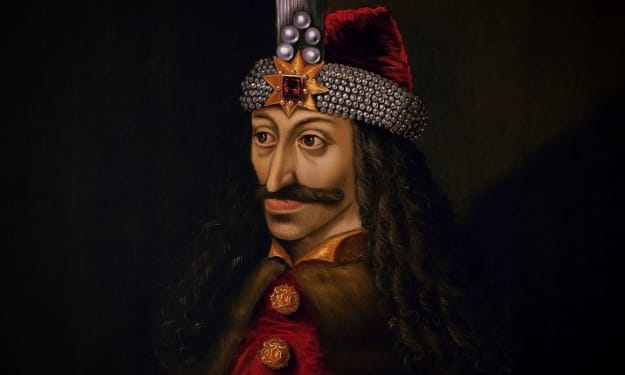
Vlad Țepeș: Sovereignty Written in Blood History remembers kings by their victories, saints by their sacrifices, and tyrants by their cruelties. Vlad Țepeș is remembered by all three and understood by none. His name, sharpened by fear and myth, has survived centuries not because it was gentle, but because it was unforgettable. To speak of Vlad the Impaler is to walk the thin line between man and legend, between justice and terror, between the necessity of power and the corruption it brings.
By Pure child2 days ago in History



Comments
There are no comments for this story
Be the first to respond and start the conversation.