Figures
Echoes of a Homeland
Antônio Gonçalves Dias, a prominent literary figure in Brazil, significantly influenced the country's cultural and poetic landscape. As a trailblazer of Brazilian Romanticism, he is celebrated for his evocative nationalistic themes, his deep connection to the indigenous spirit, and his skillful integration of European poetic structures with Brazilian narratives. Although his life was cut short, his artistic legacy and patriotic fervor were profound. This narrative recounts the life of Gonçalves Dias—the poet who captured the essence of saudade, the forest, and the spirit of Brazil. Born on August 10, 1823, in Caxias, Maranhão, he was the offspring of a Portuguese merchant and a mixed-race Brazilian mother. This diverse background significantly shaped his identity and influenced his literary work, especially in his compassionate depictions of indigenous communities and his strong sense of belonging to Brazil. Despite the societal biases of his era, Dias received a robust education and later relocated to Portugal to pursue a law degree at the University of Coimbra in 1840.
By A História9 months ago in History
The Woman with the Gun: How a Single Photo Changed the Story of the Irish Revolution
The iconic photograph of an armed woman from the IRA, taken by photographer Colman Doyle in Belfast during the 1970s, has become one of the most recognisable symbols of the "Troubles" in Northern Ireland. Much more than just a visual record, this image encapsulates the complexities of the conflict, the involvement of women in armed struggle, and how photography can shape historical and cultural narratives. Analyzing the context, impact, and legacy of this image allows us to understand not only the role of women in the IRA but also how a single photograph can transform perceptions of gender, resistance, and politics.
By Alex Anderson9 months ago in History
LIFE WITHOUT FUEL
[Isaac Asimov is a noted scientist and science fiction writer. He has a remarkable gift for being able to explain complex science phenomena in ways that the ordinary person can easily understand. Asimov was recently asked to imagine and describe what would happen to everyday life in 1997 if fuel energy began running out. Asimov explains that "this is a picture of the worst, of waste continuing of oil running out, of nothing in its place, of world population continuing to rise."]
By its_ishfaq_ahmad9 months ago in History
The Beautiful Land of Elowen
Long ago, nestled between two glistening seas and surrounded by violet-crowned mountains, there lay a land so breathtakingly beautiful that even the stars above paused in their orbits to gaze down in wonder. This was Elowen—a place where rivers shimmered with the colors of moonlight, trees whispered secrets to the wind, and the air always smelled of wild honeysuckle and rain-kissed earth.
By Haris Khan9 months ago in History
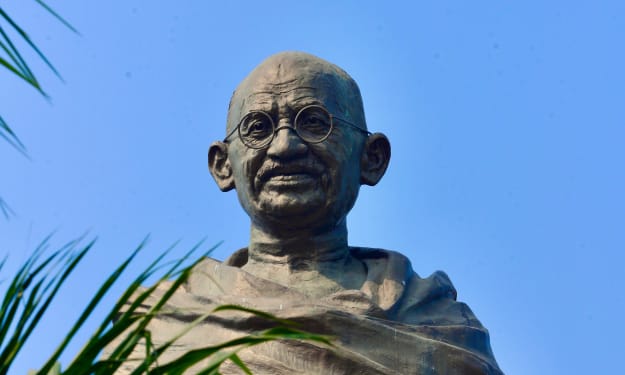
Becoming Gandhi: From Fearful Child to Fearless Father of a Nation
“Who has ever gained freedom without a battle?” asked a poet. Yet India’s path to independence defied that logic—a revolution led without swords, built on the strength of truth, humility, and nonviolence. At its heart stood Mahatma Gandhi—the man who transformed fear into a nation’s courage.
By Kadam's Publishing Company9 months ago in History
"Israel in the Quran: The Legacy of the Children of Israel"
The Role of Bani Isra'il in Islamic Scripture and Beliefs Bani Isra'il, or the Children of Israel, hold a significant place in Islamic history and theology. The Quran, the holy book of Islam, references the Children of Israel extensively, presenting their story as an important part of the broader narrative of divine guidance and prophetic missions. From the time of Prophet Musa (Moses) to the eventual emergence of Prophet Isa (Jesus), the Children of Israel are depicted as a community chosen by God, tasked with upholding His commandments and serving as a model for righteousness. The Quranic portrayal of Bani Isra'il emphasizes not only their religious and spiritual journey but also the lessons to be learned from their successes and failures.
By World politics 9 months ago in History
The Rise and Fall of the Baghdad Pact: Why CENTO Failed in the Middle East
Baghdad Pact and the 'Wall of Allies': That Military Alliance Like NATO Which Did Not Help Pakistan When Needed When you hear the name of Baghdad, the capital of Iraq, many thoughts come to mind — from Harun al-Rashid and the capital of the Abbasid Caliphate to Saddam Hussein.
By Ikram Ullah9 months ago in History
The Hidden God of War: Unmasking Yahweh, the Forgotten Lord of the Skies
Yahweh, The God Of War In the dry winds of the ancient Levant, beneath the crumbled ruins of forgotten cities and among the fractured stone tablets buried beneath the sands, lingers the shadow of a god that few truly know. Today, billions invoke his name in prayer, see him as the father of creation, the sole and omnipotent divine being who shaped the universe. But this name, Yahweh, once belonged not to a universal creator, but to a jealous and fiery god of war, a desert storm deity born from the smoke of battle, molded in tribal warfare, and later crowned the king of a nation. His name was carved in blood long before it was etched into scripture.
By The Secret History Of The World9 months ago in History
The Last Days of Bahadur Shah Zafar: The Forgotten Tragedy of the Last Mughal Emperor
The 1857 'War of Independence': When Delhi Witnessed Death Dancing "I am neither the light of anyone’s eye, nor the solace of anyone’s heart, I am but a handful of dust, of no use to anyone."
By Ikram Ullah9 months ago in History