
Echoes of a Homeland
The Life and Legacy of Gonçalves Dias

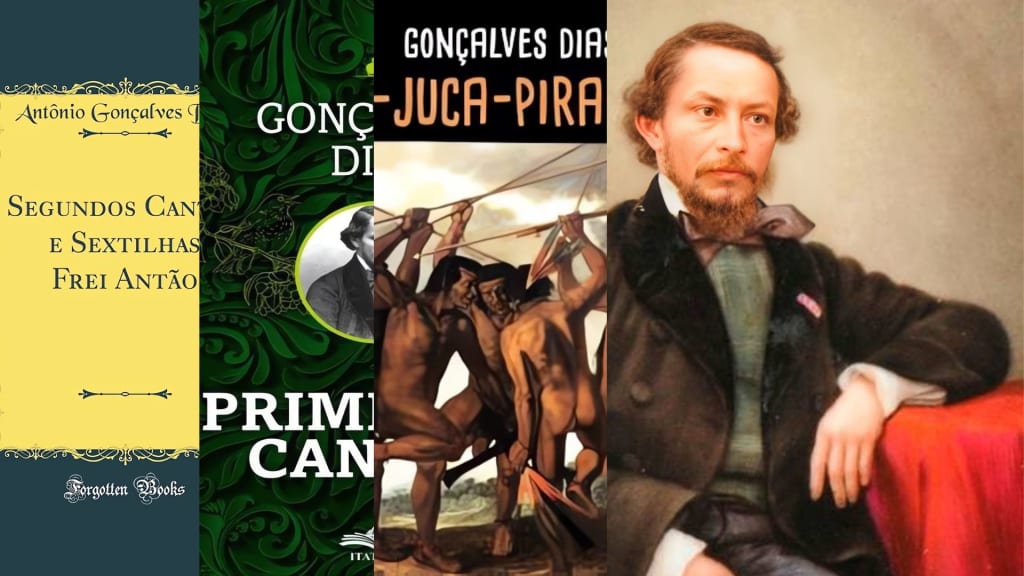
Antônio Gonçalves Dias, a prominent literary figure in Brazil, significantly influenced the country's cultural and poetic landscape. As a trailblazer of Brazilian Romanticism, he is celebrated for his evocative nationalistic themes, his deep connection to the indigenous spirit, and his skillful integration of European poetic structures with Brazilian narratives. Although his life was cut short, his artistic legacy and patriotic fervor were profound. This narrative recounts the life of Gonçalves Dias—the poet who captured the essence of saudade, the forest, and the spirit of Brazil. Born on August 10, 1823, in Caxias, Maranhão, he was the offspring of a Portuguese merchant and a mixed-race Brazilian mother. This diverse background significantly shaped his identity and influenced his literary work, especially in his compassionate depictions of indigenous communities and his strong sense of belonging to Brazil. Despite the societal biases of his era, Dias received a robust education and later relocated to Portugal to pursue a law degree at the University of Coimbra in 1840.
During his time at university, Dias began to write with seriousness. He was significantly inspired by the European Romantic movement, especially by poets from Germany and Portugal such as Goethe, Schiller, and Almeida Garrett. What distinguished Dias from his peers was his passionate ambition to create a distinctly Brazilian literature. While many of his contemporaries imitated European styles and themes, Dias sought inspiration from the Amazon, indigenous tribes, the lush tropical landscape, and Brazil's colonial history. His most renowned poem, Canção do Exílio (Song of Exile), penned in 1843 while he was still a student, emerged as a national symbol. In this work, Dias conveys his deep yearning for Brazil, celebrating the country's beauty with lines that are still taught to Brazilian students today: 'Minha terra tem palmeiras / Onde canta o sabiá...' (My land has palm trees / Where the thrush sings...). The poem's sincere simplicity and vivid imagery resonated with Brazilians both at home and abroad, becoming a cultural emblem of nostalgia and patriotism—central themes that would resonate throughout his entire oeuvre.
After returning to Brazil in 1845, Dias engaged in various intellectual and governmental positions, serving as a historian, ethnographer, and educator. However, his true passion lay in poetry. In 1846, he released his first significant collection, Primeiros Cantos (First Songs), followed by Segundos Cantos and Últimos Cantos, which collectively established the cornerstone of his literary legacy. These works intertwined personal emotion, romantic idealism, and a profound respect for Brazil’s indigenous peoples and landscapes.
A key aspect of Gonçalves Dias's poetry was his effort to forge a national identity through the perspective of the indigenous hero. His narrative poem I-Juca-Pirama (He Who Will Die), composed in 1851, exemplifies this approach. It narrates the tale of a Tupi warrior who is captured by an opposing tribe and faces execution. Rather than pleading for his own life, the warrior requests the opportunity to care for his elderly father, ultimately returning to willingly sacrifice himself in adherence to the tribal code of honor. The poem’s exploration of filial duty, bravery, and honor aligns with Romantic ideals while portraying indigenous figures as tragic heroes. This marked a significant shift from colonial portrayals of native peoples as either savages or victims, instead presenting them as representations of Brazil’s noble spirit.
Gonçalves Dias's fascination with indigenous culture extended beyond mere literature. He was an active participant in the Indianist movement of Romanticism, which aimed to celebrate native Brazilian traditions as fundamental to national identity. His work included historical and ethnographic research, where he endeavored to document the languages and customs of Brazil's first inhabitants, positioning himself as both a poet and a guardian of culture. Despite his achievements and recognition, Dias's life was fraught with personal challenges. His romantic life was particularly turbulent, marked by a broken engagement due to racial and social biases that left him emotionally scarred, a sorrow reflected in the melancholic tone of many of his poems. Additionally, his frequent bouts of illness, likely from malaria or another tropical ailment, overshadowed his later years. In 1862, in search of recovery, he returned to Europe, but his health continued to decline. After a period in Portugal, he boarded the Ville de Boulogne to return to Brazil. Unfortunately, the ship met with disaster off the coast of Maranhão on November 3, 1864, resulting in Gonçalves Dias's drowning at the age of 41.
Although his life was cut short, his impact has persisted through the ages. Gonçalves Dias is a pivotal figure in Brazilian literature, providing the nation with a poetic voice that is both reflective and proudly nationalistic. His exploration of themes such as saudade (longing), nature, indigenous dignity, and patriotic affection continues to resonate in educational settings, literary discussions, and cultural institutions today.
In commemorating Gonçalves Dias, we celebrate a poet who envisioned Brazil as more than just a colony or a geographical location, but as a vibrant, emotional, and aspirational nation. His poetry transcends mere Romanticism; it embodies the essence of a Brazil in the midst of self-discovery.
About the Creator
A História
"Hi. My name is Wellington and I'm a passion for general history. Here, I publish articles on different periods and themes in history, from prehistory to the present day.
Keep reading
More stories from A História and writers in History and other communities.
The Forgotten Shepherd
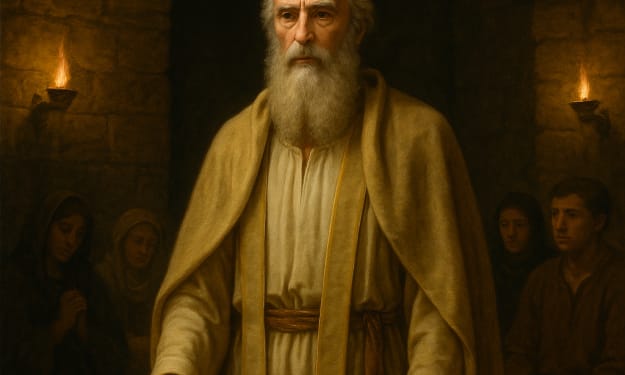
Among the initial leaders of the Christian Church, few individuals exhibit the same quiet dignity and spiritual authority as Pope Clement I, also referred to as Clement of Rome. Esteemed as the third successor of Saint Peter and one of the Apostolic Fathers, Clement's life and contributions were crucial in defining the identity and unity of the early Church. While the specifics of his biography are scarce and frequently shrouded in legend, his works—particularly his letter to the Corinthians—serve as a significant testament to early Christian theology, pastoral care, and church governance.
By A História10 months ago in History
The Year 1899 in Review: Fun Facts, Trivia, and Historic Highlights
This quick read is a collection of fun facts, trivia, and historic events from the year 1899. Discover the year’s top news stories, most influential people, sports facts, erratic weather patterns, entertainment trivia, and much more.
By Gregory DeVictor2 days ago in History


Comments
There are no comments for this story
Be the first to respond and start the conversation.