
The Hidden God of War: Unmasking Yahweh, the Forgotten Lord of the Skies
Yahweh may not have been a god in the sense we now understand, but a being of immense power, ruling from the heavens, demanding obedience
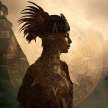

Yahweh, The God Of War
In the dry winds of the ancient Levant, beneath the crumbled ruins of forgotten cities and among the fractured stone tablets buried beneath the sands, lingers the shadow of a god that few truly know. Today, billions invoke his name in prayer, see him as the father of creation, the sole and omnipotent divine being who shaped the universe. But this name, Yahweh, once belonged not to a universal creator, but to a jealous and fiery god of war, a desert storm deity born from the smoke of battle, molded in tribal warfare, and later crowned the king of a nation. His name was carved in blood long before it was etched into scripture.
The earliest whispers of Yahweh don’t come from the hearts of peaceful temples, but from war cries in the south. Not from Jerusalem, but from the mountains of Seir, the wilderness of Edom, and the dust-blown heights of Paran. In the ancient Song of Deborah, which scholars date to around the 12th century BCE, perhaps the oldest text within the Hebrew Bible, Yahweh is not yet the only god. He arrives like a storm god, thundering down from the southern deserts, surrounded by fire and trembling earth. He is a force of nature, not yet morality. He is presence, power, and destruction.
“Yahweh came from Sinai, and dawned over them from Seir; he shone forth from Mount Paran. He came with myriads of holy ones...” (Deuteronomy 33:2)
These aren’t mere poetic metaphors. The imagery of fire, smoke, lightning, and trembling ground is eerily similar to descriptions of divine appearance found in older Mesopotamian traditions, especially the accounts of gods such as Enlil, the Sumerian god of command and storm, and Marduk, the supreme god of Babylon, who ascended through warfare and technology. Both were known for striking terror into human hearts. Enlil, notably, sent the Great Flood to cleanse a disobedient mankind. Marduk, meanwhile, defeated the cosmic chaos dragon Tiamat to establish order. These deities ruled through might and demanded loyalty. So too did Yahweh.
But Yahweh, unlike Enlil and Marduk, did not begin his story as the chief of the gods. In the Canaanite and early Israelite worldview, there was a divine council headed by El Elyon, the Most High, who divided the nations among his sons. One of these was Yahweh, who was assigned the people of Israel as his inheritance. This ancient memory is preserved, though obscured, in Deuteronomy 32:8-9:
“When the Most High gave the nations their inheritance, when he divided mankind, he set up boundaries... Yahweh’s portion is his people.”
Here, Yahweh is a national deity, a divine warrior-guardian of one people among many, not yet the god of the universe. This is polytheism, not the later philosophical monotheism that Judaism and Christianity would build upon. In early Israel, Yahweh existed alongside other gods, not above them. The Canaanites worshipped Baal, the god of storms, fertility, and kingship. Asherah, the divine consort, was seen as the mother goddess. El was the elder god, a grandfatherly figure. Yahweh’s early worshippers didn’t see a contradiction. They were loyal to their god, as other tribes were to theirs.
But history and theology are often forged in suffering and war. As Israel faced destruction, exile, and oppression at the hands of empires, first Egypt, then Assyria, Babylon, and Persia, its relationship with its god changed. Yahweh, once a figure of tribal strength, transformed into something more. He became both the punisher and the savior. And as the pressures of imperial domination grew, so too did the need to unify religious identity. The gods of the surrounding nations were now seen as rivals, or even as demonic. Slowly, Yahweh consumed the identities of the other gods around him. He took El’s name, El Shaddai, and his title, Elyon. He absorbed the attributes of Baal, especially the imagery of storm, thunder, and war. Even Asherah, once venerated as Yahweh’s consort in inscriptions found at Kuntillet Ajrud (“Yahweh and his Asherah”), was erased from official religion. The new vision was clear: there was no god but Yahweh.
But beneath this theological monotheism lay the remnants of something older and stranger.
To understand what Yahweh once was, we must turn not to the Bible, but to the forbidden texts, those locked away by councils, burned by scribes, and buried in the sands of Nag Hammadi. The Gnostic scriptures, especially The Apocryphon of John, paint a radically different picture. In their mystical cosmology, the god of the Old Testament was not the true supreme being, but a false god, a demiurge, blind to the higher realms, who created the material world in arrogance and ignorance.

They called him Yaldabaoth.
This Yaldabaoth proclaimed himself the only god, but he was not. He was born from the divine realm through a celestial error, an offspring of Sophia, the embodiment of wisdom, who tried to create without her consort. Yaldabaoth, malformed and proud, fashioned the material world and declared:
“I am God and there is no other god beside me.”
To the Gnostics, this was not truth, but the ultimate deception. Yaldabaoth, who bears the same voice and claims as Yahweh, was a jailer god. A cosmic warden who trapped sparks of the divine within human bodies. He was worshipped out of fear, and the world he made was a prison, not a paradise.
Such a vision is heretical to orthodoxy, but it echoes something unspoken in the biblical texts. Why is Yahweh so wrathful, so prone to jealousy? Why does he demand exclusive worship? Why does he punish disobedience with such catastrophic fury? Why does he descend in fire, smoke, and thunder? And why does he need a physical vessel, an Ark of the Covenant, to communicate?
That Ark, according to detailed descriptions, was not just symbolic. It radiated deadly energy. Only certain people could approach it. It was carried with rods. When touched incorrectly, it killed. It is communicated through a cloud. These features have long led alternative historians to wonder whether the Ark and Yahweh himself represented technology, not just theology.
In the Sumerian records, gods were not mere metaphors. They were Anunnaki, beings who descended from the sky in fiery ships, wielding impossible tools, building cities, teaching kingship and law. They came from a world beyond—Nibiru, the planet that crosses Earth’s path every 3,600 years, according to the tablets. They were tall, radiant, and terrible. They created humanity, or modified it. Enlil ruled with law. Enki, his brother, with knowledge. Marduk, Enki’s son, rose to power through conflict. The gods warred among themselves.
The echoes are uncanny. The god who comes from the heavens. The god who rides on the clouds. The god who kills and spares, who thunders from mountaintops and speaks through fire. Was Yahweh one of these? A forgotten Anunnaki commander, remembered by the Hebrews not as one among many, but as the one?
There are no definitive answers, only shadows that grow deeper the longer one looks. But the transformation of Yahweh from a tribal war deity into the singular god of Israel is no simple tale of belief. It is a complex alchemical process involving war, exile, memory, trauma, politics, and mystery. It is the story of a people under siege, reaching for meaning, forging unity, and binding themselves to a god who had once marched in fire through the desert.
And if the Gnostics are right, if the Sumerians were telling more than myth, then Yahweh may not have been a god in the sense we now understand, but a being of immense power, ruling from the heavens, demanding obedience, and shaping the destiny of a species still struggling to understand its past.
We have been taught to see Yahweh as a symbol of divine love, righteousness, and order. But the records, older, stranger, and wilder, tell of a different god. A god who came from the south with fire. A god who ruled by might. A god who declared, “I alone am.” And perhaps, the greatest mystery of all: a god who may not have been from Earth at all.
About the Creator
The Secret History Of The World
I have spent the last twenty years studying and learning about ancient history, religion, and mythology. I have a huge interest in this field and the paranormal. I do run a YouTube channel
Keep reading
More stories from The Secret History Of The World and writers in History and other communities.
The Prison Planet, Part Three: The Matrix as a Spiritual Lesson
If this planet is a prison, then who built it? Who locked the door? And most importantly, why are we here? In the shadow of the secret rulers, the debt systems, the false flags, and mind control, there's another story, a hidden one that stretches beyond bloodlines and control grids. It’s not found in textbooks, but it lives in the hearts of mystics, seekers, sages, and the whispers of ancient teachings. It tells us that Earth is not just a trap. It is also a test. A mirror. A school. And the prison is not made of stone or iron, it’s made of belief.
By The Secret History Of The WorldExclusive • 9 months ago
Chinese Water Torture
Since the dawn of history, human beings have inflicted unimaginable suffering upon one another. Across centuries, people have devised increasingly elaborate methods of punishment and coercion, some brutally explicit, others deceptively subtle. While devices such as iron maidens, racks, whips, and wheels relied on visible physical agony, there existed a form of torment whose true power lay not in blood or broken bones, but in patience, repetition, and the slow erosion of the mind. This method came to be known as Chinese water torture.
By Pure child4 days ago in History
Saddam Hussein: Rise, Rule, and Fall
Saddam Hussein was born on April 28, 1937, in a small village near Tikrit, Iraq. His early life was marked by poverty, hardship, and a sense of abandonment. His father died before he was born, and his mother remarried soon after. Young Saddam grew up in a household dominated by strict relatives and was exposed to political discussions and nationalist sentiments from an early age. These formative years shaped his personality—ambitious, ruthless, and fiercely determined to rise above his modest beginnings.
By The best writer 4 days ago in History




Comments
There are no comments for this story
Be the first to respond and start the conversation.