Figures
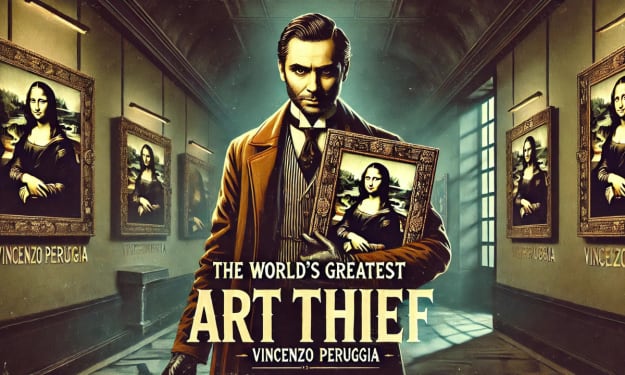
Vincenzo Peruggia: The World’s GREATEST Art Thief
The world’s greatest art thief didn’t wear a mask, drive a getaway car, or leave behind a trail of smoke and mirrors. Nope, he was far sneakier — and far bolder. Vincenzo Peruggia, a man who made off with the most famous painting in the world, didn’t just steal the Mona Lisa; he stole the show. His heist? A crime so clever it’s still talked about over a century later. This isn’t your average heist story — it’s a masterclass in the art of the steal.
By Marveline Merababout a year ago in History
"The Serbian Dancing Lady: Urban Legend or Haunting Truth?"
The Serbian Dancing Lady is an burghal fable that has sparked artifice and agitation beyond amusing media platforms and accessible forums. According to tales and beholder reports, the abstruse figure, dressed in acceptable attire, appears at night, dancing eerily in the streets of Serbia. The accounts generally call her assuming abashing dances and reacting aggressively if approached.
By Say the truth about a year ago in History
Yasuke
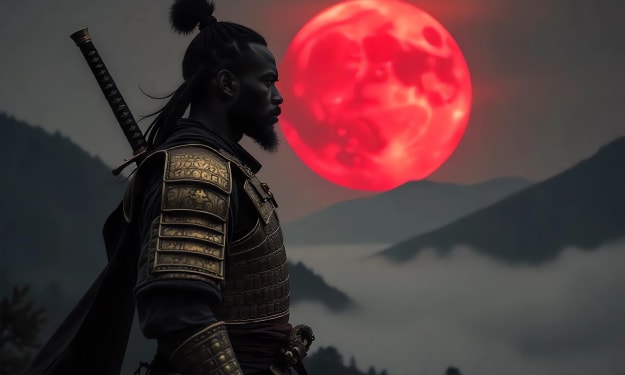
Yasuke's beginnings are shrouded in mystery, yet historical accounts indicate that he arrived in Japan in 1579 with the Italian Jesuit missionary Alessandro Valignano. This was a tumultuous time in Japan, known as the Sengoku or "Warring States" period, characterized by fierce battles among powerful landowners, or daimyōs, who were competing for dominance and shaping the nation's political future. Valignano aimed to spread Christianity throughout East Asia, but it was Yasuke's striking height—reportedly around 1.90 meters (6'2")—that captivated many, including the prominent daimyō Oda Nobunaga, as he was one of the few Black men they had ever encountered.
By A Históriaabout a year ago in History
"Echoes of Resilience: The Human Cost of the Sri Lankan Civil War"
The Sri Lankan Noncombatant War: A History of Battle and the Struggle of the Tamil People The Sri Lankan Noncombatant War was a abiding and adverse battle that spanned over 25 years, from 1983 to 2009, greatly affecting the island nation and its population. This war, waged amid the Sri Lankan government and the Liberation Tigers of Tamil Eelam (LTTE), additionally accepted as the Tamil Tigers, was apparent by violence, animal rights abuses, and abiding indigenous tensions. To accept the causes, course, and after-effects of this war, it is capital to burrow into the historical, political, and amusing contexts that led to this adverse aeon in Sri Lanka’s history.
By Say the truth about a year ago in History
The Isdal Woman Mystery
Imagine stumbling upon an unsolved mystery so perplexing, it keeps you up at night, wondering who the person behind it really was. The Isdal Woman’s story is just that—an eerie, mysterious case that has baffled investigators and intrigued true crime enthusiasts for decades. Her death in 1970 in Norway’s Isdalen Valley remains one of the most chilling cold cases in the history of true crime. From cryptic messages to an unidentified body, every piece of the puzzle seems to point to more questions than answers.
By Marveline Merababout a year ago in History
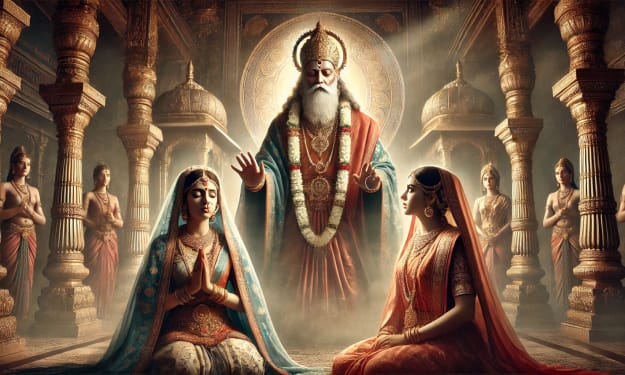
The Birth of Dhritarashtra and Pandu. AI-Generated.
Satyavati’s Decision to Call Vyasa Satyavati, desperate to preserve her family’s lineage, recalled an important secret from her past. Before her marriage to Shantanu, she had a son with the sage Parashara, named Vyasa. Vyasa was a powerful ascetic and sage, renowned for his wisdom, knowledge, and supernatural abilities. He was also known for compiling the Vedas and was deeply respected across the land.
By sai Charanabout a year ago in History
The Most DANGEROUS Man in Europe: Otto Skorzeny
If there’s one name that pops up whenever you mention World War II's greatest daredevils, it’s Otto Skorzeny. Imagine James Bond—but with a dark twist, if he had been working for the Nazis. Yes, Skorzeny was that larger-than-life character who somehow managed to be at the center of some of the war’s wildest, most dangerous missions. This guy didn’t just tiptoe around danger; he dove headfirst into it with a grin.
By Marveline Merababout a year ago in History
The Titanomachy
In Greek mythology, the Titans are frequently portrayed as colossal and formidable entities that embody the elemental forces of nature. They emerged from the union of Uranus, the personification of the sky, and Gaia, the embodiment of the earth, symbolizing fundamental powers and the vast unpredictability of the natural world. Among their progeny were various deities, some of whom would ultimately rebel against their forebears and contest the Titans' supremacy in a renowned conflict known as the Titanomachy, or the War of the Titans.
By A Históriaabout a year ago in History
The Spark of a New Nation: The Story of Theodosia Burr
“Dear Theodosia” is a song in the musical Hamilton. It juxtaposes the birth of Alexander Hamilton’s first child, Phillip, in 1782 with the birth of Aaron Burr’s first child, Theodosia, in 1783. The two young revolutionaries stood side by side in fighting against the British. Hamilton—an energetic hustler of a man—and Burr, a quiet man of action whose thoughts remained mysterious to those around him would eventually become political rivals. But, when it came down to it, the two men became fathers to their children and the new nation.
By Alisan Keeseeabout a year ago in History
THE LEGACY OF MOORISH SPAIN
The Queen of Castille sits regally on a somewhat bewildered-looking white steed, crown perched prominently on her head. Her eyes are drawn to the ochre-coloured castle gleaming brightly in late November sunlight on a distant hill. Her husband, the King of Aragon, leans forward on his horse with his hand out ready to accept the hefty keys reluctantly proffered by the last Nasrid ruler of the final bastion of Moorish rule in Al Andalus, Boabdil. Though spared the humiliation of kissing the monarch’s hand, the Moor's eyes seem to be silently pleading, “Remember what you promised.”
By Kimberley Silverthorneabout a year ago in History