
Vincenzo Peruggia: The World’s GREATEST Art Thief
A crime so clever it’s still talked about over a century later

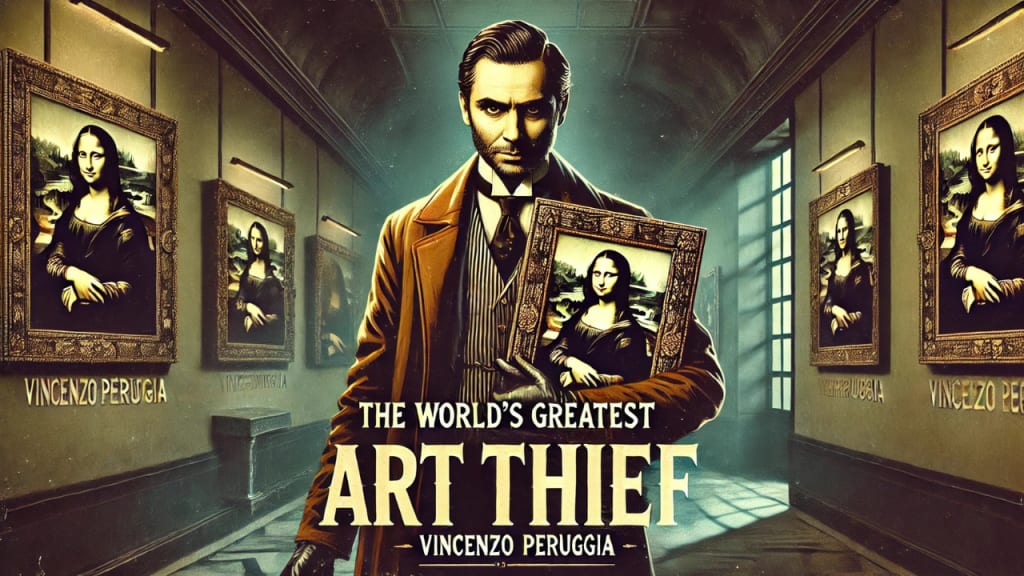
The world’s greatest art thief didn’t wear a mask, drive a getaway car, or leave behind a trail of smoke and mirrors. Nope, he was far sneakier — and far bolder. Vincenzo Peruggia, a man who made off with the most famous painting in the world, didn’t just steal the Mona Lisa; he stole the show. His heist? A crime so clever it’s still talked about over a century later. This isn’t your average heist story — it’s a masterclass in the art of the steal.
The Art of the Steal: Who Was the World’s Greatest Art Thief?
Let’s get this straight: being crowned “The World’s Greatest Art Thief” isn’t an easy title to earn. It’s not just about how much you steal; it’s about the daring, the stealth, and the pure audacity involved. And the man who’s often recognized as the best of the best in this nefarious field was none other than Vincenzo Peruggia.
Who is Vincenzo Peruggia, you ask? Well, to many, he’s the greatest thief who ever lived — and not just because he stole valuable art, but because he did it with such finesse that even the most seasoned detectives were left scratching their heads. In 1911, Peruggia made off with the world’s most famous painting: the Mona Lisa. If that’s not a mic drop moment in the art theft world, I don’t know what is.
But what made Peruggia stand out wasn’t just his boldness. It was his ability to plan a heist that nobody saw coming — a heist that would go down in history. How did he pull it off? Let’s dive in.
The Mastermind Behind the Heists: What Made Them So Good?
It’s one thing to steal a loaf of bread from a market; it’s another thing entirely to steal a $100 million painting from the heart of one of the most secure museums in the world. What made Peruggia and other legendary thieves so good at what they did?
First off, it takes brains, not just brawn. Peruggia wasn’t some run-of-the-mill criminal; he was a genius planner. To pull off such a massive heist, he spent months meticulously studying the museum’s layout, figuring out the guard rotations, and plotting his escape route. In fact, he had access to the museum on a regular basis because he worked there! He didn’t just waltz in wearing a black mask and a cape (okay, that would’ve been cool, but not very practical). No, he dressed like a worker, snuck into the museum on a quiet Monday morning, and simply walked out with the Mona Lisa under his arm. A move so simple, yet so brilliant, it would make any art thief green with envy.
But Peruggia wasn’t alone. The world’s greatest art thieves share several common traits: charisma, audacity, and patience. A good art thief knows how to charm their way past security guards or convince shady figures in the underworld to help them out. They know when to move and when to wait. Timing, as they say, is everything.
A Walk Through the Heists: Some of Their Most Daring Robberies
Let’s be real: any thief who steals a painting like the Mona Lisa is automatically in the Hall of Fame of Art Crime. But Peruggia wasn’t the only one making waves in the art theft world. Let’s take a stroll through a few of the most infamous heists in history.
The Isabella Stewart Gardner Museum Heist (1990)
Imagine it's St. Patrick's Day in Boston, 1990. Two men dressed as police officers show up at the Isabella Stewart Gardner Museum, claiming they need to investigate a reported disturbance. The guards, being good citizens, let them in. What happens next? Well, they calmly proceed to steal 13 works of art worth around $500 million. Included in this stolen masterpiece haul were paintings by Vermeer, Rembrandt, and Degas. And guess what? Those pieces have never been found. The thieves? Still on the loose. It’s the kind of plotline you’d expect in a Hollywood heist movie, but it happened in real life.
The Edvard Munch Heist (1994)
“The Scream” by Edvard Munch is one of the most iconic paintings in the world. So naturally, it became a prime target for art thieves. In 1994, just as the Winter Olympics were kicking off in Norway, a group of thieves broke into the National Gallery in Oslo and snatched the masterpiece off the wall. They didn’t stop there. These audacious criminals also made off with another version of “The Scream” from the Munch Museum. As if their victory wasn’t enough, they even left a note: “Thanks for the poor security.” Ouch. Talk about rubbing it in.
The Great Train Robbery of Art (2000)
Not all art heists take place inside a museum or gallery. In fact, one of the most daring art robberies took place in a moving train! In 2000, a gang of thieves managed to hijack a train in France, stealing a ton of valuable art — including works by Picasso and Matisse. Their escape? Well, it wasn’t quite as smooth as they’d hoped. But the sheer nerve of the robbery is what makes it stand out as one of the boldest in history.
The Chase: How the World’s Greatest Art Thief Evaded Capture
Meet the Man Who Stole $1.4 Billion With a Screwdriver. You'll definitely enjoy this!
Now, I’m sure you’re wondering: with all this stealing, how did these art thieves stay ahead of the law? Surely, someone would catch them, right?
Well, this is where the real artistry comes into play. Peruggia, for example, didn’t try to sell the Mona Lisa on the open market. Instead, he kept it hidden away in Italy, hoping to return it to its "rightful place" (the Louvre) because, in his mind, it had been stolen by the French in the first place. Talk about an interesting justification, right? The Mona Lisa was only recovered two years later, when Peruggia tried to sell it to a Florence art dealer. His plan wasn’t perfect, but his ability to blend into the background for so long? Impressive!
In other cases, like the Isabella Stewart Gardner Museum heist, the thieves avoided capture by being careful and biding their time. Many art thieves rely on the fact that law enforcement has a hard time tracking stolen works of art because they often end up in the black market, where buyers are hard to trace. It’s like playing a game of hide-and-seek, but the stakes are millions of dollars worth of priceless artwork.
The Thief’s Legacy: More Than Just a Criminal
Here’s the thing: being the world’s greatest art thief isn’t just about stealing art. It’s about leaving a legacy. And let’s face it, these thieves didn’t just steal art — they stole hearts, too.
Take Peruggia, for example. Despite his crime, he’s still seen by some as a patriot. He believed that the Mona Lisa belonged to Italy, not France. His crime was almost noble in a weird, misguided way. His legacy is still discussed today, with some viewing him as an anti-hero who fought for cultural heritage, albeit in the most controversial way possible.
Other art thieves, like those behind the Isabella Stewart Gardner Museum theft, have become almost folk legends. These crimes live on in the minds of the public, inspiring movies, documentaries, and even books. The fact that the stolen pieces haven’t been recovered only adds to the mystique and allure of the thieves themselves.
Conclusion: The Art of the Heist Continues
So, what makes someone the greatest art thief? It’s not about how many paintings you can grab, but how you can do it with style, flair, and just enough cleverness to outwit the best minds in law enforcement. The world’s greatest art thief may have disappeared into the shadows of history, but their legacy remains firmly etched in the annals of art crime.
Who knows? Maybe the next great heist is already in the works. As the saying goes, “Art is meant to be stolen, appreciated, and stolen again.” Or maybe not. Just don’t try this at home!
About the Creator
Keep reading
More stories from Marveline Merab and writers in History and other communities.
The Real-Life "Jaws" That TERRIFIED America: The 1916 Jersey Shore Shark Attacks
In the summer of 1916, the Jersey Shore was a popular vacation destination, where people flocked to the beach for sun, surf, and relaxation. But that summer, the ocean had other plans. A series of brutal shark attacks shattered the calm, transforming the peaceful shores into a scene of fear and chaos. It wasn’t a horror movie or urban legend—it was a terrifying reality. These attacks not only left a trail of destruction but also forever changed the way we view the waters that once seemed so inviting. What happened during that fateful summer of 1916 is a story so chilling that it’s hard to believe it wasn’t dreamed up by the minds behind Jaws. But trust me, it wasn’t. It was all too real.
By Marveline Merababout a year ago in History
3 Moments When Reality Accidentally Became a Horror Movie
Horror movies usually rely on a simple agreement with the audience: this could never really happen. Ghosts follow rules, monsters have weaknesses, and there’s always a clear point where reality hands the story over to fiction. Real life, unfortunately, does not care about narrative structure, logic, or closure.
By Enoch Sagini3 days ago in History
Chinese Water Torture
Since the dawn of history, human beings have inflicted unimaginable suffering upon one another. Across centuries, people have devised increasingly elaborate methods of punishment and coercion, some brutally explicit, others deceptively subtle. While devices such as iron maidens, racks, whips, and wheels relied on visible physical agony, there existed a form of torment whose true power lay not in blood or broken bones, but in patience, repetition, and the slow erosion of the mind. This method came to be known as Chinese water torture.
By Pure childa day ago in History




Comments (1)
I love your style of writing. You write with such passion and flair. Great article.