
Yasuke
The Real Black Samurai and His Surprising Influence on Assassin's Creed's Latest Game

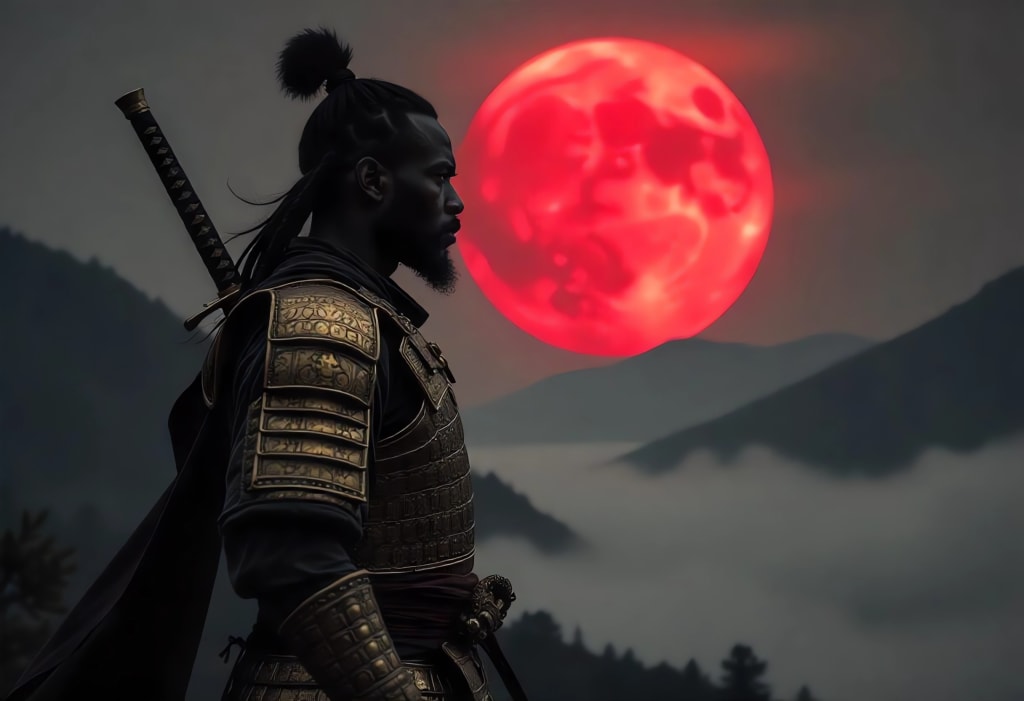
Yasuke's beginnings are shrouded in mystery, yet historical accounts indicate that he arrived in Japan in 1579 with the Italian Jesuit missionary Alessandro Valignano. This was a tumultuous time in Japan, known as the Sengoku or "Warring States" period, characterized by fierce battles among powerful landowners, or daimyōs, who were competing for dominance and shaping the nation's political future. Valignano aimed to spread Christianity throughout East Asia, but it was Yasuke's striking height—reportedly around 1.90 meters (6'2")—that captivated many, including the prominent daimyō Oda Nobunaga, as he was one of the few Black men they had ever encountered.
As Yasuke and Nobunaga's bond grew, Yasuke embraced the Japanese language and culture, which further endeared him to Nobunaga. The daimyō, a significant figure in Japan at the time, was so taken with Yasuke that he invited him to share meals and engage in discussions within his inner circle, a privilege usually reserved for family or highly regarded warriors.
Yasuke began his journey as a companion to the Jesuits, but it wasn't long before Nobunaga recognized his potential and appointed him as a loyal guard and warrior. As time went on, Yasuke earned the esteemed privilege of bearing arms and was given a home, reflecting his rise in status. Some historians believe that Yasuke could be the first non-Japanese individual to receive the title of samurai. His impressive strength and martial arts prowess distinguished him, and he remained a devoted ally to Nobunaga throughout numerous significant battles.
In 1582, a pivotal moment unfolded in Yasuke's life. Oda Nobunaga found himself besieged at the Honno-ji Temple by his own general, Akechi Mitsuhide. Yasuke was present during this tumultuous time, but as Nobunaga faced imminent defeat, he chose to commit seppuku, a traditional act of suicide to evade capture. In a brave attempt to honor his fallen lord, Yasuke sought to deliver Nobunaga’s head and sword to his son, aiming to uphold his lord's dignity even in death. Unfortunately, Nobunaga’s son also faced defeat, leading to Yasuke's eventual capture.
While many anticipated his execution, Mitsuhide made the unexpected decision to return Yasuke to the Jesuits. The reasons behind this choice remain a topic of speculation—perhaps Yasuke's status as a foreigner played a role, or Mitsuhide may have wished to maintain good relations with the Portuguese. After this incident, Yasuke seemingly vanished from the pages of history, leaving behind a legacy that is both remarkable and shrouded in mystery.
Yasuke's stay in Japan may have been short, but his remarkable story has captivated audiences for generations. Throughout the years, he has served as a muse for various creative works, ranging from anime and children's literature to historical fiction. His legacy was set to be brought to life in a Hollywood film featuring Chadwick Boseman, but sadly, the project was halted following the actor's untimely death. The recent inclusion of Yasuke in Assassin’s Creed highlights the ongoing interest in this extraordinary character from Japanese history, now presented with a contemporary flair.
The inclusion of Yasuke in the Assassin's Creed series serves as a powerful reminder of how video games can intertwine historical elements with creative storytelling. While not all games strictly adhere to historical accuracy, Assassin’s Creed has built its reputation on incorporating real events and figures into its narrative. Yasuke's presence is not just a nod to diversity; it shines a light on a remarkable chapter of Japanese history and encourages conversations about cultural exchanges that are often overlooked.
By bringing Yasuke into the fold, Assassin's Creed recognizes the intricate tapestry of samurai history, which is far more nuanced than typically portrayed. His story illustrates the significant impact that foreigners, including those from Africa, have had on Japan long before contemporary times.
Yasuke’s tale might not be fully documented, yet his transformation from an African aide to Jesuit missionaries to a samurai in Japan serves as a striking testament to the unpredictable routes of history. His presence in the Assassin's Creed series brings this intriguing character to a worldwide audience, encouraging players to delve into a story that crosses both continents and cultures. By honoring Yasuke’s legacy, Assassin's Creed highlights the importance of historical diversity, paying tribute to a remarkable individual whose bravery and commitment continue to inspire even after many centuries.
About the Creator
A História
"Hi. My name is Wellington and I'm a passion for general history. Here, I publish articles on different periods and themes in history, from prehistory to the present day.
Keep reading
More stories from A História and writers in History and other communities.
Who Were the Aryans?
Embark on an exploration of the historical narrative surrounding the Aryans, an ancient linguistic community that has significantly influenced civilization, spanning from the Central Asian steppes to contemporary regions. This article aims to investigate the origins, migrations, and cultural contributions of the Aryans, while also addressing the ancient history and the misconceptions that have obscured their legacy throughout the ages.
By A Históriaabout a year ago in History



Comments
There are no comments for this story
Be the first to respond and start the conversation.