Events
Best Digital Marketing Services in the USA
In today’s fast-paced, digitally-driven world, businesses need a solid online presence to remain competitive. Digital marketing plays a pivotal role in creating and expanding this presence, and as the demand for expert digital marketing services continues to rise, finding the best agencies in the USA has become more important than ever. From boosting brand visibility to increasing sales, the right digital marketing strategies can help companies across industries thrive in the online world.
By Amelia kerrabout a year ago in History
The Mystery of Oak Island: Unraveling the Enigma. AI-Generated.
Introduction: The Allure of Oak Island Do you know Oak Island? It is a small island located off the coast of Nova Scotia, Canada. It has emerged as one of the most famous places in the world for mystery enthusiasts and treasure hunters alike. The island is notorious for its legendary Money Pit, a deep shaft that has supposedly hidden treasure for centuries. Many people have long speculated about the treasure that was buried on Oak Island, and hundreds of expeditions have tried to uncover secrets. However, despite all these efforts, the truth about the mystery of Oak Island has remained elusive. So, what is going on with Oak Island and why does it capture the imagination of so many?
By soman Goswamiabout a year ago in History
Investigating the origins of civilization
Situated in the rich valley between the Tigris and Euphrates rivers, in present-day Iraq, Mesopotamia is recognized as one of the most important historical regions in human history. Commonly known as the "Cradle of Civilization," this area was inhabited by various groups who vigorously competed for its valuable resources and its strategic location linking Asia, Africa, and Europe. Among the ancient cultures that flourished in this region, the Sumerians are particularly notable for their groundbreaking contributions to state formation, cultural advancement, and technological progress. The designation "Sumerian" comes from the Akkadian term Shummer, which probably points to their geographical roots. In contrast, the Sumerians identified themselves as Hugozagh, meaning the "Black-Headed People." Their history traces back to prehistoric societies, including the Ubaid culture, which flourished near the Persian Gulf from the Neolithic era until the early Uruk period, approximately 4000 BCE. Although the exact origins of the Sumerians are still a topic of discussion, historians suggest they might have emerged from Central Asian populations or local Mesopotamian groups. The Sumerian civilization began to thrive around 4500 BCE and continued until approximately 1900 BCE. This era is typically categorized into six significant phases: the Ubaid Period, Uruk Period, Early Dynastic Period, Akkadian Empire, Gutian Interregnum, and the Third Dynasty of Ur. These phases were characterized by the emergence of city-states such as Uruk, Eridu, and Lagash, which became hubs of political authority, trade, and religious activities.
By A Históriaabout a year ago in History
The Cat’s in the Cradle: A Tale of Survival and Hope in 1421
In 1421, a devastating flood swept through the Netherlands, forever altering its landscape and leaving a deep mark on its history. Known as the St. Elizabeth's Flood, this catastrophic event submerged 72 villages, claiming the lives of between 2,000 and 10,000 people. Amidst the destruction and despair, an extraordinary story of survival emerged—a tale of a child saved by the resourcefulness of a cat.
By Deji Akomolafeabout a year ago in History
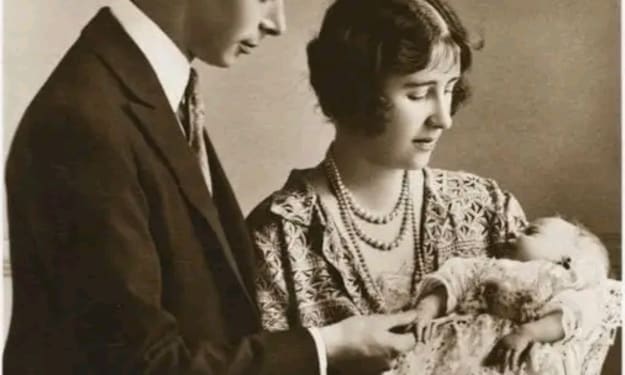
Baby Queen Elizabeth II: A Royal Journey Begins
On a crisp spring day in 1926, a tiny princess was christened into the British royal family. The baby girl, named Elizabeth Alexandra Mary Windsor, was born on April 21, 1926, to the Duke and Duchess of York—later King George VI and Queen Elizabeth The Queen Mother. At her christening, no one could have predicted that this child, affectionately called Lilibet by her family, would one day become one of the longest-reigning monarchs in British history.
By Deji Akomolafeabout a year ago in History
The Unyielding Resolve: George Rogers Clark’s Campaign to Capture Fort Sackville
The American Revolutionary War was not just a conflict fought in the established colonies along the Atlantic seaboard. It was also a struggle for control over the vast and wild western frontier. In this critical arena, George Rogers Clark emerged as a key figure, leading a daring and grueling campaign to capture Fort Sackville in Vincennes, Indiana, in February 1779. Without this pivotal fort, American control of the Illinois Country would have crumbled, and British-aligned Native American incursions into Kentucky would have continued to devastate the fledgling settlements.
By Deji Akomolafeabout a year ago in History
1,000 Days of War
Cartoon explainer: The rockets are labeled with the Russian words that Putin consistently uses to describe his goals for the Ukrainian war: denazification, demilitarization of Ukraine and protection of civilians in Eastern Ukraine. The last rocket has its true goal - "re-Sovietization."
By Lana V Lynxabout a year ago in History
"The Hidden Lifeline: Unveiling the Advantages of Libya’s Underground Water Resources"
The Advantages of Libya’s Underground Baptize Resources Libya, one of the best barren nations in the world, owes abundant of its adaptation to its underground baptize resources. In a country area condensate is deficient and apparent baptize about non-existent, the all-inclusive aquifers hidden below the arid bank accommodate a basal lifeline. These underground reservoirs, primarily the Nubian Sandstone Aquifer System and others like the Kufra and Murzuk Basins, accept enabled Libya to advance admitting its acrid environment. This commodity explores the advantages of Libya’s underground baptize assets and their role in the country’s economic, social, and ecology development.
By Say the truth about a year ago in History
Unraveling the Secrets of Ancient Egypt
Welcome to the intriguing realm of Ancient Egypt, renowned as one of history's most iconic and thoroughly studied civilizations. Even with extensive research and numerous archaeological findings, Egypt remains a source of fascination for historians and enthusiasts. In this article, we will delve into the origins, societal structure, religious beliefs, and lasting legacy of this extraordinary civilization, examining the pivotal phases that contributed to its enduring impact on the world. The origins of Ancient Egypt can be traced back to approximately 5,500 BCE during the Predynastic Period. During this era, Northeast Africa was characterized by a verdant savanna, where various tribes thrived by taking advantage of the region's rich resources. As the climate shifted towards aridity, these groups began to migrate to the fertile Nile Valley, setting the stage for one of the most sophisticated agricultural societies of the ancient world.
By A Históriaabout a year ago in History
The Anglo-Saxon Settlement of Britain: A Turning Point in History
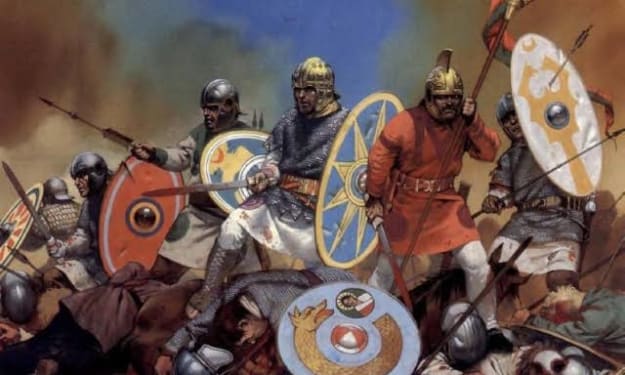
In 410 AD, as the Roman Empire retreated from Britain, a significant and transformative migration began. Germanic tribes, particularly the Anglo-Saxons, started settling in the fertile lands of the island. This migration not only reshaped the demographic and cultural makeup of Britain but also left a lasting imprint on its language, traditions, and place names. Among the most notable legacies of this period is the naming of "Wales" and the term "Welsh," both of which stem from Germanic words meaning "strangers" or "foreigners."
By Deji Akomolafeabout a year ago in History
The First Automotive Accident in the World: Historical Incident in Transport Modes
The first known car accident occurred in 1771. Modern road safety and automobile engineering as we know it today has only one particular day to its past. And that was the steam-powered tractor designed by Nicolas-Joseph Cugnot, the first automobile, crashing on the streets of Paris. It is rather difficult to imagine an automobile accident in a time when cars such as we understand them did not exist. Actually, the steam contraption, invented by Cugnot was one of the crucial moments in modern history. And the accident, though minor, became an historical event.
By Abhay kumar chauhanabout a year ago in History
Ukrainian Theatre - Nationalism and the Nationalist Theatre
Early on in her book Theatre & Nation, Nadine Holdsworth draws from a number of sociologists and theorists to define three key terms: nation, nationalism, and national identity. These are important terms to be distinguished; after all, the purview of this essay is Ukrainian theatre of national identity. Whether or not this can be conflated with Ukrainian nationalist theatre is a matter of connotation. If, as for many, the term nationalism conjures up images of Nazi Germany, Stalinist Russia, or Trumpist America—all of which have negative connotations—then it may be uncomfortable to ascribe the word nationalist to Ukrainian theatre. After all, if it earned condemnation from the Ukrainian Communist Party, to the point of Kulish’s banishment, arrest, and eventual execution, then it must have been disruptive to some utopian vision that the USSR wanted to achieve.
By Steven Christopher McKnightabout a year ago in History