
Unraveling the Secrets of Ancient Egypt
A Journey Through Time

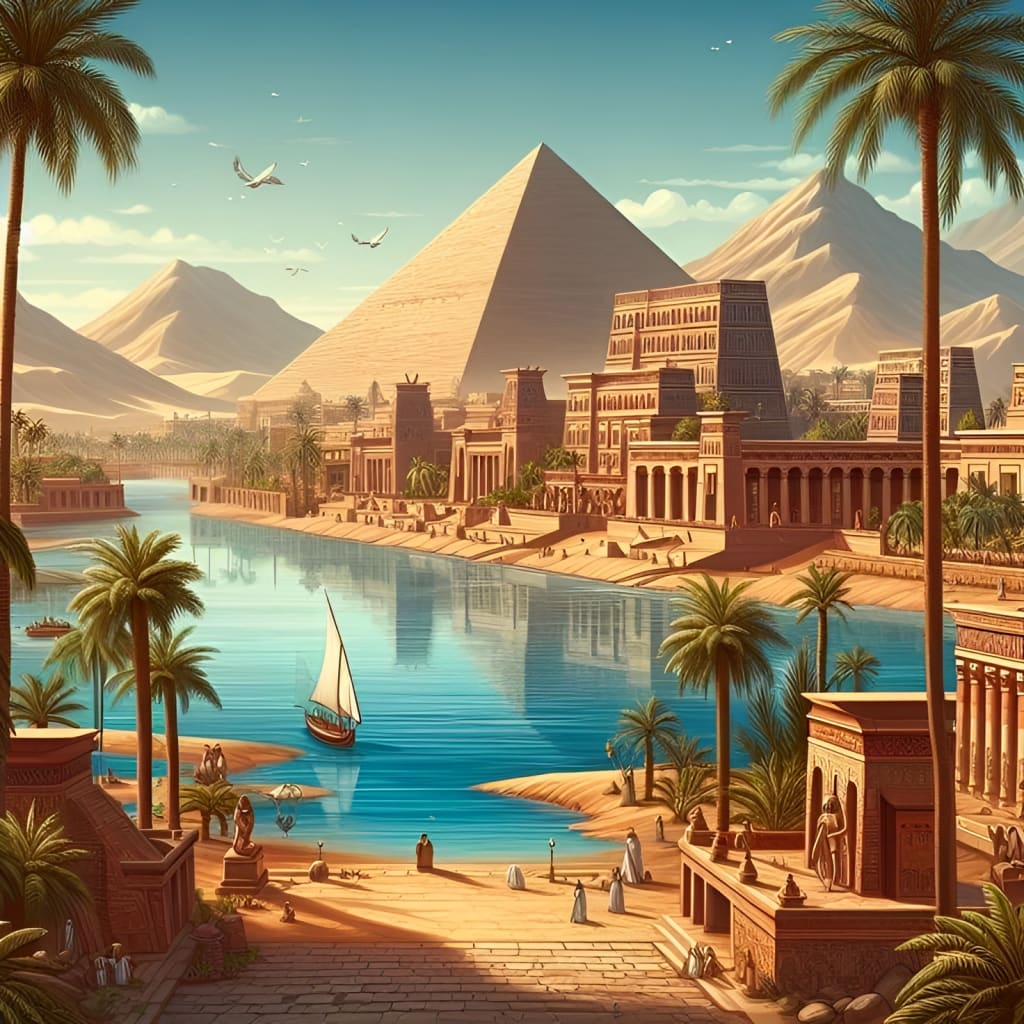
Welcome to the intriguing realm of Ancient Egypt, renowned as one of history's most iconic and thoroughly studied civilizations. Even with extensive research and numerous archaeological findings, Egypt remains a source of fascination for historians and enthusiasts. In this article, we will delve into the origins, societal structure, religious beliefs, and lasting legacy of this extraordinary civilization, examining the pivotal phases that contributed to its enduring impact on the world. The origins of Ancient Egypt can be traced back to approximately 5,500 BCE during the Predynastic Period. During this era, Northeast Africa was characterized by a verdant savanna, where various tribes thrived by taking advantage of the region's rich resources. As the climate shifted towards aridity, these groups began to migrate to the fertile Nile Valley, setting the stage for one of the most sophisticated agricultural societies of the ancient world.
These tribes developed methods to utilize the Nile's seasonal floods, which enhanced the soil for farming and ensured a reliable food supply. In addition to agriculture, early Egyptians practiced copper metallurgy, pottery making, textile production, and conducted funerary rituals, as revealed by archaeological discoveries. A rich cultural diversity emerged, with distinct groups like the Badarian and Naqada cultures playing significant roles in shaping early Egyptian identity.
As time progressed, these communities began to unify into smaller kingdoms, known as nomes, along the Nile. This gradual consolidation ultimately led to the establishment of two principal regions: Upper Egypt in the south and Lower Egypt in the north. The unification of Upper and Lower Egypt around 3,200 BCE initiated the Old Kingdom, often referred to as the "Age of the Pyramids." Menes, also known as Narmer, became the first pharaoh and established Memphis as the capital, reinforcing his divine role as the earthly representation of the god Horus. This era was characterized by the construction of impressive architectural feats, including the renowned pyramids of Giza, which demonstrated the state's organizational capabilities and the significant influence of religion.
Pharaohs held immense authority, bolstered by an expanding bureaucracy and powerful scribes who recorded information and facilitated effective governance. Trade routes flourished, linking Egypt with surrounding regions, while military endeavors secured vital resources and elevated Egypt's status. Nevertheless, extended periods of drought and administrative challenges contributed to the decline of the Old Kingdom around 2,150 BCE, leading to the First Intermediate Period, marked by political disunity and social turmoil. The reunification of Egypt in 2055 BCE by Mentuhotep II of Thebes marked the beginning of the Middle Kingdom, an era often regarded as a golden age characterized by significant cultural and economic growth. During this period, there were notable advancements in literature, art, and architecture, alongside the expansion of trade routes reaching the Levant and Crete, which enhanced Egypt's influence throughout the Mediterranean region.
In contrast to the Old Kingdom, the Middle Kingdom promoted a more inclusive perspective on the afterlife, allowing not just the elite but also ordinary citizens to aspire to immortality. This shift towards a more accessible form of religion was crucial in fostering societal unity.
However, the stability of the Middle Kingdom faced challenges due to rising internal tensions and the arrival of the Hyksos, an Asiatic group that took control of northern Egypt around 1780 BCE. Their governance, despite its challenges, paved the way for significant technological and military advancements, including the introduction of horse-drawn chariots, which were later embraced by the Egyptians. The expulsion of the Hyksos in 1550 BCE by Ahmose I marked the beginning of the New Kingdom, which is recognized as Egypt's most extensive and influential period. Notable pharaohs such as Hatshepsut, Akhenaten, Tutankhamun, and Ramses II made significant contributions to history. During this time, Egypt emerged as a global superpower, expanding its territory into Nubia to the south and the Levant to the north.
This era was characterized by military victories and ambitious construction endeavors. Monumental structures like the temples of Karnak and Luxor, along with the Valley of the Kings, reflected the Egyptians' deep reverence for their deities and the divine heritage of their rulers. The New Kingdom also saw the establishment of the first known peace treaty, the Treaty of Kadesh, which was signed between Ramses II and the Hittites following the significant Battle of Kadesh in 1274 BCE.
However, despite its remarkable achievements, the New Kingdom ultimately faced challenges from internal conflicts, invasions by the enigmatic "Sea Peoples," and economic difficulties. The death of Ramses XI in 1069 BCE signaled the conclusion of this era, ushering in the Third Intermediate Period, characterized by foreign rule and political fragmentation.
The contributions of Ancient Egypt to humanity are profound and far-reaching. Its advancements in architecture, governance, art, and science established a foundation for numerous subsequent civilizations. Despite being conquered by the Persians, Greeks, and Romans, the cultural and historical importance of Egypt persisted.
In contemporary times, the legacy of Ancient Egypt continues to evoke wonder and intrigue. Its grand pyramids, detailed hieroglyphs, and timeless myths and legends ensure that this ancient civilization remains a pivotal element of human history.
About the Creator
A História
"Hi. My name is Wellington and I'm a passion for general history. Here, I publish articles on different periods and themes in history, from prehistory to the present day.
Keep reading
More stories from A História and writers in History and other communities.
The Mysterious and Advanced Indus Valley Civilization
The Indus Valley Civilization, often referred to as the Harappan Civilization, stands as one of the most captivating and contentious societies of the Bronze Age. Flourishing in what is now Pakistan approximately 5,000 years ago, this enigmatic culture has bequeathed a wealth of mysteries for contemporary archaeologists to explore. In this article, we shall embark on a journey through the latest findings that illuminate the splendor of this extraordinary civilization.
By A Históriaabout a year ago in History
Aunt Sophie Campbell, A Smoky Mountain Legend in Appalachia
In the heart of the Great Smoky Mountains lived a woman whose legacy endured long after her passing, a woman who embodied the spirit of rugged ridges, mountain folklore, and genuine hospitality. Her name was Aunt Sophie Campbell, one of the most beloved figures in the region. Known for talent, warmth, and resilience, Aunt Sophie became a true Smoky Mountain legend.
By Tim Carmichael2 days ago in History




Comments
There are no comments for this story
Be the first to respond and start the conversation.