
The Anglo-Saxon Settlement of Britain: A Turning Point in History
Ancient Britain

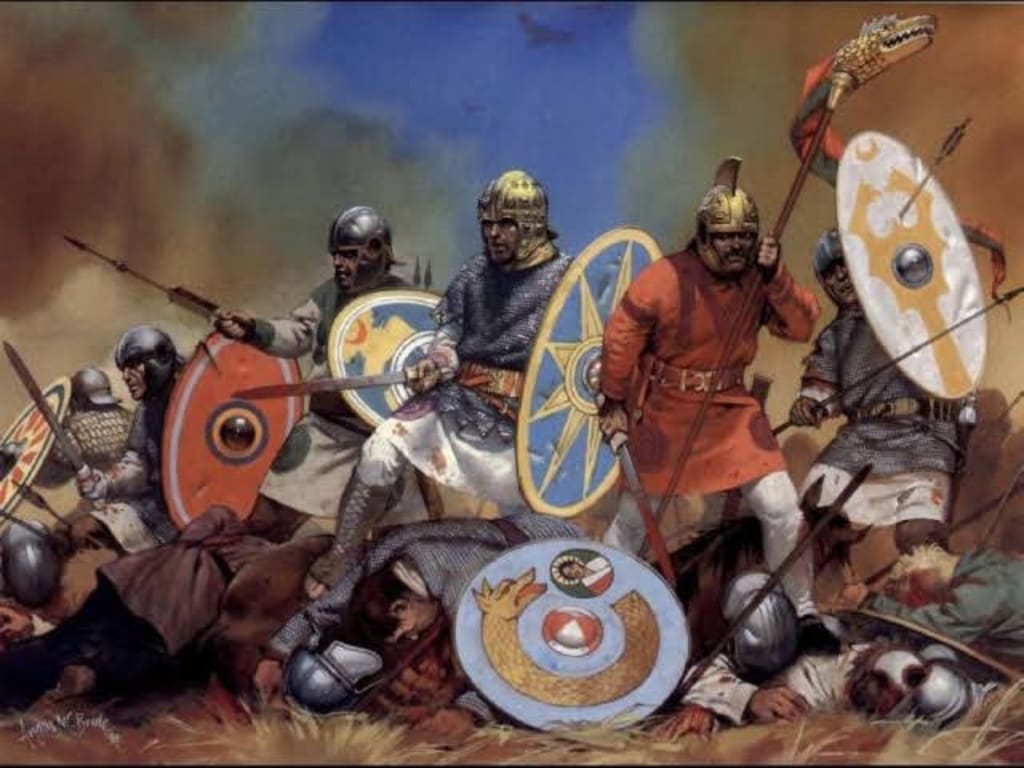
In 410 AD, as the Roman Empire retreated from Britain, a significant and transformative migration began. Germanic tribes, particularly the Anglo-Saxons, started settling in the fertile lands of the island. This migration not only reshaped the demographic and cultural makeup of Britain but also left a lasting imprint on its language, traditions, and place names. Among the most notable legacies of this period is the naming of "Wales" and the term "Welsh," both of which stem from Germanic words meaning "strangers" or "foreigners."
The story of the Anglo-Saxon settlement and its impact on the native Celtic peoples of Britain is a tale of displacement, cultural transformation, and the forging of a new identity for the island.
---
The Context of Anglo-Saxon Migration
The departure of the Romans in 410 AD marked the end of an era of centralized governance and infrastructure in Britain. The island, which had been part of the Roman Empire for nearly four centuries, was left vulnerable to external invasions and internal strife. Without the Roman legions to defend them, the Britons faced increasing pressure from northern tribes like the Picts and Scots, as well as seafaring raiders from across the North Sea.
It was in this climate of instability that the Anglo-Saxons arrived. Comprising various Germanic tribes, including the Angles, Saxons, and Jutes, these newcomers were initially invited as mercenaries to help defend Britain from external threats. However, they soon began settling the land themselves, establishing control over large swathes of territory and pushing the native Celtic population to the peripheries of the island.
---
The Displacement of the Celtic Britons
As the Anglo-Saxons established their dominance in Britain, the native Celtic Britons were gradually displaced from their ancestral territories. This displacement was not a sudden event but rather a gradual process that unfolded over several centuries. The Anglo-Saxons settled primarily in the fertile lowlands, where they established new villages, towns, and kingdoms. Meanwhile, the Celtic Britons retreated to the mountainous and less accessible regions of the island, such as modern-day Wales, Cornwall, and Scotland.
This movement of peoples led to the creation of distinct cultural and linguistic regions in Britain. The Celtic Britons retained their own languages, such as Welsh, Cornish, and Cumbric, which were derived from the earlier Brythonic language. In contrast, the Anglo-Saxons brought their Germanic dialects, which eventually evolved into Old English. The linguistic divide between these two groups would shape the cultural landscape of Britain for centuries to come.
---
The Origin of "Wales" and "Welsh"
One of the most enduring legacies of the Anglo-Saxon settlement is the naming of Wales and the Welsh people. The Anglo-Saxons referred to the Celtic Britons as "wealas," a term derived from the Old English word for "foreigners" or "strangers." This reflects the Anglo-Saxon perspective of the Celtic Britons as an alien population, despite their deep historical roots in the land.
The term "wealas" eventually gave rise to the modern English name "Wales" and the adjective "Welsh." Ironically, the Celtic Britons were the original inhabitants of the island, yet they were labeled as outsiders by the Anglo-Saxon settlers. This linguistic legacy highlights the power dynamics of the period and the cultural dominance of the Anglo-Saxons in shaping the narrative of Britain’s history.
---
The Cultural and Political Transformation of Britain
The arrival of the Anglo-Saxons did not merely displace the Celtic Britons—it also brought about a profound cultural transformation. The Anglo-Saxons introduced their own customs, laws, and religious practices, many of which became foundational to English identity. Pagan beliefs dominated in the early years of settlement, but by the 7th century, the Anglo-Saxons had largely converted to Christianity, blending their traditions with those of the Celtic Church.
Politically, the Anglo-Saxons established a patchwork of kingdoms, including Wessex, Mercia, and Northumbria, each vying for supremacy over the others. These kingdoms laid the groundwork for the eventual unification of England in the 10th century. The influence of Anglo-Saxon governance, with its emphasis on local rule and tribal loyalty, can still be traced in aspects of English law and culture today.
---
The Enduring Legacy of the Celtic Britons
While the Anglo-Saxons dominated much of Britain, the Celtic Britons retained their identity and culture in the regions to which they retreated. In Wales, for example, the Welsh language and traditions have endured for over a millennium, serving as a living testament to the resilience of the Celtic people.
The term "Welsh," once used to mark the Britons as outsiders, has been reclaimed as a badge of cultural pride. Today, Wales celebrates its unique heritage through its language, literature, and festivals, such as the Eisteddfod, which showcases Welsh music and poetry. Similarly, the Cornish language has seen a revival in recent years, and Scotland continues to embrace its Gaelic traditions.
---
Conclusion: A Story of Displacement and Resilience
The Anglo-Saxon settlement of Britain in 410 AD was a turning point in the island’s history. It marked the beginning of a new cultural era, one in which the native Celtic Britons were pushed to the margins of their own land. Yet, despite the displacement and cultural dominance of the Anglo-Saxons, the Celtic peoples of Britain preserved their identity and traditions, leaving an indelible mark on the island’s history.
The names "Wales" and "Welsh," rooted in the Anglo-Saxon perception of the Britons as foreigners, serve as a reminder of this complex and layered history. They reflect not only the divisions of the past but also the enduring strength of the Celtic identity in the face of adversity. As we look back on this pivotal period, we gain a deeper appreciation for the resilience of the Celtic Britons and the profound cultural transformations that shaped the Britain we know today.
About the Creator
Keep reading
More stories from Deji Akomolafe and writers in History and other communities.
The Bowder Stone: A Monument of Nature in the Lake District
Nestled in the picturesque Borrowdale Valley of the Lake District, the Bowder Stone stands as one of England's most extraordinary natural wonders. Weighing an astounding 2,000 tons, this colossal rock formation has captivated visitors for centuries, offering a glimpse into the dynamic forces of nature that shaped the landscape we see today.
By Deji Akomolafeabout a year ago in History
Where the Pulse Ends
© 2026 Sai Marie Johnson The humidity in the city didn’t just hang; it leaned. It was a thick, stagnant soup of diesel exhaust, ozone, and the metallic tang of blood that drifted from the "Compliance Zones." Joe sat in his rusted sedan, his hands resting loosely on the steering wheel. He wasn't gripping it. He wasn't angry. Anger was a chemical spike, a biological inefficiency. Joe was simply... focused.
By Sai Marie Johnson3 days ago in History
Ludacris and Nelly draw backlash over bookings at MAGA-coded music festival
Ludacris and Nelly headlining a mostly right-wing event is good for them. It’s also great for the genre of hip hop. The two rap veterans have showcased their talents on other stages. Why can’t they perform for mostly MAGA folks and grab that bag?
By Skyler Saunders4 days ago in Beat


Comments
There are no comments for this story
Be the first to respond and start the conversation.