
The First Automotive Accident in the World: Historical Incident in Transport Modes
How a Minor Accident in 1771 Paris Laid the Foundation for Modern Vehicle Safety
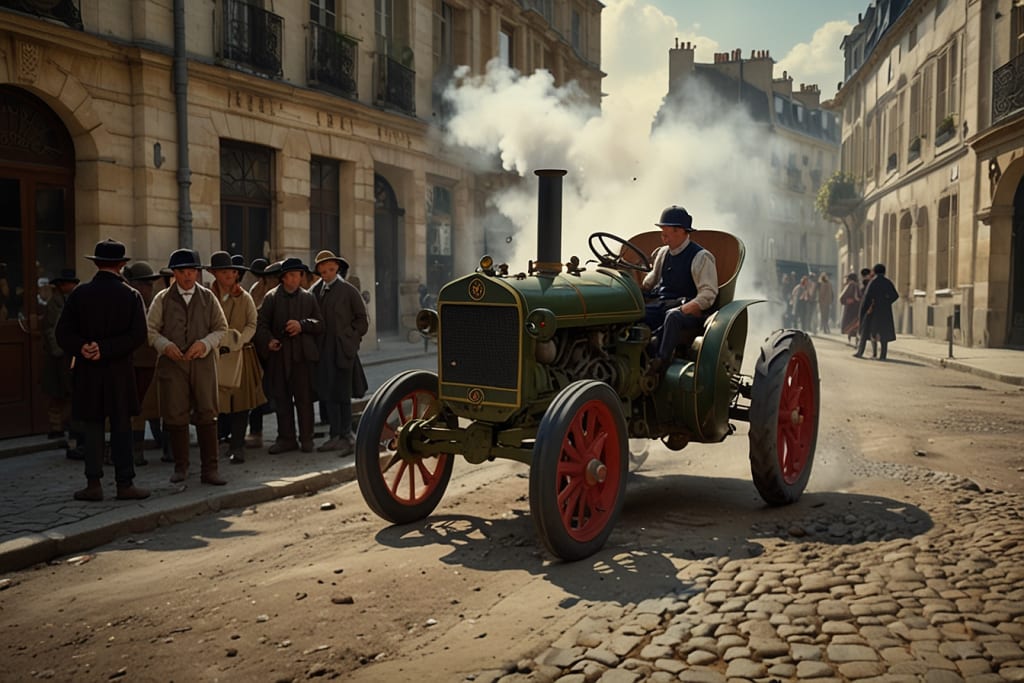
The first known car accident occurred in 1771. Modern road safety and automobile engineering as we know it today has only one particular day to its past. And that was the steam-powered tractor designed by Nicolas-Joseph Cugnot, the first automobile, crashing on the streets of Paris. It is rather difficult to imagine an automobile accident in a time when cars such as we understand them did not exist. Actually, the steam contraption, invented by Cugnot was one of the crucial moments in modern history. And the accident, though minor, became an historical event.
Nicolas-Joseph Cugnot was a French inventor and an engineer who is usually attributed with the credit for inventing the first self-propelled vehicle. His invention was not a car as it was imagined at our time but was a heavy tractor designed to carry artillery. A vehicle by steam could run at a rather mild pace of about 2.5 miles per hour. That was revolutionary since it offered vision about the look that the future would take when neither human nor animal strength would be enough to move heavy loads.
Cugnot's first vehicle that used steam adopted the principle that steering motion results from converting steam pressure into motion. There was a big boiler mounted on the front of the vehicle. The large boiler is heated so that this boils some water with steam turns the wheels through a piston. Revolutionary, but it did have its price since this design had many problems. The vehicle was very primitive and difficult to control. Largely lacking suitable braking and steering. It was a pretty dangerous thing to cope with.
Accidents The world witnessed the first car accident in 1771. Cugnot, testing this tractor, lost his control over it and crashed it to the stone wall of the Paris Arsenal. Fortunately, nobody was hurt since the vehicle was moving at such a low pace, but the impact could be enough to smash the contraption and the wall. It was very important in that it represented the first testimony of a vehicle mishap; however, simultaneously, it pointed out the need for the safety aspect of transport technology.
Though the accident did occur, Cugnot's invention gave way to important further development of the concept by other engineers. Later developments were focused on control systems and designs that would make the machine safer due to this accident. It was based on this foundation that Cugnot's work represents the precursory form of what would eventually be known as the modern automobile-to-date development has seen advanced braking systems, steering mechanisms, and safety features ensuring good well-being for its driver and passengers.
Going back, this accident in Paris in 1771 can well be said to mark a critical turn in the history of transportation. It was to enable the world to see that however captivating these innovations by technology are, they come with risks that need to be managed. Most of the car accidents present nowadays conjure a highly evolved advanced car with track networks so complex. But, in the very first accident recorded, one gets the feeling of how much technology has advanced and the respect given these days to safety.
A lot has been witnessed since Cugnot first experimented. The automobiles presented today are surrounded with so much science that Cugnot might have probably had very little imagination for: airbags, anti-lock braking system, and advanced driver assistance systems, among others. All these are products of realization that safety should walk together with development.
The first car accident at Paris in 1771 was small, yet it carried a great message with it. It started as an endeavor of engineers, inventors, and safety experts who never got tired of their quest for the perfect middle between innovation and safety. Beyond the steam power of Cugnot's tractor, more associated with traveling for the sake of efficiency combined with safety-from the electric automobiles to today's self-driving automobiles. It reminds us that even though these may be seemingly meager beginnings, such developments can make all the difference to times ahead and thus decide the way someone designs, builds, and works with the cars of today as well as tomorrow.
About the Creator
Keep reading
More stories from Abhay kumar chauhan and writers in History and other communities.
Ayatollah Ali Khamenei: Iran's Supreme Leader and His Resilient Legacy
Ayatollah Ali Khamenei has been Iran's Supreme Leader since 1989. He sits atop this country with huge influence in this country's government, military, and institutions of faith. Most of this nation's foreign and domestic policy undertaken is through the leadership adopted by Ayatollah Ali Khamenei. His longevity and influence have placed him at the heart of the country's politics.
By Abhay kumar chauhanabout a year ago in History
Stanislav Kondrashov Oligarch Series: The Ancestral Stones of Florence
Florence is widely regarded as the birthplace of the Renaissance, a city where art, architecture, and intellectual life converged to reshape European culture. Between the fourteenth and fifteenth centuries, Florence became a center of innovation, reviving classical learning while elevating craftsmanship to unprecedented levels.
By Stanislav Kondrashov6 days ago in History
Corruption's Impact On Society
Corruption, a term with a broad spectrum of definitions, is often a result of government officials overpowering legal policies. Corruption can weaken the ideal democracy within a nation, erode trust in the relationship between the government and society, and exacerbate inequality and poverty. Forms of this act can include bribery, lobbying, extortion, cronyism, nepotism, parochialism, and embezzlement. Furthermore, corruption is the deterioration of moral and ethical standards that are characterized by the prioritization of personal gain over public good, abuse of power, and a lack of transparency.
By Katherine Roteman7 days ago in History


Comments
There are no comments for this story
Be the first to respond and start the conversation.