Events
The After life Preparation of Egyptian King
Preparation for the Afterlife The adventure to the afterlife was apparent as abounding with challenges and tests, and alone those who were abundantly able would succeed. For Pharaohs, this alertness was decidedly elaborate, involving both concrete and airy elements. The concrete anatomy had to be preserved, arch to the convenance of mummification. The age-old Egyptians believed that the canning of the anatomy was capital for the soul's adaptation in the afterlife. Without an complete body, the king's ka (vital essence) would be clumsy to acknowledgment to it, authoritative abiding activity impossible.
By Say the truth about a year ago in History
Real Estate Development in Karachi: A Useful Guide
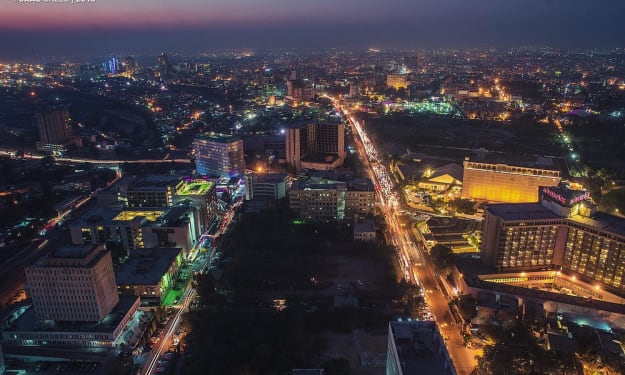
Did you know that Habib Bank Plaza was the tallest building in Pakistan for over four decades until it was surpassed by MCB Tower in 2005? For many years, the Ruet-e-Hilal committee used this iconic building for moon sightings.
By ALI BUILDERS AND DEVELOPERSabout a year ago in History
10 Miraculous Breakthroughs Shattering Incurable Disease Barriers. AI-Generated.
For decades, certain diseases have cast a long shadow, deemed untreatable and leaving patients with limited hope. But recent advancements in medical research are challenging these notions, offering groundbreaking therapies that rewrite the narrative on once-incurable illnesses. This article explores 10 of the most remarkable breakthroughs that are revolutionizing treatment for these seemingly insurmountable conditions.
By David Andrewsabout a year ago in History
The Enduring Mystery of the Somerton Man: A Beachside Enigma
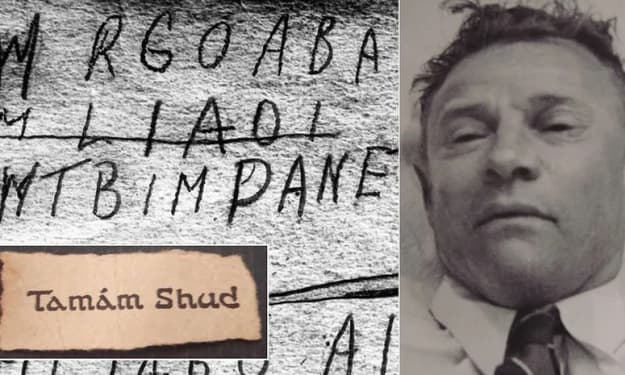
The year is 1948. Adelaide, Australia basks under the summer sun. Yet, a stark discovery on Somerton Beach casts a long shadow of intrigue. A man, unidentified to this day, lies lifeless, his death shrouded in mystery. This is the story of the Somerton Man, a case that continues to tantalize and baffle investigators over seven decades later.
By David Andrewsabout a year ago in History
Ayatollah Ali Khamenei: Iran's Supreme Leader and His Resilient Legacy
Ayatollah Ali Khamenei has been Iran's Supreme Leader since 1989. He sits atop this country with huge influence in this country's government, military, and institutions of faith. Most of this nation's foreign and domestic policy undertaken is through the leadership adopted by Ayatollah Ali Khamenei. His longevity and influence have placed him at the heart of the country's politics.
By Abhay kumar chauhanabout a year ago in History
Cuba: Resistance, Rights, and the Role of Women in the Struggle for Freedom
Sofia Orquidea Benitez Menendez: A Life Dedicated to Culture and Solidarity The interview will provide an opportunity to learn more about Sofia Orquidea Benitez Menendez, a figure of extraordinary cultural depth. With a degree in Russian and English Language and Literature, she further specialized in English at the University of Cambridge. Sofia has dedicated much of her life to teaching, translation, and the promotion of international solidarity. Currently, she works as a socio-health assistant in Italy, serving as a cultural and human bridge between Cuba and the world.
By Maddalena Celanoabout a year ago in History
The Most DISTURBING Experiment in History: The Stanford Prison Experiment
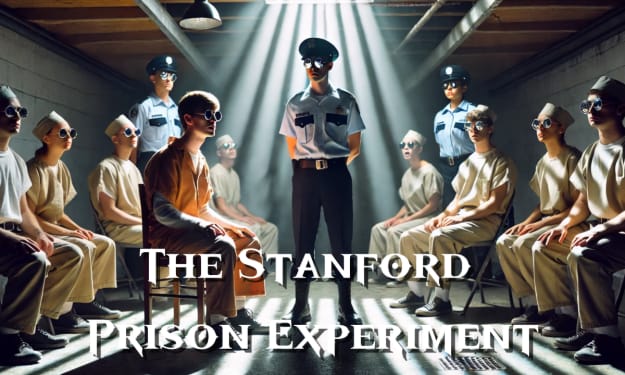
Imagine a group of college students volunteers for a two-week study that promises cash, camaraderie, and a chance to explore the depths of human psychology. Sounds like a breeze, right? Now fast forward six days, and the same “study” has devolved into something straight out of a dystopian nightmare—complete with yelling, psychological breakdowns, and power-hungry guards acting like they just inherited their own kingdom.
By Marveline Merababout a year ago in History
Ukrainian Theatre of National Identity - Russia's Nationalist Problem
With that said, I want to set the stage for the rest of this thesis by calling to attention what I will refer to as Soviet Russia’s “Nationalist Problem.” In a multinational empire, assembled after years of war, civil war, and rebellion, the main concern of the Soviet Union was to make the mechanism of a socialist nation function. Political policies were tried and tested in the early years of the USSR. After the nation had stabilized, for example, a policy of Ukrainization was implemented in the Ukrainian lands, offering the Ukrainian people educational and cultural autonomy. This policy was reversed under Stalin, who instead persecuted Ukrainians who explored ideas related to the nation and criticism of the USSR. Culture and politics were inextricably intertwined; in Russia, theate and theatrical spectacles were explored as strategies to propagandize the public into a sense of Soviet pride. Because the arts were so linked to the political mechanism at the time, an artist operating outside or against that political mechanism was subject to excommunication, imprisonment, and/or death. One political party—the Communist Party—dominated, and lack of membership to it was a fast track to pariah status.
By Steven Christopher McKnightabout a year ago in History
Ukrainian Theatre of National Identity - Intro
The following is the introduction to my Master's Thesis, The Construction of National Identity through Theatre in Ukraine in the 1920s and 2020s. In the coming days, I will be posting the full thesis, chapter by chapter. I struggled deciding whether or not to post this here, but I decided ultimately that if it were submitted to academic journals, it would be behind a paywall. This information is important to me, and I would like it to be shared as freely as possible. If you would like the full PDF, click here.
By Steven Christopher McKnightabout a year ago in History
The Mystery of the Pingyan Giant Footprint: Fact or Fiction?
For centuries, people have been fascinated by stories of giants. Different cultures have shared legends about huge human-like beings, like the Titans in Greek myths or the Nephilim in the Bible. These stories have sparked our imagination and curiosity. But finding real evidence of giants has always been challenging and controversial. This changed for some people when a massive footprint was discovered in the remote village of Pingyan, China, sparking debates about whether it could be proof of giants.
By Muhammad Waseem about a year ago in History
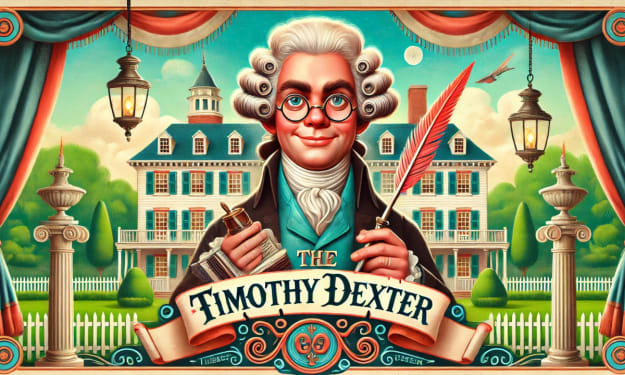
Timothy Dexter: The Luckiest IDIOT in History
Welcome to the curious case of Timothy Dexter, the self-made millionaire whose life story reads like a farcical comedy of errors. Imagine a man so bewilderingly successful that you can't help but wonder if he had a secret pact with Lady Luck herself. From shipping coal to Newcastle (yes, really!) to selling mittens in the tropics, Dexter's baffling business ventures were as inexplicable as they were profitable. In this article, we take a closer look at the bizarre yet brilliant mind of Timothy Dexter, uncovering how his peculiar strategies turned him into a business genius against all odds.
By Marveline Merababout a year ago in History