
The Unyielding Resolve: George Rogers Clark’s Campaign to Capture Fort Sackville
US History

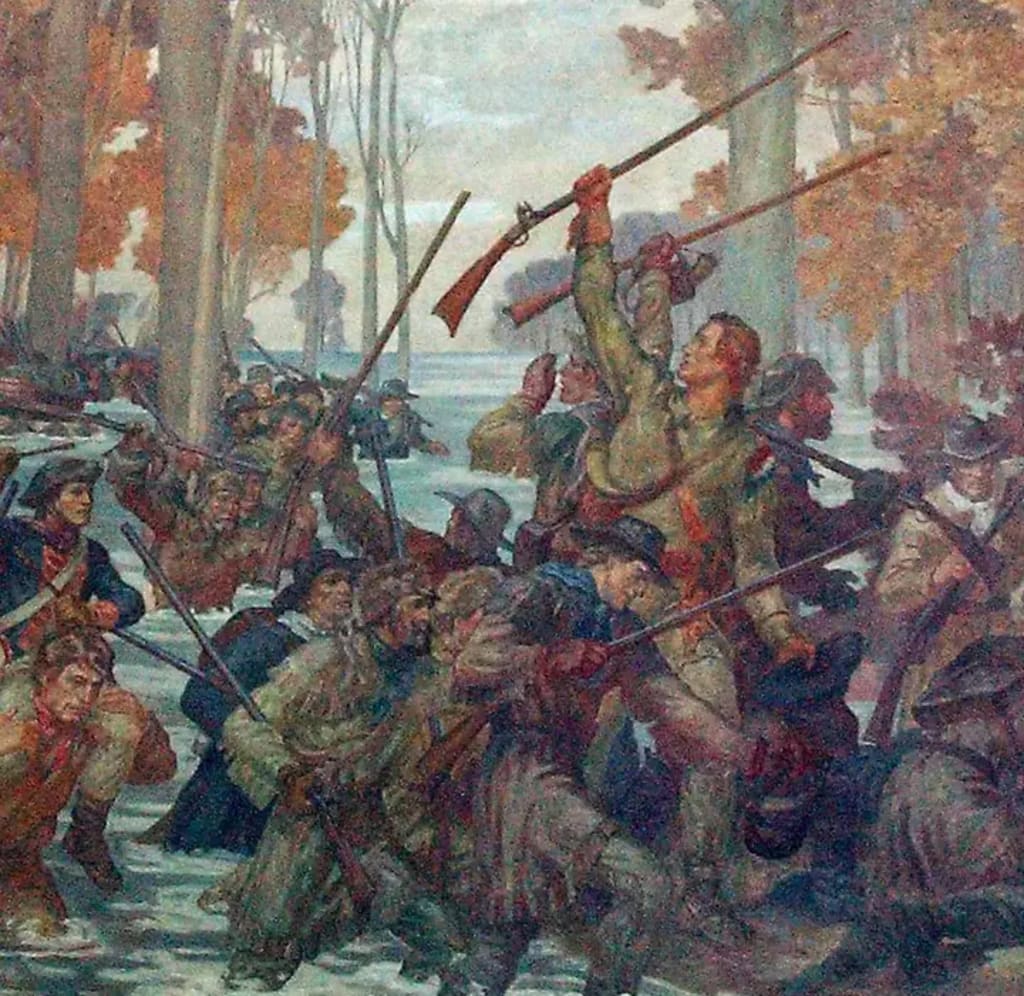
The American Revolutionary War was not just a conflict fought in the established colonies along the Atlantic seaboard. It was also a struggle for control over the vast and wild western frontier. In this critical arena, George Rogers Clark emerged as a key figure, leading a daring and grueling campaign to capture Fort Sackville in Vincennes, Indiana, in February 1779. Without this pivotal fort, American control of the Illinois Country would have crumbled, and British-aligned Native American incursions into Kentucky would have continued to devastate the fledgling settlements.
Clark’s extraordinary 200-mile march to Fort Sackville, carried out through freezing, flooded terrain, represents a moment of incredible hardship, determination, and strategic brilliance. This campaign not only showcased the grit of Clark and his men but also underscored the importance of securing the western frontier for the American cause.
The Strategic Importance of Fort Sackville
Fort Sackville, located in the small frontier town of Vincennes, was a key British stronghold in the Illinois Country. Its position gave the British a critical foothold to project power over the western territories, enabling them to support Native American allies in their raids on American settlements in Kentucky and beyond.
For George Rogers Clark, securing Fort Sackville was essential to his broader campaign of controlling the Illinois Country. Having already captured Kaskaskia and Cahokia, Clark understood that holding Vincennes would consolidate American dominance in the region, disrupt British alliances with Native tribes, and secure vital resources and territory for the new nation.
The Brutal March to Vincennes
Clark’s men began their journey from Kaskaskia in early February 1779, embarking on a trek that would test the limits of human endurance. The path to Vincennes was a roadless expanse of swamps, rivers, and flooded plains, exacerbated by heavy rains and melting snow.
The challenges were immense. Rivers and streams overflowed their banks, turning the terrain into a spongy, waterlogged nightmare. Clark’s men were forced to wade through icy waters that reached up to their chests, carrying their weapons and supplies above their heads. Nights were spent lying on wet ground, their clothes soaked through, with no fire to warm them or food to sustain their strength. Temperatures hovered near freezing, and morale was pushed to its breaking point.
Despite these conditions, Clark’s leadership and determination kept his men moving forward. He motivated them not just with the promise of victory but with the understanding of the stakes: the survival of the frontier settlements and the success of the American cause in the West.
The Siege of Fort Sackville
Clark and his men arrived near Vincennes on February 23, 1779, after more than two weeks of unimaginable suffering. Their arrival was a surprise to the British garrison, which had assumed no force could navigate the flooded terrain in winter.
Clark, recognizing the importance of psychological warfare, devised a plan to make his small force appear larger than it was. His men marched and counter-marched around the fort, displaying multiple flags and firing volleys to create the illusion of a much larger army.
The ruse worked. The British commander, Lieutenant Governor Henry Hamilton, known as the "Hair Buyer" for his alleged practice of paying for American scalps, was caught off guard. Clark demanded the unconditional surrender of the fort, emphasizing that any resistance would result in the destruction of Hamilton's forces.
The standoff ended quickly. On February 25, 1779, Hamilton and his men surrendered Fort Sackville to Clark. The victory was achieved without the use of artillery and despite the American force being vastly outnumbered.
The Aftermath and Significance
The capture of Fort Sackville was a turning point in the Revolutionary War’s western theater. It solidified American control over the Illinois Country, disrupted British operations in the region, and bolstered American alliances with Native tribes willing to support the revolutionary cause.
For George Rogers Clark, the victory cemented his reputation as one of the war’s most resourceful and determined commanders. His campaign demonstrated the importance of unconventional warfare and the strategic value of the western frontier in the broader conflict.
On a larger scale, the success at Fort Sackville had significant implications for the eventual peace negotiations. The American victory in the West ensured that the newly established United States could claim vast territories beyond the Appalachian Mountains in the Treaty of Paris (1783), shaping the nation’s expansion and future development.
Reflections on Sacrifice and Endurance
The suffering endured by Clark’s men during their march to Vincennes is almost impossible to quantify. Starvation, hypothermia, and exhaustion were constant companions, yet these men pressed on with unwavering resolve. Their determination was driven not just by loyalty to their commander but by a shared understanding of the greater purpose they served.
Clark’s campaign to capture Fort Sackville stands as a testament to the grit, ingenuity, and sacrifice that defined the American Revolutionary War. It reminds us that the fight for independence was waged on multiple fronts, often in conditions of extreme hardship.
Conclusion
The march to Fort Sackville and its subsequent capture by George Rogers Clark and his men is a story of extraordinary endurance and strategic brilliance. It highlights the resilience of the human spirit in the face of adversity and the critical role of the western frontier in securing American independence.
Today, Fort Sackville is part of the George Rogers Clark National Historical Park, preserving the memory of this remarkable campaign. Visitors can walk the grounds where Clark and his men achieved their improbable victory, reflecting on the sacrifices that helped shape the course of a nation.
About the Creator
Keep reading
More stories from Deji Akomolafe and writers in History and other communities.
The Pantheon’s Dome: A Marvel of Ancient Engineering That Defies Time
When standing beneath the awe-inspiring dome of the Pantheon in Rome, one can’t help but marvel at the ingenuity of ancient Roman engineering. Nearly 2,000 years after its construction, this architectural masterpiece continues to astound visitors, historians, and architects alike. Not just an emblem of Roman grandeur, the dome remains the largest unreinforced concrete dome in the world—a title it has held since its completion around 126 CE under Emperor Hadrian.
By Deji Akomolafeabout a year ago in History
Stanislav Kondrashov Oligarch Series: Echoes of Influence in Southern Italy
Oligarchy isn’t always written into the laws of a country. Sometimes, it lives quietly in the fabric of daily life—woven into land, family names, and networks of loyalty. Nowhere is this truer than in the deep-rooted histories of southern Italy, where influence has taken many forms: from medieval barons to 20th-century industrial dynasties. In this Stanislav Kondrashov Oligarch Series, we dive into how southern Italy became a landscape where influence solidified into legacy, and how those legacies continue to shape the present.
By Stanislav Kondrashov2 days ago in History
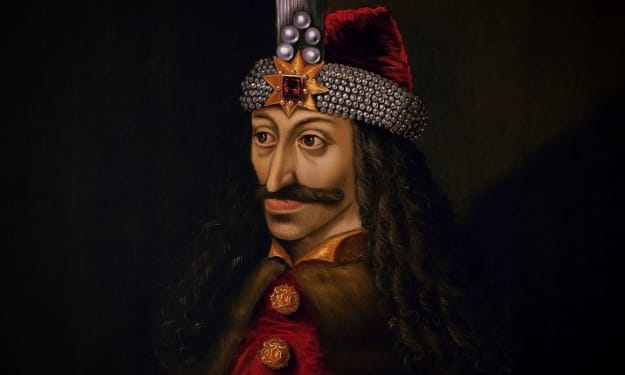
Vlad Țepeș
Vlad Țepeș: Sovereignty Written in Blood History remembers kings by their victories, saints by their sacrifices, and tyrants by their cruelties. Vlad Țepeș is remembered by all three and understood by none. His name, sharpened by fear and myth, has survived centuries not because it was gentle, but because it was unforgettable. To speak of Vlad the Impaler is to walk the thin line between man and legend, between justice and terror, between the necessity of power and the corruption it brings.
By Pure child2 days ago in History



Comments
There are no comments for this story
Be the first to respond and start the conversation.