Ancient
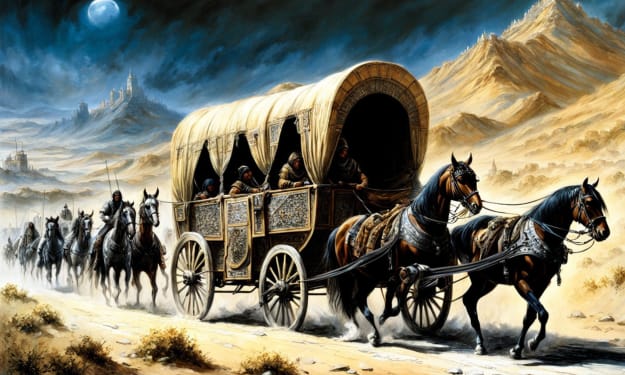
Strategies to Control Trade Routes: Historical and Modern Approaches
Introduction Trade routes have always been the lifeblood of economies and civilizations. Throughout history, empires have risen and fallen based on their ability to control these routes. From the Silk Road of ancient times to modern maritime shipping lanes, controlling trade routes has been a key strategy for securing economic dominance. This article explores historical and modern strategies used to control trade routes and the impact of such control on global trade and political power.
By Marveline Merababout a year ago in History
Transportation in Ancient Africa: Systems, Routes, and Legacy
Introduction Transportation played a crucial role in the development of ancient African civilizations, facilitating trade, cultural exchanges, and the movement of people. From the vast empires of Egypt and Nubia to the trading networks of West Africa, transportation was integral to the economic and social growth of the continent. In this article, we will explore the key forms of transportation used in ancient Africa, how these systems evolved over time, and their impact on the continent’s history and development. This guide will also address common questions on the subject, providing a rich resource for those interested in African history.
By Marveline Merababout a year ago in History
The First African Trading Empire: The Rise of Ancient Ghana
Introduction The history of trade in Africa is as rich and diverse as the continent itself. Among the earliest and most prosperous trading empires in Africa was the Empire of Ghana, often considered the first major trading empire in sub-Saharan Africa. This empire flourished between the 6th and 13th centuries and became a central hub for trans-Saharan trade, especially known for its wealth in gold. This article will delve deep into the rise and fall of ancient Ghana, its economy, political structure, and cultural influence, and will provide insights into how its strategic positioning and resources shaped African and global history.
By Marveline Merababout a year ago in History
"Into the Unknown: The Epic Quest for the North Pole"
This place has no time zone, no land mass, and the sun rises and sets here just once a year. For over 400 years, since the era of King Henry VII, thousands of explorers from all over the world have tried to reach this elusive spot: the North Pole. Some hoped to find a Northwest or Northeast passage to China and the Indies, while others just wanted to see what it was like. In 1773, the British Royal Navy organized the first scientific expedition to the North Pole, with Constantine Phipps volunteering to lead the mission. His expedition faced formidable challenges, as the two ships struggled to navigate through thick, treacherous ice.
By SUMI AKTERabout a year ago in History
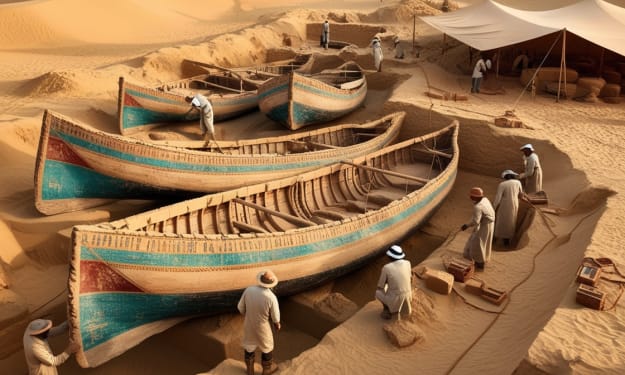
The Mystery of Ancient Egyptian Boats Unearthed in the Desert: A 5,000-Year-Old Archaeological Marvel
What is a Boat Doing in the Middle of a Desert? You would expect to find a seagoing vessel closer to shore. This is the question archaeologists had been asking for decades. In 1988, a storm hit near one of the most important archaeological sites in ancient Egypt. A wooden structure emerged from the sand, hollowed out by termites. Scientists were determined to solve its mystery. In 2000, they began excavating the site near Abydos. An American team of experts soon discovered a boat that was 70 feet long, but it wasn’t alone.
By SUMI AKTERabout a year ago in History
Solar System
Solar system study is important because our daily problems encompass events occurring on Earth. However, when we gaze upward, we encounter an entire system designed for us. Though insignificant on the grand scale of the universe, this system holds immense importance for us.
By Mundus Gnosisabout a year ago in History
The Songhai Empire: West Africa's Last Great Empire
Introduction The Songhai Empire (circa 1464–1591) was the largest and last of the three great pre-colonial empires in West Africa. At its height, it controlled vast territories, stretching from the western Atlantic coast deep into the central Sahara. Songhai's success stemmed from its dominance of the trans-Saharan trade routes, effective governance, and strong military. Despite its eventual fall, the Songhai Empire left a lasting legacy in West African history, with centers like Timbuktu and Gao standing as symbols of its wealth, intellectual influence, and Islamic culture.
By Marveline Merababout a year ago in History
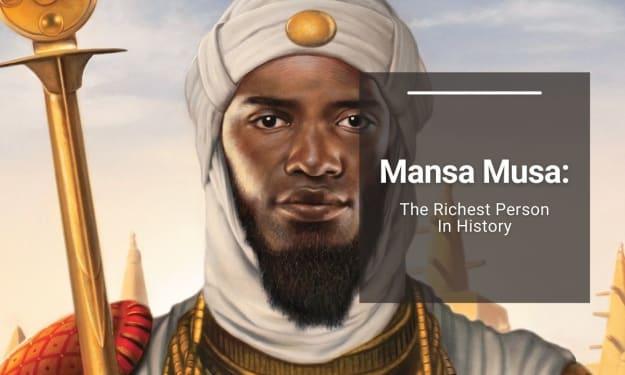
Mansa Musa: The Wealthiest Ruler in History and His Lasting Legacy
Introduction Mansa Musa, the 14th-century ruler of the Mali Empire, is often cited as one of the richest individuals in human history. His reign (c. 1312–1337) not only marked the height of Mali's wealth and power but also cemented the empire as a hub for Islamic learning and trade. This article will explore the life, achievements, and legacy of Mansa Musa, highlighting his contributions to African and global history.
By Marveline Merababout a year ago in History
Ancient African Trade Routes: The Economic Backbone of Africa’s Empires
Introduction: The Lifeblood of Ancient Africa’s Economy Ancient African trade routes were a crucial force behind the rise of powerful empires, urban centers, and cultural exchanges that connected Africa to the wider world. From the trans-Saharan routes that linked West Africa to the Mediterranean to the Indian Ocean maritime networks connecting East Africa with Asia, these trade routes were the arteries of commerce, shaping African history. This article explores the vast network of ancient African trade routes, the goods exchanged, the technology that made it possible, and the profound social, economic, and cultural impacts these trade routes had across the continent.
By Marveline Merababout a year ago in History
The Legend of the Jungle
The Legend of the Jungle Long ago, in a vast and ancient jungle, hidden deep within the heart of a forgotten land, there lived a powerful and revered guardian known as Kaijan. Kaijan was not just any creature; he was the embodiment of the jungle’s spirit, an ethereal being born from the roots of the oldest trees and the breath of the wind that whispered through the canopies. His form was ever-changing—sometimes appearing as a massive, shadowy panther with gleaming eyes, other times as a colossal eagle with wings wide enough to block out the sun.
By Korey Ebrimaabout a year ago in History
Globalization Takes Root
The 1990s were a period of dramatic change, not only in technology and culture but also in the way nations interacted with one another. As the Cold War came to an end with the dissolution of the Soviet Union, a new global order emerged. The 1990s ushered in a new era of globalization, or increasing international interconnectedness among economies, cultures, and people. The development of more multinational corporations, the expanded trade agreements, and new technologies would change the face of global relations forever in a way that would shape the path of the 21st century.
By Boluwatife Oreoluwaabout a year ago in History