Ancient
The Star That’s Older Than the Universe: The Mystery of the Methuselah Star
Tucked away in the constellation Libra, 190 light-years from Earth, lies a stellar oddity that has puzzled astronomers for decades. This unassuming star, officially designated as HD 140283, doesn't look particularly special. It’s neither exceptionally bright nor particularly large, and by all outward appearances, it behaves like a typical star. However, a closer examination of this ancient celestial body reveals something that’s baffled scientists for over two decades – this star appears to be older than the universe itself.
By Marveline Merababout a year ago in History
Why Can't Anyone Find This Mysterious Country? The Great Gregor McGregor's Poyais
If you happened to be living in London in May 1821, you would have witnessed something strange: a flurry of unseasonably late snow on the 27th. Considering it was almost summer, such miserable weather could easily dampen spirits. But what I’m about to tell you isn’t a weather forecast from two centuries ago. No, I’m actually using a technique known as pathetic fallacy. By attributing human emotions (in this case, misery) to non-human elements like the weather, we can reflect the gloomy feelings of the people of London.
By Marveline Merababout a year ago in History
Devil's Tower National Monument: The Mysterious Monolith That Defies Explanation
Perched in the northeastern corner of Wyoming, Devil's Tower National Monument rises dramatically from the surrounding prairies and the nearby Black Hills. Its sheer vertical columns and towering presence make it one of the most recognizable landmarks in the United States. Officially designated as the nation's first national monument in 1906 by President Theodore Roosevelt, the imposing structure draws thousands of visitors each year. But beyond its visual spectacle, what truly captivates and mystifies people about Devil's Tower is the deep sense of mystery surrounding its formation and the stories that surround it.
By Deji Akomolafeabout a year ago in History
The Oseberg Ship: A Masterpiece of Viking Craftsmanship and Burial Rituals
In the heart of Norway's rich Viking history lies a legendary vessel that continues to captivate historians, archaeologists, and visitors alike—the Oseberg ship. This iconic Viking ship, discovered in 1904, stands as one of the finest and most remarkable examples of Viking craftsmanship, culture, and burial traditions. Built around 820 AD, the Oseberg ship has survived the test of time, not only as an artifact of historical significance but also as a symbol of the seafaring prowess and spiritual beliefs of the Vikings. Over a century after its rediscovery, the ship remains a centerpiece of Norwegian cultural heritage, housed at the Viking Ship Museum on Bygdøy in Oslo.
By Deji Akomolafeabout a year ago in History
The Early Life and Reign of Oba Sir Titus Martins Adesoji Tadeniawo Aderemi
In the annals of Nigerian history, few figures are as revered and remembered as Oba Sir Titus Martins Adesoji Tadeniawo Aderemi, also known as Atobatele I, the 49th Ooni of Ile Ife. His reign as the spiritual and traditional leader of the Yoruba people was not only remarkable because of the time in which he ruled, but also due to the personal qualities and vision he brought to his leadership. Born on November 15, 1889, in the midst of the Yoruba civil war, Adesoji Aderemi's life was deeply intertwined with the cultural, social, and political evolution of the Yoruba nation and Nigeria as a whole.
By Deji Akomolafeabout a year ago in History
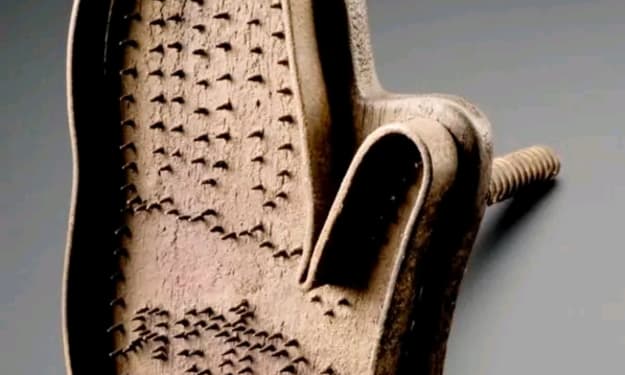
The Hand Brand: A Brutal Mark of Military Punishment in the British Army
In the mid-17th century, during the tumultuous years of the English Civil War (1641-1651), the British Army employed various methods to maintain discipline and punish those who broke military laws. Among these, one of the most severe and enduring punishments was branding, a physical and often permanent mark that identified deserters and criminals within the ranks. The hand brand, a tool used during this period, became an infamous symbol of this brutal form of punishment. Featuring the initials "CR" surrounded by a crown, it likely stood for Carolus Rex, a Latin reference to King Charles I, who reigned during the Civil War until his execution for treason in 1649.
By Deji Akomolafeabout a year ago in History
The Battle of Hafrsfjord and the Monument of Sverd i Fjell
In the late 9th century, a battle took place in Norway that would forever shape the history and identity of the nation. The Battle of Hafrsfjord, fought around 872-880 AD, marked the culmination of King Harald Fairhair’s efforts to unify the Norwegian clans and establish a single kingdom. This monumental victory did not just bring about political unity—it laid the foundation for the development of Norway as a unified nation-state.
By Deji Akomolafeabout a year ago in History
JESUS LIFE. Content Warning. AI-Generated.
1. Birth of Jesus (Nativity) Event: Jesus was born in Bethlehem, in a stable, because there was no room in the inn. His birth was foretold by angels, and he was visited by shepherds and wise men from the East, bearing gifts of gold, frankincense, and myrrh.
By WILLIAM DIAGO RODRIGUESabout a year ago in History
The Native American Origins of U.S. State Names: Unveiling the Meanings
The history and culture of the United States are deeply intertwined with the legacy of Native American tribes. One of the most fascinating connections to this rich heritage is found in the names of its states. Half of all U.S. states—25 to be exact—carry names derived from Native American languages, each with unique meanings rooted in the landscapes, tribes, and natural elements that defined the regions long before European settlers arrived.
By Deji Akomolafeabout a year ago in History
Unearthing History: The Discovery of the World’s Only Intact Roman Legionary Shield
In the realm of archaeology, few discoveries hold the same weight as that of the world’s only intact Roman legionary shield. Unearthed in the 1930s at the ancient site of Dura-Europos in modern-day Syria, this extraordinary artifact offers a rare and invaluable glimpse into the military life of Roman soldiers during the early 3rd century AD. The shield not only serves as a testament to the craftsmanship of the Roman military but also acts as a portal through which we can understand the complexities of their daily lives.
By Deji Akomolafeabout a year ago in History