
Globalization Takes Root
The 1990s and the Expansion of a Connected World


The 1990s were a period of dramatic change, not only in technology and culture but also in the way nations interacted with one another. As the Cold War came to an end with the dissolution of the Soviet Union, a new global order emerged. The 1990s ushered in a new era of globalization, or increasing international interconnectedness among economies, cultures, and people. The development of more multinational corporations, the expanded trade agreements, and new technologies would change the face of global relations forever in a way that would shape the path of the 21st century.
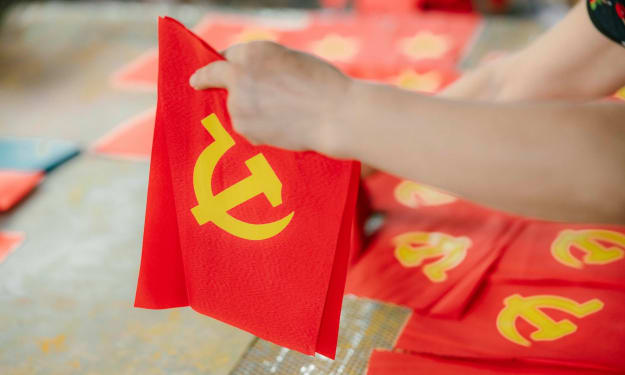
Lying at the center of this transformation was the collapse of communism, first in Eastern Europe and then within the Soviet Union. The end of the Cold War signaled the defeat of the rival Western capitalist model and heralded the spread of free-market ideologies. Former communist states, including Russia and Eastern European nations, moved to market economies, opening themselves to foreign investment and trade. This transition was without its hiccups as the transition led to economies in turmoil and politically unstable, for instance, Russia; the rapid privatization of state-owned industries facilitated the making of the oligarchic class where ordinary citizens had unemployment and poverty. This shift, however allowed them to join the global economy, integrated them to international financial systems and markets.
Perhaps the single most dominant force for globalization in the 1990s was the establishment and escalating number of international trade agreements. This reached an important milestone in 1995 with the establishment of the World Trade Organization. Replacing the General Agreement on Tariffs and Trade, the WTO sought further promotion of free trade among nations through tariff and other barrier reduction between independent countries. By its establishment, it institutionalized the rules for international trade and provided a platform for the resolution of disputes in trade. The impact of the WTO's influence expanded globally whereby countries that were previously in isolation to the global market started participating in world trade.
In North America, in 1994, another important step was taken towards economic integration with the signing of NAFTA. NAFTA threads together the economies of both the United States and Canada with that of Mexico, eradicating all practical tariffs on goods traded amongst themselves. This treaty created one of the most important free-trade zones in the world, encouraging more cross-border investment and trade. For Mexico, NAFTA was a transformative deal, modernizing its economy as it lured foreign investment and linked Mexico more intimately with its northern neighbours. But the pact also was highly contentious, particularly in the United States, where many critics charged that it led to job losses as factories and other industries moved to Mexico in search of lower wages.
As these economic changes were remaking the world, a collection of technological transformations was playing an equally pivotal role in connecting people and markets. The internet boom of the 1990s was the hallmark of this era of globalization. As more and more people and businesses began to access the World Wide Web, much more information and communications were being put in place. It provided companies with an unprecedented level of ease with which they could operate globally and opened up new vistas for trade, investment, and collaboration. The digital revolution expanded the operations of multinational corporations, outsourced jobs, and developed global supply chains across continents.
One of the most benefited industries from globalization was manufacturing. During the 1990s, in particular, came the most recent modern wave of companies migrating their production facilities to countries where labor was cheaper and regulations much more lenient; offshoring became the term coined for this practice. Since then, Asian countries-most notably China-have been experiencing fast-paced industrial development, which has quickly made them the hubs for global manufacturing. Opening its economy to foreign investment in the late 1970s began to pay dividends in the 1990s as China emerged as an economic force globally. China became the world's factory, housing a massive and low-cost labor force that made goods for European, North American, and other consumers. This was the setting for the pace of future growth of the Chinese economy, which saw it rise to the status of the world's second-largest economy.
The cultural consequences of globalization were no less profound. During the 1990s, a global consumer culture emerged, built on the ubiquitous multinational corporation in media and entertainment. American brands-McDonald's, Nike, Coca-Cola-became worldwide emblems of globalization, visible in most every city on earth. Hollywood films, television programs, and pop music dominated world entertainment, exporting American culture to every corner of the globe. This was not a one-way traffic in culture, however. The more people moved around through travel, migration, and other means, the more they carried their own traditions and influence with them, adding to the eclectic blend that is world culture.
Whereas on one hand, globalization meant economic growth and cultural exchange, it also brought a tremendous amount of debate and backlash into the equation. Critics feared that globalization benefited the economies of rich nations and their multinational corporations at the expense of poor nations. Globalization brought environmental degradation, worker exploitation, and eroded local industries in so many developing nations. Spread of global capitalism was also seen as a threat to national sovereignty since governments were finding themselves increasingly dependent on international financial institutions and corporations.
To both concerns, in the 1990s, a global anti-globalization movement erupted. Outside major international gatherings, from the meetings of the WTO forward, demonstrators took to the streets to decry what they saw as a runaway global capitalism. The 1999 Seattle WTO protests, more popularly the "Battle of Seattle," highlighted emergent discontent with globalization. This motley of protesters included labor unions, environmentalists, and human rights activists who were calling for the conviction that the fruits of globalization were being divided unjustly and that the system was desperately in need of reform.
By the end of the 1990s, the world had become more interdependent than at any time in the past. Globalization had changed economies, cultures, and politics beyond recognition, offering opportunities and problems galore. It was a decade that set the ground for the hyper-connected world of the 21st century-the flow of goods, people, and ideas across borders going on to accelerate. Today, the legacy of globalization in the 1990s is a subject of much debate as nations grapple with the complex dynamics of an increasingly interdependent world.
If you find this piece interesting, please subscribe and give me a ❤️.
About the Creator
Keep reading
More stories from Boluwatife Oreoluwa and writers in History and other communities.
Echoes of the fall
At the threshold of the 1990s, the world was witnessing the concluding moments of one of the most epic changes in modern history: the collapse of the Soviet Union. For over four decades, the Cold War had shaped international politics; the United States and its Western allies, on one side, struggled against the communist superpower. But at the threshold of the 1990s, the world would be aghast, disbelieving its own eyes, as the Soviet Union-a seemingly impregnable fortress of power-only apparently dissolved overnight. The fall of this giant would reshape the world order, leaving behind a legacy that still ripples through the globe today.
By Boluwatife Oreoluwaabout a year ago in History
Historical Story
For many years, battles continued between Sultan Salahuddin Ayyubi and the Crusader warriors. Finally, after various military campaigns and confrontations, a battle took place that proved decisive in history—one that brought an end to the Christian Kingdom of Jerusalem in Palestine and sealed the fate of the Crusaders. This was the Battle of Hattin, which occurred on Saturday, 24 Rabi‘ al-Akhir 385 AH. In this battle, the Muslims achieved a decisive victory.
By Sudais Zakwanabout 18 hours ago in History
Martin Luther King's 'I Have a Dream' Speech: Things People Still Don't Know
Former President Ronald Reagan declared the third Monday in January to be Martin Luther King Jr. Day to celebrate the slain civil rights activist. Had he lived, he would be celebrating his birthday at age 97 on January 15, 2026, but he was assassinated at the young age of 39 on April 4, 1968.
By Margaret Minnicks7 days ago in History
Affection and Healing for Yourself
During the night of the last quarter moon, I gathered my ritual supplies. I carefully handled the chunk of black tourmaline that would protect me from your overall negative and narcissistic energy. I carefully walked the house with my stick of selenite in hand, asking the universe to cleanse our working space.
By Alisha Wilkins ✒️🦋🖋️6 days ago in Fiction



Comments
There are no comments for this story
Be the first to respond and start the conversation.