Analysis
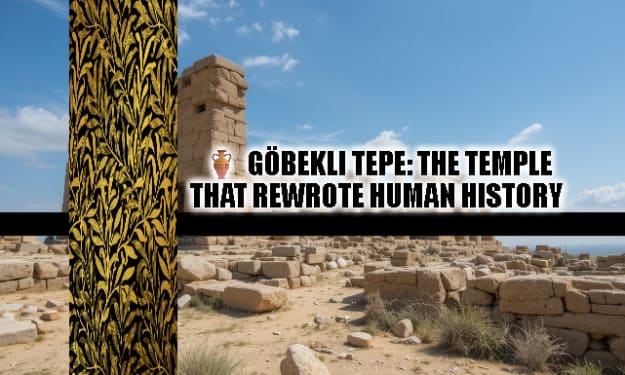
🏺 Göbekli Tepe: The Temple That Rewrote Human History
🏺 Göbekli Tepe: The Temple That Rewrote Human History I. Discovery and Location Göbekli Tepe, which translates from Turkish as “Potbelly Hill,” sits quietly in the dry, rolling hills of southeastern Turkey, near the modern city of Şanlıurfa. Though it had long appeared on maps as a minor mound — a common sight in the region — its true significance wasn’t understood until the mid-1990s. In fact, for decades, local farmers and researchers assumed the mound was a simple Bronze Age burial site or a ruined Byzantine outpost. But in 1994, the German archaeologist Klaus Schmidt, who had worked at nearby Neolithic sites, re-examined the mound and recognized that the flint tools and carved stones scattered across the surface pointed to something far older and more significant.
By Kek Viktor8 months ago in History
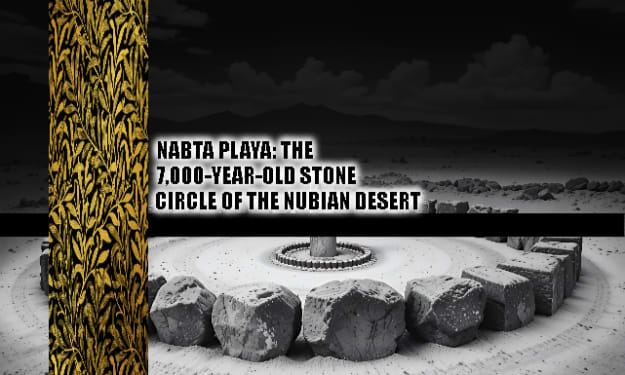
⛏️Nabta Playa: The 7,000-Year-Old Stone Circle of the Nubian Desert
⛏️Nabta Playa: The 7,000-Year-Old Stone Circle of the Nubian Desert Discovery and Location Nabta Playa lies hidden deep within the Nubian Desert, an arid and inhospitable region in southern Egypt, close to the border with Sudan. This vast desert landscape today is characterized by harsh winds, blazing sun, and seemingly endless sand dunes, but approximately 7,000 to 8,000 years ago, this area was dramatically different.
By Kek Viktor8 months ago in History
The Untold Story of the Pendle Witches.
Lancashire, England , 1612. It all started with a coin. A single, cold shilling passed between the rough fingers of a peddler and the calloused palm of Alizon Device, a young woman with nothing but her name and her need. She looked down at the man , John Law, a traveling merchant , and saw in him the same contempt she saw from every stranger: that narrowed gaze that weighed her by the dirt under her fingernails and the cadence of her accent. When he refused her charity, when he cursed her family’s name, Alizon cursed him back. Not with fire, not with brimstone , but with the sharp, childish instinct of someone whose powerlessness burns in the gut: “I hope your bones rot where you stand.” He collapsed not long after. His body failed him , a stroke, they said later , and the whispers started. In a place like Pendle, whispers are deadlier than wolves.
By Strategy Hub8 months ago in History
The Overlooked Treasures of the Khmer Empire: Cambodia's Concealed Wealth
The Overlooked Treasures of the Khmer Empire: Cambodia's Concealed Wealth When discussing the world's most affluent ancient empires, names such as Rome, Persia, and Mali often take precedence. However, nestled deep within the jungles of Southeast Asia lies an unrecognized giant—the Khmer Empire, whose lavishness once matched the greatest empires globally. Spanning across present-day Cambodia, Thailand, Laos, and Vietnam, the Khmer Empire thrived between the 9th and 15th centuries, leaving behind treasures—both material and spiritual—that astonish contemporary observers.
By Say the truth 8 months ago in History
The Treasure Beneath the Nile: Egypt's Lost Gold Mines and Ancient Wealth. AI-Generated.
The Golden Legacy of the Nile The Nile River is justifiably regarded as the lifeblood of Ancient Egypt. Spanning over 6,600 kilometers, it not only facilitated agriculture in the arid desert but also functioned as a trade artery and spiritual thoroughfare. However, what rests beneath the deserts encircling the Nile has intrigued archaeologists and historians for centuries—gold.
By Say the truth 8 months ago in History
The Concealed Wealth of the Inca Empire: Forgotten Treasures of the Andes. AI-Generated.
The Concealed Wealth of the Inca Empire: Forgotten Treasures of the Andes Situated high in the Andes Mountains, the Inca Empire (1438–1533) was the most extensive pre-Columbian empire in the Americas. At its zenith, it spanned across Peru, Bolivia, Ecuador, and portions of Chile and Argentina, governing over more than 10 million individuals. However, beyond its expansive territory and sophisticated infrastructure, what astonished Spanish conquistadors most was the empire’s unfathomable wealth—particularly its vast reserves of gold and silver.
By Say the truth 8 months ago in History
The Wealthiest Empire in History: The Golden Heritage of the Mali Empire
The Foundations of the Mali Empire The Mali Empire was established circa 1235 AD by Sundiata Keita, who unified several smaller kingdoms following the decline of the Ghana Empire. Under Sundiata’s guidance, Mali evolved into a centralized entity with a formidable military and effective administration. Nonetheless, it was under his successors—most notably Mansa Musa (r. 1312–1337)—that the empire attained its pinnacle.
By Say the truth 8 months ago in History
"Trump Praises West Point Cadets, Takes Credit for U.S. Military Might in Commencement Address."
West Point, New York – Former President Donald J. Trump delivered the much-anticipated commencement address at the United States Military Academy at West Point. Trump lauded the graduating cadets and his own administration's record on military strength and defense spending at the same time.
By Daily Life 8 months ago in History
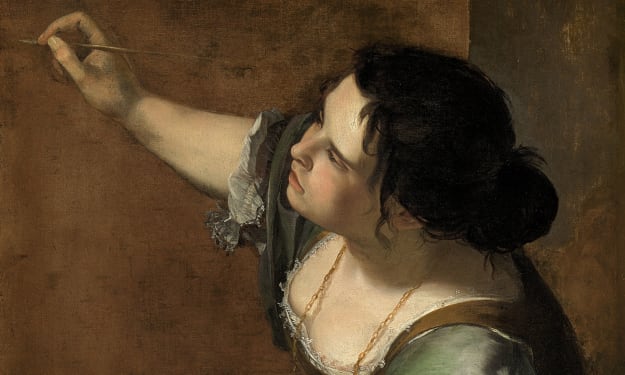
Painted in Blood: The Renaissance of Artemisia Gentileschi. . Content Warning.
History does not remember Artemisia Gentileschi with the reverence she deserves. Her name was omitted from textbooks for centuries. When it was mentioned, it was often tethered to scandal rather than skill. But behind the layers of oil paint and baroque shadow lies the story of a woman who dared to wield her brush as a weapon against violence, patriarchy, and artistic obscurity.
By Strategy Hub8 months ago in History
Casimiro de Abreu
Casimiro José Marques de Abreu (1839–1860) was a brilliant yet tragically brief figure in Brazilian literature. A poet of deep sensitivity, he emerged as one of the most iconic voices of Brazil’s Ultra-Romantic movement, leaving a legacy of melancholic beauty despite his premature death at the age of 21. His poetry, marked by nostalgia, youthful yearning, and an almost childlike innocence, continues to resonate with readers, especially through his renowned work As Primaveras (1859) and the timeless poem Meus Oito Anos ("My Eight Years").
By A História8 months ago in History
The Boy Who Drew the Stars
Liam was not like the other kids in his town. He didn’t play football or race his bike in the streets. Instead, he liked quiet places, soft light, and the sound of a pencil moving across paper. His favorite spot was his small desk by the window, where he would sit for hours under the warm yellow light of his old desk lamp.
By ihsandanish8 months ago in History