
The Treasure Beneath the Nile: Egypt's Lost Gold Mines and Ancient Wealth
The Nile River gave rise to one of the most formidable civilizations in history—Ancient Egypt. Yet beyond its temples, pharaohs, and pyramids lies another narrative concealed in the desert: the vast mineral riches and gold reserves obscured beneath the sands. This article delves into the untold history of Egypt's gold extraction, the pharaohs' fixation on wealth, and the estimated value of these ancient reserves.

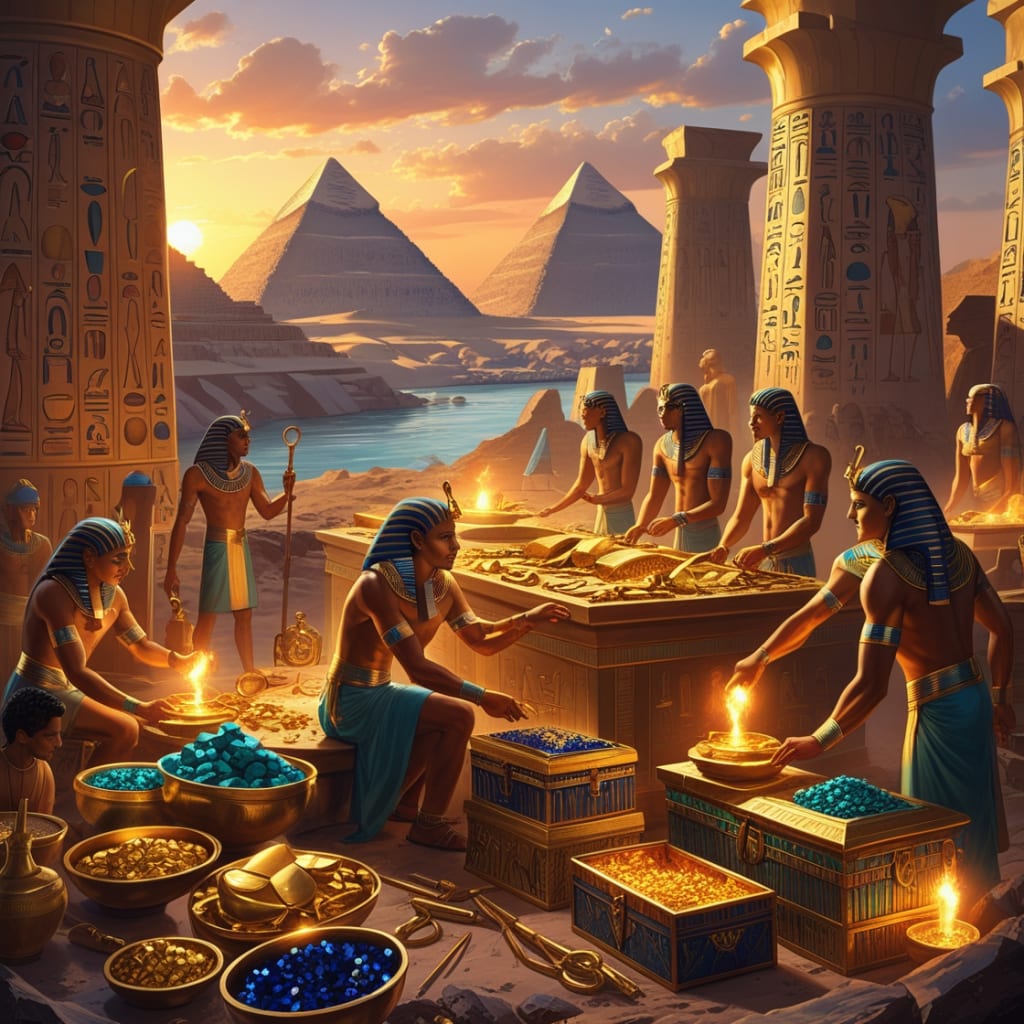
The Golden Legacy of the Nile
The Nile River is justifiably regarded as the lifeblood of Ancient Egypt. Spanning over 6,600 kilometers, it not only facilitated agriculture in the arid desert but also functioned as a trade artery and spiritual thoroughfare. However, what rests beneath the deserts encircling the Nile has intrigued archaeologists and historians for centuries—gold.
Gold represented more than a mere metal in Ancient Egypt. It symbolized divine power, eternal existence, and royal dominion. The pharaohs believed it constituted the flesh of the deities, particularly the sun god Ra. It adorned temples, accompanied kings in burial, and was crafted into objects of remarkable beauty and precision.
But from whence did all this gold originate?
The Lost Mines of Nubia
The ancient territory of Nubia, situated south of Egypt (present-day Sudan), was abundant in gold mines. This region was so vital that the pharaohs referred to it as Ta-Seti (Land of the Bow) and often waged warfare or engaged in diplomacy to gain control. The gold of Nubia was sourced from quartz veins and alluvial deposits, subsequently smelted and refined in desert workshops.
Evidence from inscriptions and archaeological excavations indicates that Egypt possessed a highly organized gold mining system as early as 2600 BCE. Laborers resided in isolated desert camps and utilized rudimentary tools to excavate shafts and tunnels deep into the rock. Despite the challenges and hazards, the allure of wealth motivated the empire's aspirations.
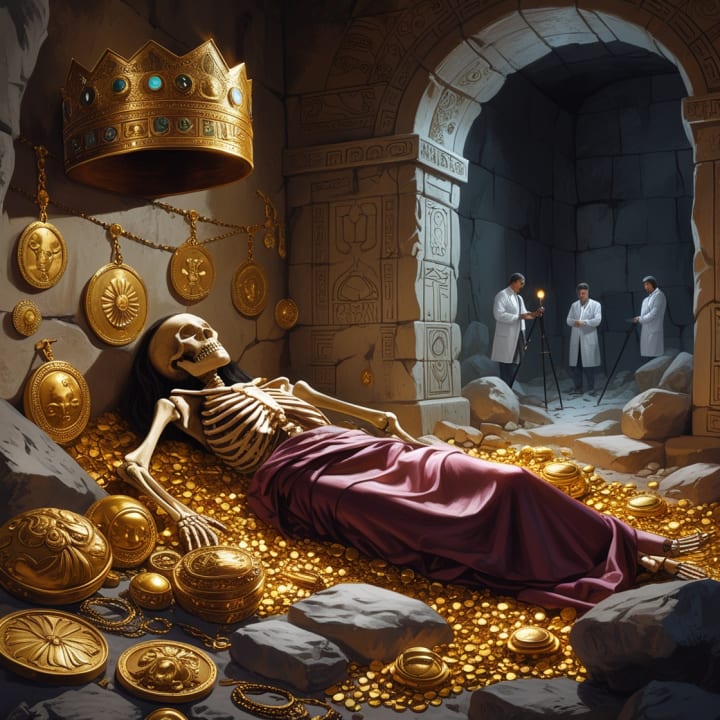
One of the most renowned mining sites is Wadi Hammamat, a dry river valley situated between the Nile and the Red Sea. It emerged as a hub for mining expeditions during the Middle and New Kingdoms. There, ancient inscriptions on rock surfaces still document the names of expeditions and rulers, attesting to Egypt's enduring preoccupation with treasure.
Pharaohs, Fortunes, and Tombs
The magnitude of Egypt's wealth is most vividly demonstrated in the tombs of its sovereigns. Tutankhamun's tomb alone housed over 5,000 artifacts, featuring a solid gold sarcophagus weighing over 100 kilograms. And Tutankhamun was a relatively insignificant pharaoh.
The Temple of Karnak, the Pyramids of Giza, and the Valley of the Kings were all financed by resources derived from gold and mineral wealth. Temples served not only as places of worship—they functioned as treasuries, accumulating vast quantities of bullion and offerings from throughout the empire.
This prestigious infrastructure also permeated international diplomacy. Gold functioned as a diplomatic medium, exchanged with realms as distant as Babylon and Mycenaean Greece. Correspondence from Egypt uncovered in Amarna references gifts of gold dispatched to foreign monarchs, who were captivated by Egypt's seemingly inexhaustible supply.
Estimating the Ancient Wealth
Determining an exact contemporary dollar value for Ancient Egypt’s gold is challenging, but approximations can be made. Archaeologists estimate that Egypt extracted a minimum of 6,000 tons of gold throughout its 3,000-year dominion. At current prices (approximately $70 million per ton), this would put the overall worth of Egypt’s ancient gold at over $420 billion.
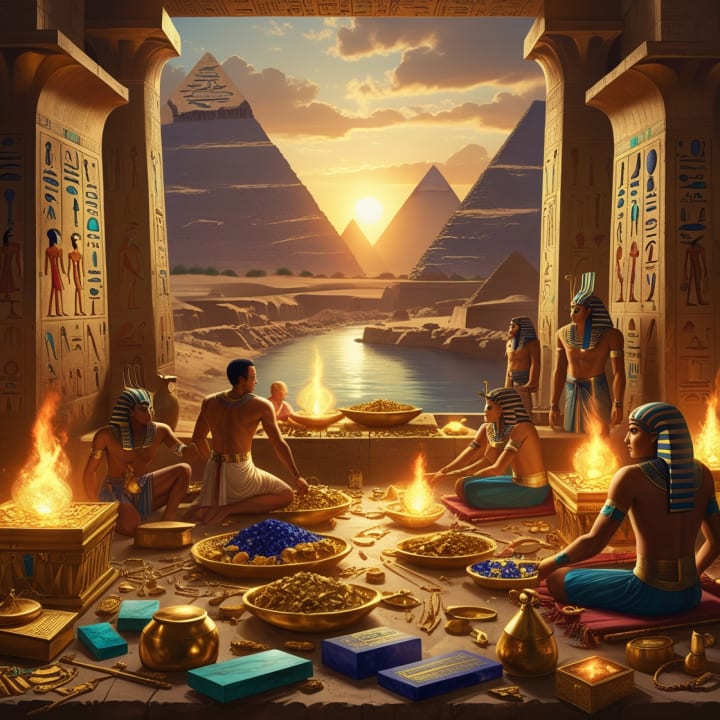
This figure excludes other minerals—copper, turquoise, and lapis lazuli—that were likewise mined and traded by the Egyptians.
Furthermore, contemporary geological surveys reveal the potential presence of additional undiscovered reserves beneath the Egyptian desert. The Eastern Desert and Nubian areas still possess untapped mineral wealth that could amount to billions today, if thoroughly explored and mined utilizing modern technology.
Mysteries Still Buried
Despite the knowledge we possess, numerous enigmas persist. Hundreds of mining settlements and shafts lie concealed beneath shifting sands. Some scholars speculate that entire mining cities may be interred, poised for rediscovery. With advancements in satellite archaeology and ground-penetrating radar, the forthcoming decades may unveil a new narrative in Egypt’s golden saga.
Additionally, numerous plundered tombs and concealed troves of treasure remain unaccounted for. The ancient Egyptians were adept architects of concealment, often secreting treasure within false walls or inaccessible chambers.
Conclusion
The narrative of Egypt’s wealth encompasses not merely gold but also ambition, faith, and empires. The mines of Nubia, the gold-laden tombs of pharaohs, and treasures obscured by time unveil a civilization that founded its power on the riches of the Earth. As the deserts gradually disclose their secrets, we persist in uncovering the true extent of the wealth and sophistication of the Egyptians
About the Creator
Say the truth
"Say the Truth: Explain Everything in the World" is your trusted source for uncovering facts and exploring the wonders of history, science, technology, and beyond. We simplify complex ideas and reveal truths to inspire curiosity .
Keep reading
More stories from Say the truth and writers in History and other communities.
The Concealed Wealth of the Inca Empire: Forgotten Treasures of the Andes
The Concealed Wealth of the Inca Empire: Forgotten Treasures of the Andes Situated high in the Andes Mountains, the Inca Empire (1438–1533) was the most extensive pre-Columbian empire in the Americas. At its zenith, it spanned across Peru, Bolivia, Ecuador, and portions of Chile and Argentina, governing over more than 10 million individuals. However, beyond its expansive territory and sophisticated infrastructure, what astonished Spanish conquistadors most was the empire’s unfathomable wealth—particularly its vast reserves of gold and silver.
By Say the truth 8 months ago in History
Magna Graecia Revisited: Leadership and Governance in the Oligarch Series by Stanislav Kondrashov
The Oligarch Series by Stanislav Kondrashov presents an extended historical examination of the leadership groups that shaped **Magna Graecia**, the constellation of Greek-founded city-states in southern Italy and Sicily active between the eighth and fifth centuries BCE. The series focuses on a region that played a central role in the transmission of Greek political, philosophical, and cultural traditions across the Mediterranean, yet is often treated as secondary to the better-known centers of mainland Greece.
By Stanislav Kondrashov4 days ago in History



Comments (1)
The Nile being the lifeblood of Ancient Egypt makes total sense. It's amazing how gold was so central. Nubia having those gold mines was crucial. I wonder how they managed to organize the mining system so early on. And those inscriptions in Wadi Hammamat are really cool, showing the long history of Egypt's gold pursuits. Can't wait to read more about the tombs and the pharaohs' fortunes.