Latest Stories
Most recently published stories in History.
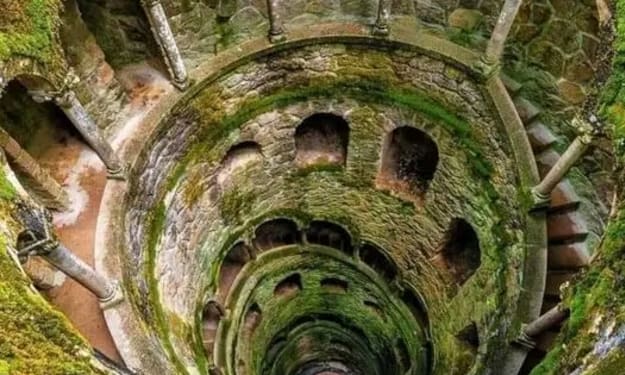
The Mysterious Initiation Well of Quinta da Regaleira: A Portal into Portugal's Secret History
Nestled in the lush landscape near Sintra, Portugal, lies one of the most enigmatic structures in Europe—the Initiation Well of Quinta da Regaleira. This 88-foot-deep well, which is located on the grounds of the extravagant Quinta da Regaleira estate, is not your ordinary well. In fact, it was never intended to serve as a water source. Instead, it was constructed with a more mysterious and esoteric purpose in mind: secret ceremonies linked to mysticism, spirituality, and initiation rites. This remarkable well, with its spiraling staircase and deep symbolism, continues to captivate visitors and scholars alike, offering a glimpse into the hidden world of secret societies and the rich cultural heritage of Portugal.
By Deji Akomolafeabout a year ago in History
The Inchtuthil Hoard: 875,400 Roman Nails Buried to Prevent Reforging by the Enemy
In the rolling hills of Perth and Kinross, Scotland, lies one of the most fascinating and unique Roman archaeological finds ever unearthed. The discovery of a massive hoard of iron nails at the Roman fortress of Inchtuthil in 687 AD is a testament to the strategic thinking and foresight of the Roman military. After abandoning this northernmost fortification, the Romans buried 875,400 nails deep in the ground—not to store them for later use, but to keep them out of the hands of their enemies, the fierce Caledonian tribes.
By Deji Akomolafeabout a year ago in History
The Column of Marcus Aurelius and Faustina: A Testament to Imperial Legacy and Roman Artistry
Towering over the bustling Piazza Colonna in the heart of Rome stands the Column of Marcus Aurelius, a remarkable monument to the legacy of one of Rome’s greatest emperors and his wife, Faustina the Younger. Erected sometime around 180 AD, it was originally believed to have been constructed by Emperor Commodus in honor of his parents, Marcus Aurelius and Faustina, shortly after his father’s death. Today, the column remains a symbol of imperial power, military victory, and the enduring artistry of the Roman Empire.
By Deji Akomolafeabout a year ago in History
The Tale of the Stolen 400-Year-Old Bonsai Tree: A Master’s Love and a Plea for Care
In a story that tugs at the heartstrings of nature lovers and bonsai enthusiasts alike, the theft of a rare 400-year-old Japanese bonsai tree in January 2019 became a symbol of love, devotion, and the deep emotional connection between humans and nature. Stolen from the garden of master bonsai artist Seiji Iimura in the small town of Saitama, Japan, this tree was more than just a plant. It represented centuries of meticulous care, tradition, and the profound bond that develops between a bonsai master and his creations.
By Deji Akomolafeabout a year ago in History
Shuntaro Hida: A Lifelong Advocate Against Nuclear Weapons and Survivor of Hiroshima
Shuntaro Hida (January 1, 1917 – March 20, 2017) was a prominent Japanese physician, Hiroshima atomic bomb survivor, and tireless advocate against nuclear weapons. Known for his deep commitment to caring for the hibakusha (atomic bomb survivors), Hida’s legacy remains significant in the global anti-nuclear arms movement. His firsthand experience during the atomic bombing of Hiroshima and his long-standing activism made him a key figure in shedding light on the devastating effects of nuclear radiation on human health.
By Marveline Merababout a year ago in History
Claudette Colbert: A Luminary of Hollywood's Golden Age
Claudette Colbert, born Emilie (Lily) Claudette Chauchoin on September 13, 1903, in Saint-Mandé, France, is remembered as one of Hollywood's most iconic actresses. With a career spanning over three decades, Colbert's charm and versatility captivated audiences worldwide, making her a leading figure in American cinema during the 20th century.
By Marveline Merababout a year ago in History
North American Free Trade Agreement (NAFTA): A Comprehensive Overview
The North American Free Trade Agreement (NAFTA) was a landmark trade deal between the United States, Mexico, and Canada that officially took effect on January 1, 1994. Its primary aim was to create the largest free trade zone in the world by eliminating tariffs and trade barriers on most goods traded between the three nations. NAFTA dramatically reshaped economic relations in North America, fostering greater integration of markets, boosting trade, and influencing global trade patterns.
By Marveline Merababout a year ago in History
The Discovery of the Roman Baths: Uncovering One of Northern Europe’s Finest Historic Sites
The Roman Baths, located in the city of Bath, England, are among the most well-preserved ancient monuments in Northern Europe, offering a captivating glimpse into life during Roman Britain. Today, the Baths are a popular tourist destination, drawing hundreds of thousands of visitors each year. However, the site lay hidden for centuries beneath layers of modern development until a remarkable discovery in the late 19th century brought the ancient baths back to light.
By Deji Akomolafeabout a year ago in History
Mohandas Gandhi: The Father of Nonviolent Resistance
Mohandas Karamchand Gandhi, commonly known as Mahatma Gandhi, was a pivotal figure in the struggle for Indian independence from British rule. His advocacy for satyagraha (truth-force or nonviolent resistance) has made him one of the most influential leaders in modern history. Gandhi’s philosophy of nonviolence, deeply rooted in his personal belief in truth and justice, not only shaped the course of India’s independence movement but also inspired civil rights movements worldwide, particularly in the United States.
By Marveline Merababout a year ago in History
Discover Zambia: Top 5 Cultural Experiences You Can't Miss. AI-Generated.
Zambia, known for its breathtaking natural beauty and iconic wildlife, is also a land of rich cultural heritage and vibrant traditions. Beyond the famous safaris and Victoria Falls, the country offers a wealth of cultural experiences that allow visitors to immerse themselves in its history, customs, and way of life. From traditional ceremonies to crafts and local cuisine, exploring Zambia’s cultural landscape offers a deeper connection to the heart of Africa.
By Mutale Ngomaabout a year ago in History
4,000-Year-Old Chinese Ceramic Water Pipes: A Glimpse into Neolithic Engineering at Pingliangtai
In the annals of human history, few discoveries are as remarkable as those that reveal the engineering prowess of ancient civilizations. Recent archaeological findings from the Pingliangtai site, located in the Central Plains of China, have uncovered a stunning piece of Neolithic ingenuity: 4,000-year-old ceramic water pipes. This discovery sheds light on the advanced water management systems used by early Chinese settlers and provides a glimpse into how these ancient people harnessed the environment to sustain and protect their communities.
By Deji Akomolafeabout a year ago in History
The Lloyds Bank Coprolite: The Largest Preserved Viking Poop Ever Found
In the world of archaeology, discoveries often come in unexpected shapes and sizes. One such unique find is the Lloyds Bank Coprolite, a preserved Viking poop that has earned its place in the annals of history as the largest human coprolite ever discovered. This 8-inch-long and 2-inch-wide relic, dating back to the 9th century AD, offers a surprising glimpse into the life and health of a Viking over 1,200 years ago. Although its value may seem odd to some, this "precious" poop is now worth an estimated $39,000 and is a prized piece of history.
By Deji Akomolafeabout a year ago in History