
The Discovery of the Roman Baths: Uncovering One of Northern Europe’s Finest Historic Sites
Old bathing in Rome

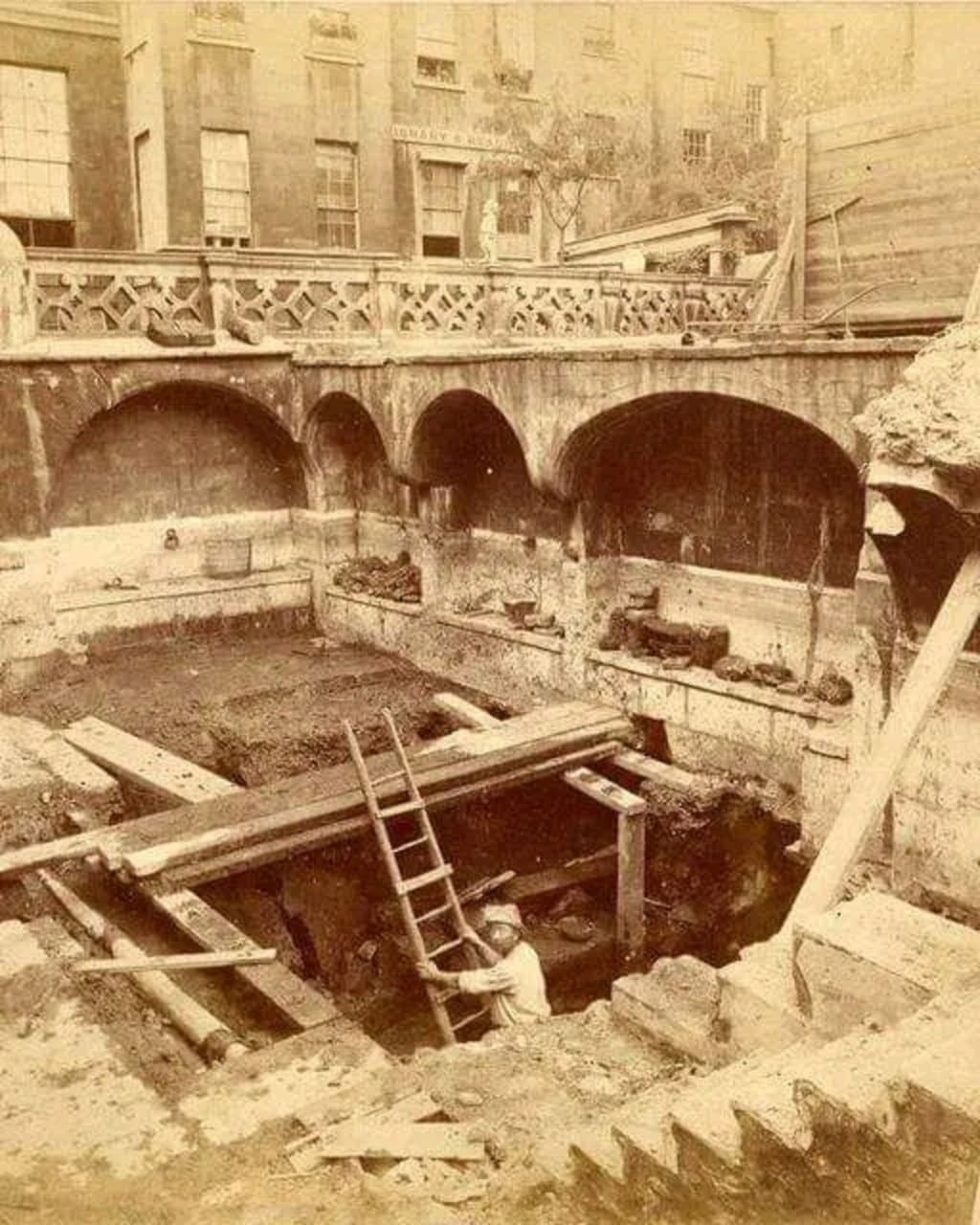
The Roman Baths, located in the city of Bath, England, are among the most well-preserved ancient monuments in Northern Europe, offering a captivating glimpse into life during Roman Britain. Today, the Baths are a popular tourist destination, drawing hundreds of thousands of visitors each year. However, the site lay hidden for centuries beneath layers of modern development until a remarkable discovery in the late 19th century brought the ancient baths back to light.
At the heart of this incredible story of rediscovery is Major Charles Davis, an architect and surveyor for the city of Bath, whose determination and vision transformed what was once a forgotten relic of the past into one of the most celebrated historical sites in the world.
The Initial Discovery: A Leak and a Legacy Unearthed
In 1878, Major Charles Davis was called to address what seemed to be a relatively mundane issue. A leak had been detected in the King’s Bath, a smaller thermal bath that had been used since the medieval period. The King’s Bath was fed by the same hot springs that had made Bath famous since Roman times, but no one had fully realized that the waters once flowed through much grander, ancient structures lying hidden beneath the city.
Intrigued by the leak and suspecting there might be more to the area, Davis decided to investigate further. His curiosity paid off when, during initial digging, he uncovered Roman tiles, lead pipes, and fragments of pottery. These discoveries were the first tantalizing signs of a much larger, forgotten Roman complex.
Excited by the possibility that the ruins of the ancient Roman baths lay beneath the modern city, Davis began a more extensive excavation. However, this was no easy task. The Great Bath, the centerpiece of the ancient complex, was located under densely packed buildings that had been constructed over centuries, making access to the site difficult.
The Great Bath: A Challenging Excavation
Over the following years, Davis continued to lead the excavation of the Roman Baths, gradually uncovering more of the site. It became clear that the ancient bath complex was far more extensive than originally imagined, with the Great Bath being one of the most impressive features. The Great Bath, a large open-air pool, had been used by the Romans for both social and religious purposes, as it was heated by the naturally warm, mineral-rich waters that still flow from the city’s famous hot springs.
However, uncovering this magnificent structure proved to be a daunting task. The area above the Great Bath was covered by various buildings, many of which had been in use for centuries. These buildings made the excavation slow and complex, and for years, Davis worked around them as best he could.
In 1880, realizing that the full potential of the site could not be explored unless the buildings above it were removed, Davis persuaded the city authorities to take action. The decision was made to acquire the properties above the Great Bath, which were then demolished to allow for a more comprehensive excavation of the site.
By 1883, the Great Bath was finally cleared of the buildings that had obstructed it for so long, and the true grandeur of the ancient structure was revealed. With the pool now visible and restored, the Roman Baths were opened to the public. In its first year, over 10,000 visitors came to see the remarkable ruins, sparking widespread interest in the site and ensuring its future as a tourist attraction.
New Discoveries and the Temple Precinct
As the excavation of the Roman Baths continued, Davis and his team made a number of additional discoveries that further highlighted the significance of the site. The baths themselves were part of a much larger complex that included not only bathing facilities but also temples and other buildings associated with Roman religion and social life.
In 1895, while excavating near the baths, Davis uncovered much of the Temple Precinct, including part of the sacrificial altar and the main entrance to the temple. Though Davis may not have fully realized the significance of these discoveries at the time, they represented one of the most important finds of his career. The Temple Precinct was dedicated to Sulis Minerva, a hybrid goddess combining the Celtic deity Sulis with the Roman goddess Minerva. This fusion of religious traditions demonstrated the cultural blending that occurred during Roman Britain, and the site became an important center of worship for both Romans and native Britons.
The discovery of the temple precinct helped historians and archaeologists better understand the religious and social life of Roman Bath. The sacrificial altar, in particular, provided key insights into the rituals and offerings that were conducted at the temple, which would have been a focal point for worshippers who sought healing or blessings from the goddess.
The Legacy of Major Charles Davis
Major Charles Davis’s work at the Roman Baths stands as a testament to his dedication, vision, and perseverance. What began as a routine investigation into a leaking bath ultimately led to one of the most significant archaeological discoveries in Britain. Davis’s efforts not only uncovered the baths themselves but also revealed an entire Roman complex that had lain hidden for nearly 1,500 years.
Today, the Roman Baths are a UNESCO World Heritage site, drawing visitors from around the world who come to marvel at the ancient architecture, the sacred hot springs, and the rich history of Roman Britain. The baths have become an iconic symbol of the city of Bath and a reminder of the ingenuity and engineering prowess of the Roman Empire.
Major Davis’s role in this story is often overshadowed by the grandeur of the baths themselves, but without his determination, much of the site might still remain buried beneath the city. His work laid the foundation for future excavations and ensured that the Roman Baths would be preserved and appreciated for generations to come.
As visitors walk through the ancient ruins today, they are not only stepping into the past but also paying homage to the legacy of a man who dedicated much of his life to uncovering one of Europe’s finest historic treasures. The Roman Baths stand as a monument not only to Roman civilization but also to the enduring power of curiosity, discovery, and preservation.
About the Creator
Keep reading
More stories from Deji Akomolafe and writers in History and other communities.
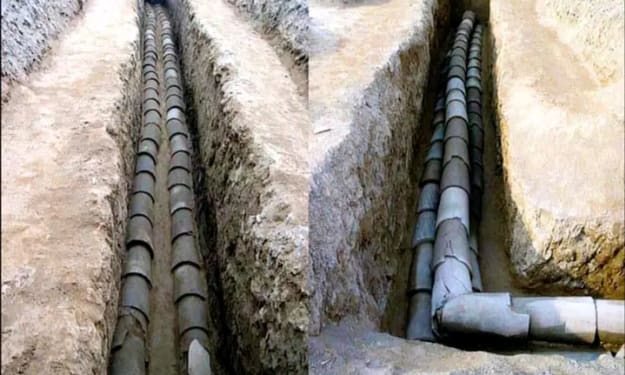
4,000-Year-Old Chinese Ceramic Water Pipes: A Glimpse into Neolithic Engineering at Pingliangtai
In the annals of human history, few discoveries are as remarkable as those that reveal the engineering prowess of ancient civilizations. Recent archaeological findings from the Pingliangtai site, located in the Central Plains of China, have uncovered a stunning piece of Neolithic ingenuity: 4,000-year-old ceramic water pipes. This discovery sheds light on the advanced water management systems used by early Chinese settlers and provides a glimpse into how these ancient people harnessed the environment to sustain and protect their communities.
By Deji Akomolafeabout a year ago in History
Vlad Țepeș
Vlad Țepeș: Sovereignty Written in Blood History remembers kings by their victories, saints by their sacrifices, and tyrants by their cruelties. Vlad Țepeș is remembered by all three and understood by none. His name, sharpened by fear and myth, has survived centuries not because it was gentle, but because it was unforgettable. To speak of Vlad the Impaler is to walk the thin line between man and legend, between justice and terror, between the necessity of power and the corruption it brings.
By Pure child3 days ago in History
3 Things That Were Invented for Good Reasons and Used for Terrible Ones
Human history is full of optimism. Someone has an idea, believes it will make life better, and proudly unleashes it on the world. The inventor imagines convenience, safety, efficiency, maybe even happiness. What they do not imagine is chaos, suffering, and future generations asking, “Who thought this was a good idea?”
By Enoch Sagini4 days ago in History



Comments
There are no comments for this story
Be the first to respond and start the conversation.