
The Inchtuthil Hoard: 875,400 Roman Nails Buried to Prevent Reforging by the Enemy
Ancient Civilization

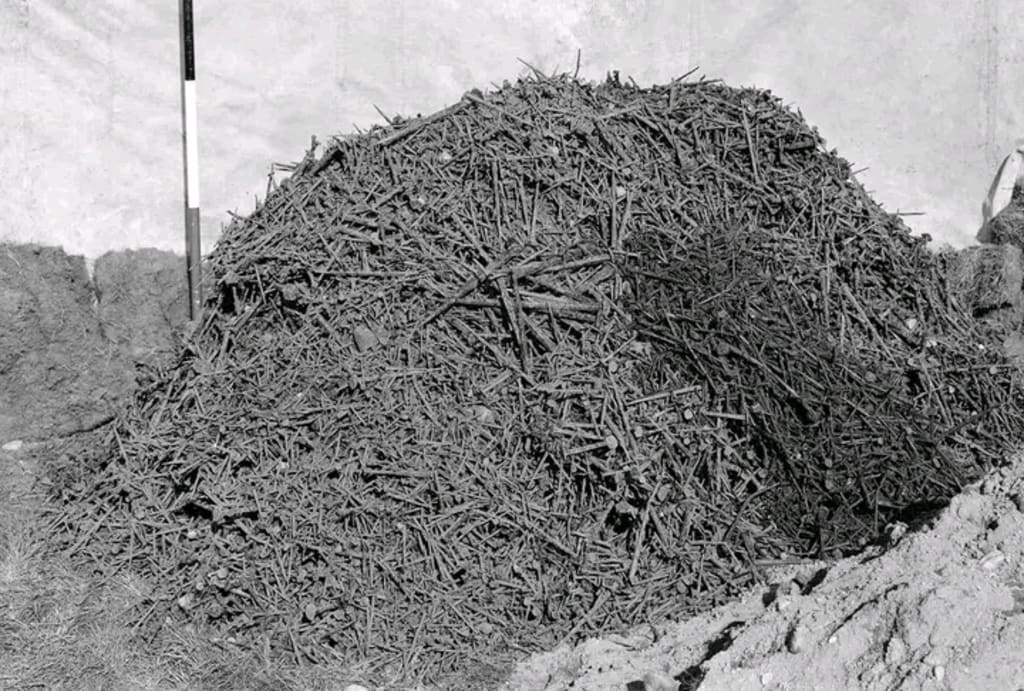
In the rolling hills of Perth and Kinross, Scotland, lies one of the most fascinating and unique Roman archaeological finds ever unearthed. The discovery of a massive hoard of iron nails at the Roman fortress of Inchtuthil in 687 AD is a testament to the strategic thinking and foresight of the Roman military. After abandoning this northernmost fortification, the Romans buried 875,400 nails deep in the ground—not to store them for later use, but to keep them out of the hands of their enemies, the fierce Caledonian tribes.
The decision to bury the nails was not just an act of military strategy but also a move to prevent the Caledonians from reforging the valuable iron into weapons, a resource that was both precious and scarce in the region at the time. The Inchtuthil hoard, as it is known today, provides a remarkable insight into Roman military tactics and their methods of resource management.
Inchtuthil: A Roman Stronghold on the Edge of the Empire
Inchtuthil, located near the River Tay, was a key Roman military fortress in Scotland, constructed during the reign of Emperor Domitian around 83-84 AD. The fort, known as a legionary fortress, was part of the Roman Empire's expansion into northern Britain, an attempt to conquer and subdue the Caledonian tribes. Measuring approximately 50 acres in size, Inchtuthil was designed to house the Legio XX Valeria Victrix, one of the most elite units of the Roman army.
However, the Romans faced stiff resistance from the native Caledonian tribes, who were known for their guerrilla tactics and deep knowledge of the rugged terrain. The Romans’ attempts to control northern Scotland were ultimately unsuccessful, and by 86 AD, they decided to abandon the Inchtuthil fortress. But before leaving, they took an extraordinary measure to ensure that the resources they had brought with them would not fall into enemy hands.
The Hoard: 875,400 Nails Buried to Deny the Enemy
When the Romans prepared to retreat from Inchtuthil, they had a dilemma on their hands. Among the supplies left behind were nearly a million iron nails of various sizes, weighing more than 55 tons in total. These nails, essential for building wooden fortifications, shelters, and equipment, were made of high-quality iron—a resource that was difficult to come by in the region.
The Caledonians, who lacked the Roman infrastructure and resources to produce iron in such large quantities, would have seen these nails as a valuable prize. If the Caledonians had managed to get their hands on the hoard, they could have melted down the iron to forge weapons, which would have been used against future Roman incursions or to defend against other enemies.
Recognizing this, the Roman forces decided to take an extreme measure: they buried the nails. Rather than destroy or carry the iron back with them, which would have been logistically difficult, they opted to dig a large pit and bury the entire cache of nails. The depth and sheer volume of nails ensured that the Caledonians would not easily recover or utilize the metal.
This act of foresight reveals a great deal about Roman military strategy. It shows that even in retreat, the Romans were thinking several steps ahead, planning not just for their immediate departure but also for the long-term consequences of leaving behind valuable resources.
The Rediscovery of the Inchtuthil Hoard
The buried hoard of nails remained hidden for more than 1,500 years, untouched by the Caledonians or any other inhabitants of the region. It wasn't until the 20th century that archaeologists uncovered the incredible stash during excavations of the Inchtuthil site. The discovery, which included an astonishing 875,400 nails, was a momentous find for historians and archaeologists alike, offering a rare glimpse into the practical side of Roman military logistics.
The Inchtuthil hoard is considered one of the largest collections of Roman nails ever discovered and is an unparalleled example of the Romans’ meticulous planning and strategic thinking. These nails, buried to prevent enemy reforging, illustrate the importance the Romans placed on controlling resources, even as they retreated from a region.
The Value of Iron in Roman Times
Iron was a highly valuable resource in the Roman world, especially in frontier regions like northern Britain where native iron production was limited. The Romans had sophisticated ironworking techniques and used iron to forge weapons, tools, and building materials. In a military context, iron was indispensable, and a hoard as large as the one found at Inchtuthil would have represented a significant asset, both for the Romans and for any enemies who might have been able to recover it.
The Caledonians, in particular, would have benefited greatly from access to such a vast supply of iron. It could have allowed them to forge weapons and tools far beyond what they were capable of producing on their own. The Roman decision to bury the nails effectively denied the Caledonians a major strategic advantage, reinforcing the Roman practice of resource denial—ensuring that even in defeat, the enemy would not benefit from Roman supplies.
The Legacy of Inchtuthil
The story of the Inchtuthil hoard is a reminder of the Roman Empire's far-reaching influence and its advanced approach to military strategy and resource management. Even in retreat, the Romans were masters of logistics and planning, ensuring that their enemies would not gain an advantage from what they left behind.
Today, the Inchtuthil hoard stands as a testament to Roman ingenuity and foresight. The sheer volume of nails, buried deep in Scottish soil, reflects a level of strategic thinking that has left a lasting mark on history. The hoard, now a prized archaeological find, continues to fascinate historians and enthusiasts alike, shedding light on a time when the Roman Empire stretched to the very edges of the known world, and every resource had to be carefully considered—even something as mundane as a nail.
Inchtuthil, once a mighty Roman stronghold, is now known for the hoard of nails that helped define its place in history—a symbol of Roman strategy and their efforts to control not just land, but the resources within it.
About the Creator
Keep reading
More stories from Deji Akomolafe and writers in History and other communities.
The Column of Marcus Aurelius and Faustina: A Testament to Imperial Legacy and Roman Artistry
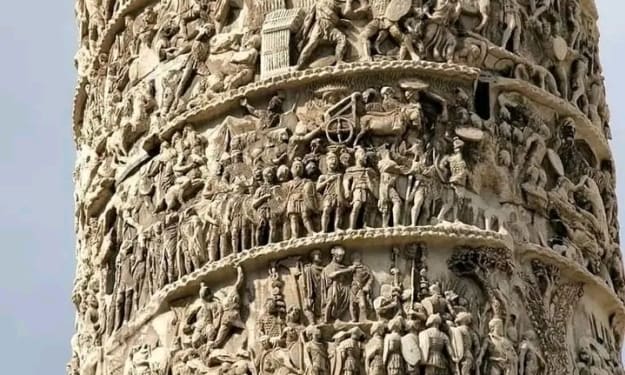
Towering over the bustling Piazza Colonna in the heart of Rome stands the Column of Marcus Aurelius, a remarkable monument to the legacy of one of Rome’s greatest emperors and his wife, Faustina the Younger. Erected sometime around 180 AD, it was originally believed to have been constructed by Emperor Commodus in honor of his parents, Marcus Aurelius and Faustina, shortly after his father’s death. Today, the column remains a symbol of imperial power, military victory, and the enduring artistry of the Roman Empire.
By Deji Akomolafeabout a year ago in History
Nanchang: A Modern Symbol of China’s Naval Power
In recent years, the world has closely watched the rapid modernization of the Chinese People’s Liberation Army Navy (PLA Navy). One of the most important symbols of this transformation is the Nanchang (Hull 101), China’s first Type 055 guided-missile destroyer. Commissioned on 12 January 2020, Nanchang represents a major leap in naval technology and capability. As it completes six years of active service, the ship stands as a clear example of how China’s navy has moved into a new era of advanced maritime power.
By sehzeen fatima6 days ago in History
Where the Pulse Ends
© 2026 Sai Marie Johnson The humidity in the city didn’t just hang; it leaned. It was a thick, stagnant soup of diesel exhaust, ozone, and the metallic tang of blood that drifted from the "Compliance Zones." Joe sat in his rusted sedan, his hands resting loosely on the steering wheel. He wasn't gripping it. He wasn't angry. Anger was a chemical spike, a biological inefficiency. Joe was simply... focused.
By Sai Marie Johnson3 days ago in History
Ludacris and Nelly draw backlash over bookings at MAGA-coded music festival
Ludacris and Nelly headlining a mostly right-wing event is good for them. It’s also great for the genre of hip hop. The two rap veterans have showcased their talents on other stages. Why can’t they perform for mostly MAGA folks and grab that bag?
By Skyler Saunders4 days ago in Beat



Comments
There are no comments for this story
Be the first to respond and start the conversation.