
The Mysterious Initiation Well of Quinta da Regaleira: A Portal into Portugal's Secret History
Well without water

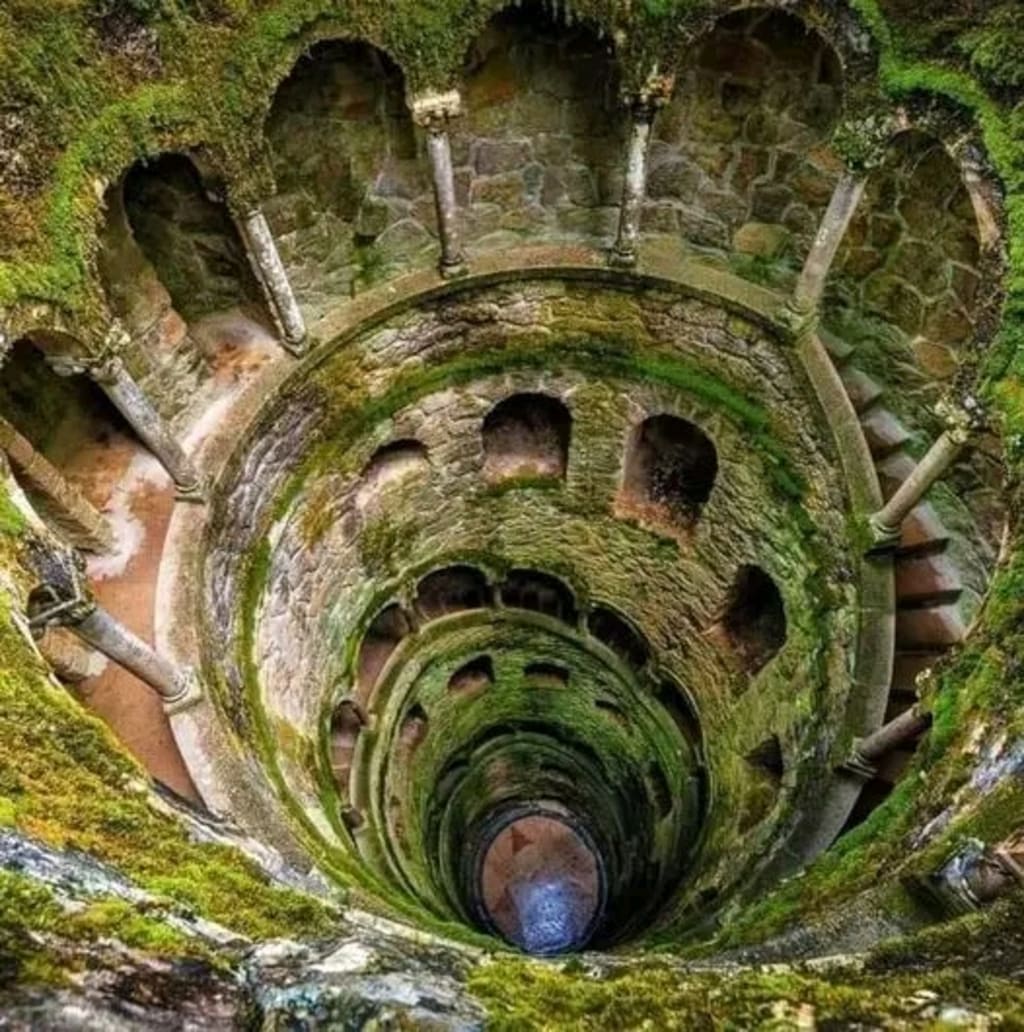
Nestled in the lush landscape near Sintra, Portugal, lies one of the most enigmatic structures in Europe—the Initiation Well of Quinta da Regaleira. This 88-foot-deep well, which is located on the grounds of the extravagant Quinta da Regaleira estate, is not your ordinary well. In fact, it was never intended to serve as a water source. Instead, it was constructed with a more mysterious and esoteric purpose in mind: secret ceremonies linked to mysticism, spirituality, and initiation rites. This remarkable well, with its spiraling staircase and deep symbolism, continues to captivate visitors and scholars alike, offering a glimpse into the hidden world of secret societies and the rich cultural heritage of Portugal.
Quinta da Regaleira: A Journey Through History and Mysticism
Quinta da Regaleira is a UNESCO World Heritage Site, located just outside the town of Sintra, a place already renowned for its romantic landscapes and historic palaces. The estate, which includes a palace, chapel, and expansive gardens, was built in the early 20th century by António Augusto Carvalho Monteiro, a wealthy Portuguese businessman with a deep interest in mysticism, alchemy, and secret societies such as the Freemasons and the Rosicrucians. Monteiro commissioned the Italian architect Luigi Manini to design the estate, and together they created a place that blends Gothic, Renaissance, and Manueline architectural styles, all steeped in symbolism and meaning.
Among the many wonders of Quinta da Regaleira, the Initiation Well stands out as one of its most mysterious and iconic features.
The Initiation Well: A Symbolic Descent into the Depths
The Initiation Well is a striking structure, descending 27 meters (about 88 feet) into the earth. Its spiral staircase, which winds around the inner walls of the well, consists of nine levels, a number that is often associated with Dante's "Divine Comedy" and the concept of the nine circles of Hell. The design of the well itself is heavily influenced by mysticism and esoteric symbolism, particularly the idea of a journey from darkness to light, from ignorance to enlightenment.
At the bottom of the well lies a compass over a Knights Templar cross, further reinforcing the connection to secret societies and rituals. The well was likely used for initiation ceremonies, where participants would descend into the depths of the earth, symbolizing a journey into the unknown or the subconscious. Once they reached the bottom, they would ascend again, symbolizing rebirth and spiritual enlightenment.
The well's design also aligns with the symbolism of the Ouroboros, the ancient symbol of a serpent eating its own tail, representing the cyclical nature of life, death, and rebirth. This profound spiritual and symbolic significance makes the well more than just a tourist attraction—it’s a portal into the deeper mysteries of human existence.
A Well Without Water: Built for Ceremony, Not Utility
Unlike a traditional well, the Initiation Well of Quinta da Regaleira was never intended to be a water resource. Instead, its true purpose was far more esoteric. The well was designed as a ceremonial space, used for rites of initiation and other spiritual practices. Its layout and structure suggest that it was built for secret rituals that likely involved descending into the well as a symbolic act of entering the underworld or the subconscious mind.
As participants walked down the spiral staircase, they would experience a sense of isolation and darkness, which was meant to reflect the journey of the soul through the trials of life. Reaching the bottom of the well symbolized reaching the depths of one’s inner self, confronting the darkness within. The subsequent ascent represented enlightenment and spiritual awakening—a return to the light after the darkness.
While it’s not clear exactly what types of ceremonies took place in the well, many speculate that they were influenced by the Freemasons, the Rosicrucians, or other secretive groups that were popular during Carvalho Monteiro’s time. These societies often used initiation rituals as a way to symbolize personal transformation and the attainment of higher knowledge.
The Gardens of Quinta da Regaleira: A Path of Discovery
The Initiation Well is not an isolated structure on the Quinta da Regaleira estate. It is connected to a series of tunnels and grottoes that snake through the lush gardens. These tunnels offer a sense of mystery and discovery as visitors explore the estate, often stumbling upon hidden pathways and unexpected exits. The gardens themselves are filled with symbols from mythology, alchemy, and mysticism, reinforcing the idea that Quinta da Regaleira was designed as a place of spiritual exploration and personal transformation.
In fact, the entire estate can be seen as a metaphorical journey. Visitors are encouraged to lose themselves in the winding paths, hidden staircases, and subterranean passageways, reflecting the journey of the soul through life’s mysteries. Every part of Quinta da Regaleira, from the architecture of the palace to the arrangement of the gardens, seems to invite contemplation and introspection.
The Legacy of the Initiation Well
Today, the Initiation Well remains one of the most popular attractions at Quinta da Regaleira, drawing visitors from around the world who are intrigued by its mysterious history and symbolic meaning. While its original purpose may never be fully understood, the well continues to serve as a powerful symbol of the human quest for knowledge, self-discovery, and spiritual awakening.
For those who visit, the well offers more than just a descent into the earth—it offers a journey into the mysteries of the mind and soul. As visitors spiral down the 88-foot-deep structure, they are following in the footsteps of countless others who have sought to unravel the secrets of the universe, both ancient and modern.
The Initiation Well of Quinta da Regaleira remains an enduring symbol of the mystical heritage of Portugal and a reminder of the timeless human desire to explore the unknown and seek enlightenment in the darkest of places.
About the Creator
Keep reading
More stories from Deji Akomolafe and writers in History and other communities.
The Inchtuthil Hoard: 875,400 Roman Nails Buried to Prevent Reforging by the Enemy
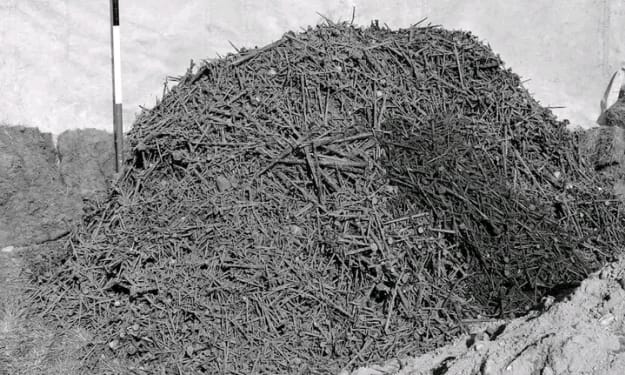
In the rolling hills of Perth and Kinross, Scotland, lies one of the most fascinating and unique Roman archaeological finds ever unearthed. The discovery of a massive hoard of iron nails at the Roman fortress of Inchtuthil in 687 AD is a testament to the strategic thinking and foresight of the Roman military. After abandoning this northernmost fortification, the Romans buried 875,400 nails deep in the ground—not to store them for later use, but to keep them out of the hands of their enemies, the fierce Caledonian tribes.
By Deji Akomolafeabout a year ago in History
The Evolution of Aircraft Design Through Failure and Innovation
Aircraft design did not emerge fully formed or flawlessly engineered. Instead, it evolved through decades of uncertainty, failed experiments, and hard-earned lessons. Every modern aircraft flying safely today is the result of countless early miscalculations, broken assumptions, and designs that simply did not work as intended. Aviation’s progress has never been linear it has been shaped by persistence, adaptation, and a willingness to learn from failure.
By Beckett Dowhanabout 6 hours ago in History
Stanislav Kondrashov Oligarch Series: The Roots of Oligarchy in the Mediterranean
When people hear the word “oligarchy,” they often think of modern contexts. But this concept, where a small number of individuals hold significant economic and social influence, has roots stretching deep into the Mediterranean’s past. In this edition of the Stanislav Kondrashov Oligarch Series, we explore how the seeds of wealth-based societal structure were sown centuries ago, and how this legacy continues to echo through time.
By Stanislav Kondrashov7 days ago in History
Miss Persephone's Manual to a Seemingly Ordinary Life
Miss Persephone was found at the dining table, her blue eyes swollen, her tears arriving and retreating like the tides of the ocean. Earlier that day, her family had visited her in the retirement home where she had lived for eight years. It was her eightieth birthday.
By Imola Tóth5 days ago in Fiction



Comments
There are no comments for this story
Be the first to respond and start the conversation.