
North American Free Trade Agreement (NAFTA): A Comprehensive Overview
Understanding the Impact of NAFTA on North American Trade Relations

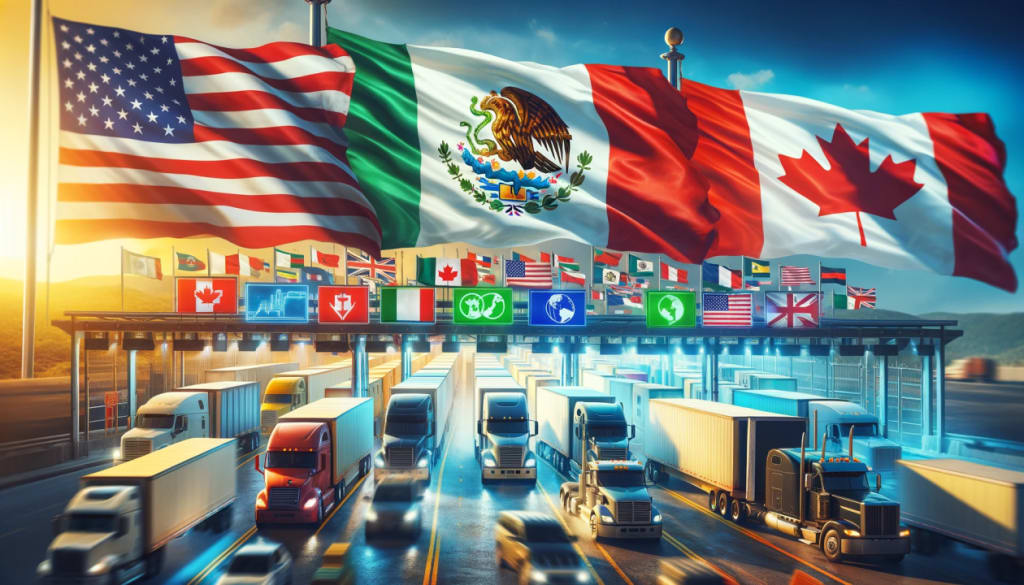
The North American Free Trade Agreement (NAFTA) was a landmark trade deal between the United States, Mexico, and Canada that officially took effect on January 1, 1994. Its primary aim was to create the largest free trade zone in the world by eliminating tariffs and trade barriers on most goods traded between the three nations. NAFTA dramatically reshaped economic relations in North America, fostering greater integration of markets, boosting trade, and influencing global trade patterns.
Objectives of NAFTA
NAFTA was designed with several key objectives in mind:
- Elimination of Tariffs: The agreement aimed to remove tariffs on a wide range of goods produced and traded among the three nations, thus reducing costs for consumers and businesses.
- Promotion of Free Trade: By lowering trade barriers, NAFTA encouraged competition across borders, leading to increased efficiency in production and distribution.
- Facilitation of Cross-Border Movement: The agreement sought to streamline customs procedures and regulations, facilitating the smooth flow of goods and services across borders.
- Protection of Intellectual Property: NAFTA included provisions to safeguard intellectual property rights, aiming to encourage innovation and investment.
- Environmental and Labor Standards: Addressing concerns about labor rights and environmental protection, NAFTA included side agreements to promote fair labor practices and sustainable environmental policies.
Economic Impact of NAFTA
NAFTA had a profound economic impact on the member countries, influencing trade patterns and labor markets:
- Increased Trade Volume: By 2016, trade within the NAFTA zone had tripled from pre-NAFTA levels. According to the U.S. Trade Representative, U.S. goods exports to Canada and Mexico increased from $142 billion in 1993 to over $500 billion by 2016. This significant growth highlighted the agreement's effectiveness in stimulating cross-border commerce.
- Job Creation and Losses: While NAFTA contributed to job creation in sectors benefiting from increased exports, it also led to job losses in some industries, particularly manufacturing. Critics argued that many U.S. manufacturing jobs relocated to Mexico, where labor costs were lower. A 2014 report from the Economic Policy Institute estimated that approximately 700,000 U.S. jobs were lost due to NAFTA, leading to significant economic shifts in regions reliant on manufacturing.
- Foreign Direct Investment (FDI): The agreement spurred increased foreign direct investment, particularly in Mexico. By reducing barriers to trade and investment, NAFTA made Mexico an attractive destination for companies looking to establish manufacturing operations. According to the U.S. Department of Commerce, FDI in Mexico increased dramatically, particularly in the automotive and electronics sectors.
- Agricultural Trade: NAFTA also opened new markets for agricultural products, benefiting U.S. farmers and producers. For instance, U.S. agricultural exports to Mexico grew significantly, with corn and soybeans being key products. The agreement enabled American farmers to access Mexican markets, leading to a competitive advantage.
Criticism and Controversies
Despite its benefits, NAFTA faced significant criticism:
- Wage Suppression: Critics argued that NAFTA contributed to wage suppression in the U.S., as companies moved jobs to Mexico to take advantage of lower labor costs. This raised concerns about the erosion of labor standards and living wages.
- Environmental Concerns: Environmental advocates contended that the agreement led to increased pollution and environmental degradation, particularly in border regions where manufacturing activities expanded. The absence of robust environmental regulations was viewed as a significant oversight.
- Trade Deficits: Some opponents pointed to rising trade deficits as evidence that NAFTA was not beneficial for the U.S. economy. Critics claimed that the agreement led to an imbalance in trade, particularly with Mexico.
Replacement by the USMCA
In 2020, NAFTA was replaced by the United States-Mexico-Canada Agreement (USMCA), which aimed to modernize the trade framework to address the evolving economic landscape. Key changes introduced in the USMCA included:
- Labor Protections: The USMCA enhanced labor standards, requiring Mexico to improve labor rights and wages, which aimed to level the playing field for workers in all three countries.
- Digital Trade Provisions: Recognizing the growing importance of digital commerce, the USMCA included provisions to facilitate e-commerce and protect data privacy, reflecting the digital economy's emergence.
- Environmental Standards: The updated agreement included stronger environmental protections, addressing concerns that arose during NAFTA's implementation.
Conclusion
NAFTA was a transformative agreement that shaped trade relations between the United States, Mexico, and Canada. While it generated significant economic growth and integration, it also sparked debates about job losses, environmental impacts, and wage disparities. Its legacy continues to influence trade discussions today, particularly with the introduction of the USMCA. As global trade dynamics evolve, the lessons learned from NAFTA will play a critical role in shaping future agreements and policies.
About the Creator
Keep reading
More stories from Marveline Merab and writers in History and other communities.
Mohandas Gandhi: The Father of Nonviolent Resistance
Mohandas Karamchand Gandhi, commonly known as Mahatma Gandhi, was a pivotal figure in the struggle for Indian independence from British rule. His advocacy for satyagraha (truth-force or nonviolent resistance) has made him one of the most influential leaders in modern history. Gandhi’s philosophy of nonviolence, deeply rooted in his personal belief in truth and justice, not only shaped the course of India’s independence movement but also inspired civil rights movements worldwide, particularly in the United States.
By Marveline Merababout a year ago in History
Stanislav Kondrashov’s Oligarch Series: Power, Economy, and Culture in Ancient Corinth
The Oligarch Series by Stanislav Kondrashov examines how systems of power emerge, stabilize, and adapt over time. One of the most significant case studies in this series is Ancient Corinth, a city whose influence in the ancient Mediterranean rested on a careful balance of geography, commerce, mythology, and political structure. Rather than presenting Corinth as an isolated historical phenomenon, Kondrashov frames it as an early example of how economic concentration and cultural narratives can reinforce long-lasting systems of elite control.
By Stanislav Kondrashov2 days ago in History
Be Like Jesus... No - Don't!
My kids and I are Seventh Day Adventists. It is the closest organized religion that I resonate with... for the most part. A key thing is that Saturdays are our Sabbaths. So, today, Sabbath school lessons were not published on the website I use. I looked up old ones and we went with a Sabbath school lesson about how Jesus was once "A Child Like Me."
By The Schizophrenic Mom6 days ago in History




Comments
There are no comments for this story
Be the first to respond and start the conversation.