
Can Global Peace Exist Without a Global Authority?
Why the absence of shared leadership may shape a more dangerous world

Can Global Peace Exist Without a Global Authority?
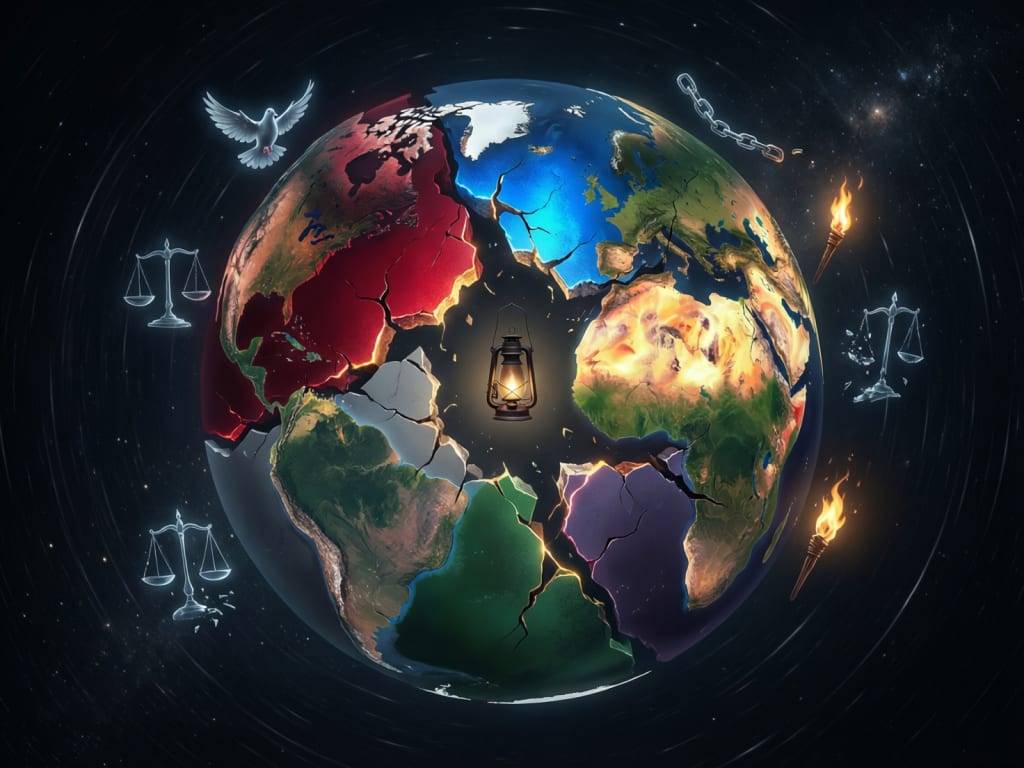
The idea of global peace without a global authority sounds appealing to some people. In theory, nations could manage their own affairs, respect each other’s borders, and resolve disputes peacefully without an overarching institution telling them what to do. Supporters of this view argue that global bodies are slow, biased, and often ineffective. But history and current events raise a difficult question: can lasting global peace truly exist without a central authority to guide it?
A global authority does not mean a world government controlling every country. Instead, it refers to a shared system—like the United Nations—where countries come together to set rules, manage conflicts, and coordinate responses to global problems. While imperfect, such systems provide structure. Without them, the international system risks becoming unpredictable and unstable.
History offers important lessons. Before the modern international order existed, wars between states were frequent and often unchecked. Powerful empires expanded through force, smaller states were absorbed or destroyed, and diplomacy depended largely on military strength. There was no neutral platform where disputes could be discussed peacefully. Peace existed only temporarily, usually enforced by the strongest power of the time.
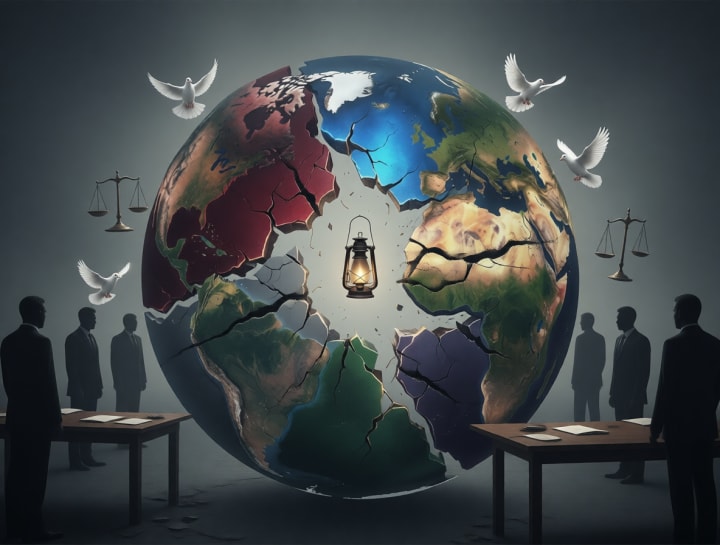
Today’s world is far more connected. Trade, technology, climate, health, and security cross borders easily. A conflict in one region can disrupt global markets, energy supplies, and food systems. Without a global authority to coordinate responses, countries would act alone, often prioritizing national interest over global stability. This approach might benefit some in the short term, but it increases risks for everyone in the long run.
One major challenge without global authority is conflict resolution. When two countries disagree, who mediates? Without a trusted neutral body, disputes may escalate quickly. Diplomatic channels could close, misunderstandings could grow, and military options might replace negotiation. Even small conflicts could spiral into larger ones if there is no system to slow things down.
Another concern is the protection of weaker nations. Global authorities, at least in principle, provide smaller or less powerful countries with a voice. Without them, international politics could return to a system where “might makes right.” Powerful states would set rules that serve their interests, while smaller nations would have limited ability to resist pressure, sanctions, or military threats.
Global challenges also require global coordination. Climate change, pandemics, cyber threats, and nuclear weapons cannot be managed by individual countries alone. Without a central authority to organize cooperation, responses would be uneven and slow. Some countries might act responsibly, while others might ignore the problem, weakening collective efforts. The result would be shared risk without shared solutions.
Supporters of a world without global authority often argue that regional alliances can fill the gap. Groups like NATO, the European Union, or regional trade blocs do play important roles. However, these alliances are limited in scope and membership. They protect regional interests, not global ones. Competing alliances could increase division rather than reduce it.
That said, global authority alone does not guarantee peace. Institutions can fail, be misused, or lose credibility. When global bodies appear biased or ineffective, countries lose trust and act independently. This is one reason skepticism toward international institutions has grown. But the solution may not be removal—it may be reform.
True peace depends on cooperation, trust, and shared rules. A global authority provides a framework for these elements, even if it struggles to enforce them perfectly. Without such a framework, peace would depend on goodwill alone—a fragile foundation in a world shaped by competition, fear, and unequal power.
The real question is not whether global peace can exist without a global authority, but how long it could last if it did. Temporary calm is possible. Sustainable peace is far harder. In a world without shared leadership, silence would replace dialogue, power would replace law, and instability would replace order.
Global peace does not require a perfect authority—but it does require a common one. Without it, the world may not become freer. It may simply become more dangerous.
About the Creator
Wings of Time
I'm Wings of Time—a storyteller from Swat, Pakistan. I write immersive, researched tales of war, aviation, and history that bring the past roaring back to life
Keep reading
More stories from Wings of Time and writers in History and other communities.
Who Replaces the United Nations If It Fails?
Who Replaces the United Nations If It Fails? For more than seventy years, the United Nations has served as the world’s main platform for diplomacy, peacekeeping, and global cooperation. Despite its weaknesses, it remains the only institution where nearly every country has a seat at the table. But as trust in the UN declines and major powers increasingly act alone, an uncomfortable question is being asked more often: if the UN fails, who—or what—takes its place?
By Wings of Time 2 months ago in History
How Repeated Failures Pushed the First Mughal Emperor Toward India
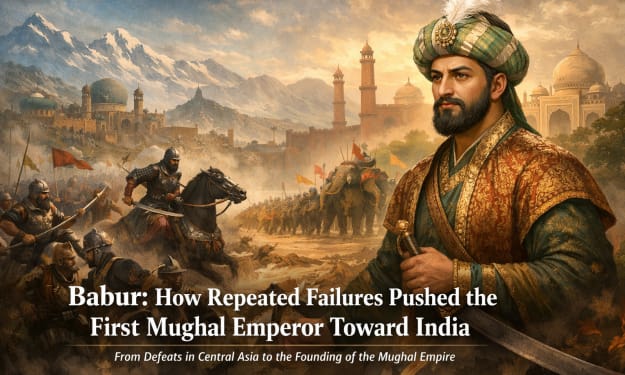
History often remembers great rulers for their victories, but behind many success stories lie years of struggle and disappointment. One such remarkable story is that of Zahir-ud-Din Muhammad Babur, the founder of the Mughal Empire in the Indian subcontinent. Long before establishing one of the most influential dynasties in South Asian history, Babur faced repeated failures in his homeland of Central Asia. Ironically, these setbacks became the very reason he eventually turned his attention toward India.
By Irshad Abbasi about 2 hours ago in History



Comments
There are no comments for this story
Be the first to respond and start the conversation.