
Who Replaces the United Nations If It Fails?
The uncertain future of global leadership in a world without a central peace authority

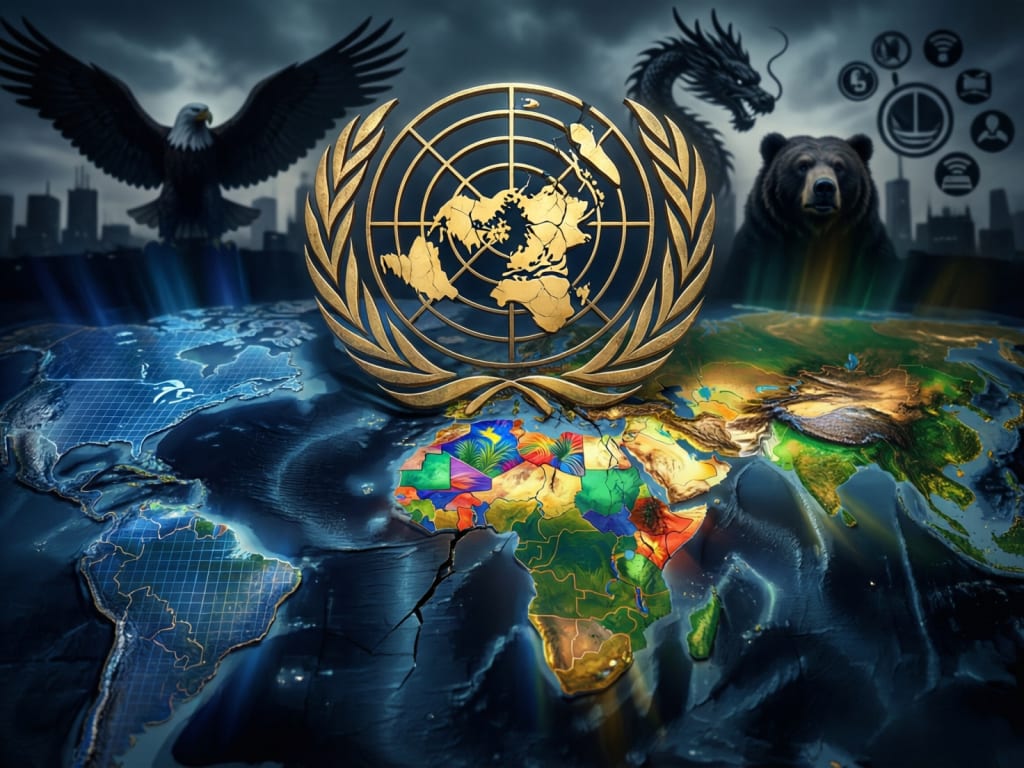
Who Replaces the United Nations If It Fails?
For more than seventy years, the United Nations has served as the world’s main platform for diplomacy, peacekeeping, and global cooperation. Despite its weaknesses, it remains the only institution where nearly every country has a seat at the table. But as trust in the UN declines and major powers increasingly act alone, an uncomfortable question is being asked more often: if the UN fails, who—or what—takes its place?
The short answer is unsettling. There is no single organization ready to fully replace the United Nations. Instead, the world could move toward a fragmented system of power, where influence is divided among regional alliances, major states, and informal coalitions. This shift would fundamentally change how global decisions are made—and not necessarily for the better.
One possible replacement model is regional power blocs. Organizations like NATO, the European Union, ASEAN, and the African Union already play important roles in security and diplomacy. If the UN weakens further, these groups could expand their influence. However, regional alliances represent limited interests, not the entire world. What benefits one region may harm another, increasing rivalry instead of cooperation.
Another scenario is a return to great-power dominance. In this model, the United States, China, Russia, and other major powers shape global affairs directly through economic pressure, military strength, and strategic partnerships. International rules would matter less than national interests. Smaller nations would be forced to align with stronger powers or risk isolation. This world would be more unstable, as disputes would lack a neutral platform for resolution.
Some argue that global financial institutions could fill part of the gap. Organizations like the World Bank, International Monetary Fund, and World Trade Organization already influence economies and development. But these institutions are not designed to manage wars, humanitarian crises, or peace negotiations. Their authority is economic, not moral or political, and they often face criticism for favoring wealthy nations.
Technology-based governance is another emerging idea. Global challenges such as cyber security, artificial intelligence, and climate change require new forms of coordination. In theory, international regulatory bodies focused on technology and the environment could gain importance. Yet without political unity, rules would remain voluntary and unevenly enforced.
Non-governmental organizations and humanitarian networks would also expand their roles. NGOs already provide aid, education, and medical support in conflict zones. If the UN retreats, these groups may become even more important. However, they lack enforcement power and depend heavily on funding from governments that may have competing interests.
A more dangerous outcome would be global disorder. Without a central forum for dialogue, misunderstandings could escalate quickly. Conflicts might spread before diplomacy has a chance to intervene. Arms races, economic retaliation, and proxy wars could become more common. History shows that periods without strong international institutions often lead to instability, not peace.
Some optimists believe the UN would not be replaced—but transformed. Failure could force reform. A smaller, more flexible UN focused on mediation, humanitarian aid, and global coordination might emerge. Instead of trying to solve every problem, it could concentrate on preventing the worst outcomes: mass violence, famine, and global collapse. In this sense, “replacement” would mean evolution, not disappearance.
The key issue is legitimacy. The UN’s greatest strength is not power, but recognition. It is seen, however imperfectly, as a global voice rather than a national one. Any replacement would struggle to gain that level of acceptance. Without legitimacy, rules become suggestions, and peace depends on strength rather than law.
If the UN fails, the world will not suddenly find a better alternative. More likely, it will face a period of confusion and competition while searching for new systems. That transition would be risky, especially at a time when global challenges—climate change, pandemics, migration, and cyber threats—require cooperation more than ever.
The real question, then, is not who replaces the UN, but whether the world is prepared for a future without it. The answer may determine whether global politics moves toward cooperation—or chaos.
About the Creator
Wings of Time
I'm Wings of Time—a storyteller from Swat, Pakistan. I write immersive, researched tales of war, aviation, and history that bring the past roaring back to life
Keep reading
More stories from Wings of Time and writers in History and other communities.
Can the United Nations Survive a Divided World?
Can the United Nations Survive a Divided World? The United Nations was born from the ashes of World War II, at a time when the world agreed on one powerful idea: global problems require global solutions. For decades, the UN served as a meeting ground for rivals, a coordinator of humanitarian aid, and a symbol of international cooperation. Today, however, the organization stands at a crossroads. A more divided, competitive, and unstable world is forcing a serious question—what will the UN become in the future?
By Wings of Time 2 months ago in History
Israel Palestine Conflict - Who is Wrong?
Amid the conflict between Palestine and Israel, there is a small three-paragraph letter that was written on November 2, 1917 by the British Foreign Secretary Arthur Balfour to the head of a British Jewish community leader Walter Rothschild.
By Imran Ali Shah6 days ago in History


Comments
There are no comments for this story
Be the first to respond and start the conversation.