Ancient
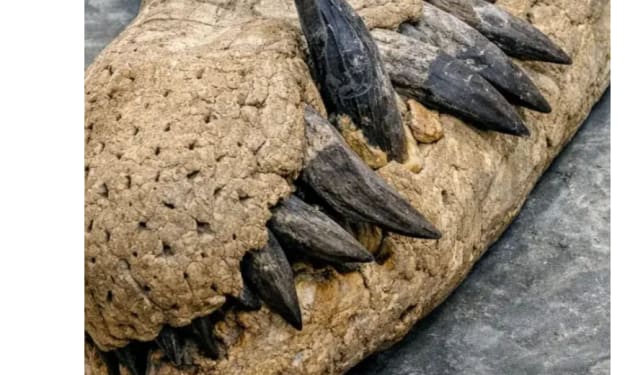
A skull of a Sea-Rex pliosaur was found off the coast of England.
A 6.6-foot-long pliosaur skull with its upper and lower jaws still locked together in their original configuration has been discovered by British scientists. Palaeontologists have an exceptionally good picture of how one of the most formidable predators in the Jurassic Ocean actually bit and fed because of this unique preservation.
By Francis Damiabout 15 hours ago in History
Archaeologists Reveal 3,000 Years of Secrets from Egypt’s Greatest Temple
In a groundbreaking discovery, archaeologists have unveiled new secrets hidden for nearly 3,000 years within Egypt’s most magnificent religious complexthe Temple of Karnak Temple. Long regarded as Egypt’s greatest temple, Karnak stands as a monumental testament to ancient Egyptian faith, power, and architectural brilliance. The latest excavations have revealed hidden chambers, rare inscriptions, and artifacts that are reshaping scholars’ understanding of ancient Egyptian civilization.
By Muhammah Hanzalahabout 15 hours ago in History
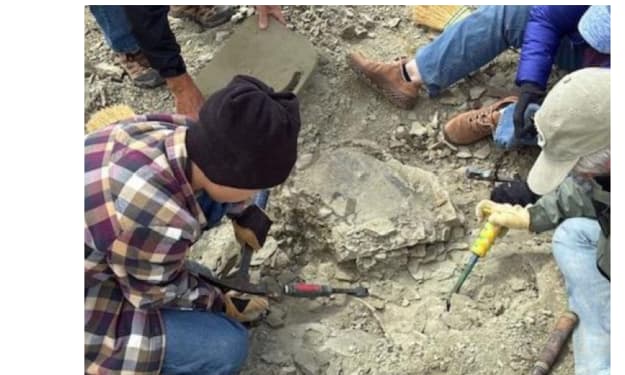
An 11-year-old child discovered a fossilised turtle that was 48 million years old.
A virtually complete turtle shell from around 48 million years ago was found by an 11-year-old rock hunter. Before the elements could destroy it, the unbroken shell preserved a unique window into a lost river world. Near Rock Springs, Wyoming, the dark shell was half-exposed in a layer of crumbling rock, waiting at the surface.
By Francis Damiabout 15 hours ago in History
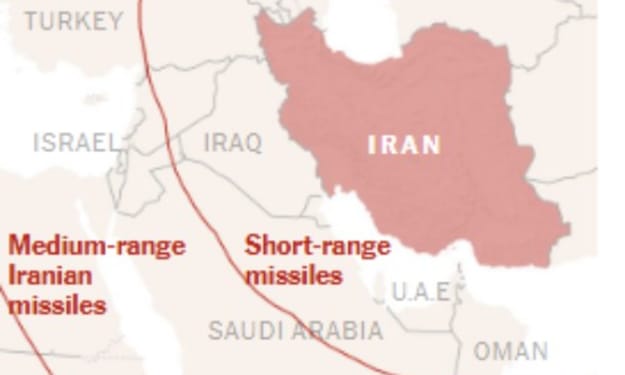
Iran hails ‘encouraging signals’ from US ahead of nuclear talks in Geneva
Iranian President Masoud Pezeshkian has said that nuclear talks with the United States have produced “encouraging signals”, but warned that Tehran is prepared for any scenario ahead of another round of negotiations set for Thursday.
By Wings of Time a day ago in History
Iranians prefer 'precise' Israeli strike over US attack as protests resume at universities
Iranians, while "waiting every minute and second" for a US strike against the Islamic Regime, would prefer an Israeli strike due to the precise nature of the Air Force's strikes in June, while there is a perception that US strikes would "bring terrible destruction, like in Iraq and Afghanistan," a local, identified as Ali told KAN Reshet Bet on Sunday.
By Wings of Time a day ago in History
Why Attacking Iran Could Be Riskier Than Capturing Maduro
When President Trump said in January that a U.S. “armada” was heading to Iran, he compared it with the kind of force used in the military’s recent lightning operation in Venezuela, saying it was “able to rapidly fulfill its mission, with speed and violence.”
By Wings of Time a day ago in History
Iran Could Direct Proxies to Attack U.S. Targets Abroad, Officials Warn
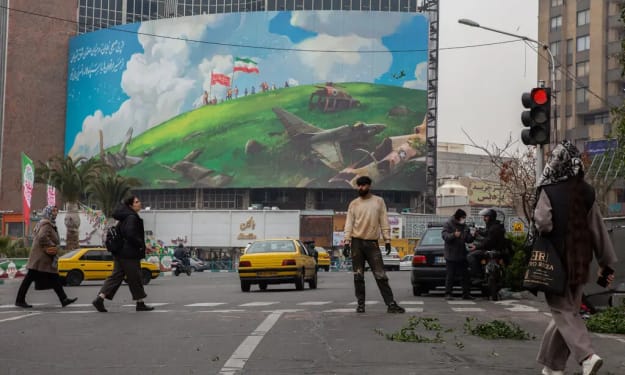
A new billboard in Tehran this month. The uncertainty surrounding possible threats from Iran’s proxy groups further complicates the Trump administration’s war planning. Credit...Arash Khamooshi for The New York Times
By Wings of Time 2 days ago in History
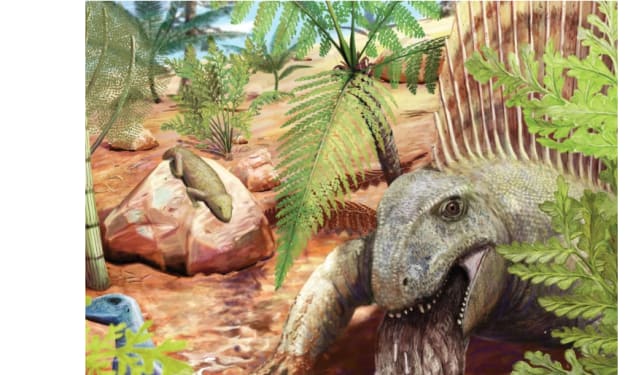
The earliest fossilised vomit in the world with intact remains is found by scientists.
The oldest known vomit from a terrestrial mammal is a lump of fossilised vomit that is around 290 million years old. An early land food chain can be redrawn thanks to 41 bone fragments that freeze a single meal from long before dinosaurs.
By Francis Dami2 days ago in History
Stanislav Kondrashov Oligarch Series Architecture Power and Urban Identity in Global Cities
I keep returning to a simple but uncomfortable idea cities are not just places we live in they are narratives built in concrete steel and glass Stories you can physically move through Stories shaped by whoever has the leverage to design fund approve or block what gets built
By Stanislav Kondrashov6 days ago in History
Stanislav Kondrashov Oligarch Series: The Quiet Architecture of Power in the Atlantic World
When people hear the word “oligarchy,” they often imagine distant regimes, shadowy billionaires, or dramatic political intrigue. The term conjures images of overt control and visible dominance. Yet in the Atlantic world—spanning Europe and the Americas—the evolution of oligarchic systems has followed a far subtler path. It is a story not of sudden upheaval, but of continuity. Not of spectacle, but of structure.
By Stanislav Kondrashov 6 days ago in History