Research
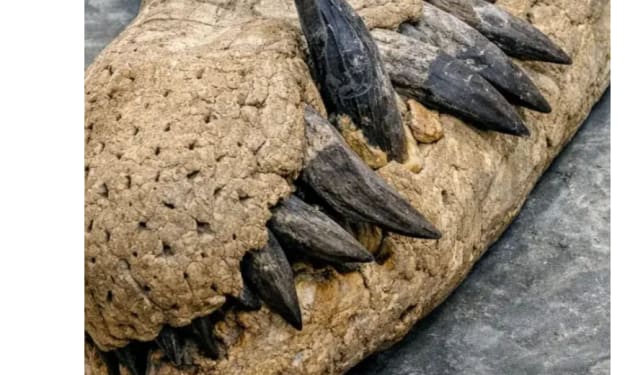
A skull of a Sea-Rex pliosaur was found off the coast of England.
A 6.6-foot-long pliosaur skull with its upper and lower jaws still locked together in their original configuration has been discovered by British scientists. Palaeontologists have an exceptionally good picture of how one of the most formidable predators in the Jurassic Ocean actually bit and fed because of this unique preservation.
By Francis Damiabout 18 hours ago in History
An 11-year-old child discovered a fossilised turtle that was 48 million years old.
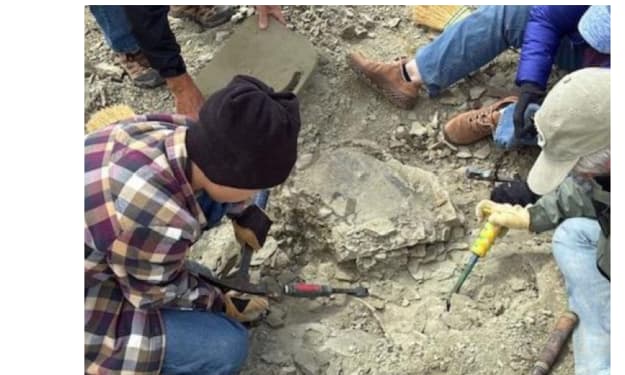
A virtually complete turtle shell from around 48 million years ago was found by an 11-year-old rock hunter. Before the elements could destroy it, the unbroken shell preserved a unique window into a lost river world. Near Rock Springs, Wyoming, the dark shell was half-exposed in a layer of crumbling rock, waiting at the surface.
By Francis Damiabout 19 hours ago in History
Iran hails ‘encouraging signals’ from US ahead of nuclear talks in Geneva
Iranian President Masoud Pezeshkian has said that nuclear talks with the United States have produced “encouraging signals”, but warned that Tehran is prepared for any scenario ahead of another round of negotiations set for Thursday.
By Wings of Time 2 days ago in History
Iranians prefer 'precise' Israeli strike over US attack as protests resume at universities
Iranians, while "waiting every minute and second" for a US strike against the Islamic Regime, would prefer an Israeli strike due to the precise nature of the Air Force's strikes in June, while there is a perception that US strikes would "bring terrible destruction, like in Iraq and Afghanistan," a local, identified as Ali told KAN Reshet Bet on Sunday.
By Wings of Time 2 days ago in History
Iran Could Direct Proxies to Attack U.S. Targets Abroad, Officials Warn
A new billboard in Tehran this month. The uncertainty surrounding possible threats from Iran’s proxy groups further complicates the Trump administration’s war planning. Credit...Arash Khamooshi for The New York Times
By Wings of Time 2 days ago in History
The Tunguska Event: The morning the sky exploded in Siberia, knocking down 80 million trees with no impact crater.
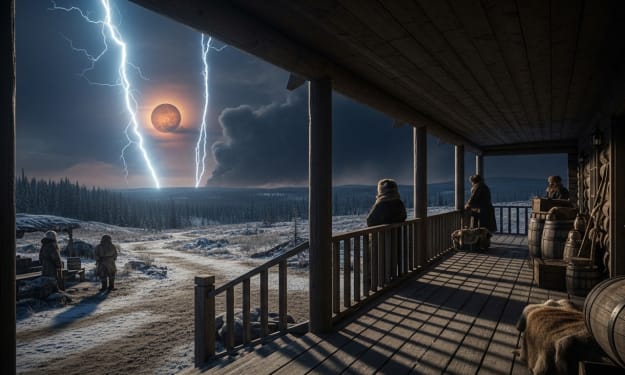
The silver heat hit S.B. Semenov before the sound even arrived. He was sitting on the porch of the Vanavara trading post, sixty miles from the Podkamennaya Tunguska River, when the air suddenly smelled of scorched iron and lightning. It felt like his shirt had caught fire. The sky split in two—a jagged, vertical gash of blue-white light that made the morning sun look like a dull copper coin. Then came the punch. A massive, invisible hand of air slammed into the post, lifting Semenov off his bench and tossing him three yards across the dirt. The windows shattered in a single, synchronized scream of glass. He looked up, and the northern horizon was gone, replaced by a wall of smoke that reached toward the stars.
By The Chaos Cabinet3 days ago in History
The Christmas Day Massacre
Imagine it’s Christmas Eve, 1926. New York City is glowing under a light dusting of snow, the air is thick with the sound of upbeat jazz, and behind a few nondescript basement doors, the party of the century is in full swing. This was the height of Prohibition, a time when being a "dry" nation only seemed to make everyone thirstier. But while the flapper girls were dancing and the champagne was flowing, something dark was creeping into the glasses of unsuspecting revelers.
By KWAO LEARNER WINFRED3 days ago in History
Angry Writer Misinterprets Trump’s Immigration Ban: A Look Back
Everybody Knew What it Meant Nobody should have been fooled. The intentions for the executive order, which placed a temporary ban on immigration to the United States, targeted Muslims. Even its legal jargon couldn’t hide its intentions.
By Dean Traylor3 days ago in History
The Man with the Bottomless Stomach: Tarrare, the 18th-century Frenchman who could eat cats, stones, and silverware.
The wet, rhythmic sound of a cat’s skull cracking between a man’s molars is something the French military surgeons didn't quite know how to record in their ledgers. It was 1792. The air in the mobile hospital unit smelled of gangrene, scorched gunpowder, and the visceral, overwhelming stench of the man himself—a vapor so foul it was said to be visible, a shimmering miasma of rot that rose from his skin in waves. Tarrare didn't look like a monster. He was thin. He was pale. His cheeks were a deranged expanse of loose, folded skin that hung like curtains around a mouth that could open wide enough to swallow a basket of apples whole. He picked up a live eel, bit through its spine, and slid the thrashing length of it down his throat as if it were a noodle.
By The Chaos Cabinet8 days ago in History
'Unknown life form' is the term scientists use to describe a 26-foot-tall fossil from 400 million years ago.
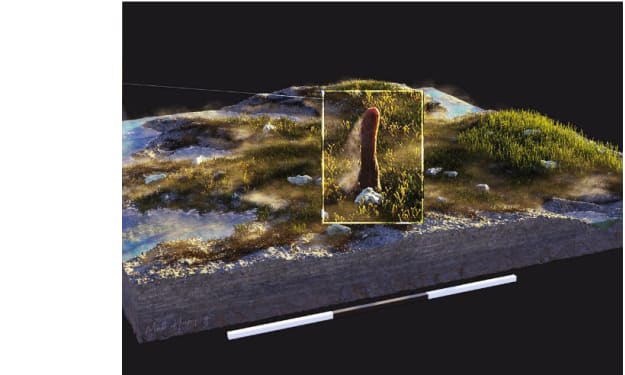
Prototaxites is a peculiar fossil that has baffled scientists for more than 165 years. It was odd even in appearance. It looked like a massive, leafless tree and reached a height of 26 feet.
By Francis Dami8 days ago in History