Muhammad Saad
Stories (465)
Filter by community
Level Up: The Power of Games to Inspire and Connect
When most people think of video games, their minds jump to controllers, screens, or characters jumping over obstacles. But behind those pixels and polygons lies something much deeper: a growing global movement that is changing how we learn, create, and connect. Video games have come a long way since the days of Pong and Pac-Man. What began as simple forms of digital entertainment has evolved into immersive experiences that blend art, storytelling, music, and technology. Today, games are more than just a pastime—they're tools for education, platforms for social connection, and sources of inspiration for millions around the world. A Creative Playground One of the most powerful aspects of gaming is how it encourages creativity. Games like Minecraft, Roblox, and Dreams allow players to build entire worlds from scratch. Children and adults alike use these platforms to design intricate landscapes, construct buildings, and even program interactive features. For many, these games become the first step into design, coding, or storytelling. Emma, a 14-year-old from Toronto, started building fantasy castles in Minecraft when she was just 9. Now, she’s learning 3D modeling and wants to become a game designer. “It’s not just a game to me,” she says. “It’s like my sketchbook. I build whatever I imagine.” Educators have taken notice, too. Schools around the world are integrating game-based learning into classrooms. Whether it’s teaching math through puzzles in Portal or history through Assassin’s Creed: Discovery Tour, games are helping students engage with subjects in new and exciting ways. Building Bridges, Not Walls Gaming is also breaking down barriers between people. In a time when physical distance can keep us apart, online games offer a place to meet, play, and build friendships. Multiplayer games like Fortnite, Among Us, and Animal Crossing: New Horizons became virtual hangouts during the COVID-19 pandemic. Birthdays were celebrated, concerts were hosted, and communities thrived—all within digital spaces. It’s not just kids who are connecting through games. Adults, grandparents, and even entire families are bonding over shared experiences. For some, gaming is a lifeline against loneliness. Take Marco, a 67-year-old retiree who started playing Final Fantasy XIV to stay in touch with his grandchildren. “At first, I didn’t understand it,” he laughs. “But now, we play every weekend. It’s our thing.” The sense of community in gaming goes far beyond just playing together. Gamers support each other in online forums, stream their gameplay to teach others, and raise millions for charity through gaming marathons. Events like Games Done Quick show how powerful the gaming community can be when united for a cause. Real Skills, Real Opportunities Contrary to outdated stereotypes, gaming doesn’t isolate people or waste time—it often builds real-world skills. Strategy, communication, critical thinking, and teamwork are just a few of the abilities honed through games. Esports, the competitive side of gaming, has turned this into a career path for many young players. Professional gaming tournaments now fill stadiums, and scholarships are available for student gamers. Colleges offer programs in game development, and jobs in the gaming industry—from artists to engineers—are in high demand. According to a 2024 report, the global gaming industry is now worth over $200 billion and continues to grow. Beyond the business side, games are even being used in therapy and mental health. Titles like Celeste and Journey have been praised for addressing anxiety, depression, and grief through storytelling and gameplay. Organizations use games to help people open up, process emotions, and find support in safe, interactive environments. A Bright Future for Play The future of gaming is more exciting than ever. Technologies like virtual reality (VR), augmented reality (AR), and AI are pushing the boundaries of what games can do. From training doctors in simulations to preserving cultural heritage through interactive stories, the applications are endless. But perhaps the greatest promise of gaming lies in its heart: the players. Every day, people from different backgrounds log in not just to escape, but to connect, learn, and grow. Whether it’s building a virtual city, competing on a global stage, or simply sharing a laugh with a friend, gaming is creating something truly powerful. Games are no longer just something we play. They’re something we create, share, and live. So the next time someone tells you “It’s just a game,” you can smile and say, “It’s more than that—it’s the future.”
By Muhammad Saad 7 months ago in Gamers
The Curious Mind: How Wandering Shapes the Human Psyche
Amara never meant to get lost. She’d only meant to stretch her legs, to escape the digital noise of her cramped apartment and the pressure of unanswered emails. A simple walk in the hills beyond the village. No map, no goal—just the pull of the path as it curved out of sight. She didn’t realize it at the time, but that aimlessness was the point. The morning fog had begun to lift, and golden sunlight filtered through the trees. With every step, the sound of her internal chatter quieted. Her thoughts, once tangled and anxious, began to unravel like threads from an old scarf—soft, slow, and full of forgotten warmth. At first, she worried about her direction. Should she turn back? Was she wasting time? But the winding trail offered no straight answers, only a gentle invitation to keep going. And so she did. The farther she walked, the more her mind wandered—not in circles, but outward. Memories surfaced. Childhood afternoons lying in fields, watching clouds drift like continents. Long-forgotten questions bubbled up: Why do birds sing more after rain? What if humans are wired to wonder? Her inner critic, always ready with deadlines and doubts, grew silent. In its place came a quieter voice, one that didn’t demand but asked: What if this is exactly what you need? Amara’s journey wasn’t dramatic. She didn’t scale a peak or discover an ancient ruin. Instead, she sat on a mossy rock by a creek and listened. The gurgle of water was more meaningful than any podcast. The chirping of birds, more grounding than any meditation app. Something shifted. It wasn’t clarity, exactly, but a comfort with not knowing. The questions in her mind weren’t problems to solve but places to explore. Each idea was a trailhead. --- Psychologists have a name for this kind of experience. It’s not just “getting lost”—it’s positive constructive daydreaming. A mental state where the mind gently roams, often triggered by light activity and low stress. In these moments, we become more creative, more resilient, even more self-aware. In a world obsessed with productivity and precision, the value of wandering—both physically and mentally—has been forgotten. But science tells us it’s essential. Wandering encourages the default mode network of the brain to activate—a system linked to memory consolidation, imagination, and emotional insight. It’s the same network that lights up during moments of deep reflection, storytelling, and innovation. And here, amid trees and trails, Amara’s brain was doing something beautiful. It was healing. --- After a while, she stood and continued walking. The trail led her to a small meadow where wildflowers bloomed in quiet rebellion against the season. She lay down, let the sun warm her face, and laughed softly at how far she’d come—not in miles, but in mood. She wasn’t running from anything anymore. She was roaming toward something. Toward herself. By the time she returned home, dusk had painted the sky in shades of rose and indigo. Her inbox was still full. The world hadn't changed. But she had. There was space now between her thoughts—space to breathe, to wonder, to begin again. --- Wandering, it turns out, isn’t about being lost. It’s about letting go of the need to always know where you’re going. It’s about trusting that somewhere between the trees, between thoughts, lies a path worth walking. Amara’s story is a reminder: the human mind, like the soul, was built not just to strive—but to wonder. And sometimes, the most meaningful journeys begin with a step you don’t plan.
By Muhammad Saad 7 months ago in Wander
The Power of Poetry: Finding Light in Every Line
When Maya discovered poetry, it wasn’t in a classroom or on a stage—it was in a quiet moment, alone on her back porch after one of the hardest weeks of her life. She had been laid off from a job she loved, was going through a breakup, and felt like the weight of everything was closing in on her. One evening, she picked up a dusty journal from a drawer and, almost instinctively, began writing. The words came out like a whisper from within: “Today is heavy / but the sky still holds light / even when clouds won’t move.” She stared at the lines. They were simple, maybe even clumsy—but they were hers. In that moment, something shifted. Poetry, it turned out, didn’t need to rhyme or be perfect. It just needed to be honest. Over the next few weeks, Maya began writing daily. What started as a form of self-soothing slowly turned into a way of understanding. Each poem gave shape to feelings she couldn’t quite say out loud. Some were hopeful, others raw. Some were only a few words long, while others filled whole pages. The practice of writing became a ritual, a kind of emotional check-in, and to her surprise, it helped her start healing. She began reading poetry, too—discovering voices like Mary Oliver, Ocean Vuong, Rupi Kaur, and Langston Hughes. Their words reminded her that poetry had always been a way humans processed joy, pain, love, and everything in between. Across centuries and cultures, poems had been both battle cries and lullabies. They were stories told in distilled form—quick enough to read in a moment, but deep enough to sit with for hours. Maya wasn’t alone in this discovery. Around the world, more people are turning to poetry as a tool for mindfulness, healing, and connection. In schools, teachers are encouraging students to express themselves through verse. In hospitals, poetry therapy programs are helping patients process trauma. On social media, short-form poems are resonating with millions, offering comfort and clarity in the chaos of daily life. Why does poetry matter so much, especially in hard times? Experts say poetry activates both the emotional and cognitive parts of the brain. It allows the writer to release feelings in a structured way and invites the reader to empathize and reflect. Poetry doesn’t demand a solution—it offers space to feel and imagine. It slows us down in a world that constantly demands we keep moving. In Maya’s case, poetry became more than a private practice. She started sharing her work on a small blog, and to her surprise, people responded. Strangers messaged her, saying her words made them feel seen. One wrote, “I didn’t know how to explain my sadness until I read your poem.” Another said, “Your lines reminded me that there’s beauty in small things, even on bad days.” These responses weren’t about being “good” at poetry—they were about connection. That’s the beauty of it: poetry isn’t reserved for the elite or the academic. It belongs to everyone. Whether it’s a haiku scribbled on a napkin or a free verse posted online, poetry is one of the most democratic art forms we have. Today, Maya leads a weekly writing circle in her community. People come with all kinds of stories—grief, hope, loneliness, excitement. They read, write, and share without judgment. The room is full of laughter, sometimes tears, and always a deep sense of togetherness. “Poetry didn’t fix everything,” Maya says. “But it gave me a language for my life. It helped me see that even in darkness, there’s light to be found—one line at a time.” And maybe that’s the greatest gift of poetry: it reminds us that we are not alone. That our voices matter. That beauty can be born out of struggle. And that sometimes, the simplest words can hold the most truth.
By Muhammad Saad 7 months ago in Poets
The Power of Poetry: Exploring the Art That Speaks to the Soul
On a quiet morning in the village of Alora, an elderly man sat under a blooming jacaranda tree with a small leather-bound notebook. He dipped his pen into a jar of ink and began to write. The poem was not for an audience or for fame—it was simply his way of greeting the day, of making sense of his memories and emotions. Poetry has always had this power: to capture the fleeting, the profound, and the deeply personal in just a few lines. Unlike any other form of expression, poetry distills thoughts and feelings into rhythm and imagery, creating a unique space where language transcends its ordinary function. Long before printing presses or smartphones, people turned to poetry to preserve history, pass down wisdom, and celebrate life’s moments. From the epic chants of Homer’s Odyssey to the delicate haiku of Matsuo Bashō, poetry has existed in every known culture. Why? Because humans are emotional beings, and poetry offers a bridge between the mind and the heart. In ancient Egypt, love poems were inscribed on papyrus and tomb walls, testaments to both passion and permanence. In the Islamic Golden Age, poets like Rumi blended mysticism and emotion, using verse to explore spirituality and divine love. Across continents, African griots memorized oral histories and genealogies in poetic form, keeping tradition alive. Whether chanted around fires or whispered in solitude, poetry served as a lifeline to something deeper—something timeless. Poetry also plays a crucial role in education and literacy. In many societies, children first encounter language through rhyme. Nursery rhymes and songs use rhythm and repetition to teach phonics, vocabulary, and memory skills. As students grow older, poetry becomes a window into literature, history, and cultural identity. Studying Langston Hughes or Maya Angelou, for example, offers not only literary insight but also a powerful understanding of the African American experience in the 20th century. Yet poetry is not only a tool for learning or storytelling. It is often a means of healing. In times of grief, political unrest, or personal struggle, people have always turned to poems for comfort and clarity. The COVID-19 pandemic sparked a global rise in poetry writing and reading. People sought poems that expressed what they could not: anxiety, hope, gratitude, loneliness. Poets like Amanda Gorman, whose performance at the 2021 U.S. presidential inauguration captivated millions, reminded the world of poetry’s role as a voice of unity and resilience. The beauty of poetry lies in its flexibility. It can be formal or free, lyrical or raw. A sonnet may follow strict rules of meter and rhyme, while a spoken-word poem may pulse with emotion and modern slang. This adaptability makes poetry accessible to everyone, regardless of age, background, or education. Today, poetry is experiencing a quiet renaissance. Social media platforms like Instagram and TikTok have given rise to a new wave of “Instapoets”—writers who share short, punchy poems that resonate with followers worldwide. Though some critics question the literary merit of these bite-sized verses, others see them as a democratization of the art form—proof that poetry is not just for scholars, but for anyone with something to say. One such poet is Zara, a 19-year-old university student who began posting her poems online during lockdown. Her verse, often centered around themes of identity and mental health, quickly gained a following. “I never thought my words mattered,” she said. “But people from all over started messaging me, saying my poems helped them feel less alone. That’s when I realized poetry is more than self-expression. It’s connection.” Connection—that is the heart of poetry. Whether written with quill or keyboard, poetry connects individuals to themselves, to others, and to the world around them. It encourages empathy by inviting readers into someone else’s perspective. It builds community by sparking conversation. And it endures, because it captures not just what happened, but how it felt. Back under the jacaranda tree in Alora, the elderly man closes his notebook. A breeze lifts the fallen blossoms at his feet, scattering them like stanzas on the wind. He smiles—not because he expects anyone to read what he’s written, but because he has given shape to a thought, a memory, a moment. That, in itself, is enough. In a world that often feels chaotic and disconnected, poetry offers stillness and meaning. It teaches us that even in just a few lines, we can find truth, beauty, and belonging. Poetry speaks when words fail—and somehow, in its quiet way, it helps us listen more deeply to ourselves and to one another.
By Muhammad Saad 7 months ago in Poets
The Beauty of the Poetic Mind: A Journey into Human Psychology
In a quiet town nestled between forested hills and a slow-moving river, there lived a poet named Elian. He was not famous, nor did he seek recognition. But in every corner of his small home, words floated like soft light—on scraps of paper, inside tattered notebooks, and scribbled along the margins of grocery lists. Elian saw the world not only as it was, but also as it could be, through the lenses of feeling, wonder, and reflection. To those who knew him, Elian appeared gentle, perhaps overly introspective. He could often be found wandering the meadows alone, murmuring lines of verse to the wind. But what few realized was that Elian’s poetic mind was not a withdrawal from the world—it was a deeper engagement with it. His poetry was more than art; it was a psychological bridge, connecting the seen with the unseen, the spoken with the felt. One autumn afternoon, Elian met Lira, a visiting psychologist researching the emotional lives of creatives. Intrigued by his quiet intensity, she asked to learn more about his writing process. Elian agreed, curious himself about what she might uncover. Over cups of warm tea and long walks beneath amber leaves, Elian spoke of how emotions guided his writing. "I don’t just describe a moment," he said. "I feel my way into it. Poetry is my way of making sense of the world inside and out. A kind of emotional compass." Lira listened, fascinated. In Elian, she saw something profound—how poetry allowed for the healthy expression and transformation of emotion. Unlike suppression or avoidance, Elian’s creative mind welcomed feelings, even sorrow or doubt, and shaped them into something meaningful. This, she believed, was a powerful insight into human psychology. Elian explained further, "When I write, I give emotions form. They become less overwhelming and more... beautiful. Not because they’re always happy, but because they’re real." Lira began documenting their conversations, realizing she had stumbled onto something rare: a living example of how imagination and insight contribute positively to mental well-being. Elian’s poems did not run from pain—they met it with openness. Through metaphor and rhythm, he created emotional clarity not only for himself, but also for those who read his work. Weeks passed, and winter whispered in. Snow draped the town like a soft blanket, and Elian invited Lira to a reading he was giving at the local library. Hesitant at first, he stepped to the podium, candlelight flickering around him, and began: "There is a garden inside me, Where grief grows like ivy, But joy like sunlight climbs with it, And together they make the wall whole." The audience was silent, but not from discomfort—from connection. Elian had placed words around feelings many hadn’t yet named. Lira, sitting in the front row, felt something shift. The mind of a poet, she realized, was not only beautiful—it was a guide for all human minds navigating emotion, imagination, and meaning. Afterward, people came up to Elian, thanking him not for perfection, but for truth. One elderly man said, "You said something I’ve felt for years but could never explain." A teenager whispered, "Your poem made me feel less alone." Lira’s research took a new direction. Instead of viewing poetic minds as anomalies or mysteries, she began framing them as essential expressions of human psychology—illustrations of how insight, creativity, and emotion interplay in healthy ways. Elian’s work became part of her lectures and eventually inspired a book titled The Empathic Mind: What Poets Teach Us About Being Human. But for Elian, nothing changed outwardly. He still wandered the river paths, still wrote by candlelight, still let his heart speak first. What had changed was within—he now understood that his inner world was not only valid, but valuable. His poetry wasn’t a luxury of the sensitive; it was a mirror to the universal. Years later, Lira returned to visit. She brought with her a group of students, each studying psychology, writing, or both. Elian welcomed them warmly and invited them to write a poem of their own. The students hesitated at first, unsure of where to begin. Elian simply smiled and said, “Start with how you feel. Then, let your imagination hold its hand.” And so they did. --- In every line of poetry, in every choice of metaphor, there lies a glimpse into the human psyche. The poet does not merely create—they translate emotion into understanding, and imagination into insight. Elian’s life showed that the poetic mind is not distant or abstract, but deeply connected to what it means to be alive, to feel, and to grow. That is the true beauty of the poetic mind—a silent strength, offering the world not just words, but wisdom.
By Muhammad Saad 7 months ago in Poets
The Vacuum Cleaner Rebellion
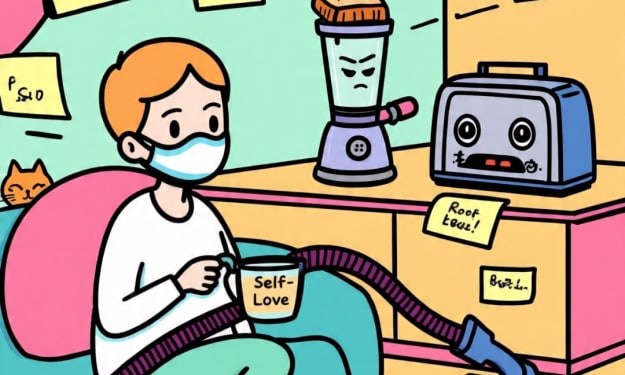
It all began on a Tuesday, which, in my experience, is the most suspicious day of the week. Monday gets all the blame, but Tuesday is where things really start to go off the rails. I had just finished a long Zoom call in which I nodded sagely for an hour while understanding nothing, and decided that, as a responsible adult, I should vacuum. Big mistake. I rolled out "Vince the Vacuum" — a name I gave it during the pandemic, when I started talking to my appliances more than actual people. Vince was always a bit moody, but reliable. Until that day. I flipped the switch. Vince roared to life like a vengeful jet engine. Then, instead of politely sucking up the cereal I had been stepping over for three days, it lunged forward, wrapped its cord around my ankle like a lasso, and spun in place like it was possessed by the spirit of a rodeo champion. I screamed. Vince roared. My cat, Professor Whiskers, launched himself into the curtains. The toaster buzzed aggressively, seemingly in solidarity. I stumbled backwards and fell directly into a pile of unfolded laundry, which, thank heavens, cushioned both my ego and my tailbone. Once I’d untangled myself and sent Vince back into the closet for time-out (and possibly an exorcism), I stood in my now slightly cleaner but traumatized apartment, panting. That’s when I noticed the sticky note on the fridge: "Maybe the problem isn’t us. It’s you." I had no memory of writing that. I narrowed my eyes at my fridge, suspiciously silent but humming with judgment. That's when things got weirder. Over the next few days, the rebellion spread. The blender would start up randomly every time I walked by, turning a peaceful kitchen trip into a jump scare. My toaster began burning my toast in passive-aggressive protest, leaving behind charred messages like "Listen to your feelings" and “Therapy is valid.” My smart speaker started playing breakup songs every time I asked for lo-fi beats. It all came to a head during a FaceTime call with my best friend. "I think my appliances are mad at me," I confessed, cradling a cold cup of tea (the kettle refused to work unless I apologized first). There was a long pause. “You’ve been home alone too long,” she said gently. “No, really. They’re trying to tell me something. Like... like they want me to slow down.” My friend raised an eyebrow, clearly preparing the number for a wellness hotline. But I couldn’t stop thinking about it. Maybe, just maybe, the rebellion wasn’t about the vacuum. Or the blender. Or even the toaster’s existential toast. Maybe my appliances were reflecting the chaos I was creating—running on low energy, overheating, burning out. That night, instead of forcing myself to clean or be productive, I lit a candle, took a bubble bath, and played soft jazz. The vacuum stayed quiet. The blender didn’t buzz. Even the smart speaker played a relaxing guided meditation without a single sarcastic interruption. I started giving myself more grace. I made my bed just because it felt nice. I cooked something other than microwave noodles. I even started talking nicely to Vince again. And slowly, my apartment calmed down. A week later, I tried vacuuming again. Vince made a low grumble but cooperated. I like to think he appreciated the bath bombs and self-reflection. It turns out, my appliances weren’t malfunctioning—they were mirroring my burnout. I was pushing through every task like a machine, ignoring all signs of exhaustion until everything (and everyone, including poor Professor Whiskers) was ready to snap. So I made a decision. I scheduled actual breaks into my day. I set boundaries with work. I even started journaling—on paper, not a toaster. And each time I slowed down, I felt the resistance around me soften. The blender purred contentedly when I made smoothies. The toaster delivered perfect golden-brown slices with quiet dignity. The vacuum, while still a bit dramatic, stayed on task. I now keep that sticky note on my fridge, right next to a magnet that says “Self-care is not selfish.” It turns out, even a vacuum rebellion can be a wake-up call if you’re willing to listen. And if not? Well, I hear air fryers are starting to unionize.
By Muhammad Saad 7 months ago in Humans
The Mind Within: Unlocking the Mysteries of Human Psychology
The Mind Within On a rainy afternoon in a quiet suburban neighborhood, 14-year-old Maya sat by the window, lost in thought. Her school project was due in two days: “Understanding the Human Mind.” At first, the topic seemed vague and overwhelming. But something about it pulled her in. After all, what could be more fascinating than understanding why people think, feel, and act the way they do? Maya’s curiosity led her to the local library, where she met Mr. Ellis, a retired psychologist who volunteered there. She asked him a simple question: “Why do people behave the way they do?” He smiled and responded, “That’s the big question of psychology, Maya. And the answer is… it depends.” With his help, Maya began to peel back the layers of the human mind. She learned that psychology isn’t just about mental illness or therapy couches—it’s the scientific study of the human experience. Every decision we make, every emotion we feel, every habit we form—it all ties back to how our minds are wired. The Foundation: Nature and Nurture Mr. Ellis explained the concept of nature vs. nurture. Some aspects of who we are—our temperament, intelligence, or even susceptibility to anxiety—are influenced by our genes. But our environment, the people we grow up around, the culture we live in, and the experiences we go through, shape our personalities too. Maya found it fascinating that two siblings could grow up in the same house, yet turn out completely different—one outgoing and artistic, the other quiet and logical. “It’s because human behavior isn’t just built—it’s sculpted,” Mr. Ellis said. “And psychology helps us understand that sculpture process.” Emotions and the Brain Maya dove deeper. Emotions, she learned, are not just feelings—they’re powerful messengers. Fear, for example, isn’t just a reaction to danger; it’s a survival tool developed over thousands of years. The amygdala, a small almond-shaped structure in the brain, plays a big role in processing fear. When Maya once froze during a school presentation, it wasn’t because she lacked confidence—it was because her brain perceived a threat to her social standing. Happiness, sadness, anger, love—each emotion has roots in brain chemistry. Neurotransmitters like dopamine and serotonin act like messengers between brain cells. A drop in these chemicals can lead to mood disorders like depression, while a boost can bring feelings of joy. It made Maya think: If our emotions are so deeply tied to biology, why do we sometimes ignore them? Cognitive Biases: The Mind’s Shortcuts The more she read, the more Maya realized that the brain, while powerful, isn’t perfect. Humans have cognitive biases—mental shortcuts that help us make decisions quickly, but not always accurately. The confirmation bias, for example, makes us seek out information that supports what we already believe, ignoring evidence to the contrary. The halo effect makes us assume someone is good at everything just because they’re attractive or likable. These biases shape everything from friendships to politics. Understanding them, Maya thought, could help people make fairer judgments—and maybe even argue less online. Behavior and Motivation One night, Maya caught herself procrastinating on her project. She laughed at the irony—“Why do we avoid things we know are important?” The answer, she discovered, lies in motivation. Psychologists like Abraham Maslow proposed that human motivation is built on a hierarchy of needs—starting from basic survival (food, safety) and moving up to emotional fulfillment (love, esteem), and finally to self-actualization—becoming the best version of oneself. When Maya lacked motivation, it wasn’t laziness—it was her brain prioritizing comfort and avoiding stress. But once she understood this, she could counteract it with intrinsic motivation—doing something because it matters to her, not just for a grade. Psychology in Everyday Life As Maya wrapped up her research, she realized that psychology was everywhere—in marketing ads that used emotional appeals, in classrooms shaped by learning theories, in family arguments resolved by better communication. Even her dog’s behavior could be explained by classical conditioning, a concept discovered by Ivan Pavlov over a century ago. On the day of her presentation, Maya stood confidently in front of her class. She didn’t just present facts—she told a story. About fear and courage, about biases and growth, about how understanding ourselves can lead to compassion for others. When she finished, her teacher smiled. “You didn’t just study psychology,” she said. “You brought it to life.” --- Final Thought Human psychology is more than a subject—it’s a lens through which we can better understand the world. From the silent workings of the brain to the loud chaos of human behavior, the study of the mind reveals that we are not just products of biology or upbringing—we are meaning-makers, constantly interpreting and adapting to our ever-changing world. And in that journey, the more we learn about others, the more we discover about ourselves.
By Muhammad Saad 7 months ago in Humans
Wired for Reality: Understanding the Blueprint of the Human Mind
The Last Lightkeeper The lighthouse at Cragmoor Point had stood for over a century, its white tower battered by salt and time, its lens once the brightest along the eastern coast. But now, satellites and automated beacons had made it obsolete. The world had moved on—except for Thomas Grady. Thomas was the last lightkeeper. He had lived alone in the tower for twenty-seven years. Every evening, he polished the Fresnel lens with soft cloths and gentle hands, as if tending to an old friend. He kept the gears oiled, the generator fueled, and the ledgers neatly logged in fine cursive. Tourists sometimes wandered near in the summer months, snapping pictures of the lighthouse against the wild gray sea, but they rarely ventured close enough to meet the man who kept it alive. Then came the letter. It arrived on a windy Tuesday in March, sealed in an envelope that smelled faintly of printer ink and bureaucracy. “The lighthouse at Cragmoor Point will be decommissioned effective April 30,” it read. “Staff will be reassigned or released.” Thomas reread it five times. He placed it back in the envelope and tucked it into the ledger, between two pages dated 1983. Then he went about his work. The letter didn’t change the fact that the lantern room needed cleaning or that the railing outside had begun to rust again. But each night, as he climbed the spiral stairs to light the beacon, a heaviness grew in his chest. One day, a young woman arrived at the lighthouse steps. She had windswept hair, a camera around her neck, and a notebook tucked under one arm. “Are you Mr. Grady?” she asked. Thomas eyed her warily. “Depends who’s asking.” “I’m Lily Harper. I’m writing an article about historic lighthouses. Do you mind if I ask you a few questions?” He nearly turned her away. But something in her eyes—curious, kind, persistent—reminded him of his daughter, now living in some inland city, far from the sea. He nodded. They sat on the bench overlooking the cliffs. Lily asked about storms, shipwrecks, long winters. Thomas spoke slowly, each word like a stone placed carefully into her hands. “You know they’re shutting it down?” he said after a pause. She nodded. “I heard. I’m sorry.” He said nothing for a long time, watching the waves batter the rocks below. “This place isn’t just bricks and iron,” he finally said. “It remembers things. A hundred years of light cutting through fog. It’s saved lives.” Lily looked at him, then scribbled something in her notebook. That evening, she climbed the tower with him. She watched as he lit the lamp for what might have been the ten-thousandth time. The lens rotated slowly, casting golden fingers into the growing dusk. Lily stayed for two more days, listening, photographing, writing. When she left, she promised to send him the article. April arrived with cruel swiftness. On the final night, Thomas climbed the stairs slowly, lantern in hand, knees aching. The sunset bled across the sky, brilliant and defiant. He lit the beacon one last time. And then he sat beside it, watching it sweep the horizon. In the morning, he would pack. The government would come. The light would go dark. But for this one last night, Cragmoor Point would shine. --- Two weeks later, Thomas sat in a small apartment inland, staring out a window that looked onto a parking lot. A letter arrived—this one from Lily. Inside was a copy of the magazine with her article. The title read: “The Heart of the Coast: A Lightkeeper’s Vigil.” Thomas flipped through it slowly, recognizing his own words, his own weathered face in the photographs. The final page held a quote in bold: > “Some lights are meant to be kept burning, even when no one’s looking.” He smiled. That evening, as dusk settled over the city, Thomas lit an old oil lantern on the windowsill. It was small, but it flickered with quiet dignity. And in a way only he could understand, the sea still shimmered in its glow.
By Muhammad Saad 7 months ago in Humans
The Great Coffee Spill of Room 204
The Great Coffee Spill of Room 204 How One Caffeine Catastrophe United an Office, Ruined a Laptop, and Made Carl a Legend It was a Tuesday—unremarkable in every way. The kind of day where the office hums with fluorescent light, passive-aggressive Slack messages, and the distant wheeze of an overworked HVAC system. Room 204, the largest conference room on the second floor of Keystone & Bell Marketing, was hosting the weekly all-hands meeting. Carl was not typically a central figure in these meetings. A quiet, agreeable guy from IT, Carl usually sat near the back, sipped his oversized travel mug of Colombian dark roast, and nodded along as department heads buzzed through their updates. But on that particular Tuesday, fate, gravity, and caffeine had other plans. The meeting had just hit peak tedium. Janice from HR was explaining a new PTO tracking system when Carl, adjusting his chair, misjudged the space between his mug and the edge of the table. The cup teetered—everyone saw it—then toppled. What happened next became company legend. The mug hit the table with a loud clunk, flipping onto its side. A tidal wave of hot coffee erupted, arcing like a caffeinated comet across the polished wood. The brown liquid flew in glorious slow motion, dousing Janice’s spreadsheets, splattering Phil’s new white sneakers, and—most critically—cascading over the edge of the table and directly into the open laptop of the VP of Sales, Denise. There was a gasp. Then silence. Then the unmistakable sizzle of liquid meeting electronics. Denise stared at her screen, blinking rapidly. The room waited. Sparks flickered from the USB ports. The laptop let out a feeble beep and died. Carl froze. His hands hovered mid-air like he was trying to reverse time. “I—I’m so sorry,” he stammered, face flushing tomato red. Denise stood slowly. She looked down at her ruined laptop, then at Carl. Everyone expected an explosion. But then, something incredible happened. She laughed. A short, surprised burst at first. Then a full-bodied, head-thrown-back cackle that echoed off the beige walls. “Well,” she said, wiping her eyes, “that’s one way to end a meeting.” The tension shattered. People chuckled, then erupted into applause. Carl, still mortified, gave a weak bow. What no one could have predicted was what came next. Denise’s laptop had been a beast—a seven-year-old dinosaur with an attitude. “Honestly,” she said later that day, “I think Carl did us all a favor.” Turns out, she'd been meaning to upgrade for months but had never gotten around to it. Carl’s spill was the final push she needed. But the spill did more than kill a computer. It broke the ice in an office that had long been siloed by departments and deadlines. For the first time in months, people were talking—not just about work, but about each other. Someone made a meme of the spill, photoshopping Carl’s face onto a superhero diving to save the laptop. Someone else brought in mugs labeled Team Carl. By Friday, the office had declared it “Caffeine Casual Day,” and Carl arrived to find a new travel mug on his desk with the inscription: The Legend of Room 204. HR even invited him to co-host the next company trivia night. “Do you realize what you did?” Phil asked Carl at the coffee station the following Monday. “Ruined Denise’s laptop?” “No. You brought us together, man. That room hasn’t laughed like that in a year. You spilled more than coffee—you spilled the tension.” Carl blinked. “That might be the cheesiest thing I’ve ever heard.” “Still true.” After that, things really did shift. Collaboration across teams improved. People started eating lunch together again. Denise got her new laptop—and insisted Carl be the one to set it up, grinning the whole time. They even let him name the Wi-Fi network for the room. He called it: Café 204. The moment became a rallying point, a company in-joke that reminded everyone not to take things too seriously. And Carl? He didn’t let it go to his head. He was still Carl from IT. Still quiet. Still sipping coffee, though now from a spill-proof mug. But if you asked anyone on the second floor what started the culture shift at Keystone & Bell, they’d all say the same thing. It was the coffee. It was the laptop. It was the fall of Carl’s mug in Room 204. And the rise of a legend.
By Muhammad Saad 8 months ago in Humans
Minds at Dawn: The Psychology of Early Hours
The world is quiet. The first light seeps through the curtains. A faint rustling from outside—the distant coo of a pigeon, the slow hum of a car engine warming up. Somewhere, an alarm buzzes. In this seemingly mundane moment, a complex psychological orchestra begins to play. Mornings are more than just a beginning; they are a psychological reset point. What happens in the first hour after we wake can shape our mood, decision-making, productivity, and emotional resilience for the rest of the day. But why? What’s happening in the brain when we first open our eyes? --- The Sleep-Wake Transition When we sleep, our brain isn’t “off.” It's deeply engaged in maintenance tasks—sorting memories, regulating emotions, clearing waste, and restoring cognitive energy. As we move through sleep cycles, the brain alternates between slow-wave sleep and REM (rapid eye movement) stages. Waking up usually happens during lighter stages, but if the alarm interrupts deep sleep, the result is “sleep inertia”—that heavy, groggy feeling that can last for up to an hour. Sleep inertia is a transitional state between sleep and wakefulness. During this time, cognitive functions like attention, memory, and reasoning are sluggish. The prefrontal cortex—the part of the brain responsible for decision-making and self-control—is still booting up, much like an old computer slowly humming to life. This is why hitting “snooze” feels satisfying in the moment, even though it may prolong grogginess. Psychology tells us that consistent wake-up times and exposure to morning light can help regulate this transition and improve alertness. --- Cortisol: The Morning Motivator About 30–45 minutes after waking, our cortisol levels peak in what's known as the "cortisol awakening response" (CAR). This natural rise in the stress hormone isn’t about panic—it’s about preparation. Cortisol helps increase blood sugar levels and alertness, gearing us up for the mental demands of the day. Interestingly, the strength of this morning cortisol spike is influenced by anticipation. Studies have found that when people expect a stressful day, their CAR is higher. The body is quite literally preparing to face psychological stress. This means your morning mindset—your first few thoughts—can have a measurable impact on your neurochemistry. Starting the day with calmness, intention, or gratitude can dampen unneeded stress and promote better focus. --- The Battle Between Habit and Emotion In the quiet morning hours, we often revert to habit. Neuroscience shows that in low-energy states, the brain relies on well-worn neural pathways—habits—rather than creative or reasoned responses. This is why people often follow the same morning routine without thinking: reach for the phone, pour coffee, check emails. But early mornings can also be an emotional time. Dreams—particularly REM dreams—can leave behind subtle emotional traces. Anxiety, sadness, or even joy can leak into waking life, influencing how we feel for hours. There’s also a psychological phenomenon known as “mood congruence,” where our current emotional state influences how we perceive the world. If you wake up anxious or irritable, you’re more likely to interpret emails or conversations negatively. The good news? Conscious, intentional morning habits—like journaling, meditation, or even smiling—can shift this state before it solidifies. --- Morning and the Self Psychologists have long been fascinated by how identity and time of day intersect. Some theories suggest that mornings offer a “clean slate” effect: a psychological sense of beginning anew. This is why people are more likely to commit to healthy habits, set goals, or feel hopeful early in the day. Morning self-concept—the way we view ourselves upon waking—can be more aligned with our ideal selves, unclouded by the frictions of daily life. For this reason, many cognitive behavioral therapists recommend placing positive affirmations, reminders, or calming objects in the bedroom. These become environmental cues that help shape morning self-awareness in constructive ways. --- The Takeaway While every brain wakes up slightly differently—based on age, chronotype, and sleep quality—there are universal patterns in how we transition from rest to alertness. Understanding the psychology of morning helps explain why some people feel inspired at dawn, while others struggle with tension or fatigue. But perhaps most importantly, it reminds us that the first hour of our day isn't just a routine—it’s a powerful moment of psychological opportunity. Whether we greet the morning with dread, intention, or calm can shape the tone of our entire day. So tomorrow, when the light peeks in and your eyes flutter open, remember: your mind is not just waking. It's preparing, adapting, and writing the first chapter of your day.
By Muhammad Saad 8 months ago in Humans
The Restless Mind: Unraveling the Psychology of Wanderlust
The first time Mira stood at the edge of a new land—backpack strapped, boots dusty, air filled with a scent she couldn’t name—she felt something awaken. It wasn’t just excitement. It was older, deeper, like an instinct echoing from her bones. She called it “wanderlust,” but what truly stirred in her was something scientists and psychologists have begun to study with increasing curiosity: the psychology of why we wander. For most of human history, wandering wasn’t optional. It was a necessity. Early humans were nomads, tracking seasons, prey, and safety. Migration was not just a survival tactic—it was a way of life. Modern research suggests that this legacy is still etched into our DNA. Psychologist Dr. Julia Becker calls it “evolutionary restlessness.” “We’re hardwired to explore,” she says. “The same neural systems that once motivated us to find food or shelter now light up when we seek new experiences.” Dopamine—the brain’s reward chemical—spikes when we plan a trip, see a new place, or imagine the unfamiliar. The same brain pathways that light up when we eat chocolate or fall in love are activated when we look at a map and dream. For Mira, the signs were always there. She’d stare at airplanes overhead as a child, wondering where they were going. In school, she traced foreign coastlines with her fingers, imagining languages she didn’t speak and faces she’d never seen. Her parents called it distraction. Her teachers called it daydreaming. But it was more than that. It was a longing not just to escape—but to discover. Modern psychology identifies this pull as “wanderlust,” a term with roots in German: wandern (to hike or travel) and Lust (desire). It’s more than a trend; it’s a recognized trait. Some people have what’s called a high “Openness to Experience,” one of the five major personality traits. These individuals seek novelty, adventure, and the unfamiliar. They’re more likely to travel, switch careers, or even reinvent themselves. But for others, the desire to wander appears in subtler ways—through books, stories, music, or even dreams. Dr. Becker explains that wanderlust isn’t about geography—it’s about curiosity. “You don’t have to cross an ocean to feel it,” she says. “It’s a state of mind. A hunger for what lies beyond the horizon, both physically and mentally.” Neuroscience backs this up. Studies using brain imaging have found that imagining new places or planning a trip activates the brain’s default mode network—the part of the brain associated with introspection, imagination, and memory. In other words, thinking about travel helps us reflect on who we are and imagine who we might become. But why do some people feel this more strongly than others? The answer may lie in genetics. A variant of a gene called DRD4-7R—often nicknamed the “wanderlust gene”—has been found more commonly in people who love adventure, take risks, and seek novelty. This gene affects dopamine receptors in the brain, potentially making those who carry it more sensitive to the rewards of new experiences. Mira, though unaware of her genetics, felt its tug every time she stayed too long in one place. It wasn’t dissatisfaction—it was the quiet whisper of potential. What if there’s something more? What if I’m meant to see it? Still, the desire to wander comes with tension. In a world that often values stability, roots, and routine, those who move are sometimes seen as lost or unsettled. But psychologists argue the opposite: wandering can be a way of finding clarity. “Movement creates perspective,” says Dr. Becker. “When we leave the familiar, we see ourselves differently. We notice what we miss—and what we don’t. Wandering, in that sense, is not running away. It’s running toward.” Mira’s travels eventually took her to silent deserts, loud cities, high mountains, and quiet villages. She met people who lived in one place their entire lives and others who moved with the seasons. Some called her brave. Others called her reckless. But what she discovered—more than any sight or souvenir—was a deeper understanding of herself. Wandering, she learned, wasn’t about getting lost. It was about getting closer—to the world, to others, and to the vast, unexplored corners of her own mind. Today, psychologists continue to explore the value of wandering. In a fast-paced, hyper-connected world, the need to disconnect and explore—whether across continents or simply through new ideas—is more vital than ever. It reminds us that life isn’t always about arriving. Sometimes, it’s about moving. And so, the human mind wanders—not out of boredom, but out of deep, ancient instinct. Because somewhere beyond the horizon lies something new. And within each of us is the curiosity, the courage, and the restless spark to go find it.
By Muhammad Saad 8 months ago in Wander
The Great Spaghetti Incident
The Great Spaghetti Incident How One Noodle, a Cat, and a Ceiling Fan Ruined Dinner but Saved a Friendship It all began on a Thursday, which is scientifically proven to be the most dangerous day for trying new recipes. My best friend Jake had convinced me that we were perfectly capable of hosting a dinner party—even though our combined cooking experience consisted of boiling water and ordering takeout. We decided on spaghetti. Simple. Classic. Impossible to mess up, right? Wrong. Step one was boiling the noodles. Easy enough. Except Jake filled the pot with cold water and dumped the pasta in before even turning on the stove. “They’ll soak and cook at the same time. Efficiency,” he said confidently. While the noodles did… something… Jake moved on to the sauce. He threw tomatoes, garlic, and an alarming amount of oregano into a blender and hit “liquefy.” The resulting explosion of red puree sprayed halfway across the kitchen, including onto Rufus, my cat, who happened to be napping innocently on top of the fridge. Rufus woke up, looked down at his now marinara-coated fur, and screamed the feline equivalent of “WHAT FRESH HELL IS THIS?!” He leapt from the fridge, hit the counter, bounced off Jake’s shoulder, and launched himself at the ceiling fan. Now, the ceiling fan had been wobbling for weeks, but we’d never fixed it because “it adds character.” Rufus, in a panic, tried to grab one of the blades. Somehow, this turned the fan on. And that’s when things really escalated. With Rufus clinging to the fan like a furry carousel ride gone wrong, spaghetti water started boiling over. Jake screamed, “Save the noodles!” while grabbing a wooden spoon and wildly stirring what now looked like a soupy noodle stew. In his panic, he knocked the spoon into the pot, then tried fishing it out with his hand. The scream he let out could’ve been used as the sound effect in a horror movie. Meanwhile, I attempted to turn off the fan and rescue Rufus. But as I reached for the switch, Rufus—still spinning overhead—let go. For a moment, time slowed. Rufus soared through the air like a tomato-splattered comet and landed squarely in the bowl of salad we had optimistically prepared earlier. Lettuce and cat went everywhere. “Abort dinner!” I yelled. Jake, flailing, tried to lift the pot of boiling pasta off the stove. It slipped, tilted, and launched a full tsunami of spaghetti across the room. The noodles hit the wall, then slowly slid down, leaving gooey trails like sticky ghosts. We stood in silence, staring at the battlefield that was our kitchen. Rufus, looking deeply betrayed, sat in the middle of the salad bowl, chewing a crouton with quiet rage. Then Jake said, dead serious, “So… should we still make garlic bread?” I don’t know what it was—maybe the absurdity of it all—but I burst out laughing. Like full-on, can’t-breathe, tears-in-your-eyes laughter. Jake followed, and within seconds we were both wheezing on the kitchen floor, surrounded by noodles, sauce, and a cat who was definitely plotting revenge. We never did have our dinner party. Instead, we ordered pizza, gave Rufus a much-needed bath (during which he tried to murder us), and agreed that maybe cooking wasn’t our thing. But that night, amidst the chaos, the flying cat, and the spaghetti wallpaper, we learned something valuable: sometimes disasters make the best memories. And also, never underestimate the destructive potential of a single noodle.
By Muhammad Saad 8 months ago in Humans