
Level Up: The Power of Games to Inspire and Connect
Exploring How Video Games Spark Creativity, Build Communities, and Shape a Brighter Future
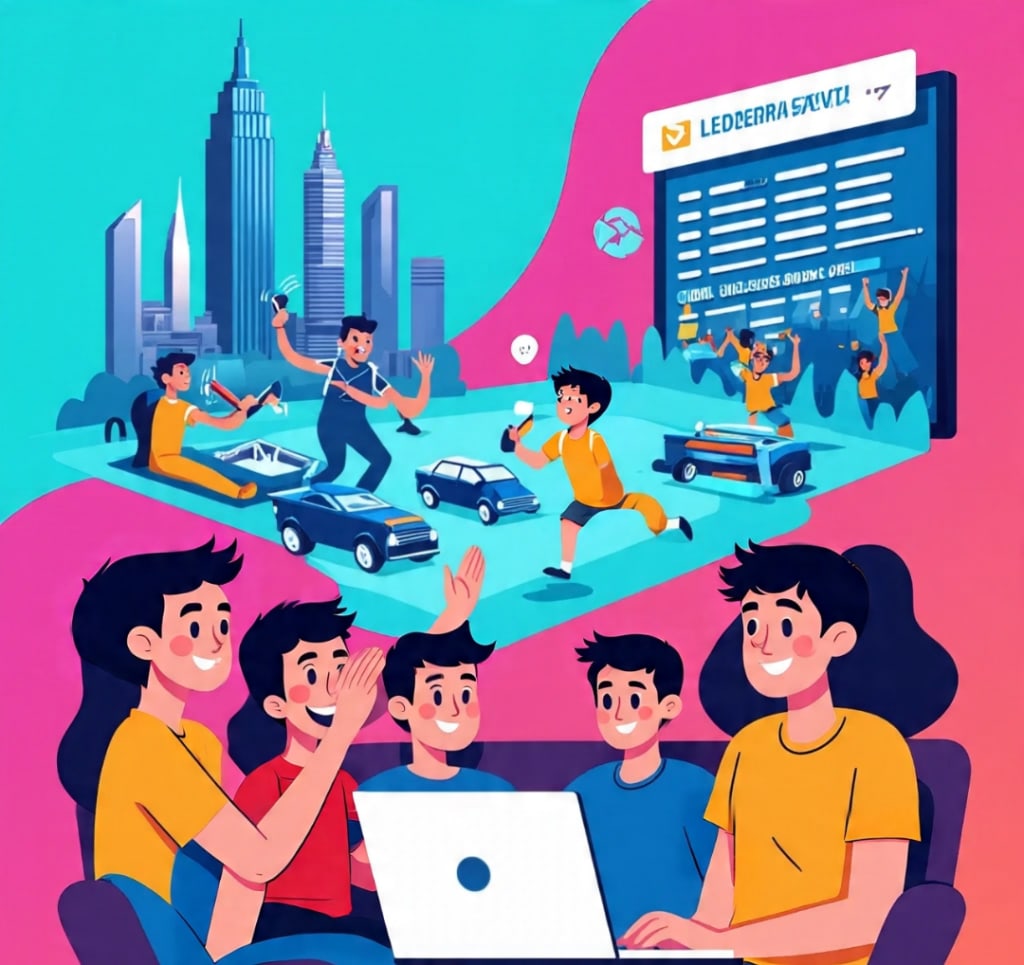
When most people think of video games, their minds jump to controllers, screens, or characters jumping over obstacles. But behind those pixels and polygons lies something much deeper: a growing global movement that is changing how we learn, create, and connect.
Video games have come a long way since the days of Pong and Pac-Man. What began as simple forms of digital entertainment has evolved into immersive experiences that blend art, storytelling, music, and technology. Today, games are more than just a pastime—they're tools for education, platforms for social connection, and sources of inspiration for millions around the world.
A Creative Playground
One of the most powerful aspects of gaming is how it encourages creativity. Games like Minecraft, Roblox, and Dreams allow players to build entire worlds from scratch. Children and adults alike use these platforms to design intricate landscapes, construct buildings, and even program interactive features. For many, these games become the first step into design, coding, or storytelling.
Emma, a 14-year-old from Toronto, started building fantasy castles in Minecraft when she was just 9. Now, she’s learning 3D modeling and wants to become a game designer. “It’s not just a game to me,” she says. “It’s like my sketchbook. I build whatever I imagine.”
Educators have taken notice, too. Schools around the world are integrating game-based learning into classrooms. Whether it’s teaching math through puzzles in Portal or history through Assassin’s Creed: Discovery Tour, games are helping students engage with subjects in new and exciting ways.
Building Bridges, Not Walls
Gaming is also breaking down barriers between people. In a time when physical distance can keep us apart, online games offer a place to meet, play, and build friendships. Multiplayer games like Fortnite, Among Us, and Animal Crossing: New Horizons became virtual hangouts during the COVID-19 pandemic. Birthdays were celebrated, concerts were hosted, and communities thrived—all within digital spaces.
It’s not just kids who are connecting through games. Adults, grandparents, and even entire families are bonding over shared experiences. For some, gaming is a lifeline against loneliness. Take Marco, a 67-year-old retiree who started playing Final Fantasy XIV to stay in touch with his grandchildren. “At first, I didn’t understand it,” he laughs. “But now, we play every weekend. It’s our thing.”
The sense of community in gaming goes far beyond just playing together. Gamers support each other in online forums, stream their gameplay to teach others, and raise millions for charity through gaming marathons. Events like Games Done Quick show how powerful the gaming community can be when united for a cause.
Real Skills, Real Opportunities
Contrary to outdated stereotypes, gaming doesn’t isolate people or waste time—it often builds real-world skills. Strategy, communication, critical thinking, and teamwork are just a few of the abilities honed through games. Esports, the competitive side of gaming, has turned this into a career path for many young players.
Professional gaming tournaments now fill stadiums, and scholarships are available for student gamers. Colleges offer programs in game development, and jobs in the gaming industry—from artists to engineers—are in high demand. According to a 2024 report, the global gaming industry is now worth over $200 billion and continues to grow.
Beyond the business side, games are even being used in therapy and mental health. Titles like Celeste and Journey have been praised for addressing anxiety, depression, and grief through storytelling and gameplay. Organizations use games to help people open up, process emotions, and find support in safe, interactive environments.
A Bright Future for Play
The future of gaming is more exciting than ever. Technologies like virtual reality (VR), augmented reality (AR), and AI are pushing the boundaries of what games can do. From training doctors in simulations to preserving cultural heritage through interactive stories, the applications are endless.
But perhaps the greatest promise of gaming lies in its heart: the players. Every day, people from different backgrounds log in not just to escape, but to connect, learn, and grow. Whether it’s building a virtual city, competing on a global stage, or simply sharing a laugh with a friend, gaming is creating something truly powerful.
Games are no longer just something we play. They’re something we create, share, and live.
So the next time someone tells you “It’s just a game,” you can smile and say, “It’s more than that—it’s the future.”
About the Creator
Keep reading
More stories from Muhammad Saad and writers in Gamers and other communities.
The Day Mr. Bean Tried Yoga
It was a sunny Saturday morning, and Mr. Bean woke up feeling unusually energetic. The birds were chirping, the air was fresh, and his mirror reflection looked back at him with a confident grin. “Today,” he announced proudly to his teddy bear, “I become flexible!” Mr. Bean had recently seen a yoga commercial on TV showing calm people twisting their bodies like pretzels while smiling peacefully. “If they can do it, so can I,” he declared, puffing out his chest. So, with great determination, he dusted off his old tracksuit, grabbed a rolled-up mat from under the bed (which had not seen daylight since 2002), and marched off to the local yoga studio. As soon as he entered, the soft scent of lavender and the calm music hit him. Everyone spoke in quiet voices, moving slowly like graceful swans. Mr. Bean tried to copy them—only to knock over a water bottle, bump into a potted plant, and get tangled in his yoga mat all within the first thirty seconds. The instructor, a peaceful woman named Miss Lily, smiled kindly. “Welcome, everyone. Let’s begin with some deep breathing.” Mr. Bean sat cross-legged, closed his eyes, and inhaled deeply. But instead of calm breathing, he began wheezing loudly, sounding like a broken vacuum cleaner. Everyone turned to look. Mr. Bean coughed, gave a thumbs-up, and whispered, “All good!” The first pose was “Mountain Pose.” That sounded simple enough—just standing tall. Mr. Bean straightened his back, puffed out his chest, and looked proud… until his balance gave way and he almost fell onto the lady beside him. Next came “Downward Dog.” The instructor demonstrated gracefully. Mr. Bean followed—but his hands slipped on the mat, and his legs went flying. For a brief second, he was upside down, staring at the ceiling lights. “Interesting view from here,” he thought before landing with a thump. The class giggled quietly, but Mr. Bean wasn’t one to give up easily. He tried again, determined to master at least one pose. Then came “Tree Pose.” “Focus on your balance,” said Miss Lily softly. Mr. Bean raised one leg and tried to stay still. Unfortunately, the calm music made him sleepy, and as he yawned, his raised leg wobbled. He grabbed onto the shoulder of the man next to him for support—who toppled like a domino into another person. Soon, the entire row of “trees” had fallen. The instructor clapped gently. “Remember, it’s about finding your inner peace,” she said, trying not to laugh. By now, everyone was smiling, including Mr. Bean. He wiped sweat from his forehead, took a deep breath, and decided to enjoy the process. When the instructor guided them into “Child’s Pose,” Mr. Bean sighed with relief. Finally—a pose that involved lying down! He stretched out comfortably, even letting out a small snore. Miss Lily tiptoed over and whispered, “Mr. Bean, we’re still doing yoga.” He blinked awake, smiled sheepishly, and pretended he’d just been “meditating deeply.” At the end of the class, they sat quietly for meditation. The lights dimmed, the room grew still, and the peaceful music played. But suddenly—growl! Mr. Bean’s stomach decided to join the session. The loud rumble echoed through the room. Several people chuckled. Mr. Bean blushed, holding his tummy. “Must be the energy flowing,” he whispered. When the class ended, everyone left smiling. Miss Lily walked up to him and said kindly, “You brought a lot of joy to the room today, Mr. Bean. Come again!” On his way home, he felt proud. He hadn’t mastered yoga poses, but he had mastered laughter. “Not bad for a beginner,” he told his teddy bear as he stretched his sore arms. That evening, he made himself a cup of tea, sat cross-legged on the couch (sort of), and smiled at the sunset. “Yoga isn’t about perfection,” he said thoughtfully. “It’s about peace… and maybe a good nap afterward.” And with that, Mr. Bean closed his eyes and dozed off—dreaming of doing the perfect Tree Pose someday, without knocking anyone over.
By Muhammad Saad 3 months ago in Gamers

Comments
There are no comments for this story
Be the first to respond and start the conversation.