
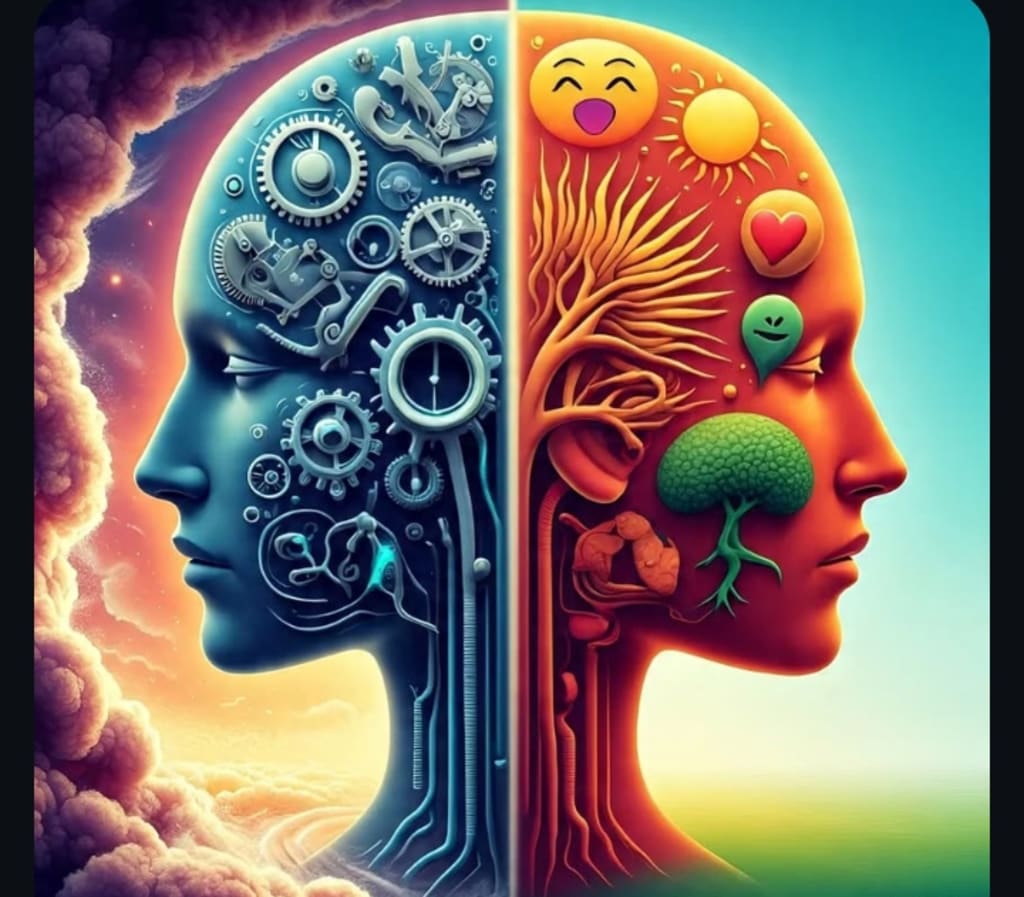
Wired for Reality: Understanding the Blueprint of the Human Mind
A Deep Dive into the Core Principles of Healthy Human Psychology and How to Align with Them for a Fulfilling Life
The Last Lightkeeper
The lighthouse at Cragmoor Point had stood for over a century, its white tower battered by salt and time, its lens once the brightest along the eastern coast. But now, satellites and automated beacons had made it obsolete. The world had moved on—except for Thomas Grady.
Thomas was the last lightkeeper.
He had lived alone in the tower for twenty-seven years. Every evening, he polished the Fresnel lens with soft cloths and gentle hands, as if tending to an old friend. He kept the gears oiled, the generator fueled, and the ledgers neatly logged in fine cursive. Tourists sometimes wandered near in the summer months, snapping pictures of the lighthouse against the wild gray sea, but they rarely ventured close enough to meet the man who kept it alive.
Then came the letter.
It arrived on a windy Tuesday in March, sealed in an envelope that smelled faintly of printer ink and bureaucracy. “The lighthouse at Cragmoor Point will be decommissioned effective April 30,” it read. “Staff will be reassigned or released.”
Thomas reread it five times. He placed it back in the envelope and tucked it into the ledger, between two pages dated 1983. Then he went about his work. The letter didn’t change the fact that the lantern room needed cleaning or that the railing outside had begun to rust again.
But each night, as he climbed the spiral stairs to light the beacon, a heaviness grew in his chest.
One day, a young woman arrived at the lighthouse steps. She had windswept hair, a camera around her neck, and a notebook tucked under one arm.
“Are you Mr. Grady?” she asked.
Thomas eyed her warily. “Depends who’s asking.”
“I’m Lily Harper. I’m writing an article about historic lighthouses. Do you mind if I ask you a few questions?”
He nearly turned her away. But something in her eyes—curious, kind, persistent—reminded him of his daughter, now living in some inland city, far from the sea. He nodded.
They sat on the bench overlooking the cliffs. Lily asked about storms, shipwrecks, long winters. Thomas spoke slowly, each word like a stone placed carefully into her hands.
“You know they’re shutting it down?” he said after a pause.
She nodded. “I heard. I’m sorry.”
He said nothing for a long time, watching the waves batter the rocks below.
“This place isn’t just bricks and iron,” he finally said. “It remembers things. A hundred years of light cutting through fog. It’s saved lives.”
Lily looked at him, then scribbled something in her notebook.
That evening, she climbed the tower with him. She watched as he lit the lamp for what might have been the ten-thousandth time. The lens rotated slowly, casting golden fingers into the growing dusk.
Lily stayed for two more days, listening, photographing, writing. When she left, she promised to send him the article.
April arrived with cruel swiftness. On the final night, Thomas climbed the stairs slowly, lantern in hand, knees aching. The sunset bled across the sky, brilliant and defiant. He lit the beacon one last time.
And then he sat beside it, watching it sweep the horizon.
In the morning, he would pack. The government would come. The light would go dark.
But for this one last night, Cragmoor Point would shine.
---
Two weeks later, Thomas sat in a small apartment inland, staring out a window that looked onto a parking lot. A letter arrived—this one from Lily. Inside was a copy of the magazine with her article. The title read: “The Heart of the Coast: A Lightkeeper’s Vigil.”
Thomas flipped through it slowly, recognizing his own words, his own weathered face in the photographs. The final page held a quote in bold:
> “Some lights are meant to be kept burning, even when no one’s looking.”
He smiled.
That evening, as dusk settled over the city, Thomas lit an old oil lantern on the windowsill. It was small, but it flickered with quiet dignity.
And in a way only he could understand, the sea still shimmered in its glow.
About the Creator
Keep reading
More stories from Muhammad Saad and writers in Humans and other communities.
The Great Coffee Spill of Room 204
The Great Coffee Spill of Room 204 How One Caffeine Catastrophe United an Office, Ruined a Laptop, and Made Carl a Legend It was a Tuesday—unremarkable in every way. The kind of day where the office hums with fluorescent light, passive-aggressive Slack messages, and the distant wheeze of an overworked HVAC system. Room 204, the largest conference room on the second floor of Keystone & Bell Marketing, was hosting the weekly all-hands meeting. Carl was not typically a central figure in these meetings. A quiet, agreeable guy from IT, Carl usually sat near the back, sipped his oversized travel mug of Colombian dark roast, and nodded along as department heads buzzed through their updates. But on that particular Tuesday, fate, gravity, and caffeine had other plans. The meeting had just hit peak tedium. Janice from HR was explaining a new PTO tracking system when Carl, adjusting his chair, misjudged the space between his mug and the edge of the table. The cup teetered—everyone saw it—then toppled. What happened next became company legend. The mug hit the table with a loud clunk, flipping onto its side. A tidal wave of hot coffee erupted, arcing like a caffeinated comet across the polished wood. The brown liquid flew in glorious slow motion, dousing Janice’s spreadsheets, splattering Phil’s new white sneakers, and—most critically—cascading over the edge of the table and directly into the open laptop of the VP of Sales, Denise. There was a gasp. Then silence. Then the unmistakable sizzle of liquid meeting electronics. Denise stared at her screen, blinking rapidly. The room waited. Sparks flickered from the USB ports. The laptop let out a feeble beep and died. Carl froze. His hands hovered mid-air like he was trying to reverse time. “I—I’m so sorry,” he stammered, face flushing tomato red. Denise stood slowly. She looked down at her ruined laptop, then at Carl. Everyone expected an explosion. But then, something incredible happened. She laughed. A short, surprised burst at first. Then a full-bodied, head-thrown-back cackle that echoed off the beige walls. “Well,” she said, wiping her eyes, “that’s one way to end a meeting.” The tension shattered. People chuckled, then erupted into applause. Carl, still mortified, gave a weak bow. What no one could have predicted was what came next. Denise’s laptop had been a beast—a seven-year-old dinosaur with an attitude. “Honestly,” she said later that day, “I think Carl did us all a favor.” Turns out, she'd been meaning to upgrade for months but had never gotten around to it. Carl’s spill was the final push she needed. But the spill did more than kill a computer. It broke the ice in an office that had long been siloed by departments and deadlines. For the first time in months, people were talking—not just about work, but about each other. Someone made a meme of the spill, photoshopping Carl’s face onto a superhero diving to save the laptop. Someone else brought in mugs labeled Team Carl. By Friday, the office had declared it “Caffeine Casual Day,” and Carl arrived to find a new travel mug on his desk with the inscription: The Legend of Room 204. HR even invited him to co-host the next company trivia night. “Do you realize what you did?” Phil asked Carl at the coffee station the following Monday. “Ruined Denise’s laptop?” “No. You brought us together, man. That room hasn’t laughed like that in a year. You spilled more than coffee—you spilled the tension.” Carl blinked. “That might be the cheesiest thing I’ve ever heard.” “Still true.” After that, things really did shift. Collaboration across teams improved. People started eating lunch together again. Denise got her new laptop—and insisted Carl be the one to set it up, grinning the whole time. They even let him name the Wi-Fi network for the room. He called it: Café 204. The moment became a rallying point, a company in-joke that reminded everyone not to take things too seriously. And Carl? He didn’t let it go to his head. He was still Carl from IT. Still quiet. Still sipping coffee, though now from a spill-proof mug. But if you asked anyone on the second floor what started the culture shift at Keystone & Bell, they’d all say the same thing. It was the coffee. It was the laptop. It was the fall of Carl’s mug in Room 204. And the rise of a legend.
By Muhammad Saad 8 months ago in Humans
what does true freedom mean in the modern world?
freedom is one of the most powerful ideas humanity has ever imagined. entire civilizations have risen and fallen around it. revolutions have been fought in its name. constitutions have been written to protect it. people have sacrificed comfort, safety, and sometimes their lives so that future generations could experience it.
By Arjun. S. Gaikwad5 days ago in Humans




Comments
There are no comments for this story
Be the first to respond and start the conversation.